Categories
News

Who was Harriet Tubman? The Life and Legacy of an American Heroine.

“Every great dream begins with a dreamer. Always remember, you have within you the strength, the patience, and the passion to reach for the stars to change the world.”

This was a famous quote by the American abolitionist and political activist, Harriet Tubman. 

As March is Women’s History Month in the United States, this article aims to present the life and legacy of one of America’s most famous heroines. 

Harriet Tubman (born Araminta ‘Minty’ Ross) was a black, female abolitionist and political activist. She was born into slavery in Maryland in 1822 from which she escapade in 1849 using the so-called “Underground Railroad.” 

Instead of running as far away as possible once she gained her freedom, she decided to go back and save others with a similar fate. She thus became a leading abolitionist and led hundreds of slaves to freedom using the “Underground Railroad.”

Early years as slave

Araminta Ross was born to parents Harriet Green and Benjamin Ross on a plantation in Dorchester County, Maryland. She later changed her name to Harriet in honor of her mother. 

Despite her mother’s efforts to keep her nine children together, the harsh reality of slavery did not allow for this. At the age of five, Harriet was rented out as a nursemaid where she was whipped and beaten whenever the baby cried. 

At age seven she was rented out to a planter to set muskrat traps and few years later she was once again rented out as a field hand.

At the young age of 12, it became apparent that Harriet was destined for greater things. One day she spotted how an overseer was about to throw a heavy weight at a fugitive slave. Harriet jumped between the slave and the overseer and the weight struck her head. 

She later explained that the weight had broken her skull and that they had carried her into the house all bleeding while she was unconscious. She had no bed, so they brought her to the seat of the loom, where she stayed all day and the next.

Escape from slavery

Harriet’s father was set free in 1840 and she discovered that her owner’s last will set her mother and children free as well. However, Harriet’s new owner refused to recognize the will and kept Harriet’s mother and siblings as slaves. 

Around 1844, she married a free black man named John Tubman and changed her last name. She wasn’t happy in her marriage though, as her husband threatened to sell her further south. 

Her husband’s maltreatment towards her and the knowledge that two of her brothers – Ben and Henry – were about to be sold, provoked Harriet to hatch a plan to escape. 

Following the death of her owner in 1849, Harriet decided to escape to Philadelphia. Her two brothers – Ben and Henry – accompanied her, but once word got out that there was a $300 reward for the return of Araminta, Henry, and Ben, the two boys had second thoughts and returned.

Harriet had no plans to remain in slavery. After seeing her brothers safely home, she set off alone for Pennsylvania. Tubman traveled nearly 90 miles using the “Underground Railroad”.

Harriet Tubman: The Conductor 

As a free woman in Philadelphia, she found work as a housekeeper, but she wasn’t satisfied living as a freed slave on her own. She wanted freedom for her loved ones as well. 

Word got around that her niece and her niece’s children were about to be sold. Harriet thus traveled back to the south to free her family via the “Underground Railroad”. 

This was the first of many trips that she made to free slaves. Her work as a “Conductor” for the “Underground Railroad” earned her the nickname “Moses”.  

In 1850, with the passage of the Fugitive Slave Law, the dynamics of freeing slaves changed. The new law stated that escaped slaves could be re-captured in the North and returned to slavery. This led to the widespread abduction of former slaves and free blacks in northern states.

Law enforcement officials were forced to partake in the capture of slaves, regardless of their personal beliefs. This evidently affected the “Underground Railroad” and Harriet’s work. They were thus forced to re-route the network to Canada, where slavery was prohibited.

Harriet Tubman: The political activist

As the American Civil War broke out in 1861, Harriet Tubman remained active. She was recruited as a nurse, cook, and laundress to assist fugitive slaves at Fort Monroe. 

Harriet also had some knowledge of herbal medicines which she used to treat the sick soldiers and fugitive slaves. 

In 1863, she became head of an espionage network for the Union Army. She provided essential information and intelligence to the Union commanders about Confederate Army supply routes and troops. She also helped liberate slaves to form black Union regiments.

She became the first woman to lead an armed expedition in the war, as she guided the Combahee River Raid, which freed more than 700 slaves in South Carolina. It took the government over three decades to recognize her military contributions during the war, but she was eventually received monetary compensation. 

Harriet’s Legacy

Potential design for new $20 bill

As Harriet aged, the injuries she suffered to her head as a young girl became more and more severe. She underwent brain surgery, because she was suffering from pains and “buzzing” in her head. Surrounded by friends and family, she died of pneumonia on March 10, 1913. 

After her death, she became widely known and respected as an American icon. In 2016, the U.S. Treasury Department announced that Harriet Tubman would replace Andrew Jackson on the new $20 bill. 

This decision came after the Treasury Department received a flood of public comments, following a campaign that called for a notable female American to appear on U.S. currency. More than half a million voters participated in an online poll for the “Women on 20s campaign”. 

Harriet Tubman devoted her life to racial equality, and she fought for women’s rights alongside the nation’s leading suffragists. She is undoubtedly a female and American national icon to look up to. 

]]>
Categories
Breaking News

What were the causes of World War I?

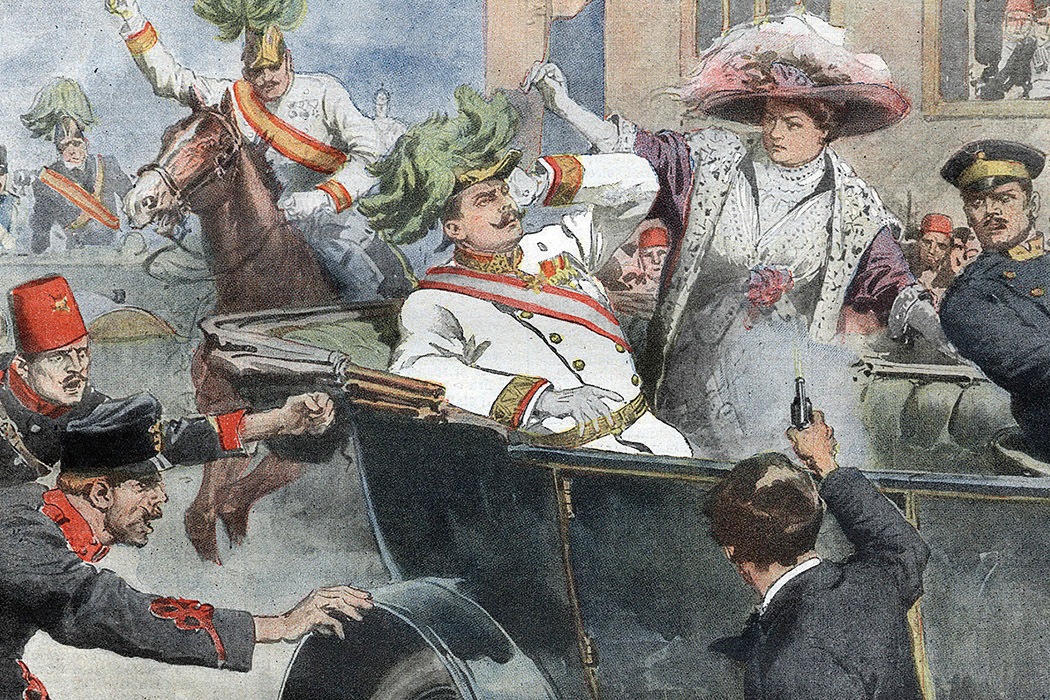
On June 28th, 1914, the Austrian archduke, Franz Ferdinand and his wife, were assassinated by a Bosnian revolutionary, Gavrilo Princip. This triggered the First World War, but the underlying reasons for the war were much more complicated. 

Numerous factors contributed to political tensions on the European continent which eventually escalated on July 28, 1914, when Austria-Hungary declared war on Serbia. This article will aim to break down the different factors that led to the First World War (or Great War).

Alliances

Prior to the war, a number of alliances had been formed in Europe. This led to a quicker escalation of the war, as certain countries had no choice but to declare war if one of their allies did. 

The main alliances that existed before the war were the Triple Alliance of Germany, Austria-Hungary, and Italy (signed in 1882) and the Triple Entente of Britain, Russia, and France (signed in 1907). 

These alliances were defensive in nature, however, it still meant that any conflict between an ally and another country would automatically involve all other signatory countries. The fact that Germany had to face France and Britain on the one side and Russia on the other, greatly influenced its actions during the war. 

Famous English historian, A. J. P. Taylor, stated that “the alliances created an excessively rigid diplomatic framework, within which relatively small detonators could produce huge explosions.” This came at an unwelcome time, as political tensions in Europe were already on the rise. 

Polarization of Europe

Some historians claim that the distant origins of the First World War can be traced back to the Franco-Prussian War in 1870-1871. While Germany became a growing powerful Empire, France fell into chaos and military decline for years. 

Subsequently, France grew more and more suspicious and hostile towards Germany, especially following the annexation of Alsace-Lorraine. This led to a significant chapter in French society, known as revanchism. 

Meanwhile, Britain abandoned its “splendid isolation” policy and formed alliances with France in 1904 and Russia in 1907, which became the Triple Entente. For Britain, this was a preventive measure against Germany following the Anglo-German naval arms race in the late 19thcentury.

Several crises between 1905 and 1914 reinforced these existing alignments and further deepened the polarization of Europe. 

Moroccan Crisis and Balkan Wars

One being the First Moroccan Crisis from 1905-1906. This was an international dispute over the state of Morocco which aggravated tensions between Germany and both France and the United Kingdom. This was due to Germany’s challenge to France in the Moroccan Crisis. 

Afterwards came the Second Moroccan Crisis in 1911 (also known as the Agadir Crisis). Imperialism led to rivalries between France, Germany, and the UK in relation to control of Morocco. 

In April 1911, French troops deployed troops into the interior of Morocco. Germany responded by sending the gunboat SMS Panther to the Moroccan port of Agadir. This led to stronger ties between London and Paris and deeper suspicions towards Berlin. 

A final significant factor were the Balkan wars and the annexation of Bosnia-Herzegovina. 

The Balkan wars took place in 1912 and 1913. The two separate wars led to the Ottoman Empire losing almost all of its holdings in Europe. This also led to the weakening of Austria-Hungary, as a much-enlarged Serbia pushed for union of the Slavic peoples. 

Russia encouraged Slav nationalism which led to increased tensions between the Russian Empire and Austria-Hungary. Especially after the annexation of Bosnia-Herzegovina. 

After the collapse of the Ottoman Empire, Austria-Hungary awarded itself the right to occupy the two provinces. This annexation worsened the already fragile balance of power in the Balkans.

The arguably illegal annexation enraged Serbs and pan-Slavic nationalists. A weakened Russia was forced to submit to Austria-Hungary, however, this did trigger more aggressive anti-Austria campaigns in Russia and surrounding Slavic regions. 

As a result of all of this, Austria felt that a preventative war against Serbia, in order to undermine its growing power, might have been necessary. When Franz Ferdinand was assassinated, Austria used this as a catalyst to declare war on Serbia.

The July Crisis

The assassination sent deep shockwaves through Austrian society. Historians have dubbed this event a “9/11 effect, a terrorist event charged with a historic meaning, transforming the political chemistry in Vienna.” 

Anti-Serbian sentiments had already been strong among the people and this attack had been the final drop. Two days after the assassination, the Foreign Minister and the Emperor agreed that the “policy of Patience” with Serbia had come to an end. 

The attack on the heir to the Austrian throne on June 28, 1914, sparked a series of events which eventually escalated into the Great War. This was known as the July Crisis. 

On July 6th, Germany affirms its unconditional support for Austria-Hungary with a so-called “blank cheque”. On July 23rd, Austria-Hungary set an ultimatum to Serbia, containing their demands for an inquiry into the assassination of Franz Ferdinand. Furthermore, Serbia was to suppress all anti-Austrian propaganda and to take measures to eliminate terrorist organizations. 

The ultimatum gave Serbia 48 hours to respond. The following day, Serbia sought support from Russia, who advised Serbia not to accept the ultimatum. 

On the 25thof July, Serbia responds to Austria with less than full acceptance. Subsequently, Austria-Hungary breaks off all diplomatic ties with Serbia. Three days later, having failed to accept Serbia’s terms, the Austrian-Hungarian Empire declared war on Serbia. 

This incidentally brought Germany into the war as well. The British Ambassador in Berlin, Sir Edward Goschen, was informed that Germany was contemplating war with France and also wished to send its army through Belgium.

In the morning of July 29, the Russian army mobilized to assist Serbia. As a result, and due to threats made by Germany against France, Britain and France entered the war. 

Historiography

Evidently, the causes of the First World War were manifold, thus, a consensus on the origins of the war remain elusive. Right after the war, Anglo-American historians asserted that Germany was solely responsible for the war, but more recent academic works have blamed all participants more equally. 

]]>