www.sciencedirect.com Image courtesy of Wikimedia Commons user: OgreBot]]>
www.sciencedirect.com Image courtesy of Wikimedia Commons user: OgreBot]]>

Neanderthals The fate of our closest, extinct relatives: the Neanderthals, as well as the relationship modern humans had with them, have been a constant source of fascination. This month, intriguing new ideas and considerations have been added to the ongoing discussion of what happened to the Neanderthals. A study by Anna Goldfield, an archaeologist from Boston University, and Ross Booton, a mathematical biologist from Sheffield University, used mathematical modelling to determine the impact of the mastery of fire on both human and Neanderthal populations. Although there is evidence that Neanderthals used fire, it is clear that they did not use it as consistently as humans. Mastery of fire has a number of major benefits. Firstly, of course, cooking food kills bacteria, making it safer to eat. It also increases the amount of processable protein that can be taken from the food. Therefore, the populations that mastered fire had a much better chance of survival. Based on the model, Booton and Goldfield concluded that modern humans using fire consistently would have allowed their populations to grow, while the Neanderthals would have declined. Fire mastery allowed modern human populations to flourish, which in turn led to them depriving Neanderthals of crucial resources. Other studies released this month have added further theories to the discourse about why the Neanderthals became extinct. A study by authors from Cambridge and Oxford Brookes Universities has used genetic analysis to conclude that disease spread could have led to the Neanderthal’s extinction. The authors argue that humans migrating out of Africa brought new diseases with them which the Neanderthals would have lacked immunity to. Elsewhere, a study by researchers at the University of Bologna, in Ravenna, analysed various hominin and Neanderthal teeth fossils and concluded that the Neanderthal decline started shortly after modern humans had first arrived in Europe. This adds significant weight to theories which argue humans played a part in the Neanderthal’s decline. Connections Between the Past and Present Other studies have focused on issues from the past that remain poignant in the present. Data collection by governments or private institutions, whether on their own citizens or those of other countries, is a civil liberties concern that has remained at the forefront of public discourse for the last few years. A study by Margo Anderson, Professor of History and Urban Studies at the University of Wisconsin, has shown that government collection and use of ‘Big Data’ is far from just a recent development. Anderson argues that following the Japanese attack on Pearl Harbour, the US government used 1940 census data to round up the Japanese ancestry population living on the West Coast of the USA. In total, some 100,000 people were held in US concentration camps for the duration of the war. In 1790, Congress had forbid the use of census data to ‘harm’ US citizens. The treatment of Americans of Japanese ancestry shows how perceived ‘national security threats’ could lead to reinterpretations of exactly what government collected information could legitimately be used for. Recent riots in Baltimore, as well as last year’s in Ferguson, have highlighted the continued controversies over policing in the United States. Undoubtedly, there are a host of complicated social, political and economic issues behind the riots in these two cities, that cannot be fairly analysed here. What is clear however, is that a sense of racial discrimination by various police forces has been an important factor. An article by Themis Chronopoulos, from the University of East Anglia, has argued that a reaction against police misconduct was a major theme in the African American Civil Rights Movement of the 1960s. Histories of the Civil Rights Movement tend to focus on discrimination in schools, voting rights, public housing and employment law as the major causes for protest. Chronopolouos claims, “Survey after survey during the period revealed that one of the overriding concerns of urban blacks was police misconduct and that this issue functioned as one of the primary causes of riots.” This conclusion can perhaps help us frame the riots in Baltimore into a wider historical context. Both the study on the Civil Rights Movement, and the one on state use of data, provide a valuable reminder of the constant connetion between history and the present. ]]>
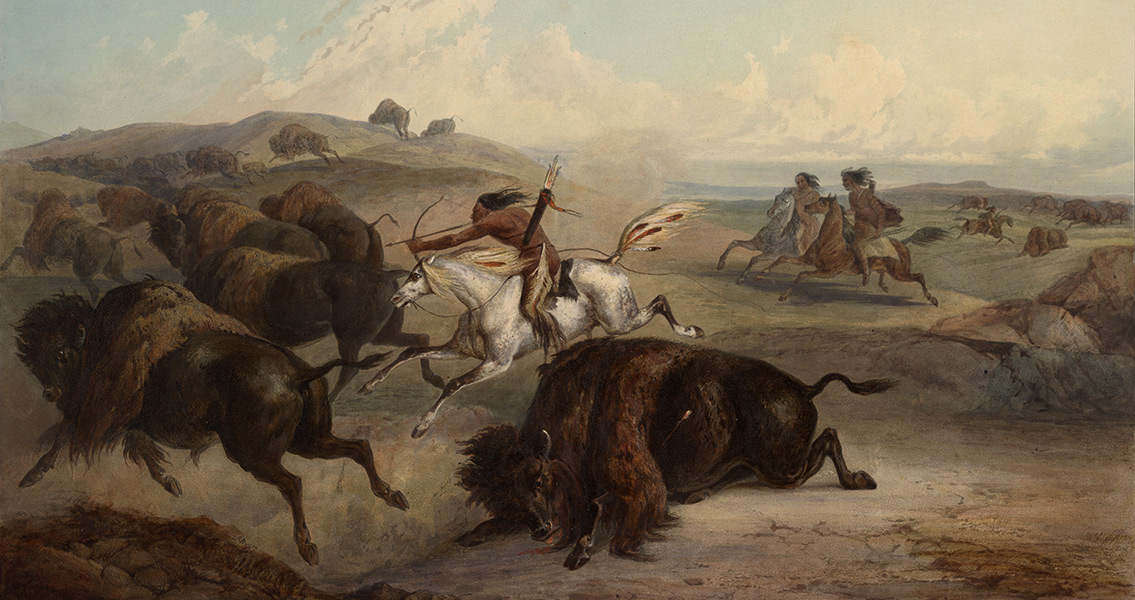
Early American Studies, reveals how the Illinois’ adaptation to the distinctive prairie environment influenced their history. “Although most historians have ignored the bison as a factor in the history of the Illinois and their region, the animals were a central fact of life there,” Morrissey explained. The traditional food eaten by Algonquians near the Great Lakes was beaver. On the Plains of the Midwest, however, beaver were scarce and of low nutritional quality. Bison, on the other hand, were plentiful. Bison hunting gave the Illinois new opportunities and shaped Illinois society in fundamental ways. “A unique economy, pedestrian (i.e., non-equestrian) bison hunting required two things: a large population and much labor,” Morrissey writes. “Because bison could be effectively hunted and processed only in large groups, committing to the bison required (but also enabled) larger villages.” Also, the processing stage was vitally important in the bison economy. As a result, the Illinois needed specialist workers to preserve the meat, render the tallow and tan the hides, Morrissey explains. “The Illinois conducted their bison economy with a gendered division of labor in which women performed the difficult tasks of hide and meat processing, this meant that the Illinois needed women.” The bison economy’s reliance on women for curing meat and creating hides fueled slave raids by the Illinois. In search of new female workers, the Illinois raided their nearby neighbours and enemies, creating a condition of continual war. Morrissey explained that “the Illinois were creating a cycle: more bison exploitation encouraged more raiding, and more violence, and larger settlements and . . . more bison.” When Native Americans came into contact with European explorers, the Illinois fought particularly intense wars. Morrissey argues that the effects of European colonisation on the Illinois cannot be understood independently of their bison economy, such was their dependence on these animals. European diseases began to hit Illinois villages in the 1670s and 1680s when European missionaries and fur traders, especially those specialising in bison hide trading, brought microbes and viruses. Diseases began to affect the Illinois significantly in the early contact period. These diseases put extra strain on the Illinois bison economy. Disease amongst the Illinois led to a shortage in specialist workers. This, in turn, led to increased slave raids and war, stretching the Illinois population to breaking point. “What seems clear is that the bison economy and the colonial changes combined to produce devastation for the Illinois in ways that were unique and particularly intense,” Morrissey argues. For more information: www.muse.jhu.edu Image courtesy of Wikimedia Commons user: Jan Arkesteijn]]>


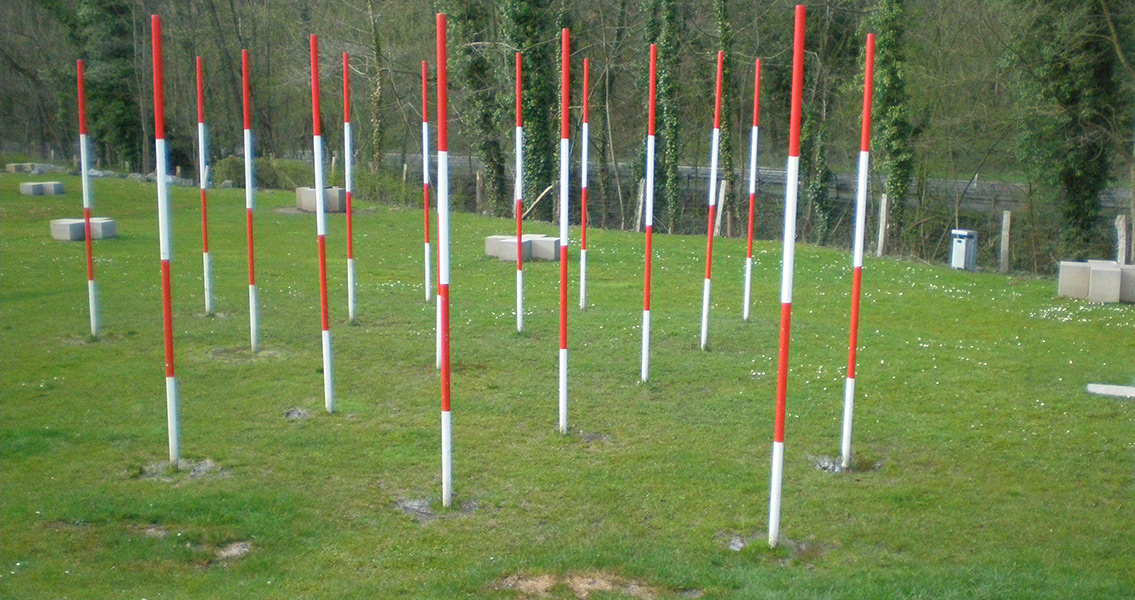
Human Ecology. Samson used data gathered from 150 excavated structures at 16 sites in the Greater Antilles, Turks and Caicos, Virgin Islands and northern Lesser Antilles. Also examined were sixteenth-century sketches and recollections of house structures by Spanish conquistadors in Haiti, the Dominican Republic, the Bahamas and Cuba. In all, these buildings spanned a period of history between 1,400 and 450 years ago. Samson argues that a distinctive ‘Caribbean architectural mode’ emerged around 1,400 years ago. Local inhabitants kept using the basic features of this style of building until European colonisation. The mode served as an effective method for meeting the needs of the community, dealing with cyclical environmental hazards and longer-term trends of historical change. Importantly, this was not a one-size-fits-all template for building structures. Carefully-designed structures were evenly anchored to the ground. High-pitched roofs and reinforced facades tended to be built near the shore, where storms were most violent. One particular site, the settlement of El Cabo in the Dominican Republic, had circular houses measuring between 6.5 and 10 metres in diameter. These structures were very effective at dealing with the winds, rain and heat of the Caribbean. Exposure to wind was reduced by locating houses in an irregular pattern, windbreaks and partitions were also used, ensuring wind tunnels did not form. These houses lasted for centuries, being rebuilt and repaired as needed, with the essential characteristics of the buildings remaining the same. Samson’s study reveals how historical communities coped with severe natural disasters. Also, Samson believes her work could shed light on how modern-day communities can be better supported by humanitarian efforts to rebuild homes. If a dialogue is encouraged between different disciplines dealing with housing, a greater appreciation of historical shelter processes can be gained. Every area has its own unique architectural history which could provide clues for how best to respond to disasters in that specific location. For more information: www.link.springer.com Image courtesy of Wikimedia Commons user: Boing-boing]]>