Categories
Breaking News

History News of the Week – A New Titanosaur, the Oldest Trigonometric Table, and the Fate of the H.L. Hunley

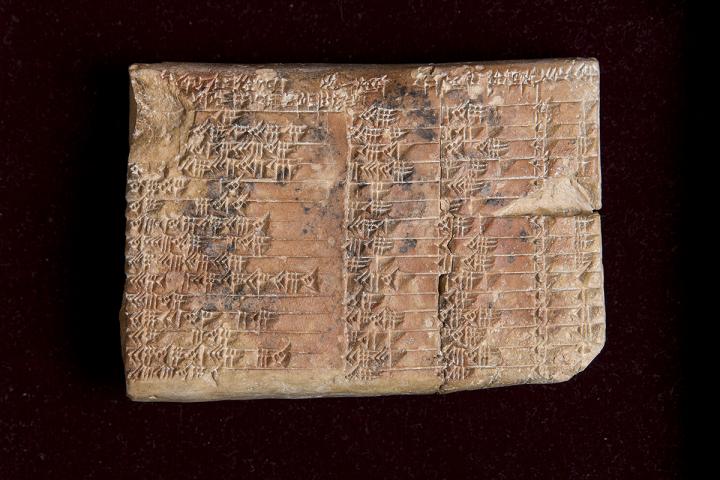
New Species of Titanosaur Discovered in Tanzania A new species of titanosaur has been discovered in Tanzania. A member of the gigantic, long-necked sauropod group, the creature’s fossil remains were discovered in Cretaceous period (70-100 million years ago) rocks in southwestern Tanzania. Although titanosaur remains have been found across the globe, they are most common in South America and rarely found in Africa. The new dinosaur has been named Shingopana songwensis, derived from the Swahili term ‘shingopana’, which means wide neck. The second part of the name comes from the Songwe region of the Great Rift Valley, where the remains were discovered. “There are anatomical features present only in Shingopana and in several South American titanosaurs, but not in other African titanosaurs,” said Eric Gorscak, a paleontologist at the Field Museum of Natural History in Chicago and the lead author of a paper in Journal of Vertebrate Paleontology detailing the find. “Shingopana had siblings in South America, whereas other African titanosaurs were only distant cousins.” Fascinatingly, Shingopana songwensis seems more closely related to sauropods found in South America than those that have been discovered in Africa. “This discovery suggests that the fauna of northern and southern Africa were very different in the Cretaceous Period,” said Judy Skog, a program director in the National Science Foundation’s Division of Earth Sciences, which supported the research. “At that time, southern Africa dinosaurs were more closely related to those in South America, and were more widespread than we knew.” Mysterious Babylonian Tablet Is the World’s Oldest Trigonometric Table Scientists have revealed that a 3,700-year-old Babylonian clay tablet is the world’s oldest trigonometric table. The researchers from UNSW Sydney believe the tablet could have been used by ancient mathematical scribes to calculate how to construct palaces, temples and canals. The findings unveil a previously unknown level of mathematical sophistication among the ancient Babylonians, showing they had begun to study the mathematics of triangles long before the ancient Greeks. Named Plimpton 322, the small tablet, which was discovered in what is now southern Iraq, has four columns and 15 rows of numbers written on it in the cuneiform script of the time using a base 60, or sexagesimal, system. Previously, scientists argued the tablet would have been a teaching aid for checking solutions to quadratic problems. “The huge mystery, until now, was its purpose – why the ancient scribes carried out the complex task of generating and sorting the numbers on the tablet,” said UNSW’s Dr. Daniel Mansfield, co-author of the study published in the journal Historia Mathematica. “Our research reveals that Plimpton 322 describes the shapes of right-angle triangles using a novel kind of trigonometry based on ratios, not angles and circles. It is a fascinating mathematical work that demonstrates undoubted genius.” The Greek astronomer Hipparchus, who lived circa 120 years BCE, is typically regarded as the father of trigonometry, with his “table of chords” on a circle considered the oldest trigonometric table. “Plimpton 322 predates Hipparchus by more than 1000 years,” said Dr Wildberger, the study’s other coauthor. “It opens up new possibilities not just for modern mathematics research, but also for mathematics education. With Plimpton 322 we see a simpler, more accurate trigonometry that has clear advantages over our own.” “A treasure-trove of Babylonian tablets exists, but only a fraction of them have been studied yet. The mathematical world is only waking up to the fact that this ancient but very sophisticated mathematical culture has much to teach us.” Confederate Submarine Crew Were Killed by Shockwave from Their Own Torpedo On 17th February, 1864, the Confederate H.L Hunley became the first combat submarine to sink an enemy vessel when it torpedoed a 1,200-ton Union warship, the USS Housatonic, outside Charleston Harbor, South Carolina. The torpedo blast, below the waterline of the Housatonic, was enough to sink the ship in under five minutes. Five seamen were killed in the attack, the rest were saved, rescued thanks to the fact the stricken ship came to rest upright in the water. For years, the fate of the Hunley crew remained a mystery. The 40-foot vessel was found in 1995, about 300 metres away from Housatonic’s resting place, and raised in 2000. Scientists from Duke University now think that firing the explosive torpedo instantly killed the submarine’s own eight-man crew. When the vessel was first unearthed, scientists were shocked to find the skeletons of the crew still at their stations. They had suffered no broken bones, the ships bilge pumps hadn’t been used and the air hatches remained closed. Except for some slight damage, the submarine was largely intact. Thorough research from Duke University, which has included modelling blasts next to a scale model of the Hunley, shooting Civil War weapons at iron plates and studies on the transmission of blast energy, has led Rachel Lance, a Duke Engineering graduate, to conclude that a powerful shockwave from the torpedo killed the submarine’s crew instantly. “This is the characteristic trauma of blast victims, they call it ‘blast lung,'” said Lance, who worked as a biomechanist at the U.S. Navy’s base in Panama City, Florida for three years before entering graduate school at Duke. “You have an instant fatality that leaves no marks on the skeletal remains. Unfortunately, the soft tissues that would show us what happened have decomposed in the past hundred years.” Lance observes that the physical evidence backs up her conclusion, showing no sign the crew took actions in response to either a flood or loss of air. “If anyone had survived, they may have tried to release the keel ballast weights, set the bilge pumps to pump water, or tried to get out the hatches, but none of these actions were taken,” she writes in her paper, which is part of her dissertation research and has been published in the journal PLOS ONE. Featured Image: The 3,700-year-old Babylonian tablet Plimpton 322 at the Rare Book and Manuscript Library at Columbia University in New York. Credit: UNSW/Andrew Kelly]]>

Categories
Breaking News

History News of the Week – USS Indianapolis Discovered

USS Indianapolis Shipwreck Discovered 72 years after its sinking, the wreckage of the USS Indianapolis has been discovered 18,000 feet beneath the surface of the Philippine Sea, according to the New York Times. In July 1945, in the final months of the Second World War, the USS Indianapolis was sunk by a Japanese torpedo, as it returned from a secret mission to deliver parts that were used in the atomic bomb dropped on Hiroshima. The ship’s sinking was the worst loss of life in the history of the US Navy. Of the 1,196 crew on board, just 316 were rescued. Although somewhere between 800 and 900 people escaped the sinking ship, no distress signal was sent. When the survivors were found by chance four days later in shark infested waters, just a fraction were left alive. On Saturday 19th September, a civilian team led by Paul G. Allen, the co-founder of Microsoft, announced that it had found unmistakable wreckage of the Indianapolis. They had been directed to the site by new research from a naval historian which determined a specific region of the ocean where the ship had been sited the night before its destruction. “To be able to honour the brave men of the USS Indianapolis and their families through the discovery of a ship that played such a significant role during World War Two is truly humbling,” Allen told the BBC. Ancient Pompeii’s Water Supply was Poisonous New research claims that the water transported through the pipelines of the ancient Roman city of Pompeii was probably poisonous on a scale that would have likely led to diarrhea, vomiting and liver and kidney damage for anyone who drank it. Kaare Lund, a chemist from the Southern University of Denmark (SDU), analysed water pipes from Pompeii and found high levels of the toxic element antimony, which he believes may have poisoned the drinking water. Antimony is acutely toxic, meaning it causes a quick reaction in anyone who consumes it. According to a statement from SDU, the element is particularly irritating to the bowels, and the reactions are excessive vomiting and diarrhea that can lead to dehydration. In severe cases it can also affect the liver and kidneys and, in the worst-case scenario, can cause cardiac arrest. Pompeii’s location, close to Mount Vesuvius, likely meant the concentration of antimony was higher there than elsewhere in the Roman Empire, as the toxic chemical element naturally occurs in groundwater close to volcanoes. Lund and colleagues’ findings have been published in the journal Toxicology Letters. Hannibal’s defeat and the rise of Rome written in coins Chemical analysis of Roman coins has found that the defeat of Hannibal led to a flood of wealth through the Empire from the silver mines of Spain. According to scientists, the discovery tracks Rome’s transition from regional power to empire. Regarded as a key event in European history, the Second Punic War saw Hannibal lead his formidable Carthaginian army across the Alps in 218 BCE in a failed assault on Rome. Hannibal’s defeat saw the Romans conquer the Iberian Peninsula, with the Romans slowly gaining control over the region’s lucrative silver mines circa 211 BCE. War reparations from Carthage combined with the revenue taken from the Spanish mines ultimately funded Rome’s rapid territorial expansion. The new geochemical analysis has now provided clear proof of the importance of the Spanish silver in funding Roman conquest. A group of scientists based in Germany and Denmark and led by Prof Fleur Kemmers and Dr Katrin Westner (Institute for Archaeological Sciences, Goethe University, Frankfurt) analysed 70 Roman coins dating from 310-300 BCE to 101 BCE, the period surrounding the Second Punic War. Using Mass Spectrometry, the team determined that the lead in the coins from after 209 BCE had distinctive isotope signatures which identified them as presumably originating from Spain. “Before the war we find that the Roman coins are made of silver from the same sources as the coinage issued by Greek cities in Italy and Sicily2. In other words the lead isotope signatures of the coins correspond to those of silver ores and metallurgical products from the Aegean region”, said Katrin Westner. “But the defeat of Carthage led to huge reparation payments to Rome, as well as Rome gaining high amounts of booty and ownership of the rich Spanish silver mines. From 209 B.C. we see that the majority of Roman coins show geochemical signatures typical for Iberian silver”. “This massive influx of Iberian silver significantly changed Rome’s economy, allowing it to become the superpower of its day. We know this from the histories of Livy and Polybius and others, but our work gives contemporary scientific proof of the rise of Rome. What our work shows is that the defeat of Hannibal and the rise of Rome is written in the coins of the Roman Empire.” ]]>

Categories
Breaking News

History News of the Week – Does an Ancient Petroglyph Depict a Total Eclipse?

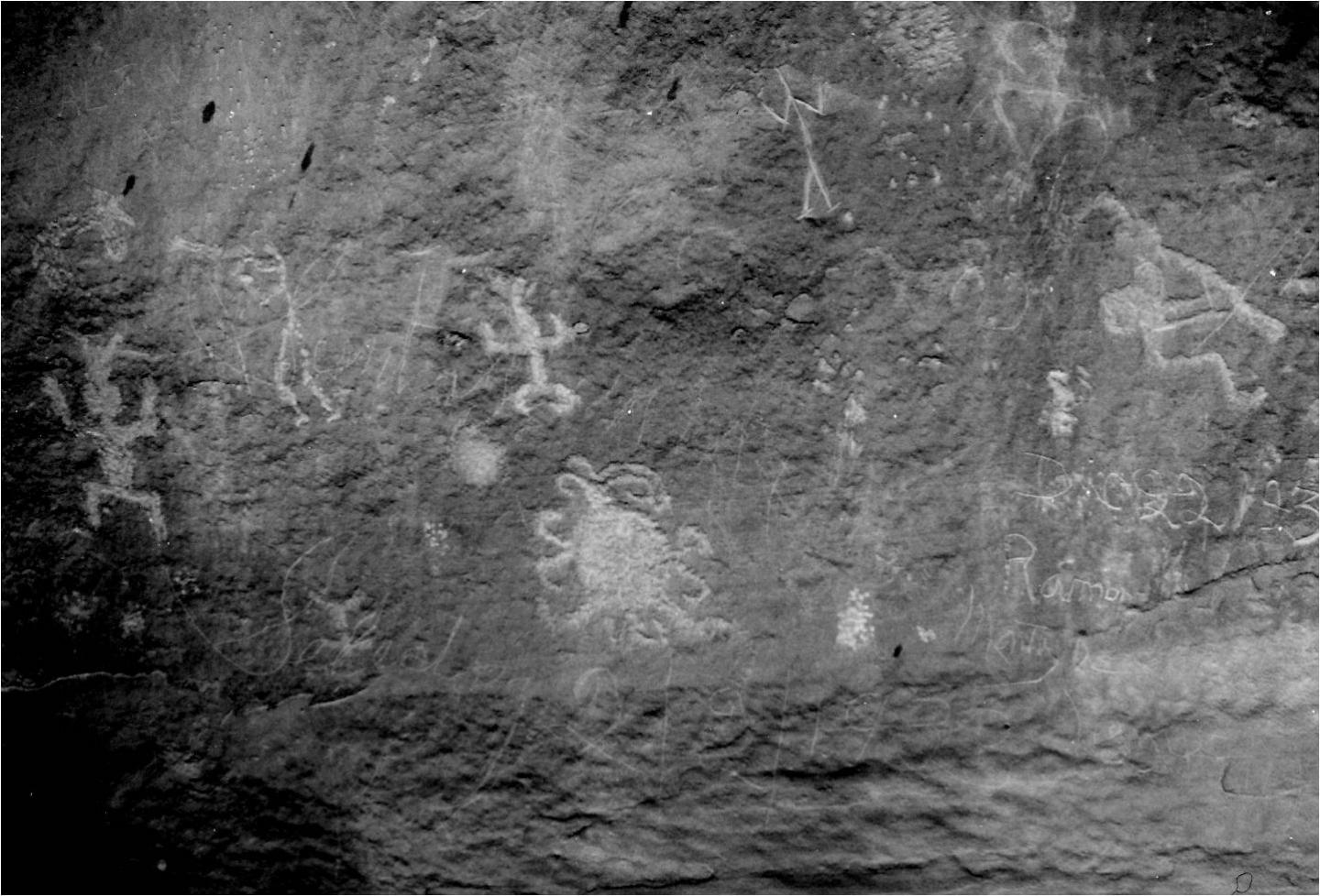
Chaco Canyon Petroglyph Could Depict Total Eclipse A petroglyph carved into a rock face by the ancient Pueblo people could depict an ancient eclipse, according to a professor from the University of Colorado at Boulder. The carving depicts a circle that resembles the sun’s outer atmosphere known as the corona, with tangled protrusions looping off the edges. According to Professor Emeritus J. McKim Malville, the image, which was first unearthed in 1992, may illustrate the total eclipse of the sun that occurred over the region on 11th July 1097. “To me it looks like a circular feature with curved tangles and structures,” said Malville of CU Boulder’s astrophysical and planetary sciences department. “If one looks at a drawing by a German astronomer of the 1860 total solar eclipse during high solar activity, rays and loops similar to those depicted in the Chaco petroglyph are visible.” Malville and colleagues used several sources to assess the activity of the sun around the time of the eclipse, to confirm if the image corresponded to how the sun would have looked at the time. This included looking at tree rings, which can provide an insight into the number of cosmic rays hitting the earth’s surface, and records of naked eye observations of sunspots dating back thousands of years in China. “This possible eclipse petroglyph on Piedra del Sol is the only one we know of in Chaco Canyon,” Malville said. “I think it is quite possible that the Chacoan people may have congregated around Piedra del Sol at certain times of the year and were watching the sun move away from the summer solstice when the eclipse occurred.” The Battle of Lewisham 40 Years On 13th August marks the anniversary of the Battle of Lewisham, a violent clash between a far-right march and counter-protestors in the south London borough. The right wing National Front organised a national march through Lewisham in the southeast of London, calling members from across the country to take part in the protest which they claimed was directed at a rise in crime in the area. At the time, Martin Webster, an organiser for the National Front, told the press: “We believe that the multi-racial society is wrong, is evil and we want to destroy it.” Huge swathes of the local community opposed the march, with Lewisham Council and the Bishop of Southwark leading thousands of peaceful demonstrators in holding a counter march close to the site of the National Front’s. At the same time, another group of counter-demonstrators, comprised of anti-fascists and members of progressive and radical left groups, sought to take more direct action, determined to block the National Front march itself. Violence erupted on the streets of London as the demonstrators and counter-demonstrators met. National Front members clashed with the protesters who then clashed with police as running battles took place through the area. Ultimately, the National Front were forced to abandon their demonstration, and were escorted to trains by the police. In total, 111 people were injured, including 56 police officers, and 214 were arrested. The event was a humiliation for the National Front, revealing the massive, determined opposition to their beliefs, and tarnishing their tough image with well documented reports of police having to usher them to safety. At the same time, the event was significant in the history of policing in the UK. Tactics were used which had never been seen before in England, with baton charges and mounted police used to disperse crowds, and riot shields on display for the first time outside of Northern Ireland. On 13th August a plaque was unveiled in New Cross, close to the site of the clash, to commemorate the community’s stand against fascism and racism. Humans Arrived in Asia Thousands of Years Earlier than Thought Humans may have left Africa and arrived in Asia up to 20,000 years earlier than previously thought, according to new research published in the journal Nature. The same study, led by Macquarie University, also suggests that humans arrived in Australia significantly earlier than is generally accepted. Dating of a cave site in West Sumatra, named Lida Ajer, has provided the first evidence for human rainforest use. It is this that has led to the rethink on the history of human migration. “Rainforests aren’t the easiest place to make a living, especially for a savannah-adapted primate, so it suggests that these people were ahead of the curve in terms of intelligence, planning and technological adaptation,” said Dr. Gilbert Price, from the University of Queensland’s School of earth and environmental sciences. Dutch paleo-anthropologist Eugene Dubois, renowned for the discovery of ‘Java Man’, visited a series of caves in Sumatra in the late 1800s, discovering human teeth there. Price said he and his colleagues are building on Dubois’ work, finally determining the significance of those teeth. “Fast forward over 100 years later, both the team of lead author Dr Kira Westaway of Macquarie University and my crew (separately) were lucky enough to re-discover and visit the caves. “It was quite an adventure. We ended up sharing notes and the collaboration was born.” Through thorough analysis of the teeth and dating of the sediments in the caves, the team determined not only that the teeth belonged to anatomically modern humans, but that they date back to as far as 73,000 years ago. Southeast Asia was a key region in the human dispersal out of Africa and through to Australia. However, until now most archaeological evidence has shown no sign of anatomically modern humans reaching the region earlier than 60,000 years ago. Feature image: A petroglyph of what may be a total solar eclipse in the year 1097 as recorded by the Chaco Canyon, New Mexico Pueblo people. Courtesy of University of Colorado]]>

Categories
Breaking News

History News of the Week – Where the Minoans and Mycenaeans came from

Minoan and Mycenaean Origins Revealed The ancient Minoans and Mycenaeans were genetically similar, with both peoples descended from early Neolithic farmers, according to new DNA research. Dating back to the Bronze Age, the archaeological remains of both the Minoans and Mycenaeans show they were culturally, artistically and technically advanced. The Minoans flourished on Crete, beginning around the third millennium BCE, while the Mycenaeans developed on mainland Greece from the second millennium BCE. The origins of these two remarkable Greek cultures has remained a mystery, but the new analysis is providing fresh insights. Published in the journal Nature, the new findings point to the Mycenaeans’ and Minoans’ origins being in Neolithic Farmers who migrated from Anatolia to Greece and Crete thousands of years prior to the Bronze Age. “Minoans, Mycenaeans, and modern Greeks also had some ancestry related to the ancient people of the Caucasus, Armenia, and Iran. This finding suggests that some migration occurred in the Aegean and southwestern Anatolia from further east after the time of the earliest farmers,” said Iosif Lazaridis, a scientist from Harvard Medical School who worked on the study. The research results also show that modern Greeks are largely descendants of the Mycenaeans. For the study, an international group of researchers from Harvard Medical School, the Max Planck Institute and the University of Washington, as well as a range of universities in Greece and Turkey extracted tooth DNA from the remains of 19 ancient individuals who archaeological evidence revealed as Minoans of Crete, Mycenaeans of mainland Greece, and people who lived in southwestern Anatolia. These samples were then analysed, with scientists from the Max Planck Institute and Harvard Medical School comparing Minoan and Mycenaean genomes with each other, 330 other ancient genomes and over 2,600 genomes of modern day humans from around the world. The study itself can be found here Tropical Forests have felt Human Touch for over 45,000 years A pioneering study of the global impact of humans on tropical forests shows that mankind has been altering these environments for over 45,000 years. The findings challenge the widely held view that tropical forests were pristine, untouched environments prior to the advent of agriculture and industrialisation. Looking at distinct phases of human impact on tropical forests, the scientists from the Max Planck Institute for the Science of Human History, Liverpool John Moores University, University College London, and École française d’Extrême-Orient found evidence of techniques such as controlled burning of sections of forest, plant and animal management, and clear-cutting dating back thousands of years. The three phases focused on by the study correspond to hunting and gathering activities, small scale agriculture and large scale urban settlement. The hugely significant findings have the potential to change attitudes to conservation. By showing that an untouched forest ecosystem doesn’t exist, and hasn’t existed for thousands of years, it suggests there is no ideal forest environment that conservationists can use as a basis when setting conservation standards. The authors argue that instead modern efforts should be informed by a past understanding of how forests have been manipulated by humans. “Indigenous and traditional peoples – whose ancestors’ systems of production and knowledge are slowly being decoded by archaeologists – should be seen as part of the solution and not one of the problems of sustainable tropical forest development,” said Patrick Roberts of the Max Planck Institute for the Science of Human History, lead author of the paper. Published in the journal Nature Plants, the study is available here: Forgotten Trenches Unearthed in England A new archaeological survey has revealed for the first time the true extent of the network of trenches and fortifications built to defend England during the First World War, according to the Guardian. The new study aimed to detail the concentration of resources along England’s eastern and southern coasts, the region anticipated to receive the brunt of the German forces in the event of an invasion. Cutting edge LiDAR (Light Detection and Ranging) data gathered by the Environment Agency were used in conjunction with more traditional methods – analyses of periodicals and local history, to plot the defensive network, the Guardian reports. Revealing trenches, gun batteries, and fortified naval bases among other defences, the scientists behind the new research say the biggest surprise was the extent of the defence network uncovered. Titled First World War Fieldworks in England, the findings have been published by Historic England as part of its contribution to the national Centenary Partnership programme about the First World War. Image courtesy of Patrick Roberts ]]>