Categories
Breaking News

History News of the Week: The Biblical Canaanites' Modern Descendants

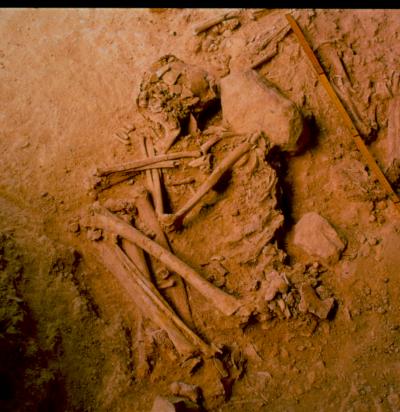
Present day Lebanese are descendants of Biblical Canaanites A new genome study of ancient remains from the Near East suggests that present day Lebanese people are direct descendants of the Biblical Canaanites. The research, which has been published in the American Journal of Human Genetics, sequenced the entire genomes of 4,000 year-old Canaanites who inhabited the region during the Bronze Age, and compared them to other ancient and present day populations. Despite the Canaanites creating the first alphabet and establishing colonies throughout the Mediterranean, historians and archaeologists only have a limited knowledge of them. They are mentioned several times in the Bible, as well as in ancient Greek and Phoenician texts, but experts know little about their genetic identity, who their ancestors were, and if they have any descendants today. The study by the researchers from the Wellcome Trust Sanger Institute determined that more than 90% of present Lebanese ancestry is likely to be from the Canaanites, with a small proportion coming from a different Eurasian population. The researchers estimate that new Eurasian people mixed with the Canaanite population about 2,200 to 3,800 years ago at a time when there were many conquests of the region from outside. Details about the Canaanites own ancestry have also been revealed. The study claims that they were a mixture of local people who settled in farming villages during the Neolithic period and eastern migrants who arrived in the area around 5,000 years ago. “For the first time we have genetic evidence for substantial continuity in the region, from the Bronze Age Canaanite population through to the present day.” Dr Claude Doumet-Serhal, co-author of the study and Director of the Sidon excavation site in Lebanon, said. “These results agree with the continuity seen by archaeologists. Collaborations between archaeologists and geneticists greatly enrich both fields of study and can answer questions about ancestry in ways that experts in neither field can answer alone.” Meanwhile, Dr. Chris Tyler-Smith, lead author from the Wellcome Trust Sanger Institute, said: “Genetic studies using ancient DNA can expand our understanding of history, and answer questions about the likely origins and descendants of enigmatic populations like the Canaanites, who left few written records themselves. “Now we would like to investigate the earlier and later genetic history of the Near East, and how it relates to the surrounding regions.” Bronze Age Iberia spared the brunt of Steppe invaders New DNA analysis of people who lived in the Iberian Peninsula during the Bronze Age has revealed that they received only minor genetic input from Steppe invaders, suggesting the Steppe migrations played less of a role in the cultural and genetic makeup of Iberian people than they did in populations elsewhere in Europe. Between the Middle Neolithic (4200-3500 BCE) and the Middle Bronze Age (1740-1430 BCE), Central, Northwestern and Northern Europe received a massive influx of people from the Steppe regions of Eastern Europe and Asia. Archaeological digs have gained insights into some of the impacts of these influxes on Iberia, in the form of changing cultural practices and funeral rituals, but the genetic effect has remained hitherto unexamined. The genomes of fourteen people who lived in Portugal in the Neolithic and Bronze Age were sequenced for the study, which has been published in the journal PLOS Genetics. These genomes were then compared with other ancient and modern genetic data, revealing only subtle changes between the Portuguese Neolithic and Bronze Age DNA, suggesting a minor genetic influence from the Steppe. Surprisingly, the changes were significantly more pronounced in paternal lineage. “It was surprising to observe such a striking Y chromosome discontinuity between the Neolithic and the Bronze Age, such as would be consistent with a predominantly male-mediated genetic influx” says first author Rui Martiniano. Height was also estimated from the samples, based on relevant DNA sequences, revealing that genetic input from Neolithic migrants decreased the height of Europeans, which subsequently increased steadily through later generations. By showing that migration into the Iberian Peninsula occurred on a much smaller scale than elsewhere in Europe, the study raises questions about the impact this had on language, culture and technology. For example, the fact that the Basque region of Spain speaks a pre-Indo-European language could be explained by these findings. The discovery also supports a theory which says Indo-European languages spread through Europe from the Steppe heartland. The study was carried out by Daniel Bradley and Rui Martiniano of Trinity College Dublin, in Ireland, and Ana Maria Silva of University of Coimbra, Portugal. New project aims to highlight importance of The Indian Army in the First World War In the UK, The Soldiers of Oxfordshire (SOFO) Museum and Oxford University’s History Faculty have received a £12,000 grant from the Arts & Humanities Research Council ‘Voices of War & Peace’ WWI Engagement Centre, for their project titled: The Indian Army in the First World War: An Oxfordshire & Buckinghamshire Perspective. The project aims to shed new light on the British Indian Army’s role in the war on the Eastern Front in Iraq through an outreach programme and touring exhibition. Sikhs, Muslims and Hindus of all ages in the local community are being called upon to engage with researchers by sharing stories, experiences and memorabilia. The touring exhibition will then showcase the findings in November. Photographs that have never been displayed before will explore the experiences of British and Indian soldiers in the conflict, as well as the Iraqi prisoners. Featured image: Archaeological remains of individual MC337 excavated from the site of Hipogeu de Monte Canelas I, Portugal, and analysed by the archaeologist Rui Parreira and the anthropologist Ana Maria Silva. Courtesy of Rui Parreira ]]>

Categories
Breaking News

History News of the Week – A Cover-up of a Nazi Plot, a Ghost Species, and a Rethink on Australia

Churchill Tried to Cover-up Nazi Royal Plot Newly released papers from the UK’s National Archives have revealed that Winston Churchill wanted to “destroy all traces” of telegrams about a Nazi plot to reinstate the abdicated King Edward VIII to the throne in return for his support during the Second World War. According to the Guardian, the telegrams reveal a plan to kidnap the Duke of Windsor – as the abdicated monarch was then known, and his wife Wallis Simpson, in Portugal in 1940. The Cabinet Office papers released by the National Archives reveal a 1953 appeal from Churchill to US president Dwight D Eisenhower and the French government to prevent publication of the telegrams for at least “10 to 20 years”, the Guardian reports. Churchill believed the telegrams were likely to give the misleading impression that the duke was in regular touch with German agents, and open to ideas which were disloyal. The prime minister’s appeal was made after he’d learnt a microfilm of the documents had fallen into the hands of the US State Department, and were being considered for inclusion in the US’ official history of the war. Although Churchill succeeded, and publication of the telegrams was delayed by a few years, they still eventually came to light in 1957. “Ghost” Species Points to Interbreeding Between Humans and Other Hominins Through studying saliva, scientists have discovered clues to a “ghost” species of archaic humans that may have contributed genetic material to the ancestors of people living in Sub-Saharan Africa today. The new findings add to growing evidence that sexual relationships between different species of archaic humans might not have been unusual, and in fact the norm. Previous research has already concluded that the ancestors of modern humans interbred with other hominin species, such as Neanderthals and Denisovans, in Asia and Europe. The latest research, published in the journal Molecular Biology and Evolution, adds to other recent genetic analyses indicating ancient Africans also interbred with other early hominins. “It seems that interbreeding between different early hominin species is not the exception — it’s the norm,” said Omer Gokcumen, PhD, an assistant professor of biological sciences in the University at Buffalo College of Arts and Sciences. “Our research traced the evolution of an important mucin protein called MUC7 that is found in saliva,” he said. “When we looked at the history of the gene that codes for the protein, we see the signature of archaic admixture in modern day Sub-Saharan African populations.” The MUC7 protein gives spit its slimy consistency, as well as binding to microbes, which may help the body get rid of disease-causing bacteria. The team of scientists were researching the purpose and origins of the protein by examining the gene in more than 2,500 human genomes, when they discovered that one group from Sub-Saharan Africa had a significantly different version to that found in other humans. “Based on our analysis, the most plausible explanation for this extreme variation is archaic introgression – the introduction of genetic material from a ‘ghost’ species of ancient hominins,” Gokcumen says. “This unknown human relative could be a species that has been discovered, such as a subspecies of Homo erectus, or an undiscovered hominin. We call it a ‘ghost’ species because we don’t have the fossils.” The study was led by Gokcumen and Stefan Ruhl, DDS, PhD, a professor of oral biology in UB’s School of Dental Medicine. Humans May Have Arrived in Australia 10,000 Years Earlier than Thought Newly discovered artefacts suggest humans arrived in Australia 10,000 years earlier than previously believed. Exactly when Australia was first settled by humans has long been shrouded in ambiguity, with recent studies seemingly pushing the approximate date further and further back in time. A team of researchers led by the University of Queensland, and including scientists from the University of Washington, found and dated artefacts from Madjedbebe, Northern Australia that suggest humans arrived there 65,000 years ago. A paper detailing the artefacts and the dating method has been published in the journal Nature. The new findings could have a significant impact on theories about the emergence of early humans and how they coexisted with their environment. In particular, according to the researchers it throws serious doubt on the idea that humans caused the extinction of megafauna such as giant kangaroos, wombats and tortoises. “Previously it was thought that humans arrived and hunted them out or disturbed their habits, leading to extinction, but these dates confirm that people arrived so far before that they wouldn’t be the central cause of the death of megafauna,” co-author and UW associate professor of anthropology Ben Marwick said. “It shifts the idea of humans charging into the landscape and killing off the megafauna. It moves toward a vision of humans moving in and coexisting, which is quite a different view of human evolution.” Among the artefacts discovered were ochre crayons and other pigments, as well as objects believed to be the world’s oldest edge-ground hatchets, potential evidence that these ancient humans ground seeds and processed plants. The artefacts were dated using radiocarbon dating and optical stimulated luminescence (OSL) – a technique used on minerals that can reveal a variety of things, such as the last time a grain of sand was exposed to sunlight – useful for determining when an artefact was buried. Featured Image courtesy Bundesarchiv, Bild 183-14059-0005 / CC-BY-SA 3.0 [CC BY-SA 3.0 de (http://creativecommons.org/licenses/by-sa/3.0/de/deed.en)], via Wikimedia Commons ]]>

Categories
Breaking News

History News of the Week – New Insights on the fate of the Rapa Nui

Easter Island mystery – ‘Ecocide’ didn’t lead to the Rapa Nui’s demise New scientific research is challenging the popular belief that the ancient inhabitants of Rapa Nui, aka Easter Island, were wiped out due to over exploitation of natural resources. It is often proposed that the Rapa Nui islanders cut down giant forests of palm trees on Easter Island, leaving them without wood to build canoes for fishing. The theory states that the absence of fish forced them to eat chickens, rats and agricultural crops. The island’s climate and infertile soil meant crop productivity started to decrease as the island’s inhabitants ate more and more. Conflict erupted as competition arose over the dwindling resources, and the population essentially wiped itself out through having destroyed the island’s ecosystem, a theory of their fate dubbed ‘ecocide’. New research from scientists at the University of Bristol, published in the American Journal of Physical Anthropology, is throwing the ecocide theory into question, showing through isotopic analysis of bones, soils and plant remains from Rapa Nui that the population had a diet of equal parts seafood and terrestrial food. Catrine Jarman, lead author of the study and PhD student at the University of Bristol’s Department of Anthropology and Archaeology, said: “We also discovered that agricultural crops consumed must have been planted in soils that were deliberately managed and manipulated to provide better yields. “Previous work has shown that plants of Rapa Nui were grown in rock mulch gardens and planting enclosures known as manavai. These had been carefully constructed and deliberately managed, and our study showed that the islanders may have added fertilisers.” Put simply, the new results suggest the Rapa Nui islanders adapted to the island’s harsh environmental conditions by managing their gardens and manipulating soils for better crops. Contrary to the idea of this ancient people recklessly wiping out the environment that had sustained them, it shows they demonstrated astute environmental awareness and stewardship to overcome nutrient poor soils. Jarman concluded: “This research highlights the unique and varied environmental adaptations that Pacific Islanders have shown through time. “Polynesians developed sustainable economies in ways that we are now better understanding through interdisciplinary research. Lessons from the past and from traditional island societies have value and relevance today.” Ancient Greek theatre had a wooden stage thousands of years ago An investigation by a Japanese architectural researcher suggests a high possibility that a wooden stage existed in the theater of the ancient Greek City of Messene during the Greek Classical period (ca. 369 BCE). During the Messene theatre’s 2007 excavation, a large storage room and three stone rows were discovered beside the stage by a group from the History of Western Architecture Laboratory of Kumamoto University. Similar features had also been discovered in Ancient Greek theatres at Megalopolis and Sparta. After studying the three sites in depth, a Kumamoto University researcher determined the stone rows remaining in the Megalopolis theater would have been used to set up wooden background picture panels, and the stage storage room would have likely been the custodian of such panels. In Hellenistic theatre, a one-story construction known as a proskenion was installed on the stage as background, behind which was another two story construction known as a skene that served as both a dressing room for actors and additional stage background. Traditionally, it’s been assumed that the skene and proskenion were wheeled around the stage as a single, large construction. The new research however, suggests they might have been moved separately. “A large force would have been required to move stage equipment as large as the proskenion and skene,” said Associate Professor Ryuichi Yoshitake who led the research project. “In previous studies, there was a theory that the proskenion and skene were simultaneously moved along just three stone rows, but I think it is more logical that the proskenion and skene each had their own set of two stone rows to move along. I came to this conclusion due to the positions of three stone rows and the fact that it would have been quite difficult to move the heavy proskenion and skene together using a single axle with three wooden wheels.” The findings have been published in the German language science journal Archäologischer Anzeiger. A new method to chart humans’ domestication of seeds Scientists from University College London have used synchrotron light to document for the first time the rate of evolution of seed coat thinning, a major mark of crop domestication, from archaeological remains. It marks the first-time scientists have been able to measure coat thickness throughout an entire seed. Published in the journal Science Reports, the authors present evidence for seed coat thinning between 2,000 BCE and 1,200 BCE in the legume horsegram (Macrotyloma uniflorum), a bean commonly eaten in southern India. “Seed coat thickness is a great indicator of domestication, as thinner coats will mean faster germination of a seed when it is watered,” explained Dorian Fuller, co-author on the paper. “But conventional methods of looking at the seed coat require breaking and destroying archaeological specimens.” “Being able to look at the seed coat thickness without breaking the sample is possible by other methods, but you can only look at a spot on the seed,” added Charlene Murphy, co-author on the paper. “The beamline at Diamond has allowed us to look at the entire seed, and has shown considerable variation within individual specimen’s seed coat thickness.” The team’s results suggest that domestication of horsegram took place during the second millennium BCE, with seed coats fairly fixed in thickness by the early centuries CE. The findings also suggest that the high-resolution X-ray computed tomography method could be used to study a variety of domesticated grains and pulses. Featured image: New isotopic analyses of bones, soils and plant remains from Rapa Nui, Chile (Easter Island) provide evidence contrary to the widely-held belief that the ancient civilization recklessly destroyed its environment. Courtesy of Terry Hunt ]]>

Categories
Breaking News

History News of the Week – Roman Construction Lessons

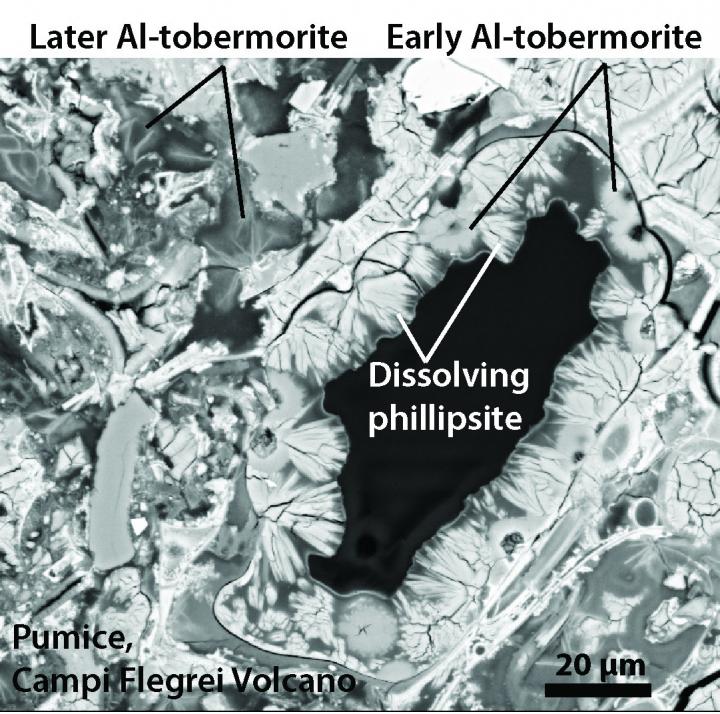
Building Lessons from the Romans New research is providing insights into how Roman harbours that are thousands of years old have withstood the ravages of time. Scientists from the US Department of Energy’s Lawrence Berkley National Lab used x-rays to study samples of Roman concrete – from an ancient pier and a breakwater, to learn more about the make-up of their mineral cements. Having previously found that crystals of aluminous tobermorite, a layered mineral, played a key role in strengthening the concrete as they grew in relict lime particles, the team’s latest research is piecing together how, when and where these crystals formed in the long history of the ancient structures. The research may ultimately influence modern construction techniques. It could lead to a wider adoption of concrete manufacturing processes with less environmental impact than those used for modern Portland cement, while the researchers also claim that an updated version of Roman concrete could be tested for applications such as seawalls and other ocean facing structures. The concrete could even be useful for safeguarding hazardous wastes. “At the ALS we map the mineral cement microstructures,” said Marie Jackson, a geology and geophysics research professor at the University of Utah who led the study. “We can identify the various minerals and the intriguingly complex sequences of crystallization at the micron scale.” “Contrary to the principles of modern cement-based concrete, the Romans created a rock-like concrete that thrives in open chemical exchange with seawater,” she continued. The research has been published in the journal American Mineralogist. Breakthrough in dating Viking fortress Archaeologists have made a breakthrough in dating the mysterious Viking fortress in Borgring, south of Copenhagen, which was first discovered in 2014. Ever since the fortress was first unearthed, a great deal of curiosity has surrounded the life, function and fate of the Viking structure. Researchers had speculated it dated to the tenth century, possibly to the reign of Harold Bluetooth (958 – 987), but it couldn’t be proven. In June of this year, archaeologists opened new trenches in a meadow next to the fortress, uncovering in situ some 2.5m beneath the surface a roughly 1m long piece of carved oak wood with drilled holes and several wooden pegs. A specialist in dendrochronological dating, Associate Professor Aoife Daly from the University of Copenhagen said the conserved part of the tree trunk was grown in the years 829-850 in the Danish area. “Since no splints have been preserved, it means that the tree has fallen at some point after year 966” Daly said in a press release. “The wood piece was found on top of a peat layer, and is fully preserved as it is completely water-logged. We now have a date of wood in the valley of Borgring, which corresponds to the dating from the other ring fortresses from Harold Bluetooth’s reign. With the dendrochronological dating, in conjunction with the traces of wear the piece has, it is likely that the piece ended as waste in the late 900s, possibly in the early 1000’s.” said research leader Jens Ulriksen. “In the coming week, the National Museum’s environmental archaeologists will take samples of wet depositions in the valley with the aim of uncovering how the layers have evolved from the earliest strata we have dated to the Bronze Age and over time,” said excavation leader Nanna Holm. The team hope that this will reveal exactly where the nearby river was when the fortress was built in the Viking Age. Funded by a grant from the A.P. Møller Foundation, the team included researchers from the Museum of South East Denmark and Aarhus University, as well as leading experts from the Environmental Archeology and Materials Research department at the Danish National Museum and the National Police Department’s Section for arson investigation. Poland seeks extradition of man accused of heading an SS unit Prosecutors in Poland are seeking the extradition of a 98-year-old man accused of being the former commander of an SS led unit that slaughtered civilians and burnt Polish villages to the ground during World War Two. Michael Karkoc has repeatedly denied the charges leveled against him, according to the Independent. Officials from the National Remembrance Institute in Warsaw accuse Karkoc of commanding a unit of Ukrainian nationalists responsible for mass killings in villages along Poland’s eastern border during World War II. The extradition request has been handed to the Polish embassy in Washington. According to the Independent, an inquiry by the Associated Press (AP) into Karkoc triggered the IPN investigation. The AP piece pointed out that Krakoc did not have a direct role in the atrocities, but was present and witness to them as a company leader. Whether Krakoc will be extradited will be governed by the EU – US extradition treaty. Krakoc is said to be suffering from Alzheimer’s disease, the Independent article states, raising questions over whether he’d be fit to stand trial. Earlier this year, his son Andriy Karkoc, fervently denied the charges leveled against his father. Image is from a scanning electron microscope, shows formations of aluminum tobermite crystals in a volcanic ash sample from the Campi Flegrei Volcano in Italy. X-ray experiments at Berkeley Lab’s Advanced Light Source have helped researchers to understand how these crystals develop over time to strengthen ancient Roman concrete structures. The scale bar at lower right represents 20 microns, or 20 millionths of a meter. Courtesy of University of Utah ]]>

Categories
Breaking News

History News of the Week – An Aztec Tower of Skulls

Aztec Tower of skulls discovered in Mexico A tower of human skulls discovered in Mexico could lead to a rewrite of Aztec history, according to the Independent. Following an eighteen-month investigation, archaeologists unearthed more than 675 skulls of men, women and children. It is believed the structure could be a part of the Huey Tzompantli, a legendary rack of bones described by the Conquistadors as they made their way through what is now Mexico. Traditionally, it was believed the Huey Tzompantli was made from the skulls of soldiers killed in inter-tribal conflicts before the arrival of Europeans to the New World. The discovery of female and child skulls in the tower has therefore perplexed archaeologists. “We were expecting just men, obviously young men, as warriors would be, and the thing about the women and children is that you’d think they wouldn’t be going to war,” Rodrigo Bolanos, a biological anthropologist investigating the find, told the Independent. “Something is happening that we have no record of, and this is really new, a first in the Huey Tzompantli,” he added. The structure lies close to Templo Mayor, a major Aztec temple which was used for human sacrifices. Archaeologists are continuing to investigate the site, and are still finding new remains as they try to work out the significance of the tower of skulls. The changing colour of the Statue of Liberty The Statue of Liberty is one of the most iconic symbols of New York City and the United States, but the 305-foot-tall statue hasn’t always been its distinct blue-green colour. When the copper statue, a gift to the US from the people of France, arrived in New York harbour in 1886, it was a reddish brown. The colour change through the years is largely down to a series of reactions as the Statue of Liberty’s copper skin has come into contact with chemicals in the air of New York Harbour. Now, a video from the American Chemical Society and PBS Digital shows the changes in the epic monument’s skin, from penny red through chocolate brown to its current liberty green. Available to view on Youtube, the video is part of the Reactions series, aiming to show the chemistry present in everyday life. Evidence of chemical dyeing from the time of David and Solomon 3,000-year-old cloth samples found in Israel’s Arave Desert are the earliest evidence of chemical dyeing ever found in the region, researchers say. According to a press release from American Friends of Tel Aviv University, the wool and linen pieces point to a sophisticated textile industry and reveal details about a deeply hierarchical society dependent on long-distance trade to support its infrastructure in the harsh desert. “This was clearly a formative period, with local kingdoms emerging and replacing Egyptian hegemony in Canaan,” Dr. Ben-Yosef, a co-author of a study in the journal PLOS ONE detailing the find, said. “These beautiful masterpieces of weaving and dyeing — the first evidence of industrial dyeing at the time, of wash-resistant color on textile — support the idea of a strong, hierarchical Edomite Kingdom in Timna at the time. “It is apparent that there was a dominant elite in this society that took pains to dress according to their ‘class,’ and had the means to engage in long-distance trade to transport these textiles — and other materials and resources — to the desert.” After radiocarbon dating the textile pieces and using gas chromatography to identify the cloth’s organic materials, the researchers found “red” molecules produced from the madder plant and “blue” molecules from the woad plant. “Both plants were known in antiquity as sources of organic dyes,” said Dr. Ben-Yosef. “We know that these plants were used to create elaborate costumes during the Roman period, more than a thousand years later. Now we have evidence in the region of an Edomite society wearing textiles produced the same way, versus an earlier ‘primitive’ smearing of color on fabric.” “We can make many inferences according to this discovery,” Dr. Ben-Yosef continued. “To force a large group of people to work in dangerous mines in the desert, you need a strong ruling party — an elite that probably wore exquisite clothes to further distinguish themselves. The smelters, working in furnaces, were considered ‘magicians’ or even priests, and they probably wore fine clothing too. They represented the highest level of society, managing a sensitive and complex process to produce copper from rock.” Fascinatingly, the artefacts provide evidence of long distance trade in the region. The plants used to create the dyes most likely originated in the Mediterranean area. The dyeing process itself meanwhile, required specialist crafts people, an industry that could not have subsisted in the desert. “If Jerusalem was indeed opulent in the time of King Solomon, and the Temple covered in copper, we can assume a link to that kingdom”, explained Ben-Yosef. Image by Clara Amit, courtesy of the Israeli Antiquities Authority.]]>