Categories
Breaking News

Pharaoh Depiction Discovered During University Class

One of the fascinating aspects of Hatshepsut is the change in how she was depicted in the monuments she constructed. In the early years she is depicted as feminine in dress and appearance, but as her reign went on she was shown in a more and more masculine fashion. Eventually her depictions show a full beard. Tragically, it seems her grandson, Amenhotep II, defaced many of her monuments and began to claim her accomplishments as his own. One of her carvings was chiselled away from a temple wall and eventually made it to Swansea University, where it was placed in the archives and forgotten about for many years. As part of their undergraduate degree, Egyptology students are given the opportunity to handle historical artefact from the large archival collection. It was while discussing artefacts in this class that the lecturer, Dr Ken Griffin, saw the carvings and immediately recognised that it was more interesting than the original archivists had thought. Dr Griffin is an expert in his subject, and has visited ancient Egyptian sites many times. He recognised the carving styles and techniques as being unique to the temple of Hatshepsut. In particular the hair and fan are carved in a very specific way. Curiously the top part of the image appears to be a fake, perhaps made by an art dealer. The stone itself seems to be authentic though, and there is a mysterious figure of a head carved on the back. Students from the class were understandably excited to be part of the rediscovery of this fragment of history. This is not the first time objects related to Hapshepsut have been found hidden in archives. A miniature hoe and rocker belonging to the pharaoh were discovered in Canada in 2016. As were stone blocks depicting her image on Elephantine Island.]]>

Categories
Breaking News

A St. Patrick's Day Shock – The History News of the Week

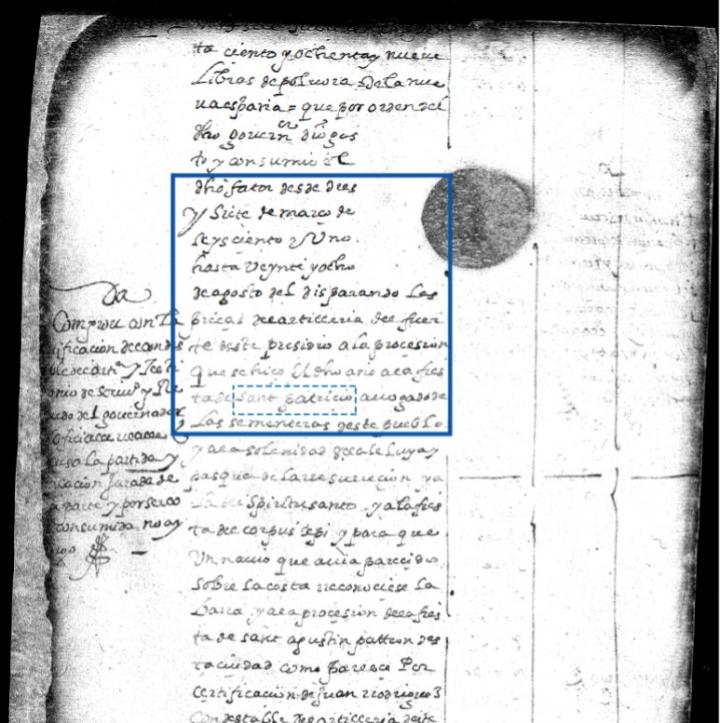
St. Patrick’s Day Celebrations had an Unlikely Origin Every 17th March cities around the globe are draped in green to celebrate St. Patrick’s Day. New research is claiming that some of the most recognisable parts of the festivities might have originated in an unexpected place. The feast of St. Patrick has been celebrated in Ireland since the ninth century. However, many of the traditions now associated with the celebration are thought to have had their beginnings with Irish immigrants to the US in the eighteenth century. Traditionally, it is thought that St. Patrick’s Day festivities such as parades and fireworks originated in north eastern US cities such as Boston and New York. However, the recently discovered evidence suggests that many of these celebrations were taking place a century before, in Florida. The basis of the new claim is gunpowder expenditures lists from St. Augustine, Florida, dated to 1600-1601. According to historians from the University of South Florida, one such list has an entry stating that in March 1600, St. Augustine’s residents gathered and processed through the streets in honour of St. Patrick, with cannon firing from a nearby wooden fort in tribute of the saint. “It was certainly a surprise,” said historian J. Michael Francis, PhD, University of South Florida-St. Petersburg, who uncovered the document. “It did not register the first time I saw the name “San Patricio,” the Spanish name for St. Patrick. After a few seconds it actually hit me that there was a St. Patrick’s Day parade/procession in St. Augustine in 1601.” The shocks didn’t end with the revelation that the residents of St. Augustine were celebrating St. Patrick’s Day with cannon and processions as early as 1600. “Even more surprising was that the document identified St. Patrick as the patron saint of the city’s maize fields,” Dr. Francis continued, in a statement from the University of South Florida. The surprising discovery was made while Dr. Francis was studying documents connected to St. Augustine’s imperial Spanish history. Neanderthals Were Compassionate Neanderthals were capable of ‘compassionate and knowledgeable health care’, according to new research from the University of York. The findings form part of a growing challenge to the image of Neanderthals as nasty, brutish and uncaring. The authors of the new study claim that in fact Neanderthals were able to deliver highly effective responses to injury and illness. [caption id="attachment_8563" align="alignnone" width="1024"]1024px-Gibraltar_Skull_(1)a Gibraltar 1 Neanderthal skull[/caption] Image credit: Jononmac46 (File:Gibraltar_Skull_(1).JPG) [CC BY-SA 3.0 (https://creativecommons.org/licenses/by-sa/3.0)], via Wikimedia Commons It has been shown before that Neanderthals provided care for their injured, but it was assumed that this was largely done out of self-interest. “Our findings suggest Neanderthals didn’t think in terms of whether others might repay their efforts, they just responded to their feelings about seeing their loved ones suffering,” said study lead author Dr. Penny Spikins, a senior lecturer from the University of York. Archaeologists have previously discovered remains of Neanderthals who’d clearly suffered serious injuries long before their deaths. The study claims that these injuries would have required monitoring, massage, fever management and hygiene care. The remains of one male Neanderthal analysed in the study had a catalogue of poor health, including a degenerative disease of the spine and shoulders. This disease would have left him weak and vulnerable in the final year of his life, the authors state. Nevertheless, his articulated remains were carefully buried, suggesting he’d remained part of the group despite being a potential burden, right up until his death. “We argue that the social significance of the broader pattern of healthcare has been overlooked and interpretations of a limited or calculated response to healthcare have been influenced by preconceptions of Neanderthals as being ‘different’ and even brutish,” Dr. Spikins explained. “However, a detailed consideration of the evidence in its social and cultural context reveals a different picture. The very similarity of Neanderthal healthcare to that of later periods has important implications. We argue that organised, knowledgeable and caring healthcare is not unique to our species but rather has a long evolutionary history.” The study has been published in the journal World Archaeology. Remains of Iron Age Feast Discovered Evidence of a huge Iron Age feast have been discovered on the Orkney Islands, off the coast of Scotland, according to The Scotsman. Archaeologists from the University of the Highlands and Islands (UHI) believe more than 10,000 animals were cooked and eaten in a massive cliff top gathering above Windwick Bay, South Ronaldsay, around 1,700 years ago. The Scotsman reports that a range of jewellery fragments and tools have been found at the site, which has been dated by radiocarbon tests on a nearby midden. “These numbers tell you about the scale of the feast and the largesse of being able to have that amount of food in circulation for what appears to be a short-lived event,” Martin Carruthers, an Iron Age expert from UHI told The Scotsman. “The feast is doing two things. It’s probably celebrating the successful conclusion of the making of a big batch of jewellery.” “The second point is the feast is pretty enormous and it is it probably the arena where pins and brooches are being handed out to individuals within the community.” Feature image: Gun expenditures log explains the procession through the streets of St. Augustine, Florida and St. Patrick as the ‘protector of the fields.’ Credit: AGI Contaduria 950 ]]>

Categories
Breaking News

Amelia Earhart’s Bones Verified – The History News of the Week

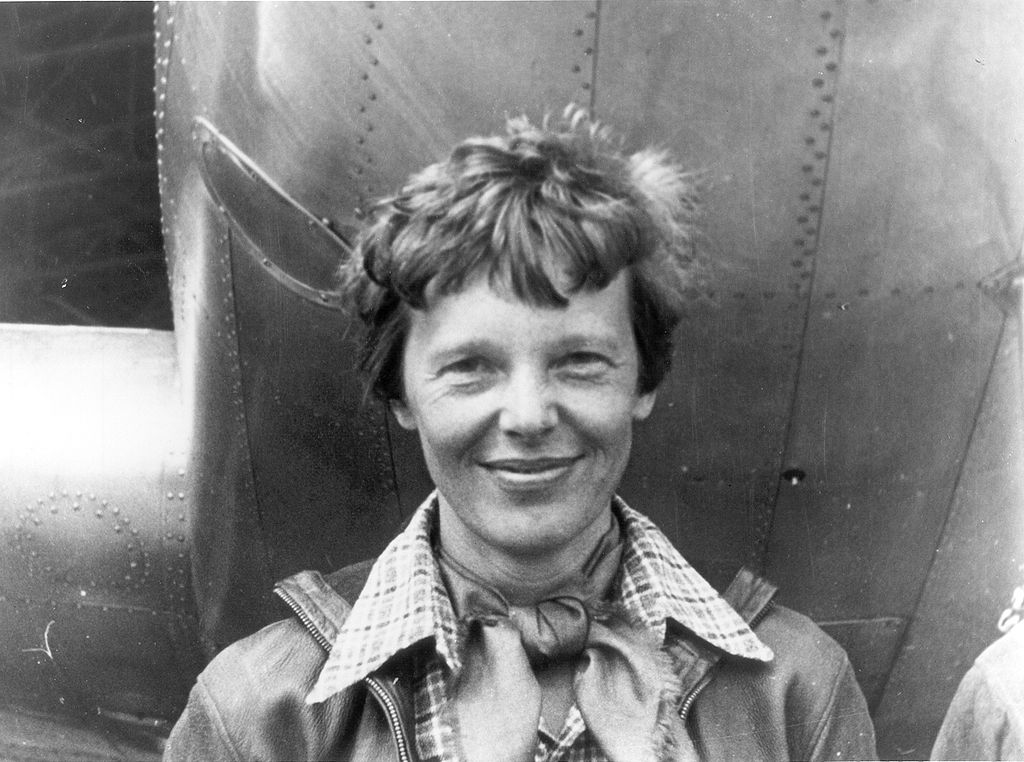
Research Confirms Remains are Amelia Earhart’s Forensic research has confirmed that bones found on a South Pacific Island are likely those of Amelia Earhart. In the 1940s, physician D.W. Hoodless performed bone measurements on the remains found on the island, and concluded they belonged to a man. Now, professor Richard Jantz from University of Tennessee has re-examined seven of the bone measurements performed by Hoodless. Using modern quantitative techniques, he concludes that Hoodless was incorrect in determining the remains to be a man’s. Significantly, Jantz’s results show that the remains are more similar to Earhart’s than to 99% of individuals in a large reference sample. The bones were also compared to the bone lengths of Earhart’s. To achieve this, her humerus and radius lengths were determined through studying a photo that included a scalable object. “Until definitive evidence is presented that the remains are not those of Amelia Earhart, the most convincing argument is that they are hers,” Jantz writes in a study, published in the journal Forensic Anthropology. Famous for being the first female aviator to fly solo across the Atlantic, Earhart and her navigator Fred Noonan mysteriously disappeared in 1937 while flying across the Pacific. Many assume her aircraft crashed into the ocean, yet some experts, such as Jantz, argue she died as a castaway on the island of Nikumaroro. Nicotine Extracted From Ancient Teeth Researchers have shown for the first time that nicotine residue can be extracted from the plaque of ancient tobacco users. The pioneering research could allow archaeologists to trace the history of tobacco consumption far back into prehistory. “The ability to identify nicotine and other plant-based drugs in ancient dental plaque could help us answer longstanding questions about the consumption of intoxicants by ancient humans,” said Shannon Tushingham, a WSU assistant professor of anthropology and co-author of the new study. “For example, it could help us determine whether all members of society used tobacco, or only adults, or only males or females.” Until now, the history of tobacco use in the Americas has been traced through the presence of pipes, charred tobacco seeds and the analysis of hair and fecal matter. However, these items are sparse in the archaeological record and can’t be tied to specific individuals. These problems don’t exist with dental matter, which preserves a wide range of substances and can be easily connected to an individual. Tushingham, along with colleagues from WSU and the University of California Davis, collaborated with members of the Ohlone tribe in the San Francisco Bay to extract plaque from the teeth of eight individuals buried between 6,000 and 300 years ago. After the plaque had been extracted with regular, everyday dental picks, it was sent to WSU labs. There, it was analysed using liquid chromatography-mass spectrometry to test for samples of nicotine and other plant-based drugs such as caffeine. Two of the samples tested positive for nicotine, showing for the first time that the drug can survive in detectable amounts in ancient plaque. One of the most interesting findings was the presence of nicotine in the plaque of an older woman. “While we can’t make any broad conclusions with this single case, her age, sex, and use of tobacco is intriguing,” Jelmer Eerkens, an anthropologist from UC Davis who worked on the study, said. “She was probably past child-bearing age, and likely a grandmother. This supports recent research suggesting that younger adult women in traditional societies avoid plant toxins like nicotine to protect infants from harmful biochemicals, but that older women can consume these intoxicants as needed or desired.” The study has been published in the Journal of Archaeological Science: Reports. Yokuts Woman Smoking Pipe Caption: This is a 1945 picture of a Yokuts Native American woman smoking a pipe. Credit: Clifford Relander New Insights into Early Pacific Settlers Researchers from the Australian National University claim to have produced ‘the most comprehensive study ever’ into the origins of people on the Pacific island of Vanuatu. Vanuatu is considered crucial to the history of migration and population of the Pacific, acting as a gateway from Asia to the ocean’s remotest islands. The results, published across two papers, confirm that the first people on Vanuatu were of the Lapita culture and arrived 3,000 years ago from South East Asia. This was followed by Papuan arrivals from the island of New Britain, part of what is now Papua New Guinea. Archaeological evidence was combined with analysis of ancient and modern DNA to make the conclusions. Dr Stuart Bedford, of the ANU School of Culture History and Language, highlighted the unique insights the study has made. “We’ve been able to track a complete genetic timeline at regular intervals starting with the first inhabitants right through to modern times,” Dr Bedford said. “The very first generation of people into Vanuatu are primarily Asian, then very quickly you see a series of migrations of Papuan people from the Bismarck Archipelago who had been living in the region for around 50,000 years. “That trend continues over the next 3,000 years right up until today as the genetic ancestry was mostly replaced by that of Papuan migrants. The people of Vanuatu today, like many peoples of the Pacific, can claim a dual heritage.” According to Professor Matthew Spriggs, a co-researcher on the study, the findings show where the Papuan migration came from. “They came from New Britain, a Papuan island just east of New Guinea,” Professor Spriggs said. “This makes sense. New Britain has some of the earliest known Lapita sites. “So what we think happened is that Lapita people after arriving in New Britain moved fairly directly on to Vanuatu and encouraged some of the local populations already in place on New Britain to move there as well.” The influence of the Lapita culture can still be felt in the languages of the region. “The Lapita people who originally came to Vanuatu from South East Asia spoke a form of Austronesian,” Dr Bedford said. “That language persisted and over 120 descendant languages continue to be spoken today, making Vanuatu the most linguistically diverse place on Earth per capita. “This is a unique case, where a population’s genetic ancestry was replaced but its languages continued.” ]]>