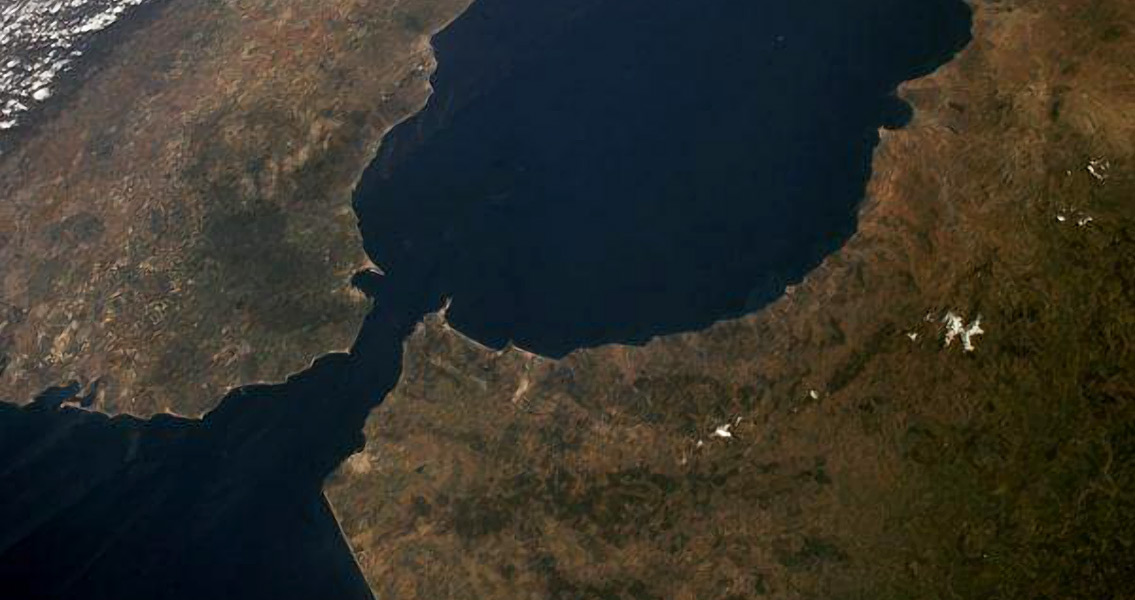
Tectonophysics, can be found online at Science Direct Image courtesy of NASA ]]>

Live Science. Since 2012, three amazingly intricate and well-preserved mosaics which once decorated the floor of the older synagogue have been found at the Huqoq site during excavations led by Jodi Magness from the University of North Carolina at Chapel Hill along with Shua Kisilevitz from the Israel Antiquities Authority. The mosaics have since been removed for conservation. ]]>

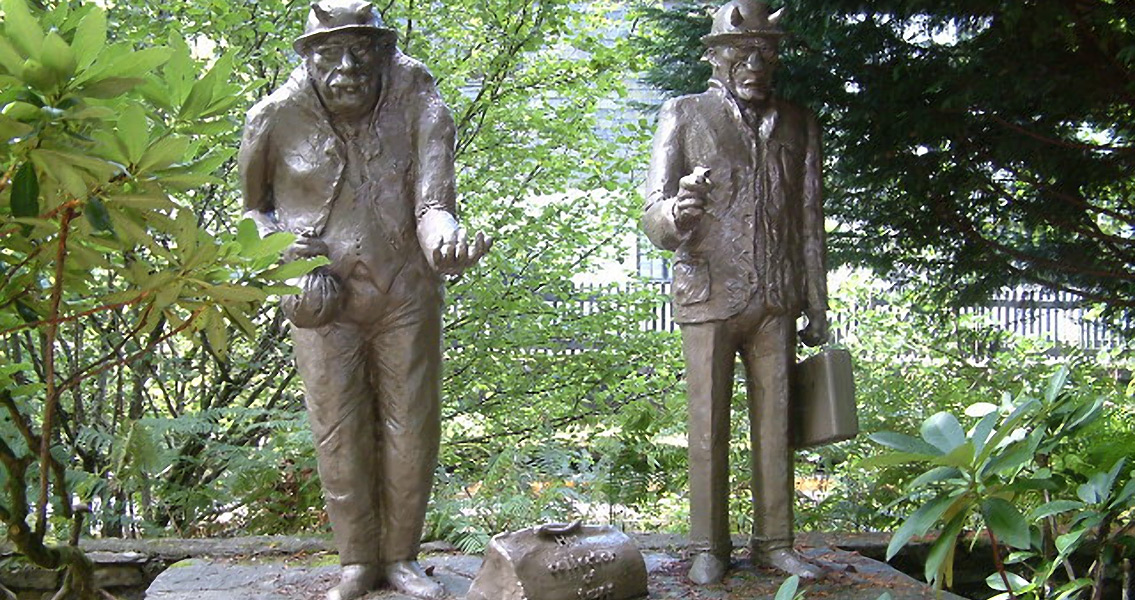
The Great Wall of China Trump’s proposed wall would pale in comparison to the impressive Great Wall of China, which at its peak measured 13,170.7 miles (21,196.18 km) in length. Even today, what remains of the wall (5,500 miles, 8,851 km) is more than twice the length of the Mexican-US border. Consisting of a series of fortifications and connected walls, the Great Wall of China was first conceived in the third century BCE by Emperor Qin Shi Huang as a means of protecting the Chinese Empire from incursion by barbarian nomads. The most recognisable and well preserved section of the Great Wall was built centuries after the project began, during the Ming Dynasty from the fourteenth to the seventeenth century CE. Although still a powerful symbol of Chinese culture, the Great Wall of China ultimately failed to prevent invaders entering China. In the seventeenth century, Manchus from central and southern Manchuria broke through the wall, attacking Beijing and bringing about the end of the Ming Dynasty and the rise of the Qing Dynasty. Nevertheless, the wall still remains one of the most impressive architectural feats in history. Hadrian’s Wall For nearly 300 years Hadrian’s Wall marked the north-west frontier of the Roman Empire, affording it enormous symbolic as well as defensive importance. The wall’s construction was ordered by Roman Emperor Hadrian on his visit to Britain in 122 CE. At its peak it stretched over 73 miles, crossing northern Britain. The wall had a selection of small castles and towers at regular intervals along its length, meaning there were observation points every third of a mile. Much like the Great Wall of China, Hadrian’s Wall was built as a defensive measure to keep out nomadic tribes, in this instance the Picts of Scotland. In 180 CE, during a major war, a tribe from the north managed to cross over the wall, attacking a fort and killing the Roman general and troops stationed there. The attack likely led to changes in how the wall was manned and its defensive system, but it remained a prominent military installation throughout the Roman occupation of Britain. Following the Roman withdrawal in the fifth century however, Hadrian’s wall started to fall into disrepair, the stones used in its construction being quarried to build castles, churches and houses. The Berlin Wall The most short lived of the three walls, but perhaps the most traumatic for those affected by it. The Berlin Wall was a symbol of the Cold War, and a Europe divided into East and West. Measuring 87 miles long and around 3 metres high, it came to embody a huge cultural divide. In August 1961 the Communist Government of the German Democratic Republic started work on the barbed wire and concrete Antifascistischer Schutzwall (antifascist bulwark) between East and West Berlin. The GDR government claimed the wall was built to prevent ‘western fascists’ attempting to infiltrate East Germany’s socialist society, but in large part its creation was intended to stop the stream of migration west out of the Soviet Union. When completed, the wall embodied the separation of East and West Berlin. Travel between the two sides became virtually impossible, except for diplomats and officials who went through designated checkpoints – the most famous of which was Checkpoint Charlie. On 9th November 1989 the GDR announced that Berliners could once again cross the wall whenever they pleased. An ecstatic atmosphere descended on the city, citizens rushed to climb over the wall, or took pickaxes to it in an attempt to bring it down. 138 people were killed attempting to cross the Berlin Wall over the 28 years of its existence, either by being shot or through accidents associated with their attempts to evade the authorities. The three walls mentioned served their purposes with varying levels of success. Beyond their intended practical uses however, they are so well remembered for the symbolic barriers they represented. It is this that can perhaps provide the biggest insight into the proposed US-Mexico border wall.]]>
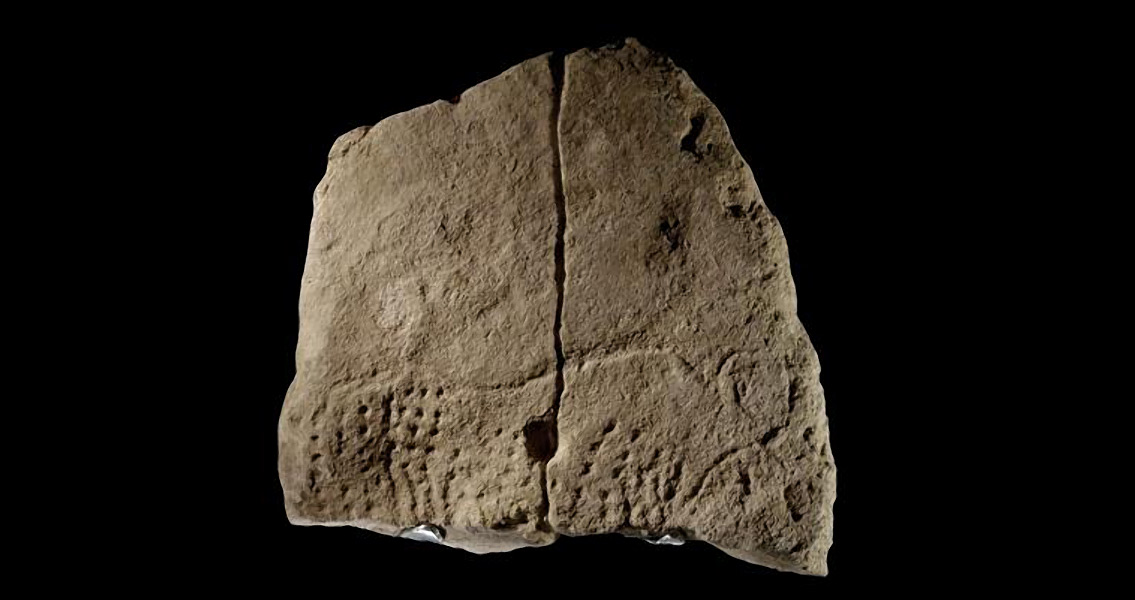
Quartenary International. “The discovery sheds new light on regional patterning of art and ornamentation across Europe at a time when the first modern humans to enter Europe dispersed westward and northward across the continent,” said White, in a press release from NYU. Depicting a complicated image involving an aurochs surrounded by a row of dots, the remarkable stone slab was excavated from Abri Blanchard. The site had undergone excavations in the early twentieth century, but starting in 2011 White and his team began a methodical exploration of the remaining deposits. Abri Blanchard is home to artefacts from the Aurignacian culture, a modern human tool making and artistic culture of Upper Paleolithic Europe. A massive diversification and specialisation in tools during the time of the Aurignacian culture (between 43,000 and 38,000 years ago) facilitated its distinctive artwork. In particular, the invention of an engraving tool known as the burin made remarkable rock engravings possible. Although anatomically modern humans first appeared around 100,000 years ago, the Aurignacian culture is widely considered to represent the first modern humans to settle in Europe. Also located in the Vézère Valley, not far from Abri Blanchard, are the Cave Paintings of Lascaux. One of the most famous archeological sites in the world, the Paleolithic cave paintings of Lascaux are remarkable for both their size and the quality of their preservation. Believed to date to sometime around 20,000 years ago, they are among the oldest known cave paintings in existence. White believes that Aurignacian art, such as the stone slab found at the Vézère Valley site, allows us to see into the lives and minds of its creators, and the societies they inhabited. “Following their arrival from Africa, groups of modern humans settled into western and Central Europe, showing a broad commonality in graphic expression against which more regionalized characteristics stand out,” he explained in the NYU press release. “This pattern fits well with social geography models that see art and personal ornamentation as markers of social identity at regional, group, and individual levels.” The oldest known engravings to have been created by a human ancestor date to around 500,000 years ago. A series of zig-zags found on a shell in Java, these markings likely made by Homo erectus constitute the oldest examples of decorative art yet discovered. Abri Blanchard has long been recognised as one of the oldest sites in Europe bearing artefacts of modern human art and symbolism. Since its discovery at the turn of the last century, hundreds of ancient items have been found there, including personal ornaments such as animal teeth, ivory and soapstone beads, pierced shells, paintings and engravings. Image courtesy of Musée national de Préhistoire collections – photo MNP – Ph. Jugie ]]>
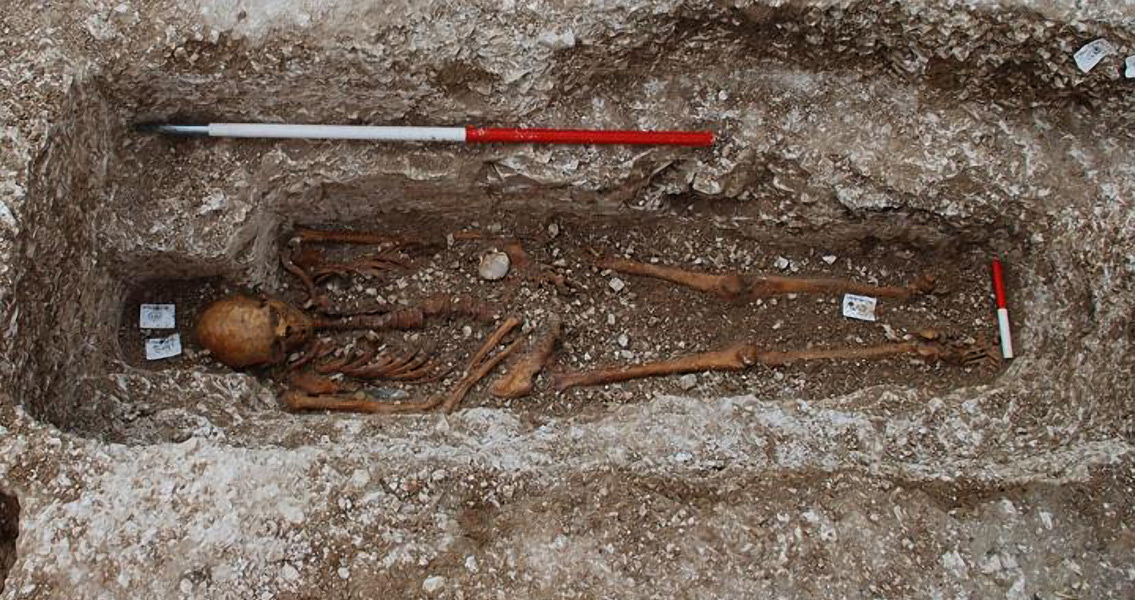
Mycobacterium leprae or Mycobacterium lepromatosis, it has affected human societies across the world for millennia. Reaching epidemic levels in the Middle Ages, leprosy continues to infect people to this day. The organisms responsible for leprosy are close relatives of M. tuberculosis, the bacteria that causes tuberculosis. Scientists theorise that leprosy enters the body through either breaks in the skin or through the mucous membranes of the nose, a theory supported by the fact that the disease tends to get transmitted after prolonged periods of close contact. Ultimately however, scientists are still unsure of the exact mechanism behind leprosy’s transmission. A multidisciplinary team investigated the strain of leprosy found in a leprosy hospital cemetery in Winchester, UK. Extensive tests were performed on a skeleton excavated from the cemetery, including genotyping, radiocarbon dating, biomolecular analysis, osteology, strontium, and oxygen isotopic analyses, as well as host of archaeological tests. Radiocarbon dating revealed that the remains studied had been buried in either the late eleventh or early twelfth century. The team believe that the individual was likely a wealthy religious pilgrim from outside the UK. As well as analysing the single skeleton in great detail, the team found that 86% of all remains sampled at the burial site displayed skeletal lesions indicative of leprosy. Simon Roffey and Katie Tucker, of the University of Winchester UK, and Michael Taylor of the University of Surrey, UK, along with their colleagues, determined that the M.leprae genome had not changed significantly since the terrible epidemic that ravaged the Middle Ages. The finding is hugely significant, suggesting that the lack of variation in the genome has allowed humans to build up a resistance to leprosy, leading to the substantial decline in the disease’s transmission. The strain of M.leprae sampled from the skeleton was found to belong to the 2F lineage, a strain which today is associated with leprosy cases in South-Central and Western Asia. Although most of the M.leprae strains found at the Winchester cemetery fall into the 2F lineage, the sample presented in the paper was genetically distinct from these isolates. It remains unclear exactly where or when the pilgrim actually contacted leprosy. Nevertheless, the team’s findings have the potential to greatly enhance our understanding of the transmission of leprosy in the past, and the present. “These findings confirm the benefits of a multidisciplinary approach which allows investigation of the wider relationship between leprosy, medieval pilgrimage and M. leprae transmission.” the authors write in the study, published in open access journal PLOS Neglected Tropical Diseases. Image courtesy of Roffey, S. and colleagues, PLOS Neglected Tropical Diseases ]]>
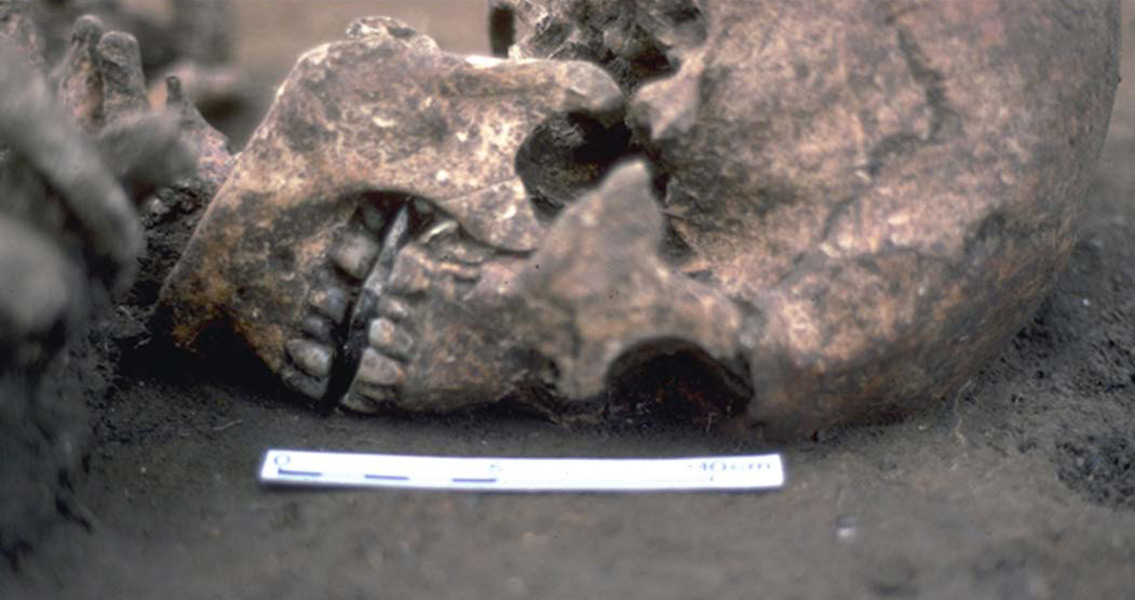
The Guardian. Archaeologists that studied the burial say that the man could have been buried in such a manner to prevent him from rising from the dead and terrorizing the living. Discovered near the river Nene at Stanwick, the original site dates to either the third or fourth century, when the region would have been dominated by small farming communities. Originally discovered in 1991, it was only recently that research methods had progressed to the point where specialist archaeologists and other experts from Historic England were able to uncover the complex mysteries of the burial. The mutilation in question is thought to have been unique among Romano-British remains, according to human skeletal biologist Simon Mays, who worked with Historic England to study the burial. Never before has such a practice been identified in the archaeological record, Mays added, remarking that the position of the body would have been consistent with an individual who was either a threat to a community – or just seen as distressingly, perhaps dangerously, odd. It’s difficult to pinpoint the age of the man when he died thanks to the lack of precision in modern methods. However, scientists feel that, based on the evidence they have gathered, the man is likely to have been at least in his thirties when he died – and that the fact that his tongue was severed could have been the result of a self-inflicted wound due to poor mental health. Another more sinister theory is that the loss of his tongue might have been meted out as punishment for some crime. There are ancient Germanic laws that prescribed the removal of the tongue as a punishment for malicious slander or bearing false witness, Mays said. There’s no known Roman laws to that effect, but researchers are looking into the possibility as the knowledge modern historians have about Romano-British practices are not nearly as complete as they could be. May said that the team latched on to the idea of the man’s tongue being amputated by looking at other Romano-British burials where missing body parts were replaced by foreign objects at appropriate anatomical locations. There’s around less than a dozen such identified instances, the majority of which are decapitations where a pot or a stone was placed in the grave in lieu of a head, the burial expert explained. With the stone found in the front part of the mouth, where the tongue would have been, the researchers felt it was a safe bet to conclude it had been placed there to take the place of a missing tongue. Corroborating evidence regarding the loss of the man’s tongue prior to his death came in the form of traces of bacterial infection in the bones of the mouth typical of the type of infection one would have received in the third or fourth century after having their tongue removed. Image courtesy of Historic England]]>