Categories
Breaking News

History News of the Week – Ancient Egyptian Prosthesis Studied

New insights into remarkable Ancient Egyptian prosthesis Egyptologists from the University of Basel have been examining a 3,000-year-old prosthetic big toe from Ancient Egypt. Discovered in a female burial from the necropolis of Sheikh Abd el-Qurna close to Luxor, the prosthesis had been studied before, but the Swiss team have now examined it using the most cutting-edge techniques, such as modern microscopy, X-ray technology and computer tomography. It’s been revealed that the remarkable artefact was refitted several times to its owner, a priest’s daughter. The researchers have also reclassified the materials used in the wooden toe’s construction, and determined how the prosthesis was made and utilised. The new analysis has revealed the skill involved in the toe’s construction, particularly in the mobility the prosthesis would have offered, and the intricately designed belt strap which would have fastened it to its wearer. Together with experts from ETH Zurich, the scientists from Basel are assessing the natural and man-made structures of the tomb and its surroundings. According to a statement from the University: “The specialists are currently developing geometric precise digital elevation, landscape, and architecture models for this area. These will then be combined to an archaeological and geological 3-D map that will illustrate the morphology of the terrain as well as the investigated subterranean structures. On that basis, the researchers want to reconstruct and simulate the development of the cemetery and its use phases.” Water Bottles used by Native Americans could have been poisonous A new study suggests that the water bottles manufactured by Native Californian Americans could have been detrimental to their health. Scientists recreated the Native American water bottles to gain insights into the manufacturing process. In particular, they wanted to see if bitumen, a material derived from petroleum, could have had an impact on the indigenous Californians’ health. The team made two types of ancient water bottle using traditional Native American methods. One of the bottles was lined with soft bitumen, known as ‘malak’, which washes ashore after seeping through the ocean floor, and one was lined with hard bitumen, known as ‘woqo’, typically found in land deposits. “In accordance with historical records, we used a Monterey chert flake and a bird bone awl to weave baskets from soft rush plants from California. We sourced abalone shells to use as mixing dish and heated the bitumen with metavolcanic pebbles before applying to the basket by hand using a sea mammal bone,” said Kevin Smith, co-author of the study and a PhD student from the University of California. Bitumen consists of polycyclic aromatic hydrocarbons (PAHs), which are linked with health problems such as cancer, hormone imbalances, organ damage and developmental impairments. After studying the recreated bottles, the scientists behind the study found that although storing water in the bitumen lined bottles didn’t cause dangerous levels of PAHs to leech out – even after two months, olive oil quickly became contaminated, suggesting the storage of fatty foods could have been a health risk. Dr Sabrina Sholts, lead author of the study from the Smithsonian Institution’s National Museum of Natural History, said: “To our knowledge, this is the first time that experimental archaeology has been used to quantify PAH exposure in an ancient population. We believe that our research provides a deeper temporal context for understanding health impacts and evolutionary changes related to harmful chemical exposure caused by human technology.” The study has been published in the journal Environmental Health. Nazi artefacts found in Argentina could be fake On 20th June, the New York Post reported a “a trove of original Nazi artefacts” had been discovered in Argentina. Among the objects were an original bas relief of Hitler and a medical device used for measuring heads. The collection of 75 objects was found hidden in an art collector’s home, just outside the capital city of Buenos Aires. According to the Associated Press, the objects are believed to have belonged to high-ranking Nazis in Germany. “Our first investigations indicate that these are original pieces,” Argentine Security Minister Patricia Bullrich told the Associated Press On 24th June, the Washington Examiner reported that the objects could be fake, citing a leading auctioneer of Nazi artefacts, Bill Panagopulos, president of Maryland-based Alexander Historical Auctions. Panagopulos said the items were ‘obvious replicas’, after seeing video footage and pictures of the artefacts. The art collector whose home the objects were discovered in is still under investigation. Image courtesy of University of Basel, LHTT. Image: Matja� Kačičnik ]]>

Categories
Breaking News

History News of the Week: Did the Nazis Tolerate Lesbians?

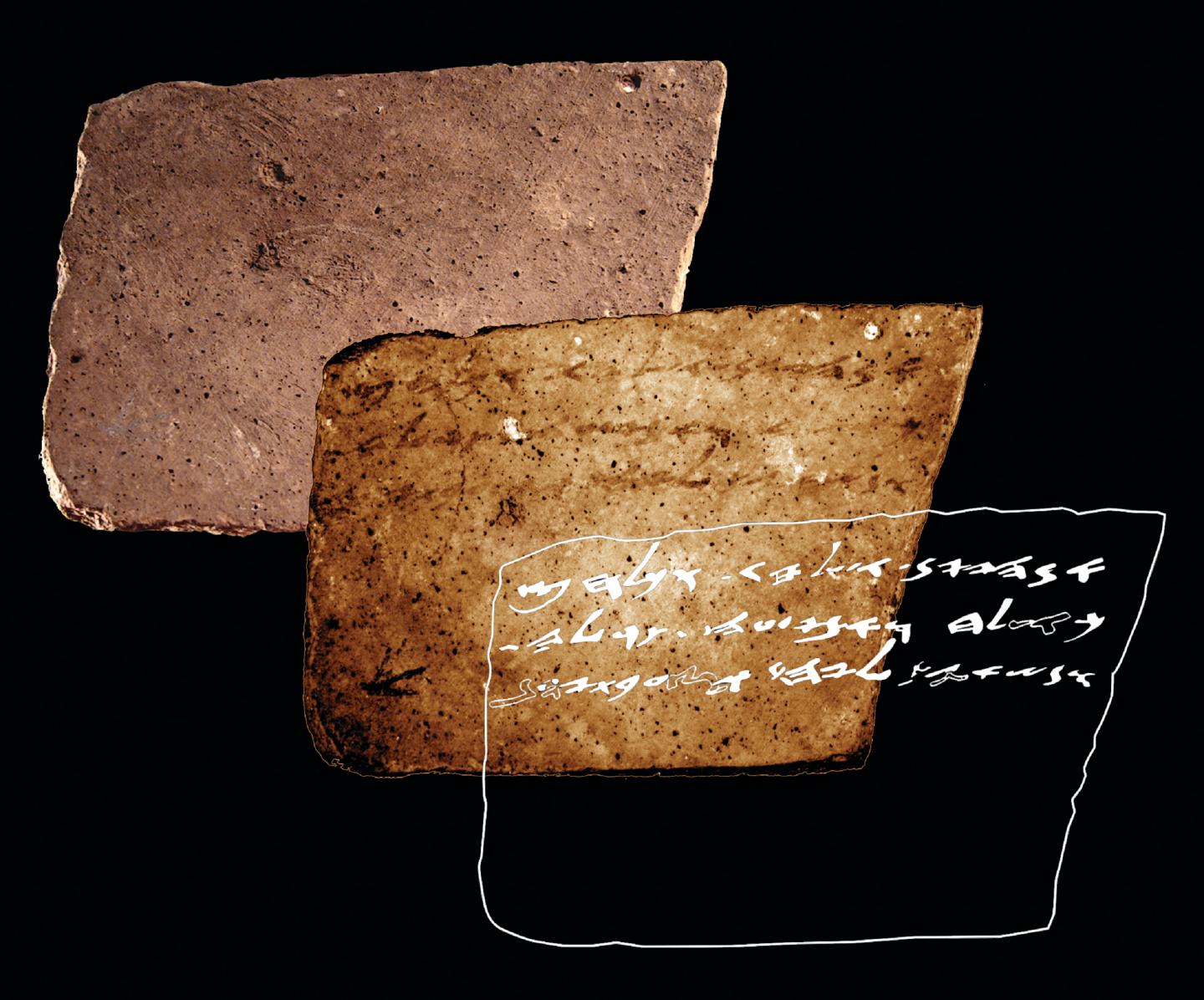
Limited toleration of Lesbianism in Nazi Germany A new study claims that the Nazi regime, infamous for its discrimination and oppression, had some toleration for Lesbians. Samuel Clowes Huneke, a doctoral candidate in history at Standford University in the USA, analysed police examination files from the 1940s related to alleged violations of same sex relations laws. His findings have been published in the Journal of Contemporary History. “These files add a new level of nuance to existing scholarship,” Huneke said in a statement from Stanford. “They hint at a more normal existence that was the daily experience of some lesbians in the Third Reich.” The Nazi regime’s persecution of homosexual men is well known, with homosexual acts between men explicitly criminalised. Somewhere between 5,000 and 15,000 alleged homosexual men were incarcerated in concentration camps under the Nazi regime, with up to 60% of them dying in the camps. The experience of homosexual women in Nazi Germany however, is much more ambiguous, especially because women were excluded from the laws that made homosexuality illegal among men. Huneke argues that Nazi officials didn’t view lesbians as a threat, as women were banned from most spheres of politics and public life “In light of both the fearsome persecution of homosexual men and scholarship that places it in the context of National Socialist pronatalism, the regime’s seeming lack of interest in female homosexuality is startling, for in other respects the government placed considerable burdens on women,” writes Huneke, who is working on a dissertation about the history of homosexuality in postwar Germany. Files Huneke discovered in 2015 show that Nazi authorities investigated eight women in Berlin, all denounced for violating same sex laws. In each case, authorities determined the women could not be prosecuted for same-sex relations under the criminal code. “To scholars accustomed to seeing in the Nazi state a jungle of overlapping jurisdictions, personal initiative and law based solely on the Führer’s wish, this is a curious portrait of the Nazi justice system, one marked by an unexpected concern for the strict interpretation of statute,” Huneke writes in his article. Invisible Hebrew inscription revealed Tel Aviv University (TAU) researchers have discovered and deciphered an invisible inscription on the back of a pottery shard which has been on display in the Israel Museum for over 50 years. The ostracon – an ink inscribed pottery shard, dates back around 2,600 years, to the period just before the destruction of the kingdom of Judah by Nebuchadnezzar. An inscription on the ostracon’s front side was noticed when the object was first unearthed in 1965, and has been thoroughly studied by scholars. Opening with a blessing by Yahweh, it also discusses money transfers. The back of the shard had been considered blank however, until now. “Using multispectral imaging to acquire a set of images, Michael Cordonsky of TAU’s School of Physics noticed several marks on the ostracon’s reverse side. To our surprise, three new lines of text were revealed,” said Arie Shaus of TAU’s Department of Mathematics and one of the principal investigators of the study published in the journal PLOS ONE. Deciphering 17 words on the object’s reverse, the researchers concluded it was a continuation of the text on the front side. “The new inscription begins with a request for wine, as well as a guarantee for assistance if the addressee has any requests of his own,” said Shaus, in a statement. “It concludes with a request for the provision of a certain commodity to an unnamed person, and a note regarding a ‘bath,’ an ancient measurement of wine carried by a man named Ge’alyahu.” Tel Arad was a military outpost at the southern border of the kingdom of Judah, stationing 20 to 30 soldiers. One tonne World War Two bomb exploded at Sevastopol Explosive experts in Sevastopol have successfully destroyed a one-tonne World War Two bomb, according to the Daily Mail. The parachute mine was found seventeen metres under the surface, in the bay of Sevastopol, on the Crimean Peninsula. It seems likely that the massive bomb was dropped in 1941 as part of a Nazi campaign to block the entrance to Sevastopol’s port – in turn disrupting shipping to and from the city. According to the Daily Mail, the bomb had to be destroyed due to its proximity to a gas pipeline, hydraulic engineering facility and a shellfish farm. The delicate operation took nine hours, and saw divers move the bomb into open sea, before it was detonated remotely using a robot submarine. The ferocious detonation included a massive amount of seawater being blown some 100 feet (30.5 metres) into the air. ]]>

Categories
Breaking News

History News of the Week: A Discovery to Rewrite the Story of Mankind?

Shock as oldest Homo sapiens are found in an unexpected place Fossil remains of Homo sapiens, along with stone tools and animal bones, have been found in Jebel Irhoud, Morocco. The three hundred-thousand-year-old bones are the oldest Homo sapiens remains ever discovered, and could drastically rewrite our understanding of humanity’s origins. A hundred thousand years older than the next oldest securely dated Homo sapiens remains, the discovery suggests that the evolution of mankind was far more complicated than traditionally thought, and involved the entire African continent. Until now, the oldest Homo sapiens remains had all been found in East Africa, in the area around that is now Ethiopia, leading scientists to conclude that modern humans all descended from a population living in that region. “We used to think that there was a cradle of mankind 200 thousand years ago in east Africa, but our new data reveal that Homo sapiens spread across the entire African continent around 300 thousand years ago. Long before the out-of-Africa dispersal of Homo sapiens, there was dispersal within Africa,” said palaeoanthropologist Jean-Jacques Hublin, one of the authors of two papers appearing in the journal Nature that detail the discovery. The fact that Homo sapiens had spread to North Africa by three hundred thousand years ago suggests the origins of our species happened much earlier than previously thought. Japan’s largest dinosaur skeleton discovered The complete, eight-metre-long skeleton of a dinosaur has been excavated from 72-million-year-old marine deposits on Japan’s northern island, Hokkaido. It is the largest dinosaur skeleton ever discovered in Japan, according to researchers. A member of the duck-billed hadrosaurid family, excavations to uncover the spectacular skeleton started in 2013, in the Hobetsu district of Mukawa Town. According to the research team from Hokkaido University and Hobetsu Museum in Mukawa, it is only the third time in history a complete hadrosaurid skeleton has been found in marine deposits, and the first time such a finding has been made in Japan. Nicknamed Mukawaryu (Mukawa Dragon), it is only the second complete dinosaur skeleton to have been unearthed in Japan. Dr. Yoshitsugu Kobayashi of the research team said: “We first discovered a part of the fossilized Mukawaryu skeleton in 2013, and after a series of excavations, we believe we have cleaned more than half of the bones the dinosaur had, making it clear that it is a complete skeleton.” There are more than 50 kinds of dinosaur in the hadrosaurid group, divided into two categories: crested (Hadrosaurinae), and uncrested (Lambeosaurinae). “Although Mukawaryu has some characteristics of both groups, our preliminary analysis indicated it might belong to the Hadrosaurinae. Further cleaning of the fossils and detailed research should make it clearer which group the Mukawaryu skeleton belongs to,” said Kobayashi. Ancient Egyptians were closer to Europeans than modern Egyptians For the first time, scientists have successfully sequenced the DNA of Egyptian mummies. The findings reveal that the Ancient Egyptians had more in common genetically with the people of the eastern Mediterranean than those living in modern day Egypt. The research was carried out by scientists from the Population Genetics Group at the Max Planck Institute for the Science of Human History, in Jena, Germany, and has been published in the journal Nature Communications. Although there are thousands of sets of mummy remains worldwide, until now extracting the DNA has proven a challenge. “Researchers were generally skeptical about DNA preservation in Egyptian mummies, due to the hot climate, the high humidity levels in tombs and some of the chemicals used during mummification, which are all factors that make it hard for DNA to survive for such a long time,” Stephan Schiffels from the Max Planck Institute told Live Science. Schiffels and colleagues used an innovative new method called next generation sequencing, which allows human DNA to be extracted from other types to tell if a fragment is very old or suspiciously new. For this study, they focused on mummies from between 1380 BCE and 425 CE. When the mummy DNA was compared with genetic samples from modern Egyptians, they found that it had significantly less sub-Saharan ancestry than the modern samples. The scientists were only able to speculate on why this genetic change occurred. “One possible cause could be increased mobility down the Nile and increased long-distance commerce between sub-Saharan Africa and Egypt,” said Schiffels. Image courtesy of Philipp Gunz, MPI EVA Leipzig (License: CC-BY-SA 2.0) ]]>

Categories
Editorial

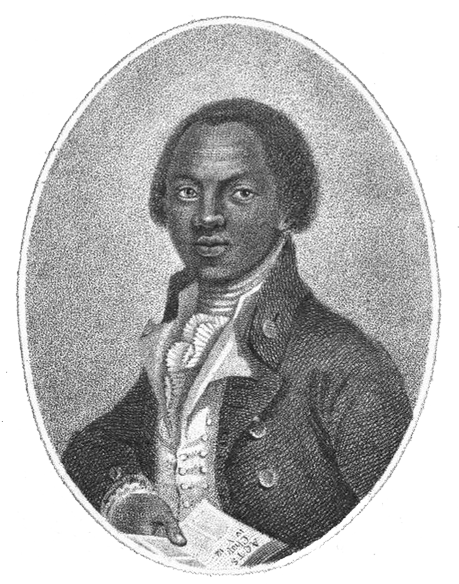
Olaudah Equiano – From Slave to Abolitionist

The Interesting Narrative of the Life of Olaudah Equiano or Gustavus Vassa, the African, Equiano’s autobiography, published in 1789, marked a significant turning point in the fight to abolish slavery. Describing his capture in Africa and subsequent life as a slave, the autobiography shone a light on the horrors of the slave experience, making its brutality tangible to those who had been born free. It became a rallying point for the abolitionist cause. It began with a petition for abolition addressed to the British parliament, and ended with an antislavery letter to the Queen. In between it detailed Equiano’s life, providing a rare insight into slavery through the eyes of one of its former victims. Translated into several different languages, The Interesting Narrative… would go on to be read by tens of thousands. Just as significantly, Equiano himself worked tirelessly to promote the book and the abolitionist cause. He embarked on extensive lecture tours across Britain and Ireland, and spent much of the 1790s passionately campaigning for abolition – drawing more and more attention to the issue, notably working closely with Granville Sharp and Thomas Clarkson in the Society for the Abolition of the Slave Trade. Olaudah Equiano’s life was a remarkable one, even before he became a leading figure in the battle to abolish slavery. Born in what is now Nigeria, Equiano was kidnapped and sold into slavery as a child – forcibly transported across the globe, to Barbados and then Virginia. In 1757, Equiano was bought by a naval captain named Henry Pascal, who named him Gustavus Vassa and brought him back to England. For years he served as Pascal’s slave on navy ships, participating in major battles of the Seven Years’ War. The period proved deeply influential on Equiano’s life. Fellow soldiers taught him to read and write, and the basics of mathematics, while Equiano also converted to Christianity, getting baptised in 1759. Freed by Pascal at the end of the Seven Years’ War, Equiano was again enslaved in 1762, shipped from London to the West Indies and taken on by a merchant shipping company. Again, the experience proved hugely influential on Equiano, his relatively high rank meaning he was actually involved in organising the sale and transportation of other slaves. “I was often a witness to cruelties of every kind, which were exercised on my unhappy fellow slaves. I used frequently to have different cargoes of new Negroes in my care for sale; and it was almost a constant practice with our clerks, and other whites, to commit violent depredations on the chastity of the female slaves; and these I was, though with reluctance, obliged to submit to at all times, being unable to help them.” Shrewdly, Equiano traded and saved hard during his time in the West Indies, and by 1766 had raised enough to buy his freedom. After working for several years as an able seaman, he eventually returned to London where he first met anti-slavery campaigner Granville Sharp. It marked the beginnings of Equiano’s career as one of the most influential, if seldom acknowledged, anti-slavery campaigners. He became involved in the Sierra Leone Resettlement Project, which aimed to provide a safe place for freed slaves to live and work; founded the Sons of Africa, which campaigned for abolition through public speaking, letter writing and lobbying; and even appeared in the House of Commons to call for improved conditions on slave ships. Soon, he realised that one of the most potent arguments for abolition he could offer however, was his own life story…]]>