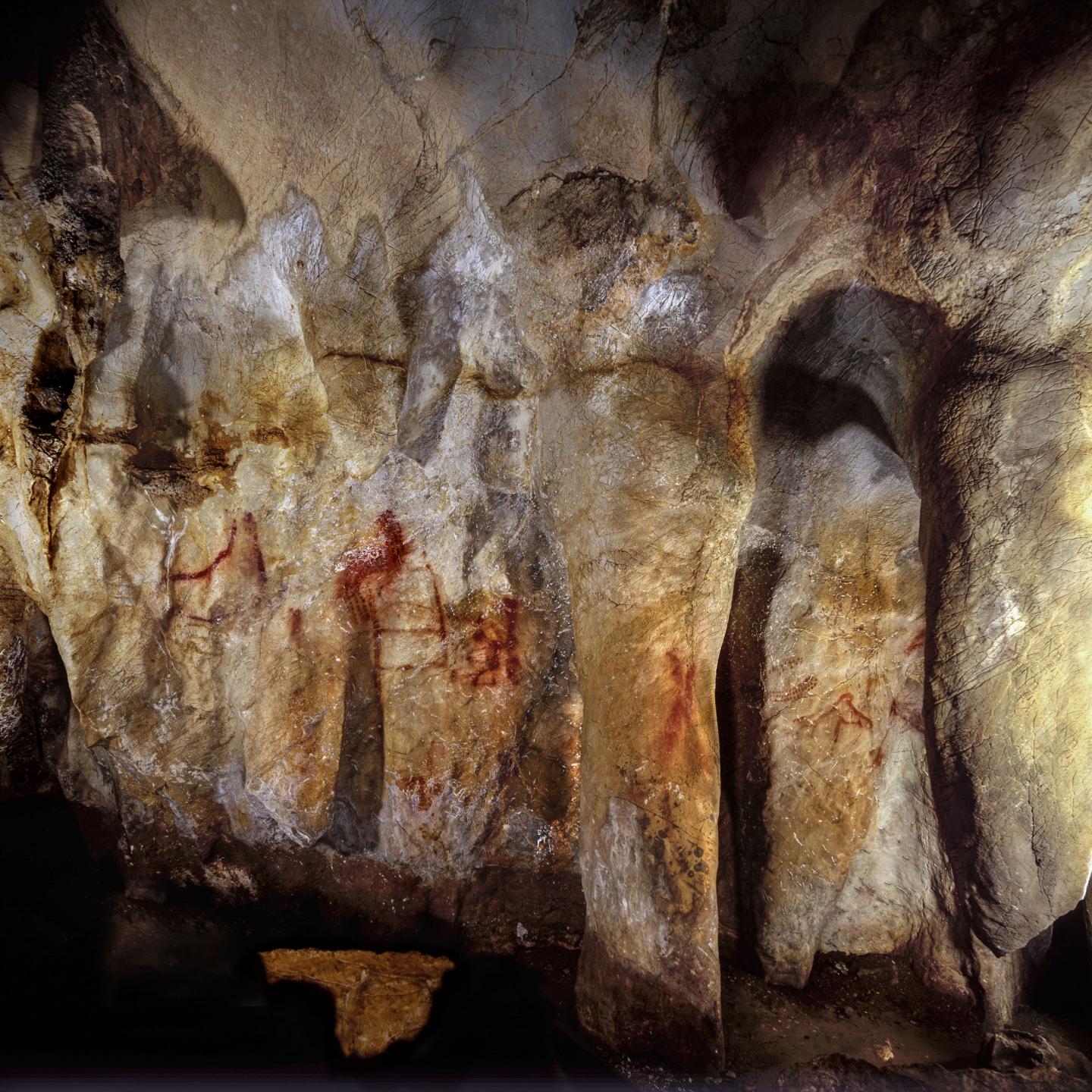
Neanderthals Created 64,000 Year-Old Cave Paintings Neanderthals, and not humans, created the world’s oldest cave paintings, new research claims. The findings add to growing evidence that our closest extinct evolutionary cousins were far from their barbaric, unsophisticated representation in popular culture. Scientists from the Max Planck Institute for Evolutionary Anthropology and University of Southampton show that paintings in three Spanish caves are over 64,000 years old. That’s 20,000 years before the first humans arrived in Europe. The research has been published in the journal Science. It suggests that Neanderthals thought symbolically, an attribute usually only attributed to modern humans. “Artefacts whose functional value lies not so much in their practical but rather in their symbolic use are proxies for fundamental aspects of human cognition as we know it,” said Dirk Hoffmann, from the Max Planck Institute, in a press release. Cave painting has, until now, been entirely attributed to modern humans, largely due to difficulties in dating it precisely. The international team behind the new study used the uranium-thorium method to date tiny carbonate deposits that have built up on top of the cave paintings. Traces of uranium and thorium indicate when the deposits formed. This allows a minimum age for the paintings underneath to be determined. Joint lead author Dr Chris Standish, an archaeologist at the University of Southampton, said: “This is an incredibly exciting discovery which suggests Neanderthals were much more sophisticated than is popularly believed. “Our results show that the paintings we dated are, by far, the oldest known cave art in the world, and were created at least 20,000 years before modern humans arrived in Europe from Africa – therefore they must have been painted by Neanderthals.” Infant Cranial Modification Linked to Identity in Ancient Andes A new study claims that the binding and reshaping of infants’ skulls in the Andes between 1100 and 1450 was linked to identity and inequality. Prior to the expansion of the Inca Empire into the region that is now Peru, cranial modification of infants was hugely popular. Assistant professor of anthropology at Cornell University Matthew Velasco argues that these head-shaping practices were connected to political solidarity and social inequality. The anthropologist analysed hundreds of skeletal remains from multiple tombs in the Colca Valley of highland Peru. One key finding was that modification grew in popularity over the period of investigation. Prior to 1300, cranial modification was rare, while by the end of the period it had risen to 73.7% of the population. “The increased homogeny of head shapes suggests that modification practices contributed to the creation of a new collective identity and may have exacerbated emerging social differences,” Velasco said. “Head shape would be an obvious signifier of affiliation and could have encouraged unity among elites and increased cooperation in politics.” Velasco found that women with modified heads had better access to varied food options and were less likely to encounter violence in their lives. This, he suggests, points to a connection between cranial modification and inequality. A sixteenth century Spanish colonial document Velasco examined described groups moulding skulls into the shapes of volcanoes from their origin myth. “If this is true, then cranial modification reflects a deeply religious worldview and was fundamental to a person’s being and existence, and not simply a fashion statement,” Velasco said. Velasco’s findings have been published in the journal Current Anthropology. Ninth Century Rock Art Destroyed Unique paintings on a ninth century temple in Hyderabad have been whitewashed by villagers, according to the Times of India . The cave temples, located on a hillock, are one of the oldest structures in the region. However, their artworks were not on any protected lists for archaeological sites. “They were initially Jain caves that were later converted into a Lord Shiva temple after installation of shivalingam. During the recent Shivaratri celebrations, the villagers whitewashed the paintings on the pillars and cave walls,” Aravind Arya Pakide, an archaeology expert, told the Times of India. “It is complicated to restore these paintings. In the name of beautification, they are using acrylic paints and damaging the archaeologically-significant structures.” Ceiling paintings on an ornate gateway have been particularly badly affected, with only traces of the figures depicted remaining, the Times of India article reports. Featured image: La Pasiega, Section C, Cave Wall With Paintings. The ladder shape composed of red horizontal and vertical lines (centre left) dates to older than 64,000 years and was made by Neanderthals. Image credit: © P. Saura ]]>

 Toba Supereruption Didn’t Cause Volcanic Winter
74,000 years ago, the Toba supereruption caused spectacular destruction on the island of Sumatra. It has been hypothesised that the eruption triggered a six-year long volcanic winter in East Africa, in turn causing the human population in the region to plummet.
New research from the University of Arizona has looked at the effect of the eruption on East Africa. The findings disagree with the Toba Catastrophe Hypothesis, finding no evidence of severe ecological disruption following the eruption.
“This is the first research that provides direct evidence for the effects of the Toba eruption on vegetation just before and just after the eruption,” said lead author Chad L. Yost, a doctoral candidate in the UA Department of Geosciences. “The Toba eruption had no significant negative impact on vegetation growing in East Africa.”
Yost and colleagues studied microscopic bits of plants preserved in two sediment cores from Lake Malawi, the southernmost of the East African Rift Lakes. They analysed samples taken from roughly every 8.5 years over a period beginning approximately 100 years before the eruption and ending 200 years later.
“It is surprising,” Yost said. “You would have expected severe cooling based on the size of the Toba eruption–yet that’s not what we see.”
According to Yost, if the region had experienced the multi-year cooling suggested in the Toba Catastrophe Hypothesis, the cores would have evidence of a massive die-off of the region’s vegetation at all elevations. However, the team only found some die-off in mountain plants just after the eruption, and no die-off in lower elevation plants.
Part of the Toba Catastrophe Hypothesis says the eruption caused human populations to shrink. However, according to Yost, all known archaeological evidence of human habitation in the region is found at low elevations.
“We know anatomically modern humans were living within 50 kilometers of Lake Malawi,” Yost said. “People would have been able to travel to habitats and lower elevations that had little to no cooling effect from the Toba eruption,” he said.
Co-author Andrew S. Cohen, UA Distinguished Professor of Geosciences, said: “That a singular event in Earth history 75,000 years ago caused human populations in the cradle of humankind to drop is not a tenable idea.”
The research has been published in the Journal of Human Evolution.
First Briton had “Dark to Black Skin”
Scientists have carried out the first ever full DNA analysis of Britain’s oldest modern human specimen, revealing that 10,000-year-old Cheddar Man likely had “dark to black skin”, blue eyes and dark curly hair.
“Generally people would be very surprised to see what Cheddar Man – an individual from 10,000 years ago – looked like,” Dr Selina Brace, an ancient DNA researcher who contributed to the work at the Natural History Museum, told The Independent.
The fossil of Cheddar Man was first discovered in 1903 in Gough’s Cave in Somerset. He lived shortly after the first settlers crossed from continental Europe to Britain at the end of the last ice age. The new revelations, made through genetic analysis of Cheddar Man’s bones, show that the genes for lighter skin became widespread in European populations later than traditionally thought.
Tom Booth, an archaeologist at the Natural History Museum who worked on the project, told the Guardian: “It really shows up that these imaginary racial categories that we have are really very modern constructions, or very recent constructions, that really are not applicable to the past at all.”
The key to the surprising discovery was genetic markers that showed skin pigmentation usually associated with sub-Saharan Africa.
Dr Brace told The Independent: “It’s kind of surprising, because you would have thought [light skin] would have come more quickly as people are moving into these different climates. But in fact what we think is they had a very meat and fish-rich diet, so it was quite likely they were getting their vitamin D from there.”
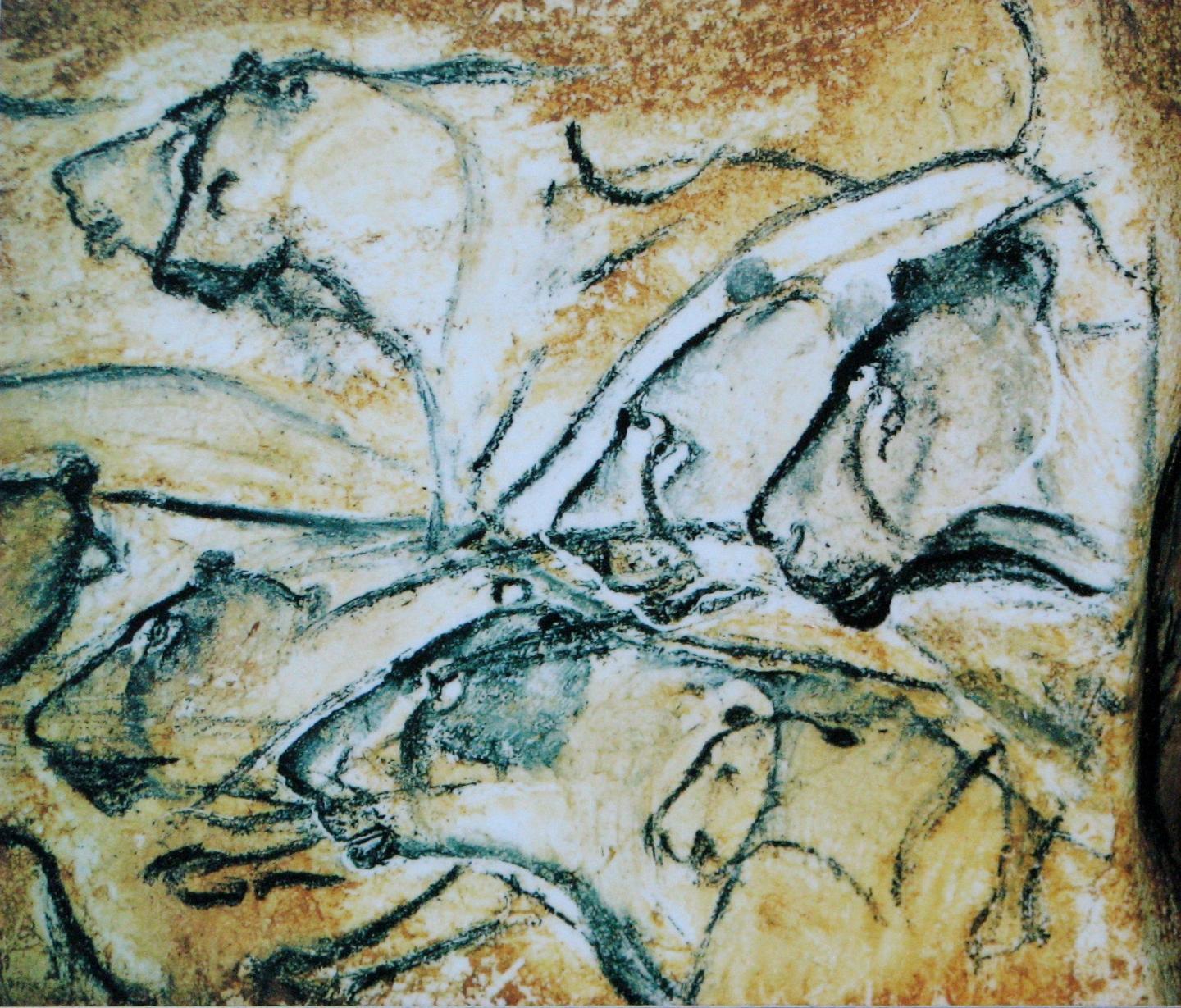
Featured image: Replica of drawing of lions painted in the Chauvet Cave. Art in the cave has been identified as created by early modern humans.]]>

 Jarman and team re-dated the remains, showing that contrary to what the previous carbon dating had suggested, the remains were all consistent with a single date in the ninth century, and the Great Viking Army.
Jarman said: “The previous radiocarbon dates from this site were all affected by something called marine reservoir effects, which is what made them seem too old.
“When we eat fish or other marine foods, we incorporate carbon into our bones that is much older than in terrestrial foods. This confuses radiocarbon dates from archaeological bone material and we need to correct for it by estimating how much seafood each individual ate.”
The study has been published in the journal Antiquity. According to Jarman, the research could be a starting point for learning more about the Great Viking Army.
“The date of the Repton charnel bones is important because we know very little about the first Viking raiders that went on to become part of considerable Scandinavian settlement of England.
“Although these new radiocarbon dates don’t prove that these were Viking army members it now seems very likely. It also shows how new techniques can be used to reassess and finally solve centuries old mysteries.”
Prehistoric Weapons Recreated
Archaeologists from the University of Washington have recreated the weapons used by hunter-gatherers in the post-Ice Age Arctic up to 14,000 years ago.
Janice Wood, a recent anthropology graduate, and Ben Fitzhugh, a professor of anthropology, reconstructed projectiles and points from ancient sites in what is now Alaska, and studied the qualities that made them effective hunting weapons.
Their study, published in the Journal of Archaeological Science, focused on hunting weapons from the earliest archaeological records of Alaska (10,000 to 14,000 years ago), when a range of different projectiles and points were in use. Their study has provided insights into the technological choices made by prehistoric Alaskans.
“The hunter-gatherers of 12,000 years ago were more sophisticated than we give them credit for,” Fitzhugh said. “We haven’t thought of hunter-gatherers in the Pleistocene as having that kind of sophistication, but they clearly did for the things that they had to manage in their daily lives, such as hunting game. They had a very comprehensive understanding of different tools, and the best tools for different prey and shot conditions.”
Wood travelled to the area around Fairbanks, Alaska, and crafted 30 projectile points of various kinds, staying as close to the original materials and manufacturing processes as possible. Projectiles were made from poplar, with birch tar used as an adhesive to affix the points to the tips of the projectiles.
The anthropologist then tested how well each point could penetrate and damage two different targets: blocks of ballistic gelatin (a synthetic gelatin meant to mimic animal muscle tissue), and a fresh reindeer carcass purchased from a local farm. Instead of an atlatl, a kind of throwing board used by ancient Alaskans, Wood used a maple recurve bow to shoot the arrows.
Three different types of point were tested: composite microblades, stone and bone. It was found that the microblades were more effective on smaller prey, due to their versatility and ability to inflict more damage. The bone points penetrated more deeply and created narrower wounds, suggesting they could be used to stun larger prey such as bison. The stone points could have cut wider wounds, especially on larger prey, resulting in quicker kills.
 For Wood, these findings show that the hunter-gatherers were sophisticated enough to recognise which points to use and when.
“We have shown how each point has its own performance strengths. It has to do with the animal itself; animals react differently to different wounds. And it would have been important to these nomadic hunters to bring the animal down efficiently. They were hunting for food.”
The authors believe that the research could also shed new light on debates over whether human hunting practices could have led to the extinction of certain species.
“I see this line of research as looking at the capacity of the human brain to come up with innovations that ultimately changed the course of human history,” she said. “This reveals the human capacity to invent in extreme circumstances, to figure out a need and a way to meet that need that made it easier to eat and minimised the risk.”
History of Dice Revealed in New Study
New research has charted the history and development of dice, revealing how they’ve changed over the last 2,000 years to become unbiased, with every number having an equal probability of being rolled.
The research was led by Jelmer Eerkens, professor of anthropology at the University of California, Davis. It reveals that in the Roman era, many dice were lopsided, in contrast to the perfect cubes seen today. It also highlights that Roman dice varied drastically in shape, size, material and the configuration of numbers.
Between 400 CE and 1100 CE, dice are apparently extremely rare in the archaeological record, corresponding with the Dark Ages.
According to Eerkens and colleagues’ research, a new awareness of the importance of form in dice became apparent around 1450, reflecting the onset of the Renaissance.
“A new worldview was emerging — the Renaissance. People like Galileo and Blaise Pascal were developing ideas about chance and probability, and we know from written records in some cases they were actually consulting with gamblers,” he said. “We think users of dice also adopted new ideas about fairness, and chance or probability in games.”
“Standardising the attributes of a die, like symmetry and the arrangement of numbers, may have been one method to decrease the likelihood that an unscrupulous player had manipulated the dice to change the odds of a particular roll,” Eerkens continued.
Eerkens and his co-author, Alex de Voogt of the American Museum of Natural History, looked at hundreds of dice in museums and archaeological depots across the Netherlands, assembling a set of 110 carefully dated, cube shaped dice to analyse.
For Eerkens, dice present a fascinating artefact for archaeologists, embodying shifting worldviews.
“In this case, we believe it follows changing ideas about chance and fate.”
The study has been published in the journal Acta Archaeologica.
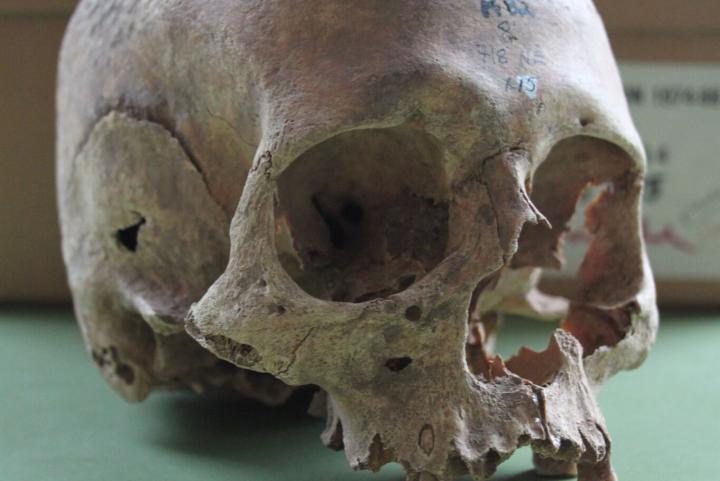
Featured image is one of the female skulls from the Repton charnel. Image credit: Cat Jarman]]>