Categories
Breaking News

Kings Dethroned—Who Reigns Supreme in the Field of Astronomy?

Kings Dethroned. Gerrard Hickson and His Discovery Kings Dethroned is based on research from Gerrard Hickson. Reportedly, in 1907, he made an astonishing discovery. Based on his findings and calculations, he came to believe that the sun was remarkably closer to the earth than previously thought. Such a finding flew in the face of previous research and the teachings even from the greatest astronomers. It could upend the entire field. Hickson more broadly came to believe that the actual methods for calculating the earth’s distance from the sun and all the subsequent conclusions by the great astronomers were seriously flawed. He followed the work of these astronomers backwards to find the flaws in their work and conclusions. Then he followed their work and conclusions forward to identify the erroneous consequences. In his book, written in 1922, Hickson lays out the history of this work, what he considers to be an evolution of the field. This evolution spans work completed as far back to the days of the Roman Empire up to Hickson’s own work. He believed that this information must be put forth for the general public to better understand the field of astronomy and the gravity of these ‘truths’ he had discovered. Hickson took his book Kings Dethroned one step further by not only proclaiming a mistake and a ‘truth’ but also by debunking large portions of the field of astronomy. He presents arguments for how one error led to more, essentially indicating that the field had built itself on a faulty foundation. He also takes things even one step more by, at times, suggesting a conspiracy to protect those false conclusions. Public and Scientific Reception to Hickson’s Work You might imagine that Hickson’s discoveries and writings would be astonishing. Such information should have entirely upended the field of astronomy. Would this not mean that people’s understanding of the earth and its place in space was entirely wrong? Surely people would want to know the truth and the field of science would quickly set about towards correcting all those old falsehoods. Yet, if you think about your own education in science and anything you do know about astronomy, you probably do not recall hearing about any great revolution in the field. You also probably do have a sense that the earth is fairly far away from the sun. So, what gives?  Well, what gives, is that Hickson was himself wrong. His own calculations were flawed. His book and theories were later debunked. Ultimately, Hickson’s book was considered so spectacularly wrong that, in 1989, the archivists at MIT identified it as a member of their “Nut Collection.” This is their affectionate term for useless research that now has no bearing on the scientific community. Hickson’s work is not alone in that collection, but it certainly stands out for its spectacular inaccuracy and the high degree of hubris it displays. Today’s, Hickson’s view (and his prideful certainty) that the earth is quite close to the sun, is considered almost laughable. Indeed, it may even sit aside other erroneous theories such as that old view that the earth is flat. However, what makes Hickson’s views more easily criticized is that he was working in a time with access to more data and better scientific equipment to avoid such erroneous conclusions. Further, Hickson was indeed overly prideful when he wrote his work and it makes his own inaccuracy all the much more ironic. He had proclaimed that his work would dethrone the great ‘kings’ of the field. However, their reigns were left solidly in tact and rather than sitting atop his own throne, he is considered to have no relevance in the field (aside from being a footnote example of faulty findings). Utility for Modern Audiences As a modern reader, with sometimes limited time, you may wonder if you should put forth the effort to read Kings Dethroned. In many cases, yes you should make the time. The book is iconic for putting forth erroneous information and it does highlight the hubris of a man who thought he had it all figured out. If you are in the field of science, why not read a book that will broaden your understanding for the field and the scope of its history. Hickson’s work should not just be a footnote of inaccuracy, it should be considered as a work that does have a place in the history of the development of the field of astronomy. When you read the book King’s Dethroned, you may find yourself sometimes feeling astonished at Hickson’s thought processes, conclusions, and written statements. Read it as a bit of scientific history. Read it as a source of entertainment. Read it so you have some fun trivia to share at parties. Finally, read it as a warning against exercising any similar levels of hubris in your own scientific work.    ]]>
Categories
Breaking News

World’s oldest beer brewery discovered in Israel

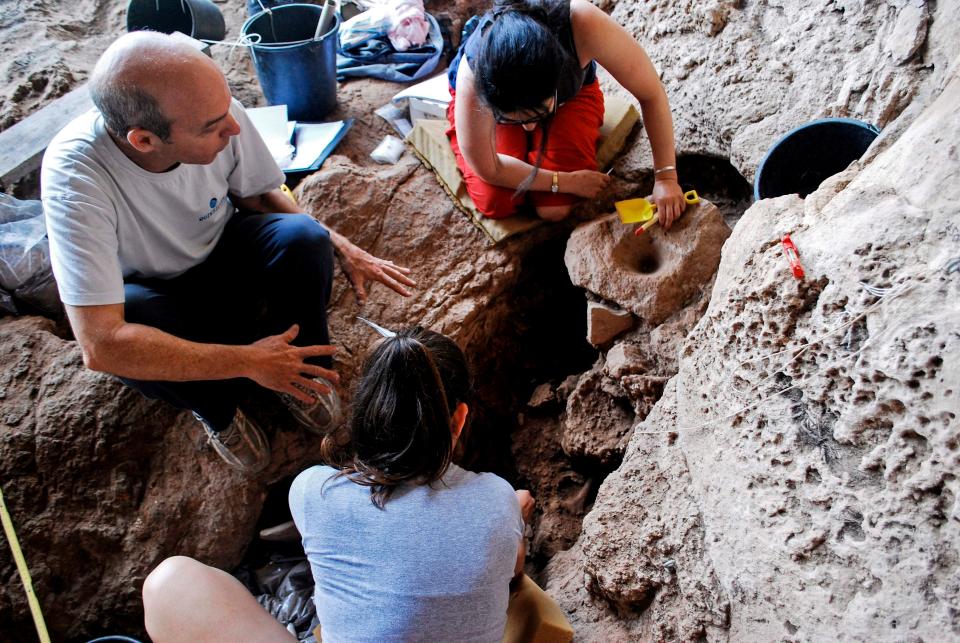
Archaeologists at the beer-making site in a cave near Raqefet, Israel
Photo credit: AFP[/caption]

Who were the Natufians?

The Natufians were semi-sedentary foraging people, living in the Eastern Mediterranean between the Palaeolithic and the Neolithic periods (after the last Ice Age). As part of their rituals, they collected locally available plants, stored malted seeds and made beer.  

A vivid and colourful picture of Natufian ways

Prof. Dani Nadel, Zinman Institute of Archaeology, University of Haifa, Israel, was on the excavation team: “The Natufian remains in Raqefet Cave never stop surprising us. “We exposed a Natufian burial area with about 30 individuals; a wealth of small finds such as flint tools, animal bones and ground stone implements, and about 100 stone mortars and cup marks. “Some of the skeletons are well-preserved and provided direct dates and even human DNA, and we have evidence for flower burials and wakes by the graves. “And now, with the production of beer, the Raqefet Cave remains provide a very vivid and colourful picture of Natufian lifeways, their technological capabilities and inventions.” The results of the study indicate that the Natufians exploited over seven types of plants associated with the mortars. That includes wheat or barley, oat, legumes, and bast fibres like flax. They would then pack plant foods in fibre-made containers and store them in boulder mortars. Bedrock mortars would be used to brew wheat and barley based beer, which would then have likely been served in ritual feasts. [caption id="attachment_8893" align="aligncenter" width="500"] This is the site location and artefacts analysed. (A) The location of Raqefet Cave and three additional Natufian sites in Mt. Carmel; (B) field photos of the studied boulder mortars (BM1,2) and the location of BM3 on the cave floor (scale bar and arrow: 20 cm); (C) a functional reconstruction of the mortars: a boulder mortar used to store plants in a basket with a stone slab on top, and a bedrock mortar used for pounding and cooking plants and brewing beer. Photo credit: Dror Maayan; Graphic design credit: Anat Regev-Gisis[/caption]

Fleshing out our understanding of Natufian society

In July, experts discovered the remnants of what may have been the oldest bread ever baked in Jordan at a site occupied by the Natufian people 14,400 years ago. The fact that beer was brewed at Raqefet Cave 13,000 years ago fleshes out our understanding of Natufian social and ritual realms. It is thought that the brewing of beer inspired people to cultivate cereals in southern Levant – supporting a hypothesis proposed by archaeologists more than 60 years ago.]]>

Categories
Breaking News

Not food scraps after all: turtle shells as Native American musical instruments

An example of a Native American flute, which was crafted by
Chief Arthur Two-Crows in 1987. Music and the animal kingdom share a deep connection. Photo credit: Jossi Fresco[/caption] Considering, more specifically, the music of Native American cultures, the voice and percussion are considered paramount. But with new research from Florida State University, we now know that turtle shells once played a significant role in this pocket of North America’s indigenous cultures.

Keeping the beat

In the past, turtle shells found at archaeological sites have often been dismissed as food remains. However, in an article published in academic journal PLOS One, Professor of Anthropology, Tanya Peres, says these turtle shells were used as rattles and other musical instruments. “Music is an important part of many cultures in ways we may not realize,” Peres comments. “Musical instruments have a deep ancient history in human society and are encoded with meanings beyond their sound making capabilities.”

Not just food

Peres worked alongside lead author Andrew Gillreath-Brown, a doctoral candidate from Washington State University. The research team closely examined the use of turtle shells as percussion instruments across the south eastern states. They identified and analyzed several partial Eastern box turtle shells from middle Tennessee archaeological sites that they believe were used as rattles. “It is important to explore and understand what other ways — besides food — prehistoric animal remains may have been used in the past,” Gillreath-Brown said. “Turtle shell rattles provide deep insights into human-environment and -animal relationships.”

Turtles: deeply symbolic in indigenous cultures

Gillreath-Brown notes that the belief that the world was formed upon a turtle’s back is a belief held across many indigenous groups. “This symbology and belief is imbued into the turtle shell rattles, which are meant to keep rhythm and thereby interjects powerful symbology and spiritual energy into dances and ceremonies,” he said. [caption id="attachment_8889" align="aligncenter" width="500"] The belief that the world was formed upon a turtle’s back is a belief held across many indigenous groups. Photo credit: kormandallas[/caption]

Consistent across cultures

The research draws upon turtle shell rattles that have been discovered throughout North America; from Florida to the north east, and all the way up to Canada. Each region is likely to attribute different meaning and levels of importance to these rattles; but their presence in such a widespread group of localities demonstrates that turtle shells were important to creating rhythm in ceremonies across prehistoric North America.

Rethinking food scraps

Peres says there are still many questions for researchers to investigate regarding the roles of turtles in indigenous populations. “We need to continue to bring together multiple lines of evidence and viewpoints so we can attempt a more nuanced understanding of past human-animal relationships,” she says. For now, the research has opened the door to re-examining curated turtle remains from archaeological digs, which may have wrongly been dismissed as food scraps.]]>

Categories
Breaking News

Easter Island's society: far more collaborative than we thought

Credit: Wikimedia Commons[/caption]

The Easter Island heads: secrets spilled

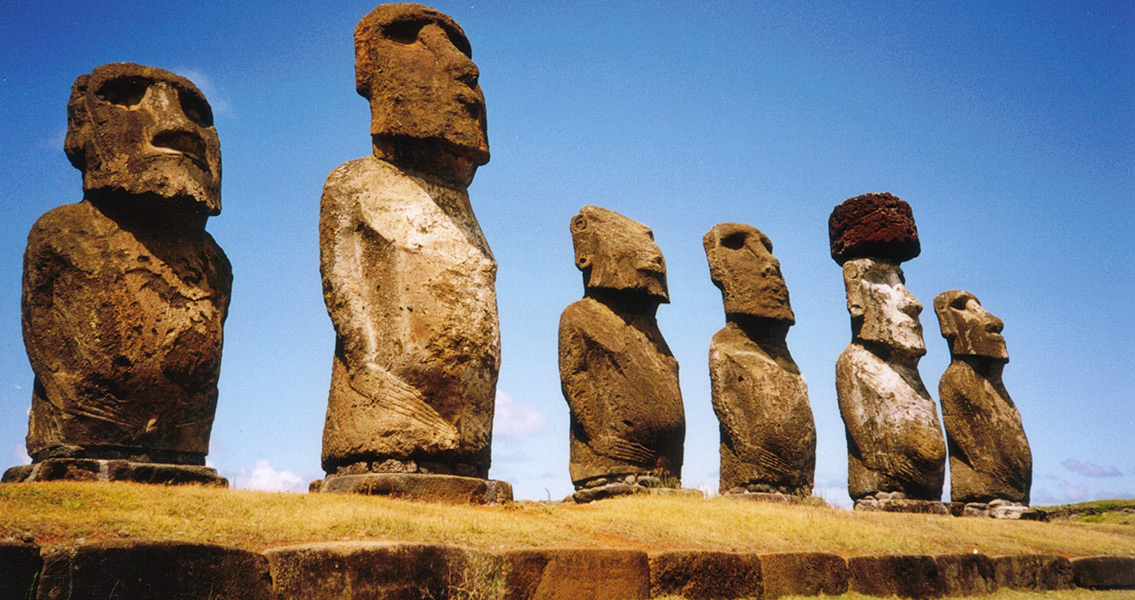
Field Museum scientist Laure Dussubieux was one of the study’s authors. “For a long time, people wondered about the culture behind these very important statues,” she says. “This study shows how people were interacting, it’s helping to revise the theory.” Lead author Dale Simpson Jr., an archaeologist from the University of Queensland adds: “The idea of competition and collapse on Easter Island might be overstated… To me, the stone carving industry is solid evidence that there was cooperation among families and craft groups.” [caption id="attachment_8696" align="aligncenter" width="800"] Credit: Bjørn Christian Tørrissen via Wikimedia Commons[/caption]

The history of Easter Island

People first arrived on Easter Island around 900 years ago. The society was later scourged by colonists and slavers, but the Rapa Nui culture has persisted. According to oral tradition, the founding population was two canoes led by the island’s first chief. Over the years, the population rose to reach a number of many thousands, making up the complex society that carved the famous Easter Island statues, or moai. Easter_Island_c1880

Sociopolitical organisation

Although the moai are colloquially known as ‘the Easter Island heads,’ they are actually full-body figures that have been part-buried over time. There are nearly a thousand of the statues, with the largest standing at 70 ft tall. “Ancient Rapa Nui had chiefs, priests, and guilds of workers who fished, farmed, and made the moai. There was a certain level of sociopolitical organisation that was needed to carve almost a thousand statues,” says Simpson.

Rapa Nui excavation

Recent excavations of four statues were conducted by Jo Anne Van Tilburg of Cotsen Institute of Archaeology, UCLA and director of the Easter Island Statue Project, along with her Rapa Nui excavation team. Van Tilburg worked with Simpson and Dussubieux to analyse 21 of roughly 1,600 stone tools discovered in the excavations. Around half were fragments that suggested how they were used, giving us a better understanding of the society that erected the statues. Easter Island Maori

The Easter Island production industry

For Van Tilburg, the goal of the project was to gain a better understanding of how tool makers and statue carvers may have interacted, thus gaining insight into how the statue production industry functioned. Dussubieux explains: “We wanted to figure out where the raw materials used to manufacture the artefacts came from… We wanted to know if people were taking material from close to where they lived.” The results pointed to a society that involved consistent collaboration. “The majority of the [tools] came from one quarry complex–once the people found the quarry they liked, they stayed with it,” says Simpson. “For everyone to be using one type of stone, I believe they had to collaborate. That’s why they were so successful–they were working together.” Easter Island

An interactive society from day one

This level of large-scale cooperation flies in the face of the popular narrative that Easter Island’s inhabitants warred themselves into extinction after running out of resources. Van Tilburg urges caution in interpreting the study’s results. “The near exclusive use of one quarry to produce these seventeen tools supports a view of craft specialization based on information exchange, but we can’t know at this stage if the interaction was collaborative. It may also have been coercive in some way. Human behaviour is complex. This study encourages further mapping and stone sourcing, and our excavations continue to shed new light on moai carving.” Simpson says: “There’s so much mystery around Easter Island because it’s so isolated, but on the island, people were, and still are, interacting in huge amounts.”]]>