Categories
Breaking News

What were the causes of World War I?

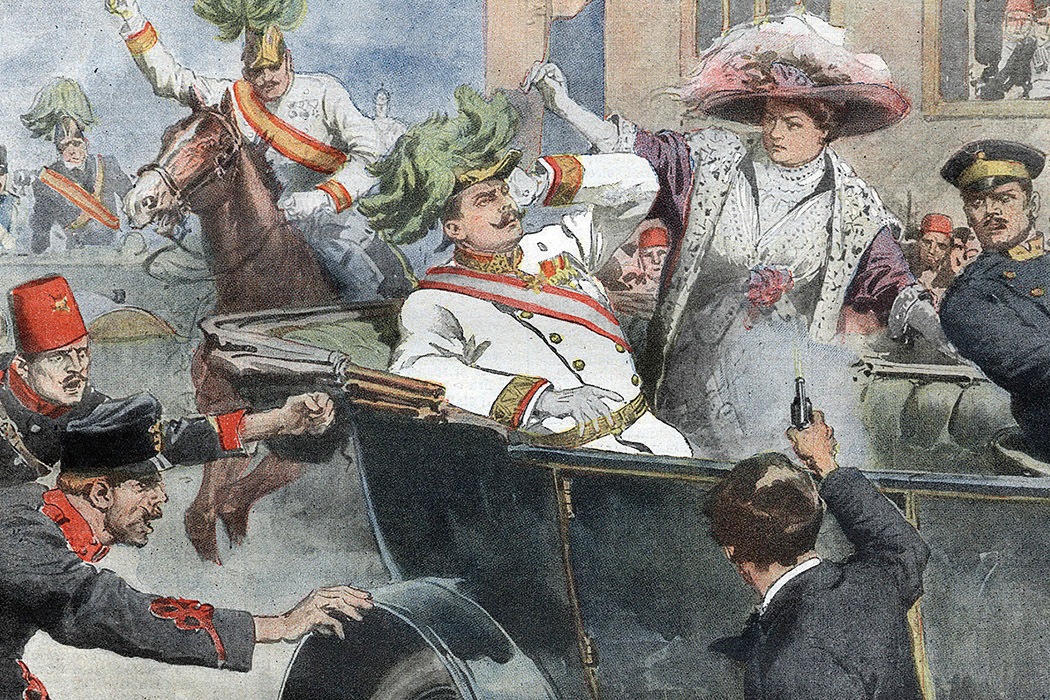
On June 28th, 1914, the Austrian archduke, Franz Ferdinand and his wife, were assassinated by a Bosnian revolutionary, Gavrilo Princip. This triggered the First World War, but the underlying reasons for the war were much more complicated. 

Numerous factors contributed to political tensions on the European continent which eventually escalated on July 28, 1914, when Austria-Hungary declared war on Serbia. This article will aim to break down the different factors that led to the First World War (or Great War).

Alliances

Prior to the war, a number of alliances had been formed in Europe. This led to a quicker escalation of the war, as certain countries had no choice but to declare war if one of their allies did. 

The main alliances that existed before the war were the Triple Alliance of Germany, Austria-Hungary, and Italy (signed in 1882) and the Triple Entente of Britain, Russia, and France (signed in 1907). 

These alliances were defensive in nature, however, it still meant that any conflict between an ally and another country would automatically involve all other signatory countries. The fact that Germany had to face France and Britain on the one side and Russia on the other, greatly influenced its actions during the war. 

Famous English historian, A. J. P. Taylor, stated that “the alliances created an excessively rigid diplomatic framework, within which relatively small detonators could produce huge explosions.” This came at an unwelcome time, as political tensions in Europe were already on the rise. 

Polarization of Europe

Some historians claim that the distant origins of the First World War can be traced back to the Franco-Prussian War in 1870-1871. While Germany became a growing powerful Empire, France fell into chaos and military decline for years. 

Subsequently, France grew more and more suspicious and hostile towards Germany, especially following the annexation of Alsace-Lorraine. This led to a significant chapter in French society, known as revanchism. 

Meanwhile, Britain abandoned its “splendid isolation” policy and formed alliances with France in 1904 and Russia in 1907, which became the Triple Entente. For Britain, this was a preventive measure against Germany following the Anglo-German naval arms race in the late 19thcentury.

Several crises between 1905 and 1914 reinforced these existing alignments and further deepened the polarization of Europe. 

Moroccan Crisis and Balkan Wars

One being the First Moroccan Crisis from 1905-1906. This was an international dispute over the state of Morocco which aggravated tensions between Germany and both France and the United Kingdom. This was due to Germany’s challenge to France in the Moroccan Crisis. 

Afterwards came the Second Moroccan Crisis in 1911 (also known as the Agadir Crisis). Imperialism led to rivalries between France, Germany, and the UK in relation to control of Morocco. 

In April 1911, French troops deployed troops into the interior of Morocco. Germany responded by sending the gunboat SMS Panther to the Moroccan port of Agadir. This led to stronger ties between London and Paris and deeper suspicions towards Berlin. 

A final significant factor were the Balkan wars and the annexation of Bosnia-Herzegovina. 

The Balkan wars took place in 1912 and 1913. The two separate wars led to the Ottoman Empire losing almost all of its holdings in Europe. This also led to the weakening of Austria-Hungary, as a much-enlarged Serbia pushed for union of the Slavic peoples. 

Russia encouraged Slav nationalism which led to increased tensions between the Russian Empire and Austria-Hungary. Especially after the annexation of Bosnia-Herzegovina. 

After the collapse of the Ottoman Empire, Austria-Hungary awarded itself the right to occupy the two provinces. This annexation worsened the already fragile balance of power in the Balkans.

The arguably illegal annexation enraged Serbs and pan-Slavic nationalists. A weakened Russia was forced to submit to Austria-Hungary, however, this did trigger more aggressive anti-Austria campaigns in Russia and surrounding Slavic regions. 

As a result of all of this, Austria felt that a preventative war against Serbia, in order to undermine its growing power, might have been necessary. When Franz Ferdinand was assassinated, Austria used this as a catalyst to declare war on Serbia.

The July Crisis

The assassination sent deep shockwaves through Austrian society. Historians have dubbed this event a “9/11 effect, a terrorist event charged with a historic meaning, transforming the political chemistry in Vienna.” 

Anti-Serbian sentiments had already been strong among the people and this attack had been the final drop. Two days after the assassination, the Foreign Minister and the Emperor agreed that the “policy of Patience” with Serbia had come to an end. 

The attack on the heir to the Austrian throne on June 28, 1914, sparked a series of events which eventually escalated into the Great War. This was known as the July Crisis. 

On July 6th, Germany affirms its unconditional support for Austria-Hungary with a so-called “blank cheque”. On July 23rd, Austria-Hungary set an ultimatum to Serbia, containing their demands for an inquiry into the assassination of Franz Ferdinand. Furthermore, Serbia was to suppress all anti-Austrian propaganda and to take measures to eliminate terrorist organizations. 

The ultimatum gave Serbia 48 hours to respond. The following day, Serbia sought support from Russia, who advised Serbia not to accept the ultimatum. 

On the 25thof July, Serbia responds to Austria with less than full acceptance. Subsequently, Austria-Hungary breaks off all diplomatic ties with Serbia. Three days later, having failed to accept Serbia’s terms, the Austrian-Hungarian Empire declared war on Serbia. 

This incidentally brought Germany into the war as well. The British Ambassador in Berlin, Sir Edward Goschen, was informed that Germany was contemplating war with France and also wished to send its army through Belgium.

In the morning of July 29, the Russian army mobilized to assist Serbia. As a result, and due to threats made by Germany against France, Britain and France entered the war. 

Historiography

Evidently, the causes of the First World War were manifold, thus, a consensus on the origins of the war remain elusive. Right after the war, Anglo-American historians asserted that Germany was solely responsible for the war, but more recent academic works have blamed all participants more equally. 

]]>
Categories
Breaking News

The Spanish Civil War: How it all started and its aftermath

The Spanish Civil War (La Guerra Civil Española in Spanish) took place from 1936 to 1939. On the political left side were the Republicans fighting the Nationalists, who were on the political right. 

The war was mostly a struggle between democracy and fascism. Ultimately, the Nationalist front won, and Spain was ruled by Francisco Franco’s dictatorship until 1975, when Franco died. 

The Spanish Civil War was one of the worst atrocities in Spanish history, so how did it all start?

Spain in the 19thcentury

The 19thcentury was a tempestuous time in Spain. The country faced many different reforms, with the liberals advocating for limited powers for the monarchy. In 1812, King Ferdinand VII dissolved the Constitution.

Twelve successful coups were carried out, subsequently. Although these coups and public uprisings reduced some of the ultra-conservatism of the monarchy, discontent among the people was still prevalent. 

In 1874, the Carlists and Anarchists were formed in opposition to the monarchy. The Radical Republican Party helped bring republicanism to the fore front of Spanish politics.

During the First World War, Spain remained neutral. The threat of communism, as perceived by the public, kept growing during this time. Eventually, King Alfonso XII gave in to popular pressure and established a republic in 1931. 

This was the start of the Second Spanish Republic, which remained in power until the escalation of the Spanish Civil War.

Preparations by Franco and the Nationalists

Numerous suspicious military officials, including Francisco Franco, were sacked and moved to Spanish territories abroad. For instance, Franco was transferred to command of the Canary Islands. 

Francisco Franco

His disloyalty only grew after this. With the help of the British Secret Intelligence Service, Franco managed to escape Spanish supervision and fled from the Canary Islands to Spanish Morocco. 

In the following year, several extrajudicial police killings took place. Public resentment continued and the Socialists and Communists demanded that arms be distributed to the people before the military took over. 

Outbreak of the Civil War

On July 18, 1936, the right-wing Nationalists, led by General Franco, began a revolt. He broadcasted a message calling for all army officials to join the coup d’état and overthrow the existing leftist government. 

Within three days, the Republican government managed to capture Morocco, much of northern Spain, and several key cities in the south. For a while, the government managed to subdue the rebellion.

Franco, who was well-respected by officials in the Army of Africa, planned to bring them over to the European mainland to join the fight. The Nationalists were aided by the conservative Moroccan troops who were also opposed to the leftist government in Spain.

Workers and peasants fought alongside the Nationalist rebels, but in many cities, they were denied weapons. In conservative regions the Nationalists quickly seized control with little bloodshed.

However, in other more liberal regions, such as the city of Bilbao, the fight resulted in many casualties. The revolt against the Spanish navy largely failed. Nevertheless, Franco managed to sail his Army of Africa from Morocco. 

This was a gamechanger and in the following months, Nationalist forces rapidly overran many Republican-controlled regions. In November 1936, Madrid was put under siege. 

In 1937, Franco united the Nationalists with the Falange, Spain’s fascist party, while the Republicans aligned themselves with the communists. 

With those ideological oppositions, both sides sought foreign help. Germany and Italy aided Franco’s fascist rebellion, while the Soviet Union helped the Republican government. 

Additionally, thousands of communists and other radicals from France, the Soviet Union, America, and other places formed International Brigades to support the communist Republican cause. 

A significant achievement from the foreign contribution was the successful defense of Madrid until the end of the war. 

In June 1938, the Nationalists managed to cut the Republican territory in two. Franco mounted a major attack against Catalonia and in January 1939, its capital, Barcelona, fell. Soon after, the rest of Catalonia was also captured. 

This was the end of the Republican cause. Its leaders did try to negotiate a peace deal with Franco, but he refused. On March 28, 1939, the Republican government surrendered Madrid.

Impact on Europe

The Spanish Civil War underlined opposing political sentiments that existed throughout Europe. The right and the Catholics supported the Nationalists as a counter measure to the expansion of Bolshevism.

Meanwhile, labor unions, students, intellectuals, etc. united on the left to support the Republicans to stop the spread of fascism. 

Moreover, anti-war and pacifist movements were widespread as well. Many countries in Europe were concerned that a Civil War in Spain could spark a Second World War. In fact, the Spanish Civil War was an indicator of the growing instability within Europe.

Many non-Spanish citizens also participated in the war, either as soldiers or advisors. Britain and France, as the heads of a political alliance of 27 nations, promised not to intervene in the Spanish Civil War. The USA unofficially aligned themselves with this stance. 

Germany, Italy, and the Soviet Union singed the non-intervention agreement officially, but still participated in arms deals with Spain. 

After the War

Franco served as the leader of the newly formed fascist Spain. He implemented harsh reprisals against his former enemies. Thousands of Republicans were imprisoned and at least 30,000 executed. Furthermore, many were put in forced labor camps. 

Hundreds of thousands of Republicans fled the country after the war. Some 500,000 went to France. 

Shortly after the end of the Spanish Civil War, the Second World War broke out in the rest of Europe. Spain did not officially join the Axis powers, although Franco did write to Hitler offering to join the war on 19 June 1940.

Instead, Spain supplied Germany with the Blue Division to fight specifically on the Eastern Front against the USSR in recognition for the aid that Spain received during its civil war from Germany and Italy. 

The actual death toll of the Spanish Civil War is a controversial topic. Particularly, the part related to war and post-war repressions. Many historians, encyclopedias, dictionaries, etc. only provide vague numbers and general descriptions.

The figures vary from 250,000 to 1 million victims. The main reason for the ambiguity in the numbers are the different methodologies used to count the victims. Various researches have included different casualties ranging from combat related deaths, terror attack related deaths, to post-war deaths, and extra-judicial killings.

]]>
Categories
Breaking News News

How did the Partition of India happen and what were the consequences?

In August 1947, one of the largest mass migrations in human history took place. This was after India regained its independence from the British Empire. This might have been the end of the British Raj, but it was merely the beginning for India, Pakistan, and many of its surrounding regions. 

The subsequent chapter in history, known as the Indian Partition, sparked a large conflict and resulted in the death of many people. Even today, the struggle has not ended with the continuation of the Kashmir conflict. 

This was undoubtedly one defining moment in the world’s history, but how did the partition of the British colony take place? This article endeavors to shed more light on the creation of the separate nations of India and Pakistan. 

The Two-nation theory

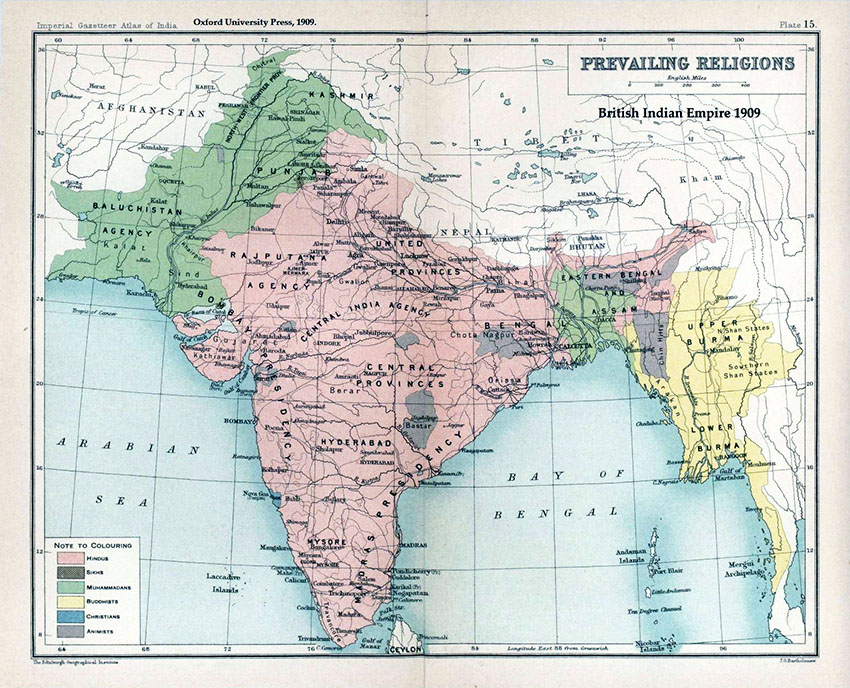
At approximately 25% of its population, Muslims were the largest religious minority in British India.  The conflict between India’s Muslim population and its Hindu population were apparent long before the Partition.

The notion of a two-nation state had been promoted throughout the second half of the 19thcentury. This theory claims that religion is the determining factor in defining the nationality of a group. Following that definition, Indian Muslims were entitled to be a sovereign nation where Islam could be practiced as the primary religion. 

During the British rule, religious sovereignty was not the biggest issue. The British government insisted on speaking of Indians as “the people of India”, instead of speaking of an “Indian nation”. 

This was the justification for British rule, as “Indians were not a nation”. This type of governance allowed some autonomy among the Muslim minority. 

Under imperial rule, they enjoyed a protected minority status with a system of reserved legislative seats and separate electorates. This style of governing was often referred to as “divide and rule”.

Yet, when it became apparent that the British rule might come to an end, the All-India Muslim League started a Muslim identity movement. In 1945-1946, the League won a majority of Muslim votes in provincial elections.

Following this victory, the claims for an independent Pakistan became stronger. As the Second World War approached, the political stakes in India were significantly higher. 

The end of the British Raj

In 1939, when the Second World War escalated, Britain brought India into the war without consultation. This was the beginning of the end for the British Raj. 

It sparked widescale national protests which culminated in the 1942 Quit India movement led by Mahatma Gandhi.

Mohandas Karamchand Gandhi

In the meantime, the war called for more local allies. The Muslim League saw this as an opportunity to offer its aid in exchange for future political security. In March 1940, the Muslim League introduced the “Pakistan Resolution” calling for the creation of a “separate state”. 

Historians are still debating whether this demand was merely a bargaining chip or a firm objective. Either way, it might have intended to solve the Muslim minority issue, but it ended up aggravating the situation.

Due to financial issues, Britain recognized that it could not sustain its empire. In June 1948, an Act of Parliament was issued as a deadline for the transfer of power. 

What this Act failed to address, however, was the issue of India’s Muslim minority. It proposed a loose federation, but this idea was rejected by both Congress and the Muslim League, which vowed to fight for an independent “Pakistan”. 

Meanwhile, civil killings continued. In August 1946, the Great Calcutta Killing took place which left some 4,000 people dead and an additional 100,000 homeless. 

Eventually, an ultimatum was presented which left politicians with little choice but to agree to the separation of the state. On August 14, 1947, Pakistan celebrated its independence. The new official borders split the provinces of the Punjab and Bengal in two. 

A nation divided

A partition of such a magnitude did not go by without backlash. Riots were started with mass casualties and a colossal wave of migration. Some 14 – 16 million people moved from one side of the border to the other. 

The direction in which they travelled depended on their religion. Hindus and Sikhs came together in a conscious effort to separate themselves from the Muslims. 

This chapter, unfortunately, did not go by without casualties. The death toll of the partition ranges anywhere between 200,000 to two million victims. Many were killed by members of their own communities and sometimes their own families.

Especially, women were targeted as a symbol of community honor. Reportedly, up to 100,000 women were abducted or raped. 

One of the reasons why the partition sparked such extreme emotions was because many people were not only very deeply attached to religious identity, but also to territory. Furthermore, British troops were reluctant to maintain law and order. 

Another unforeseen side-effect was the ultimate homogeneity of Pakistan. The Muslim League had anticipated that Pakistan would contain a substantial non-Muslim population, whose presence would safeguard the Muslim population remaining in India. Instead, in West Pakistan, non-Muslim minorities comprise only 1.6% of the population. 

Pakistan was evidently created as a “safe land” for India’s Muslims, but not all Muslims supported its formation. Thus, many decided to remain in India and still form the largest minority group in independent India.

This led to ongoing conflicts. The nationally beloved icon, Mahatma Gandhi, was assassinated in January 1948 by a Hindu nationalist extremist who blamed him for being too supportive of the Partition. 

Happy ever after

After the Partition, both states faced substantial problems accommodating and rehabilitating post-Partition refugees. When the two nations went to war over the disputed territory of Jammu and Kashmir, the number of refugees skyrocketed.

Unfortunately, the relationship between the two nations has hardly improved since the 1950s. Kashmir still remains a territory of conflict.

Since the Partition of India, the two nations have fought three wars over the region: the Indo-Pakistani Wars of 1947 and 1965, and the Kargil War in 1999. 

To make matters even worse, both nations are now nuclear-armed and terrorist attacks are frequent. In February 2019, one of the deadliest attacks took place. A Kashmir separatist terrorist group, Jaish-e-Mohammed, carried out a suicide attack on a military convoy killing over 40 Indian soldiers.

]]>
Categories
Breaking News

What was Watergate?

In light of Robert Mueller’s investigation into Donald Trump’s possible ties to Russian interference in the 2016 US Presidential election, it is worth looking back at the Watergate scandal. Comparing the two situations, one cannot help but get a sense of déjà vu. 

President Richard Nixon was involved in a widescale scandal that eventually led to his resignation. History does tend to repeat itself, as the US president is once again wrapped in an international political scandal. On that note, this article aims to shed light on what really happened during the Watergate Scandal. 

Who was Richard Milhous Nixon?

Before he became president, Nixon was a lieutenant commander in the US Navy during World War II. Afterwards, he became a Californian congressman and senator. He continued climbing the political career ladder and served as US vice president to Dwight D Eisenhower for eight years, before he decided to run for president himself.

In 1960, he entered the presidential race, but lost to John F Kennedy. Needless to say, Nixon was not happy with this outcome. He blamed the media for favoring his opponent. He did eventually make it to the White House in 1968, but that resentment never went entirely away. 

During Nixon’s five-and-a-half years presidency, he waged five overlapping wars: on the media, Democrats, the US judiciary, US history, and not-surprisingly, on the anti-war movement itself. 

His goal was to undermine anyone who he saw as an enemy, including people who leaked the Pentagon Papers. In response, Nixon appointed the so-called ‘White House Plumbers’, who were tasked with stopping the leak of classified documents. Eventually, the ‘Plumbers’ were tasked with other illegal activities. 

The Watergate robbery

In the early morning of June 17, 1972, several burglars were arrested in the Watergate buildings in Washington DC which was the office of the Democratic National Committee. This was no ordinary robbery though. The crime was connected with Nixon’s reelection campaign.

Investigations showed that they found wiretapping phones and stolen documents on the burglars. One of the robbers was identified as E Howard Hunt, an ex-CIA officer and one of Nixon’s ‘Plumbers’. 

As a matter of fact, Nixon never ordered the break-in. However, to make the matter more suspicious, Nixon went to great lengths to cover the crime up. The real scandal was the subsequent collusion to distance himself and his administration from the crime. 

Reportedly, six weeks after the burglary, Nixon ordered his chief of staff Bob Haldeman to cover the incident saying: “They have to be paid. That’s all there is to that.”

Nixon’s second term

Somehow, Nixon was able to overcome the growing discontent surrounding the Watergate break-in and he won the re-election in 1972. He beat his democratic opponent George McGovern with one of the most substantial margins in US history.

During his second term, Nixon’s attempt to obstruct justice continued. Later investigations highlighted how Nixon and his aides planned to instruct the CIA to impede the FBI’s investigation. This plan did not work, however, and in January 1973 seven conspirators were indicted. Five of them pleaded guilty and the other two were convicted in trial. 

Two important personas in uncovering the Watergate scandal were Washington Post reporters Bob Woodward and Carl Bernstein. They later won a Pulitzer Prize for their reporting. 

Their work included following the money trail which led the burglary back to Nixon’s people. As they kept investigating the issue, their stories were continuously and vehemently denied by the White House and its press secretary at the time, Ronald Ziegler. 

Much of the information that they received came from an anonymous whistleblower only known as ‘Deep Throat’. Many years later, in 2005, it was revealed that the anonymous source had been W. Mark Felt, a former associate director of the FBI.

The infamous tapes

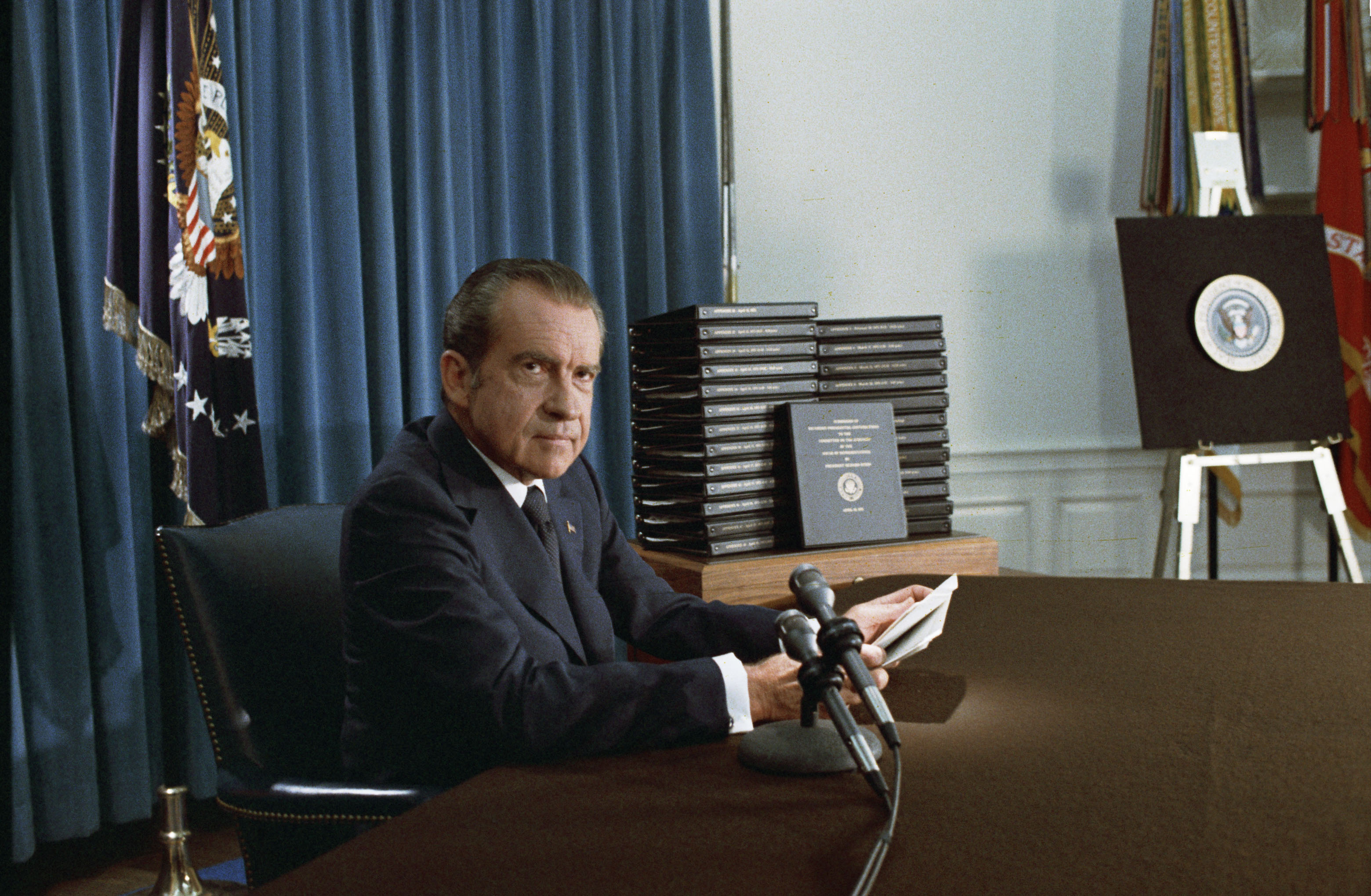
Several of Nixon’s aides testified in front of a grand jury. Some admitted that the president had secretly taped every conversation that took place in the Oval Office. During the summer and fall of 1973, Nixon tried everything to protect the tapes.

The prosecution would not give up that easily though. A special prosecutor named Archibald Cox was adamant about obtaining the tapes. When Nixon realized that he was not going to give up, he ordered for him to be fired. 

In protest, several officials of the Department of Justice resigned. This event took place on Saturday October 20, 1973, which came to be known as the Saturday Night Massacre. 

The saga continues In March 1974, when seven of Nixon’s officials were indicted. They became known as the Watergate Seven. Meanwhile, the battle over the Oval Office tapes continued and went all the way to the US Supreme Court. Eventually, the court ruled unanimously that the tapes had to be released. 

It came to light that 18 minutes of the recording had been erased. Nixon’s personal secretary Rose Mary Woods claimed that she had done this by accident, but further investigations proved that the tape had purposely been erased in several sections. 

In August 1974, a new audio tape surfaced which contained a recording in the Oval Office in which Richard Nixon and Bob Haldeman hatched a plan to block FBI investigations, claiming that national security was the reals issue in the Watergate break-ins. 

This particular extract from the tape was henceforward known as the ‘smoking gun’. Nixon’s own lawyers later stated that it “proved that the President had lied to the nation, to his closest aides, and to his own lawyers for more than two years.” 

The end of the Nixon era

It was clear that this was game-over for President Richard Nixon. Facing certain impeachment, he decided to resign. On August 9, 1974, Nixon and his wife left the White House. As he stepped into the helicopter, he gave his famous v-sign salute which later became one of his best-known trademarks.


The famous Nixon v-sign

He was succeeded by President Gerald Ford, who issued a presidential pardon for Nixon. Thus, Richard Nixon himself never faced any charges, but in total the scandal resulted in 69 government officials being charged and 48 being found guilty. Reading this story in 2019, one cannot help but be alarmed by the similarities between the Watergate Scandal and the current Russia investigation. As the world continues to watch the American presidency, this might be the year in which President Donald J. Trump’s fate will be decided. 

]]>
Categories
Breaking News News

Seeking Refuge: International Refugee Policy and the Holocaust

January 27 was international Holocaust Remembrance Day, the 74th anniversary of the liberation of the death camp at Auschwitz-Birkenau.  In this time of many refugees and fierce debates about where they can find refuge, it seems timely to remember the Jewish refugees who fled—or tried to flee—Nazi-occupied Europe, and the international debates over who, if anyone, would take them in.

Exodus

When the Nazis first came to power in Germany they did not prevent Jewish emigration. They claimed to encourage it in their attempt to make Germany, and later Nazi-occupied Europe, judenrein—devoid of Jews. They did make it very difficult for German Jews to transfer their assets outside Germany, and they required Jewish emigrants to get “certificates of harmlessness’ approved by the Gestapo as well as proving that they had turned over their valuables.  Nevertheless, more Jews were cleared for departure than ever found refuge in other countries.

In theory, other countries were aware of the need. In the summer of 1938, Western countries met at the Evian Conference to discuss the refugee crisis; they made statements of concern, but very few actually offered to take in significant numbers of refugees.  Even after the widely reported violent pogroms of Kristallnacht in November 1938 most countries kept their admissions quotas low and refused visa requests. The reasons for this varied depending on the countries, and there were a few exceptions.

United States:

The US had passed immigration quotas in 1924, strictly limiting the number of immigrants it would accept from places other than England and Northern Europe.   These quotas were partly inspired by the report of the government’s Dillingham Commission, which claimed that unassimilated, unassimilable immigrants from southern and Eastern Europe threatened the integrity of the US. The reports also claimed to describe differences in intelligence and moral character between immigrants of different ethnicities. Furthermore, during the economic depression of the early 1930s many native-born Americans viewed immigrants as competitors for jobs that were already too scarce.  So at the Evian Conference the US refused to raise its immigration quotas (which allowed 27,000 people a year from Germany and Austria) and admit Jews fleeing the Nazi regime.

There was a domestic interfaith effort to raise the quota for humanitarian reasons. In 1939 the Wagner-Rogers Bill, which would have admitted 20,000 Jewish children into the US, was introduced in both houses of Congress—where it failed to pass out of committees for a general vote. Also in 1939 the ship St Louis, which had taken refugees to Cuba and been turned away, sought admission to the US, which also refused them. The ship and its passengers returned to Europe, where more than 250 of its 900 refugee passengers died in the Holocaust.

As the war intensified in Europe, refugees were described as national security threats, and administrative directives denied visas to people who might have been admitted under the legislative quotas.  In June 1941 US diplomats were told that visas would soon be denied to people who had relatives in German-occupied countries who might be taken hostage and used to blackmail the emigrants into committing espionage or sabotage. In 1942 one man, Herbert Karl Friedrich Bahr, applied to enter as a refugee and was found to be a spy.  No other such cases among the many thousands of refugees who sought asylum from the Nazis in America are known to historians, but at the time his case made it much easier to turn genuine refugees away. At the Bermuda Conference of 1943 the US again refused to increase admissions.

In 1944 the Treasury Department, whose presiding Secretary was Jewish and deeply concerned by word of the Holocaust, prepared the “Report to the Secretary on the Acquiescence of This Government in the Murder of the Jews,” and the government formed War Refugee Boards.  From 1945-48, in the aftermath of the war and the liberation of the concentration camps, the new President Truman’s directives brought nearly 40,000 people displaced by war, many of them Jewish, to the US.

Britain:

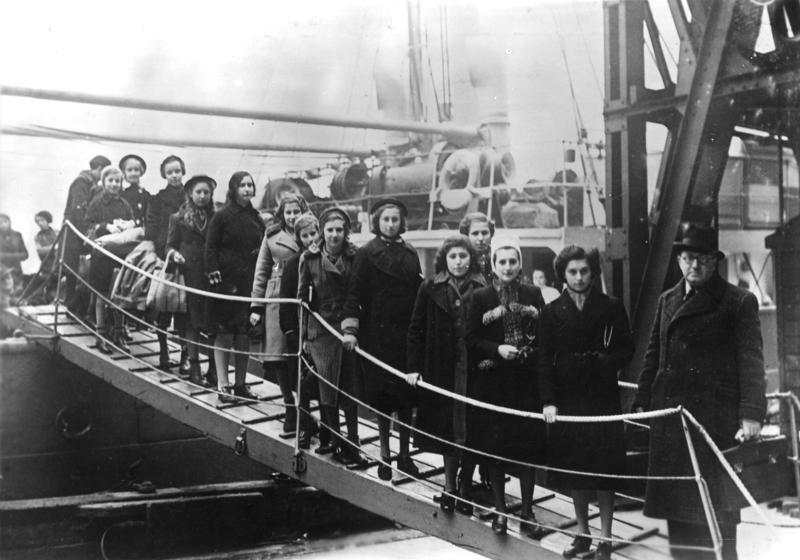
Britain also strictly limited the immigration of adult refugees to its own soil. In 1939 when war broke out it also curtailed the immigration of German Jews to Palestine, which it controlled. But the persistent efforts of children’s aid committees persuaded the government to accept child refugees in the aftermath of Kristallnacht. Under the Kindertransport program, children under seventeen were allowed to immigrate from Germany and German-annexed territories, without their parents or guardians, so long as individuals or NGOs were willing to pay for their care; it was also understood that once the crisis was past they would leave.  A few infants were sent through Kindertransport in the care of older children.   The first Kindertransport arrived in December 1938, and children continued to arrive into 1940, when the Nazis effectively prevented Jews leaving for Britain. About 10,000 children came to Britain via Kindertransport; about 7,500 of those children were Jewish.

In 1939 Britain began interning ‘enemy aliens’ in case they might be spies or saboteurs.  About 1,000 teenagers who had arrived via Kindertransport were sent to internment camps.  Some of these internees joined the British armed forces once they were of age.

After the war it became clear that many of the Kindertransport refugees had been orphaned and could not return home as first envisioned.  Many became British citizens or emigrated to Australia or America.

Continental Europe:

Nearly 100,000 Jewish refugees emigrated from Germany and Austria to other countries in Europe that were then overrun by the Nazis. Most of these died in the Holocaust.

 About 40,000 entered Spain, whose vague and contradictory policies allowed considerable discretion to local officials; many of these fled further rather than remaining there.

Switzerland accepted about 30,000 Jewish refugees, many of whom were kept in camps apart from the main population, and turned nearly the same number away. 

After the war ended, hundreds of thousands of Jewish Displaced Persons were sheltered in camps run by the Allies in Italy, Germany and Austria.

Latin America:

Latin American immigration policies were generally growing more restrictive over the 1930s in the wake of economic depression—just as the refugee crisis was growing.  About 84,000 Jews were resettled in Latin American nations over the war years. After 1941 this was largely a result of the German ban on emigration, but in earlier years the restrictions came largely from populist and nativist sentiment in the host countries.  

There were exceptions.  Bolivia, thanks in part to a Jewish business leader with ties to their President Germán Busch, welcomed more than 20,000 Jewish refugees; some moved on (without papers) into other Latin American countries, but many stayed. Brazil and Mexico took in significant numbers of refugees from Nazism, and the Mexican consul Gilberto Saldivar, posted to Vichy France, ordered his staff to issue Mexican visas to any refugee who asked for them. 

The Dominican Republic offered to take any number of Jewish refugees if they had means to ‘contribute to the country’s enrichment’ and would agree to establish an agricultural settlement in an area designated by the government.  Some historians see this as an attempt by the Dominican dictator Trujillo to ‘whiten’ the population of his country—or get people to overlook his own history of killing civilians. Fewer than 1,000 Jewish refugees actually settled in the DR, but about 5,000 DR visas were issued, allowing refugees to get out of Germany.

Shanghai:

A Jewish girl and her Chinese friends in the Shanghai Ghetto during WWII, from the collection of the Shanghai Jewish Refugees Museum, via Wikimedia

One exit destination that required no visas was the city of Shanghai, some parts of which were controlled by the Chinese (or, after 1937, the Japanese, who were getting the upper hand in the Sino-Japanese War) while other parts were controlled by various foreign powers which traded there. Shanghai was already home to a few thousand Jews who had emigrated either for business or (especially in the case of Russian expatriates) to escape pogroms.  Nearly 20,000 Jews emigrated from Nazi-occupied lands to Shanghai’s international quarters. Most of these arrived in late 1938 and early 1939, after Kristallnacht and before the Japanese imposed immigration restrictions.  Many of them settled in the very affordable Hongkou neighborhood, which became known as “Little Vienna.”  Shanghai was struggling economically as a result of the war, and the international sectors had also become home to Chinese refugees, but locals still welcomed the new refugees.

The Japanese occupying forces were less welcoming.  Germany urged them to eliminate the Jewish population through heavy forced labor, ration cuts and medical experiments.  The Japanese refused to do this, but in 1943 they did require all Jews to be contained within Hongkou, which was already overcrowded. There was little privacy, and too often little food, but still the refugee population survived the war.  After the war many returned to Europe, and some others fled the Chinese civil war in 1939.

More information about specific sections of this article can be found at the links below:

 The Evian Conference

Two perspectives on US responses to Jewish refugees

The British Kindertransports

Spain’s ambiguous refugee policy

Latin America’s reception of refugees

Refugees in Shanghai

]]>
Categories
Breaking News

How did Switzerland stay neutral during World War II?

When thinking of Switzerland, a few things come to mind: Chocolate, watches, and the country’s unwavering neutrality. Switzerland has an impressive record of being the world’s longest standing neutral nation and has not taken a part in a war since 1505. 

In 1815, during The Congress of Vienna, the country officially proclaimed its stance of non-involvement. This has been true ever since and during both World Wars Switzerland managed to remain neutral. 

However, maintaining its neutrality has not been easy. Especially its ‘non-involvement’ in the Second World War has been heavily scrutinized since, particularly in terms of border controls, banking, and trade with Nazi Germany. 

The main reason why Switzerland was able to remain neutral was thanks to the non-invasion of Hitler’s army. This, naturally, did not mean that Hitler had no intention of invading Switzerland, but rather that the cons outweighed the pros. 

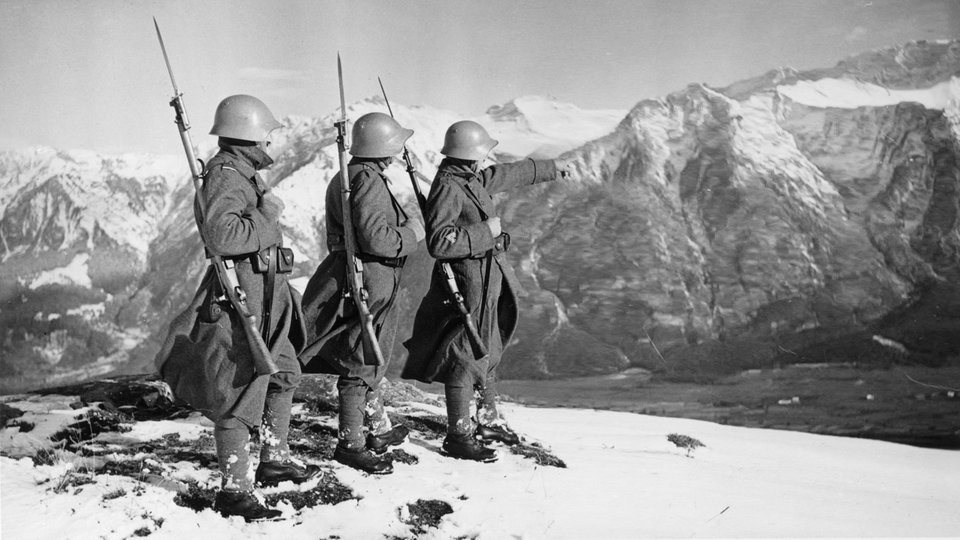
Firstly, due to the rapid mobilization of the citizen army at the outbreak of the war in 1939, Switzerland became a difficult target. The Swiss invested heavily in their machinery, which, in addition to its naturally tough terrain, made the chances of a successful invasion slim for the German army. 

Secondly, Germany did not want to jeopardize its pre-existing trade partnership with Switzerland. The infamously neutral Swiss bank were beneficial to the Nazis. 

Yet, by 1940, Switzerland was completely surrounded by Axis powers and Nazi occupied land. Undoubtedly, this made it difficult to stay clear of the war. Subsequently, Switzerland allowed, and in certain ways, assisted the Nazis which made their so-called neutrality a subject of scrutiny. 

Despite its pledge to be a sanctuary for marginalized groups, Switzerland imposed strict laws to regulate the influx of Jewish refugees. For instance, the Swiss government taxed the Swiss Jewish community for any Jewish refugee they allowed into the country. 

On other instances, Jewish refugees were completely denied entry. One Swiss government official stated in an infamous speech that “our little life boat is full”, in an attempt to justify their regulations. 

Another controversial point of protection was the Swiss currency. The Swiss Franc was the only remaining freely convertible currency in the world until 1936. Both the Allies and Axis Powers, therefore, depended heavily on Switzerland’s economic stability. 

Obviously, accepting gold from both sides does not impede a country’s neutrality. However, it is the way in which the Swiss bank dealt with the large amount of gold, collected from Holocaust victims, after the war, which has been deemed immoral. 

Finally, Switzerland, as it was completely surrounded by Nazi held territory, had no choice but to cooperate with German trade policies. Reportedly, approximately 10,276,000 tons of coal was transported from Germany to Switzerland between 1939 and 1945. Evidently, the Swiss wanted to stay on good terms with Nazi Germany. 

It can thus be argued that Switzerland was not truly neutral during World War II. Yet, at a time of war, the notion of neutrality is arguably as relative as the notion of virtue itself. Some might argue that Switzerland aided Nazi Germany, while others would state that the Swiss simply had no other choice in order to maintain control over their country.  

]]>
Categories
Breaking News

What is “blackbirding”?

Everyone has heard shocking stories about the transatlantic slave trade, but this was hardly the only type of slavery in which Europeans were engaged. The Pacific slave trade involved the forceful enslavement of Pacific islanders from the mid 19thcentury to the 20thcentury. This particular type of slavery is often referred to as “blackbirding”. 

The primary focus of “blackbirding” was to supply cheap labor to sugar-cane plantations on Pacific plantations, particularly in Queensland, Fiji, New Caledonia, and the Samoan Islands. This was mainly achieved through trickery and kidnapping. They were frequently deceived about the length of time for which they were “contracted” and the nature of their “contract”. If all this failed, the islanders were simply loaded onto slave ships at gunpoint.

The captured islanders were collectively known as Kanakas, which means Person or Man in Hawaiian. These workers were essentially treated as slaves, but officially they were referred to as “indentured labourers”. 

There have been debates as to whether “blackbirding” was considered slavery, as the “labourers” were paid. Yet, it is worth noting that their wages were well below the wages of European workers. 

According to various studies, first-year workers received a standard pay rate of six pounds per year. The pay rate was also fixed for 40 years without taking inflation into account. As slavery had already been outlawed by the British Empire, the minimal pay was used to justify the practice. 

“Blackbirding” can be seen as a euphemism, because the captured workers still worked in slave-like conditions. A person recounting their grandfather’s story explains how “[he] was told that once they were here, they were unable to speak their mother language, they were punished in terms of corporal punishment.” They were also segregated from wider society just like African American slaves were in the US. 

In 1872 the British Parliament introduced the Pacific Islanders’ Protection Act which outlawed “blackbirding”. Yet, the practice still continued until the early 20thcentury. The Act did provide for agents on British recruiting vessels, leading to stricter licensing procedure, and patrol of British-controlled islands. 

The Pacific Islands weren’t the only area where “blackbirding” took place. The practice was also common in the United States after slavery was banned. Many US citizens used the Reverse Underground Railroads to capture free African-Americans and fugitive slaves and tricked or sold them into slavery. 

This practice in the United States was also known as “blackbirding” and relied on the same type of coercion and trickery. People of African or mixed ancestry frequently took part in these actions. While some worked for white employers, others helped slave owners with finding escaped slaves. 

For many tricking their fellow African-Americans was not a choice, but a necessity to survive. For their help they would receive a bounty. Their actions also resulted in more successful kidnappings, as “blackbirding” largely relied on developing a connection between the hunter and their target and for ex-slaves it was easier to trust a fellow African-American person.

In 1807 Britain passed the Abolition of the Slave Trade Act and in 1862 Lincoln signed the Emancipation Proclamation, but this was hardly the end of slavery. “Blackbirding” was simply one of the many ways in which people circumvented official laws to continue profiting from slavery. 

]]>
Categories
Breaking News

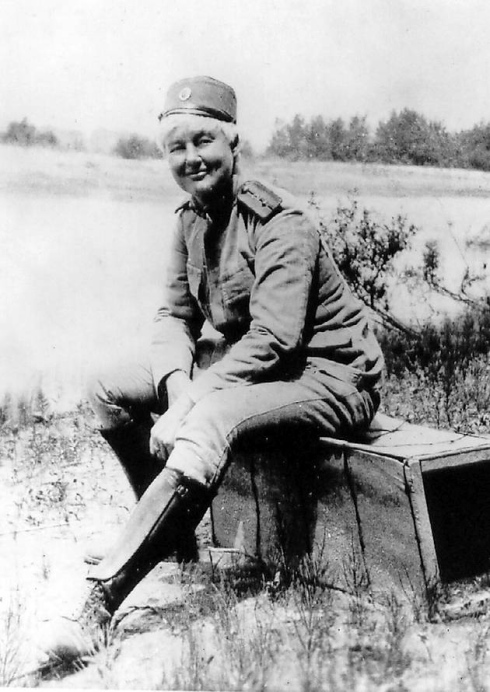
Who was Flora Sandes?

What do most little girls dream of becoming when they grow up? A princess, a housewife, a teacher perhaps? None of these options tempted a young girl born in North Yorkshire in 1876. Her dream was to become a soldier and when the First World War escalated, she became the only female fighter to be on the frontlines. 

Even in her early years, she didn’t let social stereotypes stop her from pursuing her hobbies. According to her autobiography, she enjoyed fencing and shooting and once cars were invented, she bought an old French racecar and drove it around her neighborhood. 

When the First World War broke out in 1914, she volunteered to become a nurse, however, she was rejected due to a lack of experience. This, obviously, did not stop her and she joined the red cross. In August 1914 she left England for the Serbian battlefield together with 36 other women. 

Their job was to aid in the humanitarian crises, but a year into her nursing job, Flora left her post and joined the soldiers on the frontlines. Being the only woman shooting at Austro-Hungarian soldiers and throwing hand grenades into enemy territory, she soon made a name for herself among the Serbian armed forces.

She moved up in ranks rapidly. From being a private at first, she was promoted to corporal and then to sergeant-major. It wasn’t just fighting in which she proved herself as an equal to her male counterparts. Anecdotes recount how she gave her male comrades a fair game in pursuits such as car racing, smoking, drinking, and shooting. 

One year after she joined the battle, she was severely wounded by a grenade in hand to hand combat. She was saved by a lieutenant in her company, who saved her by risking his own life. 

She was given the highest decoration of the Serbian Military, the Order of the Karadorde’s Star. In the same year, she published her autobiography, An English Woman-Sergeant in the Serbian Army. 

Due to the severe injury she suffered from the grenade attack, she spent the remainder of the war running a hospital. She demobilized in 1922 as the first female and first foreign officer of the Serbian army.

At age 51 she married Yuri Yudenitch, an ex-pat Russian general. They lived in France for a while, but as Flora missed Serbia too much, the two of them eventually settled in Belgrade. 

They were both recalled to military service when the Nazis launched an attack on Yugoslavia in 1941, but the invasion was over before they were given the time to take military action.

She was incarcerated by the German’s political police, the Gestapo. They questioned her for seven days before finally releasing her, but she was still ordered to report to the Gestapo once every week. 

After the death of her husband in 1941, due to heart failure, she moved back to England. She spent her final years touring across England, telling her story of how she became the first female Sergeant-major. She died on November 24, 1956 and was cremated in Ipswich. 

Flora Sandes was doubtlessly a remarkable person and her story was and remains an inspiration for women everywhere.  

]]>
Categories
Breaking News

Kings Dethroned—Who Reigns Supreme in the Field of Astronomy?

Kings Dethroned. Gerrard Hickson and His Discovery Kings Dethroned is based on research from Gerrard Hickson. Reportedly, in 1907, he made an astonishing discovery. Based on his findings and calculations, he came to believe that the sun was remarkably closer to the earth than previously thought. Such a finding flew in the face of previous research and the teachings even from the greatest astronomers. It could upend the entire field. Hickson more broadly came to believe that the actual methods for calculating the earth’s distance from the sun and all the subsequent conclusions by the great astronomers were seriously flawed. He followed the work of these astronomers backwards to find the flaws in their work and conclusions. Then he followed their work and conclusions forward to identify the erroneous consequences. In his book, written in 1922, Hickson lays out the history of this work, what he considers to be an evolution of the field. This evolution spans work completed as far back to the days of the Roman Empire up to Hickson’s own work. He believed that this information must be put forth for the general public to better understand the field of astronomy and the gravity of these ‘truths’ he had discovered. Hickson took his book Kings Dethroned one step further by not only proclaiming a mistake and a ‘truth’ but also by debunking large portions of the field of astronomy. He presents arguments for how one error led to more, essentially indicating that the field had built itself on a faulty foundation. He also takes things even one step more by, at times, suggesting a conspiracy to protect those false conclusions. Public and Scientific Reception to Hickson’s Work You might imagine that Hickson’s discoveries and writings would be astonishing. Such information should have entirely upended the field of astronomy. Would this not mean that people’s understanding of the earth and its place in space was entirely wrong? Surely people would want to know the truth and the field of science would quickly set about towards correcting all those old falsehoods. Yet, if you think about your own education in science and anything you do know about astronomy, you probably do not recall hearing about any great revolution in the field. You also probably do have a sense that the earth is fairly far away from the sun. So, what gives?  Well, what gives, is that Hickson was himself wrong. His own calculations were flawed. His book and theories were later debunked. Ultimately, Hickson’s book was considered so spectacularly wrong that, in 1989, the archivists at MIT identified it as a member of their “Nut Collection.” This is their affectionate term for useless research that now has no bearing on the scientific community. Hickson’s work is not alone in that collection, but it certainly stands out for its spectacular inaccuracy and the high degree of hubris it displays. Today’s, Hickson’s view (and his prideful certainty) that the earth is quite close to the sun, is considered almost laughable. Indeed, it may even sit aside other erroneous theories such as that old view that the earth is flat. However, what makes Hickson’s views more easily criticized is that he was working in a time with access to more data and better scientific equipment to avoid such erroneous conclusions. Further, Hickson was indeed overly prideful when he wrote his work and it makes his own inaccuracy all the much more ironic. He had proclaimed that his work would dethrone the great ‘kings’ of the field. However, their reigns were left solidly in tact and rather than sitting atop his own throne, he is considered to have no relevance in the field (aside from being a footnote example of faulty findings). Utility for Modern Audiences As a modern reader, with sometimes limited time, you may wonder if you should put forth the effort to read Kings Dethroned. In many cases, yes you should make the time. The book is iconic for putting forth erroneous information and it does highlight the hubris of a man who thought he had it all figured out. If you are in the field of science, why not read a book that will broaden your understanding for the field and the scope of its history. Hickson’s work should not just be a footnote of inaccuracy, it should be considered as a work that does have a place in the history of the development of the field of astronomy. When you read the book King’s Dethroned, you may find yourself sometimes feeling astonished at Hickson’s thought processes, conclusions, and written statements. Read it as a bit of scientific history. Read it as a source of entertainment. Read it so you have some fun trivia to share at parties. Finally, read it as a warning against exercising any similar levels of hubris in your own scientific work.    ]]>

Categories
Breaking News

World’s oldest beer brewery discovered in Israel

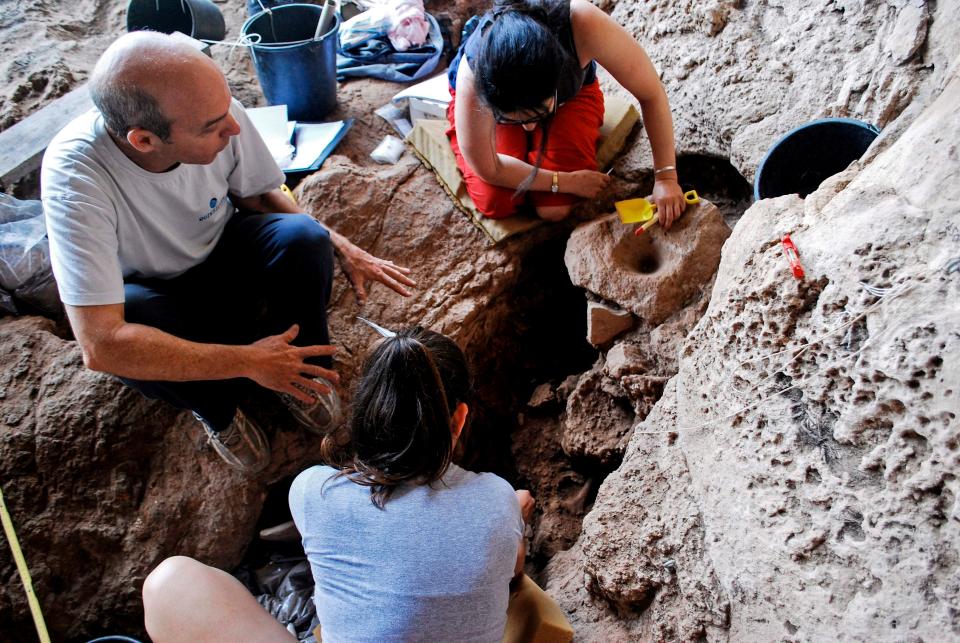
Archaeologists at the beer-making site in a cave near Raqefet, Israel
Photo credit: AFP[/caption]

Who were the Natufians?

The Natufians were semi-sedentary foraging people, living in the Eastern Mediterranean between the Palaeolithic and the Neolithic periods (after the last Ice Age). As part of their rituals, they collected locally available plants, stored malted seeds and made beer.  

A vivid and colourful picture of Natufian ways

Prof. Dani Nadel, Zinman Institute of Archaeology, University of Haifa, Israel, was on the excavation team: “The Natufian remains in Raqefet Cave never stop surprising us. “We exposed a Natufian burial area with about 30 individuals; a wealth of small finds such as flint tools, animal bones and ground stone implements, and about 100 stone mortars and cup marks. “Some of the skeletons are well-preserved and provided direct dates and even human DNA, and we have evidence for flower burials and wakes by the graves. “And now, with the production of beer, the Raqefet Cave remains provide a very vivid and colourful picture of Natufian lifeways, their technological capabilities and inventions.” The results of the study indicate that the Natufians exploited over seven types of plants associated with the mortars. That includes wheat or barley, oat, legumes, and bast fibres like flax. They would then pack plant foods in fibre-made containers and store them in boulder mortars. Bedrock mortars would be used to brew wheat and barley based beer, which would then have likely been served in ritual feasts. [caption id="attachment_8893" align="aligncenter" width="500"] This is the site location and artefacts analysed. (A) The location of Raqefet Cave and three additional Natufian sites in Mt. Carmel; (B) field photos of the studied boulder mortars (BM1,2) and the location of BM3 on the cave floor (scale bar and arrow: 20 cm); (C) a functional reconstruction of the mortars: a boulder mortar used to store plants in a basket with a stone slab on top, and a bedrock mortar used for pounding and cooking plants and brewing beer. Photo credit: Dror Maayan; Graphic design credit: Anat Regev-Gisis[/caption]

Fleshing out our understanding of Natufian society

In July, experts discovered the remnants of what may have been the oldest bread ever baked in Jordan at a site occupied by the Natufian people 14,400 years ago. The fact that beer was brewed at Raqefet Cave 13,000 years ago fleshes out our understanding of Natufian social and ritual realms. It is thought that the brewing of beer inspired people to cultivate cereals in southern Levant – supporting a hypothesis proposed by archaeologists more than 60 years ago.]]>