
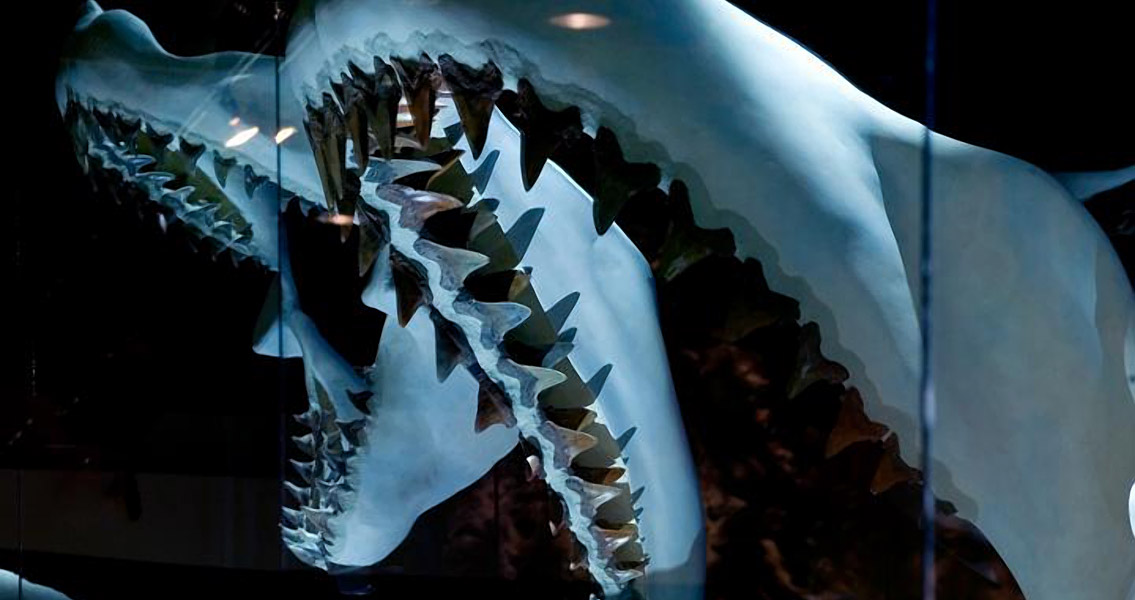
Carcharocles megalodon was the largest shark in the history of the planet, the fossil record suggesting body lengths of up to 18 metres (59 feet). By way of comparison, the giant great white shark which starred in the movie Jaws was meant to be just seven metres (25 feet) long. Although fossilised teeth of the monster sharks have been found in Africa, North America, South America, India, Australia, Japan, and Europe, little else is known about them. In particular, why these terrifying creatures went extinct has long been a mystery. In a recently published study, researchers from the University of Zurich suggest that megalodon died out because the diversity of its prey decreased, and new predators arrived on the scene as competitors. The team’s conclusion is based on an innovative study of the giant shark’s geographical distribution over time. Led by Catalina Pimiento from the Paleontological Institute and Museum of the University of Zurich, the team of researchers examined 200 megalodon records in museum collections and databases from across the globe. Their results have recently been published in the Journal of Biogeography. The data allowed Pimiento’s team to chart the range and abundance of the giant sharks. During the early Miocene, lasting until roughly 16 million years ago, megalodon were mainly found in the warm waters of the Northern Hemisphere, off the coasts of Europe and North America, as well as in the Indian Ocean. Later, they penetrated further into the seas around Australia, South America and Asia. The population of the species peaked during the middle Miocene, while they acheived their widest geographic dispersion during the late Miocene. Around five million years ago megalodon entered a state of continuous decline, seemingly coinciding with the beginnings of the Pliocene glacial period. Until now, most explanations for megalodon’s extinction have been directly connected to this period of climate change. The fossil record has led most researchers to conclude that the giant sharks lived in warm waters. As the temperature of the oceans started to decrease, its hypothesised they would have become uninhabitable for megalodon, and the species slowly died off. Another suggestion is that the freezing waters forced Megalodon’s prey to migrate, starving the giant sharks. The University of Zurich study throws serious doubt on this climate change explanation. “We were not able to ascertain any direct link between the extinction of C. megalodon and the global fluctuations in temperatures during this time.” explained Pimiento in a press release. “Changing climatic conditions do not appear to have had any influence on the population density and range of the giant sharks,” Evolutionary narratives of other species showed the greatest connection with the development of the monster sharks, according to the new study. At a time when a multitude of smaller marine mammals were disappearing, the megalodon range also decreased. Similarly, the arrival of other major predators, such as the ancestors of the killer whale and the great white shark, also coincided with a decline in the megalodon population, suggesting the new species provided too much competition for the increasingly scarce prey. Image ©Jeff Gage / Florida Museum of Natural History]]>


advances.sciencemag.org Image by Fishhawk, courtesy of Oregon State University]]>


P. falciparum parasite. The first recorded instances of the disease in humans took place in China in 2,700 BCE. It has since had a constant, and dramatic effect on history, with some historians arguing that it played a leading role in the fall of the Roman Empire. Now, a new study argues that the origins of malaria go back much further than ancient China, to the time of the dinosaurs. Typically, malaria is thought to be of a reasonably modern origin, with estimates placing its beginnings to between 15,000 and 8 million years ago. The new study, published in the journal American Entomologist, argues that malaria evolved in insects at least 100 million years ago. George Poinar, a researcher from Oregon State University, claims that the disease may have begun in an insect such as the biting midge. His conclusions have been reached through careful analysis of the fossil record, including a one hundred million-year-old Protoculicoides biting midge preserved in Myanmar Amber, which contained numerous oocysts of the malarial parasite Paleohaemoproteus burmacis in its body cavity. “Scientists have argued and disagreed for a long time about how malaria evolved and how old it is,” Poinar explained in a press release from OSU. “I think the fossil evidence shows that modern malaria vectored by mosquitoes is at least 20 million years old, and earlier forms of the disease, carried by biting midges, are at least 100 million years old and probably much older.” Poinar and his wife Roberta garnered attention in 2007 with their book ‘What Bugged the Dinosaurs?’, in which they suggest that the evolution and development of blood sucking, disease spreading insects could have played a pivotal role in wiping out the dinosaurs. They argue that a single global event, such as a meteor strike, failed to explain dinosaur extinction. “There were catastrophic events known to have happened around that time, such as asteroid impacts and lava flows,” Poinar said in the OSU press release. “But it’s still clear that dinosaurs declined and slowly became extinct over thousands of years, which suggests other issues must also have been at work. Insects, microbial pathogens and vertebrate diseases were just emerging around that same time, including malaria.” In the new study, Poinar argues that insects must be considered the primary hosts of malaria, since the sexual reproduction stage of the parasites does not occur in the vertebrate animals they infect. In particular, he highlights Gregarinida as the parasite group which could have been the progenitor of the disease. “Based on the host range and life cycle of representatives of the Coccidia and Gregarinida, the progenitor for malarial organisms (Haemosporidia) is considered to have evolved from gregarine protozoa.” he writes in the newly published journal article. Based on the fossil evidence, he concludes that reptiles may have been the first vertebrate hosts of malaria, “Fossil evidence and molecular studies indicate that the original vertebrate hosts of malarial or plasmodid organisms were reptiles; thus, the mid-Cretaceous biting midge infected with P. burmitis could well represent an early prototype of a malarial vector–vertebrate association.” He writes in the study. Poinar’s research suggests that malaria is millions of years older than traditionally believed. By charting its ancient history, new insights could be gleaned into its effects on vertebrate survival millions of years ago, as well as providing new insights into its deadly modern day life-cycle. For more information: oxfordjournals.org Image by George Poinar, Jr., courtesy of Oregon State University]]>

here Featured Image courtesy of Historic Scotland]]>
here]]>