

Panthera spelaea, the Eurasian cave lion, a species that was larger than an African lion without the mane, became extinct approximately 14,000 years ago, but the reasons behind its disappearance have never been completely understood. Archeological findings show that between 50,000 and 10,000 years ago, Upper Paleolithic humans did in fact hunt animals both large and small, however, evidence of lion hunting is rare. In an attempt to determine if early humans hunted the cave lion, thereby contributing to its extinction, Marián Cueto, with the Universidad de Cantabria, Spain, and her colleagues examined nine fossilized toe bones from the claw of a cave lion, looking for evidence the cats were exploited by humans. The feline bones were unearthed at La Garma, the Upper Paleolithic cave site located in northern Spain. What researchers found was that a majority of the bones did in fact show signs of having been modified by stone tools used by humans, along with signs of a specific technique, similar to the one used by modern hunters to keep the claws attached to the fore while skinning it. The research suggests that the toe bones may have been part of a single lion pelt, possibly covering the floor of the occupied cave. The La Garma site is known to have been associated with human rituals, and it’s possible the Eurasian cave lions had some symbolic meaning for Upper Paleolithic humans. While the analysis doesn’t offer definitive findings which would conclude the Upper Paleolithic humans hunted cave lions for their pelts, it also doesn’t offer any findings to the contrary, and other evidence has been found showing that cave lions and early humans did interact in some capacity. The cave, situated on La Gama Mountain, is divided into different levels. In the upper section there are human burial sites, the intermediate level holds a large number of palaeontological remains, primarily bones. The most important remains, however, are found on the lower level where there are three intact spaces with numerous examples of painted art, including an amazingly realistic black horse, and a number of symbols painted red. Also found are representations of goats and bison and still more panels are covered with hand prints. The drawings date to between 28,000 and 13,000 years ago. Prehistoric humans ventured into the La Garma cave to perform sacred rituals. They navigated hundreds of yards through the dark, until they reached one of the circular stone huts (each with a horse skull in the center) where their religious ceremonies took place. Untouched for thousands of years, La Garma acts as a time capsule, with everything remaining exactly as it was during the Upper Paleolithic era. The nature of the ceremonies is unknown, however, the discovery of just foot bones indicates that aside from the pelts, the claws of the lion were also brought into the cave. The research has been published journal in the online journal PLOS ONE. Image courtesy of Wikimedia Commons user: Pit1233 ]]>

Live Science recently: “There was a belief that it was a day when spirits of the dead would cross over into the other world.” The Romans also held two festivals in October. The first, Feralia, was a date late in the month where the Romans commemorated their dead; reflecting again how ancient cultures associated the cold, dark winter with death. The other was a day to celebrate the Roman goddess of fruit and trees, Pomona. With this festival, we can see hints of one of the most popular Halloween traditions. Pomona’s symbol was an apple, perhaps explaining the origins of apple bobbing. As the Roman Empire spread into the Celtic lands, conquering most of the territory by 43 CE, Samhain started to be combined with Feralia and Pomona. Separate pagan traditions to mark the onset of winter crossed over; different rituals and traditions fusing and evolving. It was a pattern which would be repeated again and again as the Halloween we know today started to form. In the eighth century, Pope Gregory III designated 1st November ‘All Saints’ Day”, an occasion to commemorate all saints and martyrs. As happened with both Christmas and Easter, certain elements of pagan festivals were placed into the Christian calendar, continuing the traditions of acknowledging the changing seasons. The evening before became known as All Hallows’ Eve, and later Halloween. To mark the occasion, massive bonfires were lit to light the cold evening. Parades were held on the streets and revelers started to dress up as dead saints and martyrs. As the ninth century wore on, and All Saints Day and All Hallows Eve became established as regular events on the calendar, the foundations were laid for modern Halloween. One of the most archetypal Halloween rituals is trick or treating, which has a somewhat vague origin. One theory is that it originates from the medieval practice of “souling”, where the poor would go door to door on All Saints’ Day, asking for food in exchange for prayers for the dead. Another theory is that it has its origins in “mumming”, a medieval European folk tradition where bands of revelers took to the streets in simple, home made costumes, acting out stories and singing songs. Associated with Christmas until the nineteenth century, “mumming” undoubtedly bears some resemblance to modern Halloween traditions. Through the centuries celebrations to mark the end of winter have developed, sometimes influencing each other, other times in parallel. The evolution of Halloween can not be clearly traced. Historians debate just how influential Samhain really was, while other traditions seem to have originated in a number of different places separately from each other. What is clear is that our modern interpretation of Halloween is a potion concocted from a plethora of folk, pagan and Christian influences. A modern occasion with a long and colourful history. ]]>

Proceedings of the National Academy of Sciences. The simulations ran by Fitzpatrick et al took into account high resolution data for winds, land distribution, precipitation and ocean currents. “We synthesized a lot of new climatic data and ran a lot of new simulations that are exciting in terms of highlighting and pinpointing where some of these prehistoric populations might have come from,” said Fitzpatrick, in a press release. “The simulation can assess, at any point in time, if somebody left point A, where would they end up if they drifted? We can also model directed voyages. If somebody knew where they were going, how long would it take them to get there?” Interestingly, the team’s results suggest the settlers were aware of El Nino Southern Oscillation Patterns, and used them to aid their voyages. El Nino occurrences typically happen every three to seven years, and are shown in the archaeological record through evidence of forest fire and drought. One major consequence of El Nino is that winds and associated precipitation shift from westerly to easterly. Settlers would have found travel toward Oceania much easier during El Nino years, and could have timed their departures accordingly. “What Pacific scholars have long surmised but never really been able to establish very well is that, through time, Pacific Islanders should have developed a great deal of knowledge of different climactic variations, different oscillations of wind and changes in environments that would have influenced their survivability and their abilities to go to certain places,” Fitzpatrick explained. Information relating to the origins of the early seafarers has also been revealed by the study, occasionally challenging prevailing archaeological theories. The settlers of western Micronesia likely came from near the Maluku Islands, while those of East Polynesia probably came from Samoa. Hawaii and New Zealand on the other hand, may have been settled from the Marquesas or Society Islands. Easter Island was likely populated by people from Marquesas or Mangareva. The results suggest Samoa may have been an epicenter for colonisation missions, throwing into question existing data that have the Philippines as the possible point of departure for the colonisation of Micronesia. What the paper cannot answer is the tantalising question of why these early seafarers were driven to travel such huge distances. As the authors admit, there is no easy way to explain why people took the chance of launching colonising missions to islands up to 2,500 miles away. “What drove the movement? That’s the big question,” Fitzpatrick said. “Was it political? Was it a result of population pressure? There were probably multiple reasons why people decided to leave one place and go to another.” Image Courtesy of Scott Fitzpatrick ]]>
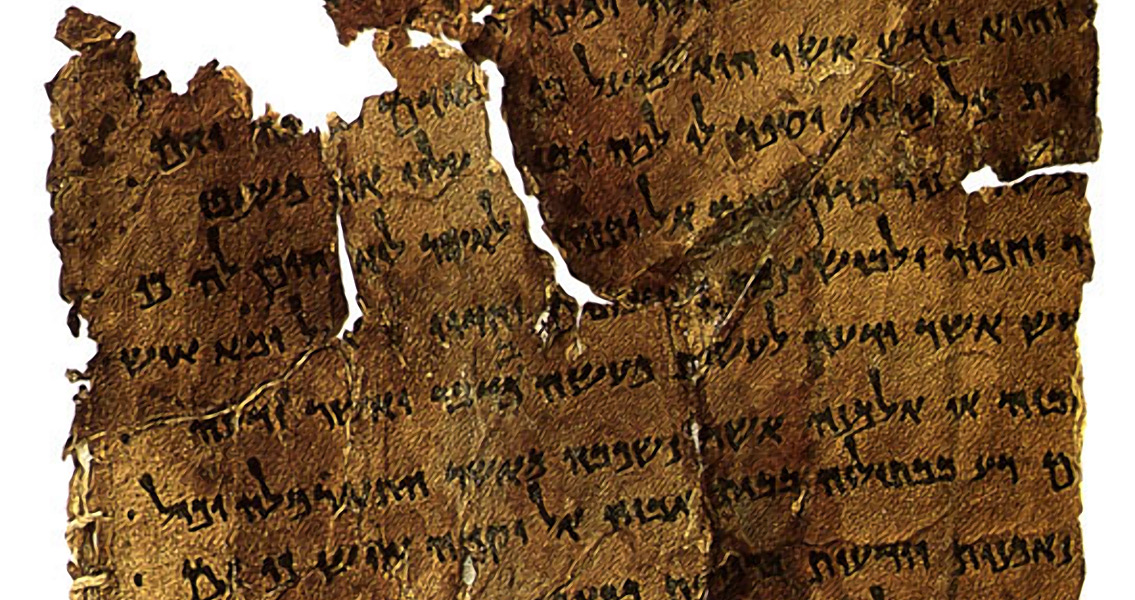
USA Today, Israeli archaeologists have dated the scroll to the seventh century BCE, the time of the First Temple. The scroll itself, written in ancient Hebrew, is made of papyrus; once translated it revealed the details of a purchase order for a shipment of wine, with the relevant text reading “from the King’s maidservant, from Na’arat, jars of wine, to Jerusalem.” The Israel Antiquities Authority robbery prevention unit recovered the papyrus. As it was initially discovered decades ago in the same region as the famous Dead Sea Scrolls, this shipping order was likewise well-preserved thanks to the dry, arid climate of the West Bank, a region also known as the Judean Desert. Eitan Klein, the unit’s deputy director, remarked that the newly-recovered and analyzed scroll is some of the rarest evidence that the Kingdom of Judah had some sort of organized administrative bureaucracy in place at the time. The find, Klein added, underlines just how central a role Jerusalem played as the financial capital of the entire kingdom during the time period, especially the second half of the seventh century BCE. There are three possible kings that the wine might have been intended for, Klein said, based on historical data gleaned from the Hebrew Bible. Israel Hasson, the director of the IAA, remarked that this new discovery proves that the caves of the Judean Desert hold an untold number of archaeological finds of such tremendous importance. Calling for a systematic investigation into the desert cave systems, Hasson added that time is of the essence, considering how delicate these scrolls are – and how susceptible they are to changing climatic conditions. The new find is not without controversy, however, especially in light of a highly contentious and criticized decision by UNESCO, the world heritage administrative arm of the United Nations, to ratify a pair of resolutions to refer to the Temple Mount – the epicenter of Jewish worship around the globe – exclusively by its Arabic name. While Jerusalem is considered the third holiest site in Islam behind Mecca and Medina, the decision to exclude Judaism’s ties to the city – and by extension the city’s ties to the Christian faith – has resulted in a public outcry from many in Israel’s government. One such politician, Miri Regev, a former Israeli Defense Forces brigadier-general and the current minister of culture and sport for the country, seized on the discovery of the papyrus scroll as a tool for politicizing the event, declaring that the reference to Jerusalem was additional tangible proof that Jerusalem “was and will remain the eternal capital of the Jewish people.” Regev added that the Temple Mount, a site that she called “the very heart of Jerusalem and Israel”, will nonetheless continue to be the most holy site for Judaism and the Jewish people regardless of the UNESCO ratifications, both now and in the future. ]]>

Asahi Shimbun newspaper. The two weapons were located alongside the skeletal remains found within the tomb, indicating that the individual buried within was of high social status, according to the Kagoshima University Museum’s Tatsuya Hashimoto. An associate professor of archaeology who was involved in the research, Hashimoto remarked that the swords likely belonged to someone very close to the upper echelons of the Yamato kingdom, perhaps even a servant to someone close to the king of the dynasty which once ruled Japan during the third to seventh centuries CE (known as the Kofun Period). Burial Site 139’s style and construction reinforce its ties to the Kofun Period, as it matches other underground tunnel tombs found in the Mizazaki prefecture and the nearby Kagoshima prefecture. In addition to the swords, there were two sets of remains found in 139, additional weapons and armor, and grave goods such as horse harnesses as well. Careful curation work by the Gangoji Institute for Research of Cultural Property was conducted on both swords. One weapon was found to be approximately 142 centimeters long, including the remains of a wooden pommel; researchers say that the fully reconstructed length of the sword would be approximately 150 centimeters, giving it the title of the longest sword ever found in an ancient Japanese tomb. Details such as a warp-patterned brocade on the scabbard of the sword further distinguish the weapon, as there have only been three other archaeological finds of the expensive textile, known as “tatenishiki”, dating back to the Kofun Period. The other weapon, an 85 centimeter long sword with a round pommel decorated with silver, features hilt wrappings made from granular ray skin. Researchers believe that the sword originated from the Paekche Kingdom, one of the “Three Kingdoms” that once ruled the Korean Peninsula. Paekche is thought to have had strong ties to Yamato Japan. Surviving historical documents indicate that cultural exchange between the two regions was strong, with the Korean kingdom exporting works of art and religious teachings in exchange for military aid in its struggles with its neighbors – reinforcing the theory that the ray-skin decorated sword might have been made there and was then purchased by, or given as a gift to, one of the individuals found in Burial Site 139. ]]>

Science Daily, “The new excavations and the accompanying architectural survey will provide us for the first time with detailed insights into what happened on the shores of the Sea of Galilee before the palace was built and after it was destroyed by the earthquake of 749 AD. Our results will then contribute to the future development of the site.” ]]>
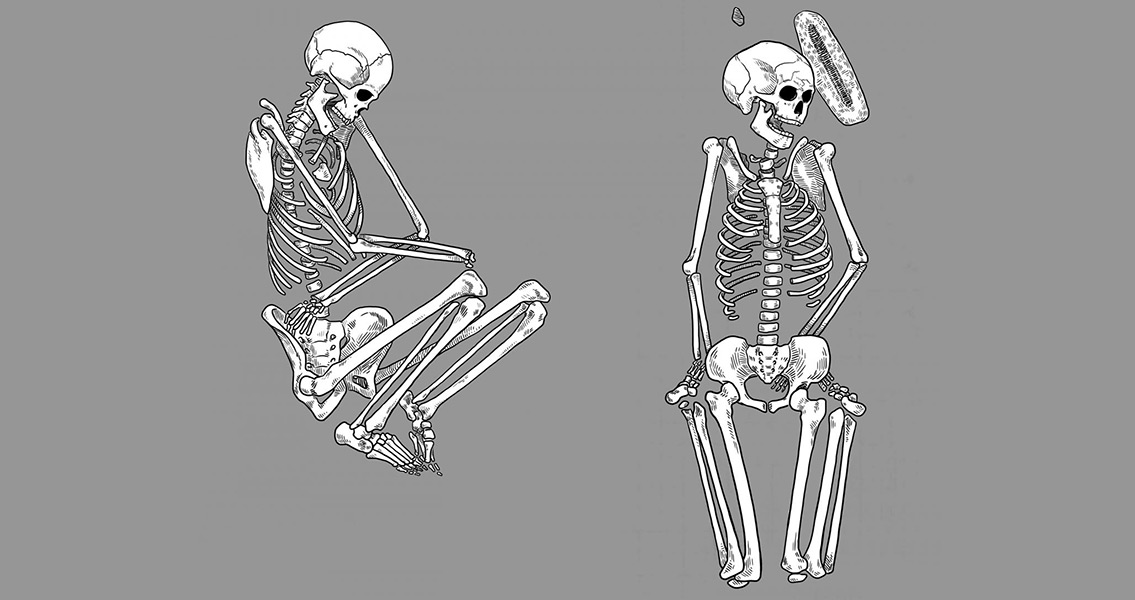
here Illustration by Caitlin McPherson]]>

works of Flavius Josephus our knowledge of early Jewish history would be littered with massive gaps. The Jewish priest, scholar and historian wrote crucial texts on the Jewish Revolt and subsequent Roman suppression as well as earlier Jewish history, even making references to the life of Jesus. In particular, his writings give us a glimpse into the dramatic Second Temple Period. Even now, Josephus’ works are used by historians to gain an insight into events such as the Roman siege of Jerusalem in 70 CE. As excavations continue to explore the supposed site of the siege, it’s remarkable how often artefacts and evidence support the general narrative of Josephus’ writings. Two of his works are particularly crucial for the study of Jewish history. The first, ‘History of the Jewish War’, was written in seven volumes between 75 and 79 CE. At the start of the book there is a brief outline of Jewish history from the second century BCE, before launching into a detailed account of the Jewish-Roman War. The siege of Jerusalem is described in fine detail while the book also depicts the invincible might of the Romans, suggesting the revolt was likely doomed from the start. Additionally, the work deals with the causes of the revolt, highlighting it was an inevitable backlash to the harsh reality of life under Roman rule. ‘The Antiquities of the Jews’ is a much broader work, tracing the history of Judaism from creation up until the outbreak of the revolt. It is widely considered by historians to have been an attempt to present Judaism to the Romans and Greeks in a positive light; to distance the religion from the fanatical reputation it had gained in light of the Roman-Jewish War. Fascinatingly, ‘The Antiquities of the Jews’ contains references to Jesus Christ. In Book XX he is referred to as the “so-called Christ”, while a later reference refers to Christ’s divinity, something that many assume was in fact added by a Christian copyist. Most significantly, the work preserved many sources that otherwise could have been lost, making it vitally important for Jewish history. Details of Flavius Josephus’ early life are far from clear. Some accounts claim he was born in Jerusalem in 37 CE, his father a man connected to the Jewish church, his mother from a royal blood line. Others argue that he was born in Sadducee, to an aristocratic family. He excelled in his studies and eventually joined the Pharisees, a Jewish religious party infamous for distancing themselves from the Jewish nationalism which culminated in the revolt. The Pharisees were willing to submit to Roman rule, provided they could maintain religious independence. Despite his allegiance to the Pharisees, when the Jewish-Roman war broke out Josephus led forces against the Romans at Galilee. He eventually surrendered to the Romans at the siege of Jotapata, ignoring the calls of his men to fight to the death. After capture by the forces of Vespasian, Josephus managed to win the future emperor’s favour, entering his circle of trust and eventually completely defecting to the Romans (hence his Latin name). Josephus became completely absorbed into Roman society, giving his children Roman names and becoming a regular figure in the court of the emperor. Although his works show he stayed connected to Judaism, writing several retorts to the criticism leveled at the religion in the Roman and Hellenic world, he was denounced as a traitor by the Jews. A controversial figure in the history of Judaism who is often portrayed as a self-serving traitor, Josephus’ works nevertheless provide a crucial insight into a crucial period of history. The works are occasionally blighted by exaggeration, poor chronology or obvious bias reflecting the writer’s Pharisee beliefs, but they have been crucial in helping modern historians piece together the relationship between Judaism and the Roman Empire.]]>
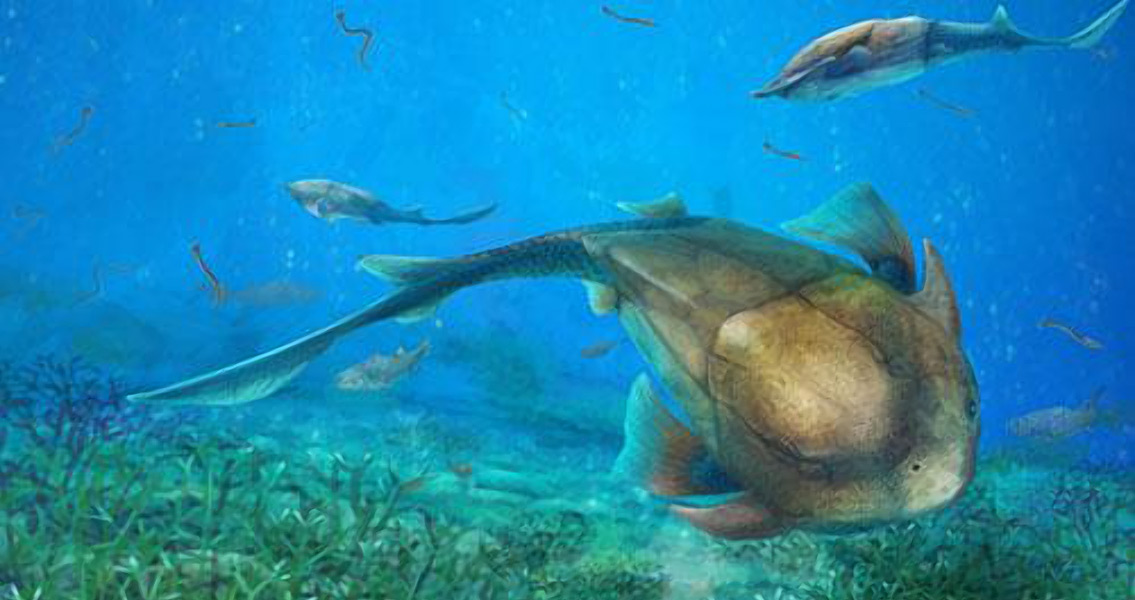
Qilinyu rostrate, a fish-like Silurian placoderm species, has led to new information regarding the evolution of the jaw in vertebrate species. The roughly 423 million year old fossil is approximately 126 millimeters in length – with an estimated total body length for the creature of 20cm – and is associated with several different species including the Guiyu and Megamastax (classified as osteichthyans), the Entelognathus (a maxillate placoderm) and the Dunyu (a galeaspid). Osteichthyans, which include tetrapods and bony fish species, have facial and bone structure differences when compared to placoderms. The discovery of Entelognathus revealed a placoderm with many facial characteristics more suited to osteichthyans, but the relationship between Entelognathus’ development and the rest of the placoderms from the same time period remained uncertain until this new discovery. According to a recently published research study by the Chinese Academy of Sciences, Sweden’s Uppsala University, and the Institute of Vertebrate Paleontology and Paleoanthropology of Beijing, the new Qilinyu fossil bridges the gap between placoderms such as Entelognathus and osteichthyans. The new specimen, according to the team of international researchers, has dentary, premaxilla, and maxilla structures that are constructed in the same way as the gnathal plates of less advanced placoderms while also predating the addition of certain lower jaw bones that characterized the evolutionary move away from gnathal jaws to maxillate ones. According to Uppsala University professor Per E. Ahlberg, one of the authors of the new study, examining the jaw bones of both Qilinyu and Entelognathus reveals that both fish species combine the characteristics of placoderm gnathal plates and bony fish jaw bones. Extrapolating from these findings, Professor Ahlberg remarked that if gnathal plates from placoderm species represented an inner jaw arcade that was similar to certain bones of bony fish species, there would be an expectation to find gnathal plates in distinct locations in Qilinyu and Entelognathus. With no evidence of these gnathal plates, the professor states that one interpretation of this is to conclude that the jaw bones of humans are lightly remodeled gnathal plates of placoderms, accomplished through several hundred million years of evolutionary process. Based on the team’s findings, Professor Ahlberg remarked that it looks as if substantial anatomical details of humanity can be traced back even beyond early bony fish species, into the Silurian period in the form of these “ungainly” placoderm species. The scientific community has largely agreed with the team’s findings, with John Long, the Society of Vertebrate Paleontology’s president and professor from Australia’s Flinders University, commenting that the new insights into Qilinyu help to fill a large gap in the evolution of vertebrate jaws. The new research study, published recently in the journal Science, can be found online here Image drawn by YANG Dinghua]]>