Categories
Breaking News

The Plague’s Stone Age Origins – History News of the Week

Plague Came to Europe in the Stone Age The plague likely entered Europe during the Neolithic era with a large-scale migration of people from the Eurasian Steppe, according to new research from the Max Planck Institute for the Science of Human History. If correct, the new findings suggest that the plague causing Yersinia pestis bacteria arrived in Europe millennia before the first known historical epidemics. The scientists from the Max Planck Institute have sequenced the first six European genomes of Y.pestis as part of research that aims analyse ancient forms of the disease in a bid to understand its evolution. Over 500 tooth and bone samples from Germany, Russia, Hungary, Croatia, Lithuania, Estonia and Latvia were screened for Y.pestis in the latest study. Six full Y.pestis genomes were recovered from the remains. It’s been deduced that the plague likely entered central Europe at the same time as nomads from the Caspian-Pontic Steppe around 4,800 years ago. Significantly, the Y.pestis genomes from this period were all closely related despite having been found at different sites across the continent. “This suggests that the plague either entered Europe multiple times during this period from the same reservoir, or entered once in the Stone Age and remained there,” explains Aida Andrades Valtueña of the Max Planck Institute for the Science of Human History, first author of the study. To clarify which scenario was more likely, the scientists examined their data in the context of the existing archaeological and ancient DNA evidence regarding the movement of peoples during the same period. “In our view, the human genetic ancestry and admixture, in combination with the temporal series within the Late Neolithic-Bronze Age Y. pestis lineage, support the view that Y. pestis was possibly introduced to Europe from the steppe around 4,800 years ago, where it established a local reservoir before moving back towards Central Eurasia,” explains Alexander Herbig of the Max Planck Institute for the Science of Human History, a corresponding author of the study. The study detailing the research has been published in the journal Current Biology. Origins of Gold Answered? New light has been shed on the origins of gold by an international team of researchers. One of our planet’s most intriguing mysteries, the origins of gold have puzzled scientists for centuries, with no satisfactory explanation yet developed. Published in the journal Nature Communications, the new research has established that gold came to the Earth’s surface from the mantle, the layer separating the Earth’s crust from its nucleus. The internal movements of the planet were behind the ascent and concentration of the precious metal. Evidence of the process has been found in the Deseado Massif at the Argentinean Patagonia, an area which represents the first register of gold found under the South American continent. “The minerals we extract and which support our economy are located in the crust. And, although we are experts in taking advantage of them, we still know very little about their true origin. The search for gold has motivated migrations, expeditions and even wars, but its origin is one of the main questions in the field of mineral deposits genesis,” said José María González Jiménez, a Ramón y Cajal researcher from the Department of Mineralogy and Petrology at the University of Granada. Studying xenoliths- small fragments from the earth’s mantle which have been brought to the surface through volcanic eruptions, the scientists found tiny native gold particles, whose thickness is that of a human hair and whose origin is the deep mantle. The mantle’s upper limit is located at about 17 kilometres under the oceans and 70 kilometres under the continents. The Deseado Massif is one of the largest auriferous provinces in the whole planet, with gold mines that are still being exploited. The area’s high concentration of gold has given the scientists an insight into why mineral deposits are limited to certain specific regions. “Said history dates back 200 million years, when Africa and South America were part of the same continent González Jiménez explained. “Their separation was caused, among other factors, by the ascent of a ‘mantle plume’ from the deep mantle, which broke the crust (much thiner and fragile) and caused the separation of the two continents. The ascent of said deep mantle plume generated a true chemical factory that enriched the mantle with metals, which would later generate the conditions for the creation of gold deposits. This time the process was caused by the movement of a tectonic plate under another, allowing the circulation of metal-rich fluids through the cracks, which precipitated the metals and concentrated them near the surface”. The international team of researchers behind the study includes scientists from Chile, Australia and France. Featured Image: Map of proposed Yersinia pestis circulation throughout Eurasia. A) Entrance of Y. pestis into Europe from Central Eurasia with the expansion of Yamnaya pastoralists around 4,800 years ago. B) Circulation of Y. pestis to Southern Siberia from Europe. Only complete genomes are shown. Credit: Aida Andrades Valtueña. Andrades Valtueña et al. (2017). The Stone Age Plague and its Persistence in Eurasia. Current Biology. ]]>

Categories
Breaking News

Inequality’s Deep Roots – The History News of the Week

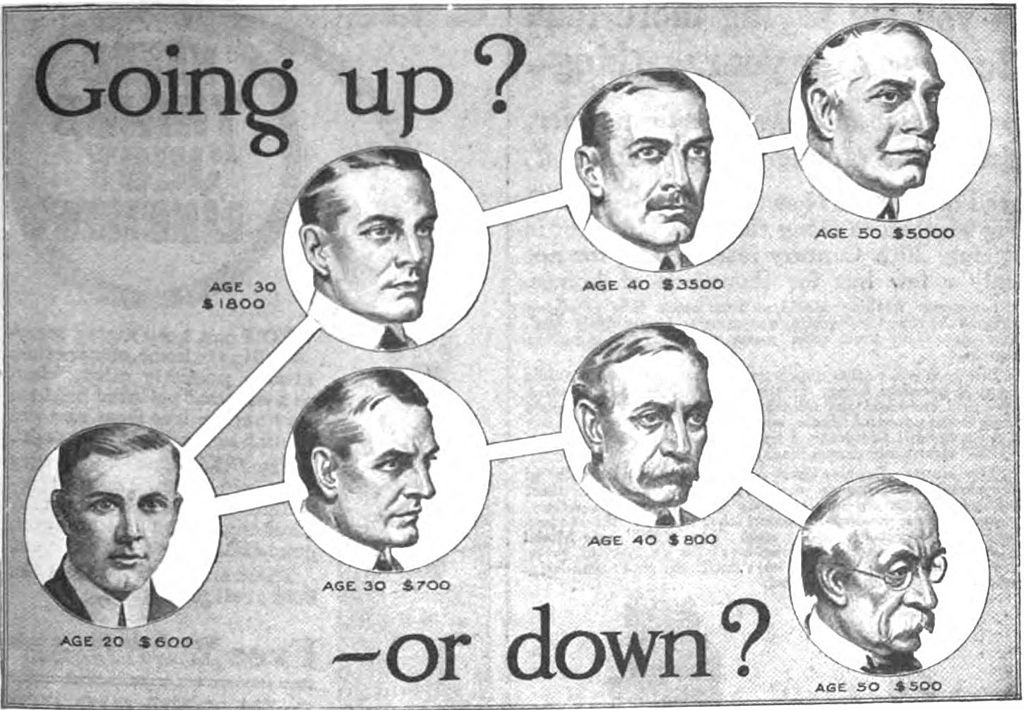
Inequality Started with the Rise of Agriculture New research claims that the rise of economic inequality in human societies can be traced all the way back to the dawn of agriculture. Published in the journal Nature, the research involved academics from fourteen different institutions, and was led by Tim Kohler from Washington State University (WSU). The findings have profound implications for modern societies, the authors believe. “Inequality has a lot of subtle and potentially pernicious effects on societies,” Kohler explained. The researchers based their findings on the Gini coefficient, a commonly used measure of inequality developed over a century ago by Italian statistician and sociologist Corrado Gini. On this system, a country with total wealth equality would have a Gini coefficient of zero, while a country with all the wealth concentrated in one household would have a Gini Coefficient of one. House sizes were compared at 63 different archaeological sites, and the researchers used this data to assign Gini coefficients. It was found that hunter-gatherer societies typically had lower wealth disparities, with a median Gini of .17. This is likely because their nomadic lifestyles would have made wealth accumulation difficult, and passing it on to future generations even more so. Small-scale, low intensity farmers (horticulturalists) had a median Gini of .27, while large scale agricultural societies had a median Gini of .35. One remarkable observation by Kohler’s team is that inequality continued to rise in the Old World, but plateaued in the New World. According to Kohler, this is down to the ability of Old World societies “to literally harness big domesticated mammals like cattle and eventually horse and water buffalo.” Draft animals, which were not available in the New World, let rich farmers till more land and expand into new areas. This increased their wealth while ultimately creating a class of landless peasants. “These processes increased inequality by operating on both ends of the wealth distribution, increasing the holdings of the rich while decreasing the holdings of the poor,” the researchers write in their study. Bronze metallurgy and a mounted warrior elite further increased the Gini coefficient in the Old World, allowing some individuals to live in massive houses and make territorial conquests, the benefits of which were inherited by their descendants. The researchers’ models put the highest Gini numbers in the ancient Old World at .59, close to that of contemporary Greece’s .56 and Spain’s .58. It is well short of China’s .73 and the United States .80, a 2000 figure cited in the Nature paper. The 2016 Allianz Global Wealth Report puts the U.S. Gini at .81 and Kohler said in a WSU press release he has seen the U.S. Gini reported as high as .85, “which is probably the highest wealth inequality for any developed country right now.” For Kohler, the current high Gini number in the US should be a cause for concern. “People need to be aware that inequality can have deleterious effects on health outcomes, on mobility, on degree of trust, on social solidarity–all these things,” he said in a WSU statement. “We’re not helping ourselves by being so unequal.” Kohler has documented four periods of growing inequality among the ancient Pueblo people of the American Southwest, all of which ended in violence and greater equality. The last of these was particularly dramatic – coinciding with the complete depopulating of the Mesa Verde area. “In each case, you see not just this decline in Gini scores, but we also see an increase in violence that accompanies that decline,” Kohler said. “We could be concerned in the United States, that if Ginis get too high, we could be inviting revolution, or we could be inviting state collapse. There’s only a few things that are going to decrease our Ginis dramatically.” 14 Million Years Ago, Madrid Was a Desert A new study claims that the central Iberian Peninsula, an area that covered what is now Madrid, was an arid savanna during the middle Miocene period. The research, led by the Complutense University of Madrid and published in the journal PLOS ONE, compared mammal assemblages from different localities in Africa and South Asia with those that inhabited the Iberian central area 14 million years ago. Through paleontological studies of the fossil vertebrate remains found at the Somosaguas site in Madrid, the researchers have been able to infer the environment that existed there. The central premise behind the research is that the body size of every species is largely influenced by the environmental conditions of their habitat. Elephants in humid places such as Asian jungles, for instance, are smaller than those living in dry places like African savannas. “Based on this premise, the distribution of sizes within a mammal community can offer us valuable information about its climatic context”, explains Iris Menéndez, a researcher at the Department of Paleontology of the UCM and the Institute of Geosciences (UCM and CSIC). From their analysis, the palaeontologists have inferred that the centre of the Iberian Peninsula witnessed ‘a very arid tropical climate with a high precipitation seasonality’. After a brief wet period, the annual dry season could last up to ten months. “These results confirm the previous inferences on the savanna environment of Somosaguas in the Miocene, but placing this habitat at their driest estimated, within the limits between the savanna and the desert”, says Menéndez. Climatic parameters from more than 60 modern day Asian and African sites were compiled as a point of comparison for the study. “For this purpose, we made a compilation of information on mammalian fauna lists, their body sizes, and climatic parameters for these localities, such as temperatures and precipitation. Based on this data, we developed statistical models suitable for the inference of different climatic parameters in the past”, explained the UCM researcher. “We included the information on the 26 mammal species found in the Somosaguas site, which allowed us to infer the environment by comparison with the extant assemblages”. Neanderthals Lived in Spain for 3,000 Years Longer Than Thought Neanderthals survived in Spain long after they had died out every else, new research claims, suggesting our extinct cousins lived in Spain 3,000 years longer than is traditionally believed. According to the international team of researchers who carried out the study, the findings suggest that the process of modern human populations absorbing Neanderthal populations through interbreeding was not a regular, gradual wave of advance but a “stop-and-go, punctuated, geographically uneven history.” Over a period of ten years the researchers excavated three new sites in southern Spain, where they unearthed evidence of Neanderthal materials from as recently as 37,000 years ago. “Technology from the Middle Paleolithic in Europe is exclusively associated with the Neanderthals,” said Dr. João Zilhão, from the University of Barcelona and lead author of the study. “In three new excavation sites, we found Neanderthal artefacts dated to thousands of years later than anywhere else in Western Europe. Even in the adjacent regions of northern Spain and southern France the latest Neanderthal sites are all significantly older.” The Middle Paleolithic spanned from 300,000 to 30,000 years ago. It is widely acknowledged that during this time, anatomically modern humans started to move out of Africa and assimilate coeval Eurasian populations, including Neanderthals, through interbreeding. “We believe that the stop-and-go, punctuated, uneven mechanism we propose must have been the rule in human evolution, which helps explaining why Paleolithic material culture tends to form patterns of geographically extensive similarity while Paleolithic genomes tend to show complex ancestry patchworks,” Dr. Zilhão said. Dr. Zilhão believes that discovering and analysing new Neanderthal sites is the key to understanding the pattern of human evolution, and the true fate of the Neanderthals. “There is still a lot we do not know about human evolution and, especially, about the Neanderthals,” said Dr. Zilhão. “Our textbook ideas about Neanderthals and modern humans have been mostly derived from finds in France, Germany and Central Europe, but during the Ice Ages these were peripheral areas: probably as much as half of the Paleolithic people who ever lived in Europe were Iberians. Ongoing research has begun to bear fruit, and I have no doubt that there is more to come.” The study has been published in the journal Heliyon. Featured Image: Illustration from a 1916 advertisement for International Correspondence Schools, Scranton, Pennsylvania, a vocational school, in the back of a US popular science magazine. During the Industrial Revolution, income inequality in the US was very great, and education was seen as a route to social mobility. This advertisement uses the threat of poverty to recruit students. Part of advertising copy that appeared below the picture: “Here is your future charted for you, based on the actual average earnings of trained and untrained men. Which way will you go? You’ll either go up, through training, to a position that means good money and more comforts as the years go by, or you’ll go down, through lack of training, into the ranks of the poorly paid.” ]]>

Categories
Breaking News

Neanderthals Never Had a Chance – The History News of the Week

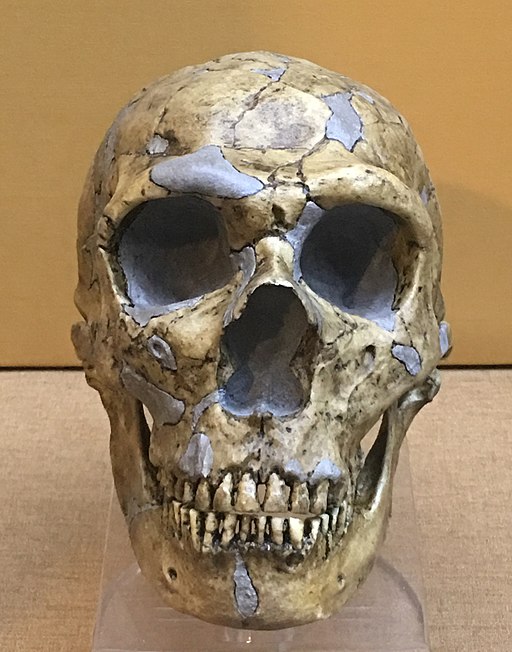
Neanderthals Were Always Doomed A new study, published this week in the journal Nature Communications, claims the Neanderthals were doomed the moment humans entered Eurasia. Scientists have long been trying to determine the cause of the Neanderthals’ extinction. Theories have ranged from the spread of humans providing too much resource competition for the Neanderthals’ to survive, to climate change or fundamental genetic limitations. The latest study suggests that the Neanderthals’ fate was inevitable. The Stamford University scientists used computer modelling to show that the migration of modern humans from Africa into Asia meant humans were always going to eventually replace Neanderthals, whatever factors might have played a role in the species’ collapse. “Here we show that a scenario of migration and selectively neutral species drift predicts the Neanderthals’ replacement,” the authors write in the introduction to their study. Neanderthals inhabited Eurasia for over 300,000 years, yet within 15,000 years of the arrival of modern humans to the region, our closest extinct living relatives were extinct. “We suggest that although selection and environmental factors may or may not have played a role in the inter-species dynamics of Neanderthals and modern humans, the eventual replacement of the Neanderthals was determined by the repeated migration of modern humans from Africa into Eurasia,” the authors write. “Our simple model suggests that recurring migration from Africa into the Levant and Europe—even at a low rate—was sufficient to result in the Neanderthals’ replacement even if neither species had a selective advantage over the other, and regardless of possible differences in population size between the two species.” Fossils of Humans’ Oldest Ancestors Discovered in Southern England Fossils of the oldest mammals from the line that led to mankind have been discovered on England’s Jurassic Coast. The small, rat like mammals lived 145 million years ago, at the time of the dinosaurs, and are the ancestors of most mammals alive today – from humans to blue whales. A team of researchers led by Dr Steve Sweetman from the University of Portsmouth identified the two fossilised teeth of the creatures found on the Dorset coast. Portsmouth graduate student Grant Smith made the initial discovery. “Grant was sifting through small samples of earliest Cretaceous rocks collected on the coast of Dorset as part of his undergraduate dissertation project in the hope of finding some interesting remains. Quite unexpectedly he found not one but two quite remarkable teeth of a type never before seen from rocks of this age. I was asked to look at them and give an opinion and even at first glance my jaw dropped,” Dr Sweetman explained in a University of Portsmouth press release. “The teeth are of a type so highly evolved that I realised straight away I was looking at remains of Early Cretaceous mammals that more closely resembled those that lived during the latest Cretaceous – some 60 million years later in geological history. In the world of palaeontology there has been a lot of debate around a specimen found in China, which is approximately 160 million years old. This was originally said to be of the same type as ours but recent studies have ruled this out. That being the case, our 145-million-year-old teeth are undoubtedly the earliest yet known from the line of mammals that lead to our own species.” According to Dr Sweetman, the animals were likely furry, nocturnal creatures. He believes the smaller one may have eaten insects and could have been a burrower, while the larger may have eaten plants as well as insects. “The teeth are of a highly advanced type that can pierce, cut and crush food. They are also very worn which suggests the animals to which they belonged lived to a good age for their species. No mean feat when you’re sharing your habitat with predatory dinosaurs.” The teeth were recovered from exposed rocks in cliffs near Swanage, a site which has yielded thousands of fascinating fossils in the past. According to Smith’s supervisor, Dave Martill, a professor of Biology at the University of Portsmouth, it quickly became apparent that they’d discovered something remarkable. “We looked at them with a microscope but despite over 30 years’ experience these teeth looked very different and we decided we needed to bring in a third pair of eyes and more expertise in the field in the form of our colleague, Dr Sweetman. “Steve made the connection immediately, but what I’m most pleased about is that a student who is a complete beginner was able to make a remarkable scientific discovery in palaeontology and see his discovery and his name published in a scientific paper. The Jurassic Coast is always unveiling fresh secrets and I’d like to think that similar discoveries will continue to be made right on our doorstep.” A study detailing the findings has been published in the journal Acta Palaeontologica Polonica. Ancient Egyptian Papyri Ink Contained Copper The black ink used by Ancient Egyptian scribes contained copper, according to new analysis by the University of Copenhagen of 2,000-year-old papyri fragments. It’s generally been assumed that writing ink was primarily carbon-based until the fourth and fifth centuries CE, but by carrying out X-ray microscopy on the fragments, the Danish researchers have shown that copper, an element never before identified in ancient ink, was used. Intriguingly, even though the papyri fragments were written over a period of three centuries and originate from different regions, the team’s results did not show much variation. “The composition of the copper-containing carbon inks showed no significant differences that could be related to time periods or geographical locations, which suggests that the ancient Egyptians used the same technology for ink production throughout Egypt from roughly 200 BCE to 100 CE,” said Egyptologist and first author of the study Thomas Christiansen from the University of Copenhagen. Private papers of an Egyptian soldier named Horus, who was stationed at a military camp in Pathyris, and the Tebtunis temple library, were the two primary sources of the papyri. The fragments all formed parts of larger manuscripts which are currently part of the Carlsberg Collection at the University of Copenhagen. “None of the four inks studied here was completely identical, and there can even be variations within a single papyrus fragment, suggesting that the composition of ink produced at the same location could vary a great deal. This makes it impossible to produce maps of ink signatures that otherwise could have been used to date and place papyri fragments of uncertain provenance,” explains Christiansen. “However, as many papyri have been handed down to us as fragments, the observation that ink used on individual manuscripts can differ from other manuscripts from the same source is good news insofar as it might facilitate the identification of fragments belonging to specific manuscripts or sections thereof.” The researchers suggest that their findings, which have been published in the journal Scientific Reports, could also greatly aid conservation efforts of ancient Papyri. Featured Image: Homo neanderthalensis skull – a hominid fossil reconstruction in the Beijing Museum of Natural History – China, July 2017. Image courtesy of Wikimedia Commons user: Bjoertvedt ]]>

Categories
Book Reviews

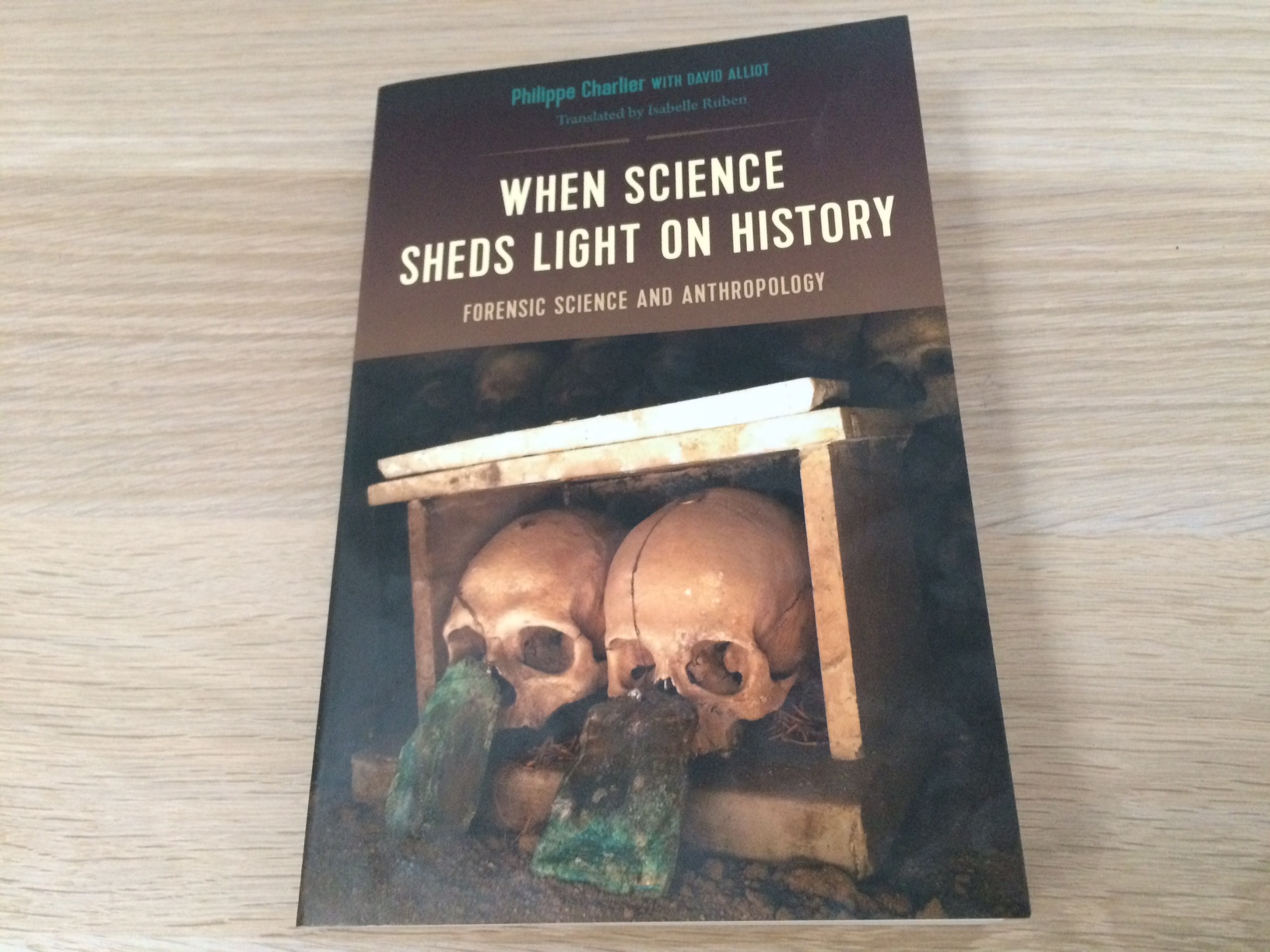
When Science Sheds Light on History – Book Review

Categories
Breaking News

History News of the Week – Minoan 'Masterpiece' Unearthed

Discovery of Minoan Sealstone Could ‘Rewrite’ History of Ancient Greek Art Researchers working at the tomb of 3,500 year old Bronze Age warrior in the southwest of Greece have unearthed an ‘intricately carved’ sealstone which University of Cincinnati (UC) archaeologists are heralding as one of the finest works of prehistoric Greek art ever discovered. Depicting an intense hand-to-hand battle, the artefact has been dubbed the ‘Pylos Combat Agate’. “Looking at the image for the first time was a very moving experience, and it still is,” said Shari Stocker, a senior research associate in UC’s Department of Classics “It’s brought some people to tears.” “What is fascinating is that the representation of the human body is at a level of detail and musculature that one doesn’t find again until the classical period of Greek art 1,000 years later,” explained Jack Davis, the university’s Carl W. Blegen professor of Greek archaeology and department head, in a statement from UC. Davis and Stocker have been leading a dig at the tomb of the Bronze Age warrior, which was first discovered in 2015. The tomb’s occupant has been dubbed the ‘Griffin Warrior’, and his final resting place has already yielded a wealth of fascinating artefacts, including four gold signet rings. The size of the hand carved stone is perhaps the most remarkable thing about it, measuring just 3.6cm in length. Many of its details can only be viewed with a powerful camera lens and photomicroscopy. “Some of the details on this are only a half-millimetre big,” said Davis. “They’re incomprehensibly small.” The dramatic image of a warrior plunging a sword into a shielded enemy’s neck is reminiscent of the kinds of scenes described in Homer’s Iliad. Although the researchers can’t say if the image reflects a Homeric epic, they’re confident it would be from a legend familiar to Minoans and Mycenaeans. “It would have been a valuable and prized possession, which certainly is representative of the Griffin Warrior’s role in Mycenaean society,” Stocker explained. “I think he would have certainly identified himself with the hero depicted on the seal.” The sheer skill that would have been needed to create the sealstone is causing a re-evaluation of the history and development of Ancient Greek art. “It seems that the Minoans were producing art of the sort that no one ever imagined they were capable of producing,” explained Davis. “It shows that their ability and interest in representational art, particularly movement and human anatomy, is beyond what it was imagined to be. Combined with the stylised features, that itself is just extraordinary.” “This seal should be included in all forthcoming art history texts, and will change the way that prehistoric art is viewed,” said Stocker. Date of Biblical Eclipse Pinpointed Researchers have determined the date of an ancient eclipse which is referred to in the Bible. They believe it could be the oldest date of a solar eclipse yet recorded. The researchers used a combination of the Bible and Ancient Egyptian texts to pinpoint the date of the eclipse to 30th October 1207 BCE. From this information they’ve been able to refine the dates of Egypt’s ancient pharaohs, particularly the reign of Ramesses the Great. Biblical scholars have long been perplexed by the book of Joshua, which describes Joshua leading the people of Israel in Canaan, a region which covers modern day Israel and Palestine. According to the Biblical text, Joshua prayed “Sun, stand still at Gibeon, and Moon, in the Valley of Aijalon. And the Sun stood still, and the Moon stopped, until the nation took vengeance on their enemies.” “If these words are describing a real observation, then a major astronomical event was taking place – the question for us to figure out is what the text actually means,” said paper co-author Professor Sir Colin Humphreys from the University of Cambridge’s Department of Materials Science & Metallurgy. “Modern English translations, which follow the King James translation of 1611, usually interpret this text to mean that the sun and moon stopped moving,” said Humphreys, who is also a Fellow of Selwyn College. “But going back to the original Hebrew text, we determined that an alternative meaning could be that the sun and moon just stopped doing what they normally do: they stopped shining. In this context, the Hebrew words could be referring to a solar eclipse, when the moon passes between the earth and the sun, and the sun appears to stop shining. This interpretation is supported by the fact that the Hebrew word translated ‘stand still’ has the same root as a Babylonian word used in ancient astronomical texts to describe eclipses.” Evidence that the Israelites were in Canaan between 1500 and 1050 BCE can be found in the Merneptah Stele, an Egyptian text dating from the reign of the Pharaoh Merneptah, son of Ramesses the Great. The large granite block, held in the Egyptian Museum in Cairo, says that it was carved in the fifth year of Merneptah’s reign and mentions a campaign in Canaan in which he defeated the people of Israel. Using an innovative eclipse code, one which considers variations in the planet’s rotation, the team determined that the only annular eclipse visible from Canaan between 1500 and 1050 BCE was on 30 October 1207 BCE, in the afternoon. If the team’s calculations, which have been published in the Journal of Astronomy and Geophysics, are correct, then it is possible to date the reign of both Ramesses and his son to within a year. “Solar eclipses are often used as a fixed point to date events in the ancient world, Humphreys said. If Humphreys et al’s results of accepted, then the reign of Merneptah began in 1210 or 1209 BCE. As it is known from Egyptian texts how long he and his father reigned for, it would mean that Ramesses the Great reigned from 1276-1210 BCE, with a precision of plus or minus one year, the most accurate dates available. Hitler Only Joined the Nazis After Being Rejected by Another Far-Right Group Adolf Hitler only joined the Nazi Party after being rejected by another far right group, a historian at Aberdeen University is claiming. According to the Independent, historian Dr Thomas Weber unearthed an unpublished document which reveals that the German Socialist party told Hitler in 1919 they did not want him in their party nor to write for their newspaper. Weber argues that this rejection by the German Socialist Party should be seen as a crucial historic event, a turning point which ultimately led to Hitler joining the Nazi party and becoming its leader. Weber suggests that Hitler would have found it much more difficult to rise to the leadership of the much larger German Socialist Party. “I can only speculate why they did not let him join but one would imagine it had something to do with the fact Hitler was opinionated and they did not want to have someone there who was telling them what to do,” he told the Independent. He added: “If he had been accepted into the German Socialist party he would have almost certainly remained on the sidelines. Hitler managed to push over the established leadership of Nazi party but that would have been very unlikely to have happened if he had joined the German Socialist party.” The document Weber has discovered is from the testimony of Hans Georg Grassinger, the founding chairman of the German Socialist party, reports the Guardian. It describes how, in 1919, Hitler approached Grassinger to join the Party. Hitler also asked Grassinger to borrow money. Hitler, who was 30 at the time, was informed that the party did not him in their ranks. Featured image: The tiny sealstone depicting warriors in battle measures just 1.4 inches across but contains incredible detail. Credit: University of Cincinnati ]]>