

here]]>
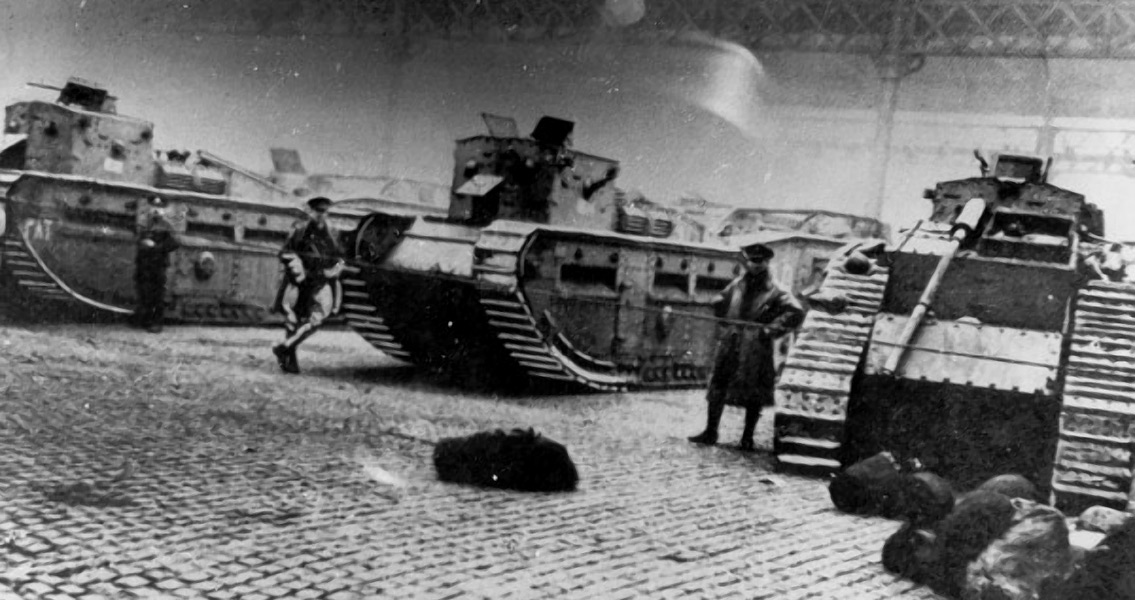


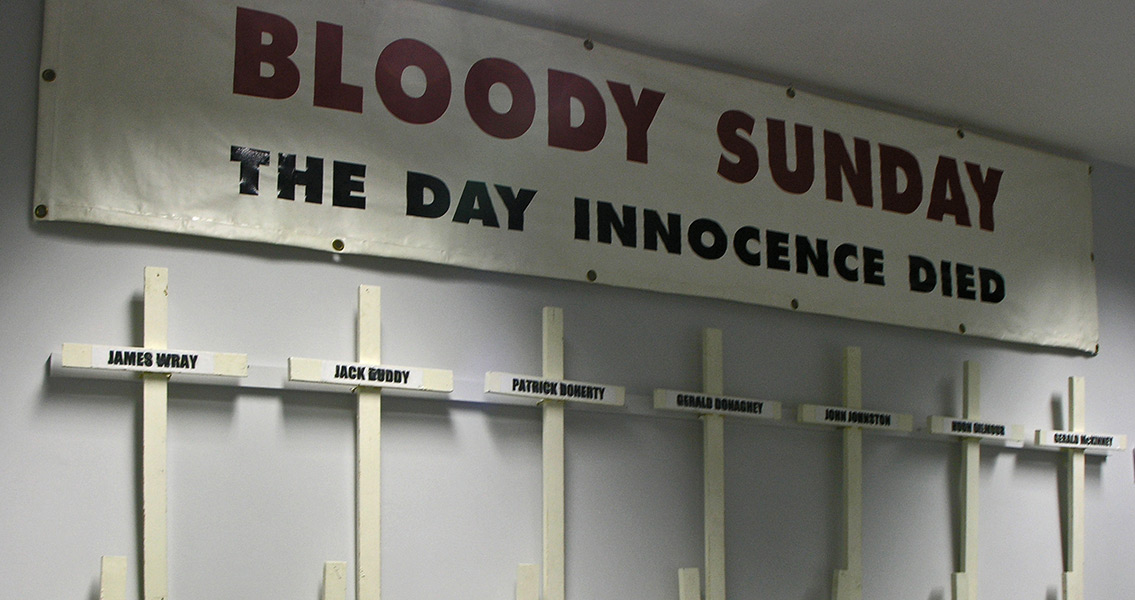
The Wolfe Tones – Go On Home British Soldiers Its depiction in Irish rebel songs such as ‘Go On Home British Soldiers’ shows that for many in Ireland the massacre was just another tragedy in a centuries old conflict between British imperialism and Irish nationalism. The Bloody Sunday massacre was absorbed into the tradition of rebel music which had for centuries railed against British interference in Ireland and Northern Ireland. It took decades for the British government to accept the responsibility of its military for the massacre. A controversial report, headed by High Court Justice Lord Widgery, was published in summer 1972. It exonerated the British troops, and suggested that the protesters had been carrying explosives and other weapons. It wasn’t until 2010 that a new report into the events was published, headed by Lord Savile it laid responsibility for the massacre with the British army and cleared all of the victims of any wrong doing. Among other crucial conclusions, it claimed the soldiers opened fire without warning and subsequently attempted to cover up their actions, and that the protesters were all unarmed. In November 2015 a former British soldier was arrested for questioning in regards to the shootings, showing that 44 years on, the Bloody Sunday massacre is yet to be truly resolved. Image courtesy of Wikimedia Commons user: SeanMack ]]>


Felis silvestris lybica (western wildcat). Researchers with the Chinese Academy of Sciences located in Beijing unearthed cat bones in 2001 while investigating several ancient agricultural settlements in the Shaanxi and Henan provinces of northern China. It was later determined that the bones were from around 3,500 BCE. However, knowing the age of the bones wasn’t enough evidence in and of itself to determine if a relationship between cats and humans already existed in the fourth millennium BCE, or if the cats had arrived in China from the Near East already domesticated. Enter the research team. Comprised of scientists from the French National Center for Scientific Research, the French Natural History Museum (MNHN), the University of Aberdeen, the Chinese Academy of Social Science and the Shaanxi Provincial Institute of Archaeology, the team tested mandibles from five of the Chinese cats from Shaanxi and Henan using geometric morphometric analysis, the only method capable of differentiating the bones of small cats (without using DNA) because their morphologies are so similar and the differences are frequently imperceptible with conventional methods. Even though there are at least four different types of small cats in China, evidence of the western wildcat has never been found there. The results of this analysis have conclusively determined that the bones all belonged to the Prionailurus bengalensis, (leopard cat) a distant cousin of the western wildcat. The answer: Cats were in fact domesticated in China prior to 3,000 BCE, based on the research team’s results. Still widespread in Eastern Asia today, the leopard wildcat is known for its tendency to frequent areas with a large human presence. Like the western wildcats of Egypt and the Near East, the leopard cats were likely drawn to the Chinese settlements due to the number of rodents attracted to grain stores. This is the same process that took place in Egypt and the Near East with the birth of agriculture during the eighth millennium BCE. Therefore, in at least three geographical locations on the planet, cat domestication was closely related to the start of farming culture. Still unknown: Since all modern cats are descendants of the western wildcat, when did this species replace the leopard cat in China? By way of the Silk Road? Perhaps with the Roman or Han empires? Will the world ever know? The complete report on these findings has recently been published in the journal PLOS ONE Image courtesy of Bernard DUPONT]]>


Eotrachodon orientalis, which means “dawn rough tooth from the east”, the name is also a tribute to the first duck-billed dinosaur ever discovered: the Trachodon. The details of the team’s research have just been published in the Journal of Vertebrate Paleontology. Erickson and colleagues say the Eotrachodon orientalis specimen measured between 20 and 30 feet long (between 6 and 9 metres) in life. It likely walked on its hind legs, occasionally coming down on to all four to graze on plants. The team are currently unable to say for sure how old the specimen was when it died, but according to Erickson, the highly vascularised bones suggest it had been growing rapidly before its death. This could suggest it was in adolescence, and would have grown even longer had it reached adulthood. The discovery has revealed a great deal about the development of Hadrosaurids. The family of dinosaurs lived during the Cretaceous Period which lasted for roughly 79 million years, from 145.5 million to 65.5 million years ago. One of the most common families of dinosaurs from the period, Hadrosaurid remains have been found in North America, Europe and Asia. The discovery in Montgomery County shows that the duck-billed dinosaurs originated in what is now the eastern United States. “This is a really important animal in telling us how they came to be and how they spread all over the world”, said Erickson, in a press release. During the Cretaceous Period the North American continent was divided into two landmasses: Laramidia to the west and Appalachia to the east, by a 1,000 mile ocean connecting the Arctic Ocean to the Gulf of Mexico. “For roughly 100 million years, the dinosaurs were not able to cross this barrier”, said Jun Ebersole, director of collections at McWane Science Center. “The discovery of Eotrachodon suggests that duck-billed dinosaurs originated in Appalachia and dispersed to other parts of the world at some point after the seaway lowered, opening a land corridor to western North America.” For more information: www.tandfonline.com Image courtesy of Jun Ebersole, McWane Science Center]]>