


Lemdubuoryctes aruensis however, the remarkably archaic new bandicoot fossil discovered by Alpin, didn’t live in a rainforest but on an expansive savannah plain stretching from Australia to New Guinea at the time of the last glacial maximum. “While retreating rainforests and spreading grasslands did provide a backdrop for ecosystem change 5-10 million years ago. The Australian fauna likely adapted via changing its distribution rather than undergoing wholesale extinction and replacement,” Michael Westerman, with La Trobe University in Australia, says in the article, adding, “This agrees with our results from DNA, which indicate that modern desert-living bandicoot groups pre-date the onset of aridity by as much as 40 million years.” These timeframes coincide with the proliferation of Eucalyptus woodlands in Australia’s interior. “Bandicoots, like other Australasian marsupials, probably occupied a range of different habitats over many millions of years. However, our study has further implications for future conservation. Arid zone bandicoots are amongst the most vulnerable mammals in Australasia today, with multiple species having gone extinct within the last 100 years. By demonstrating their profound evolutionary antiquity, we can thus serve to highlight how extremely urgent it is to protect these living fossils as part of Australia’s unique biodiversity”, Dr. Kear is quoted as saying in the Heritage Daily article. The study has been published in Scientific Reports. ]]>
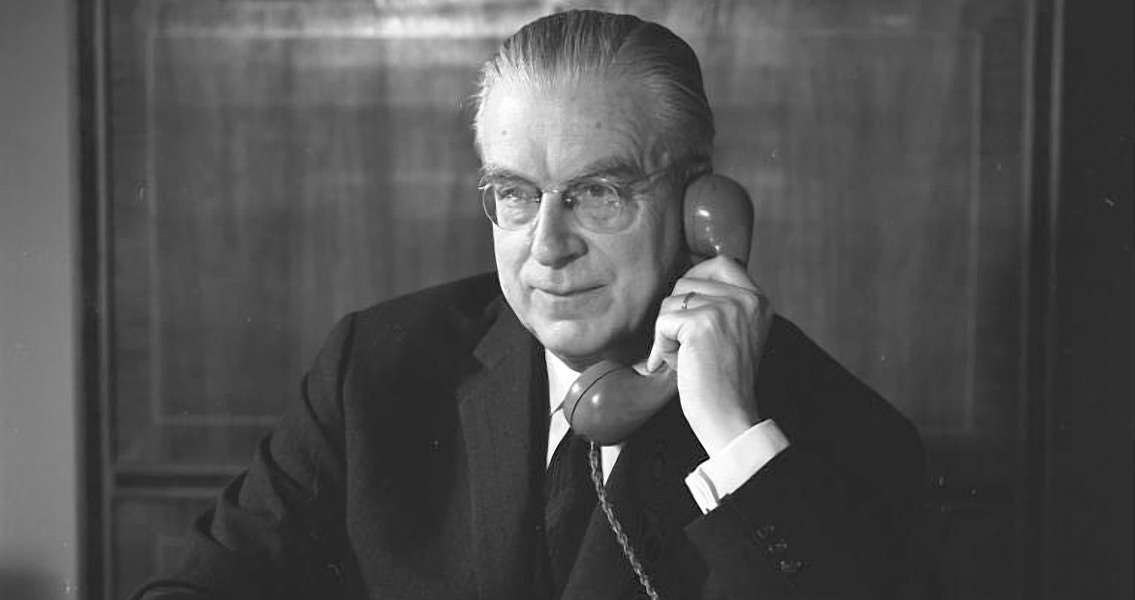
Adolf Eichmann, were eventually captured, while others managed to evade justice for the rest of their lives. While many who’d worked in the higher echelons of the Nazi regime were either killed in the Second World War or prosecuted at the Nuremberg Trials, lower level party members or soldiers were often allowed to continue unpunished, forging careers in Germany’s post war society. ]]>

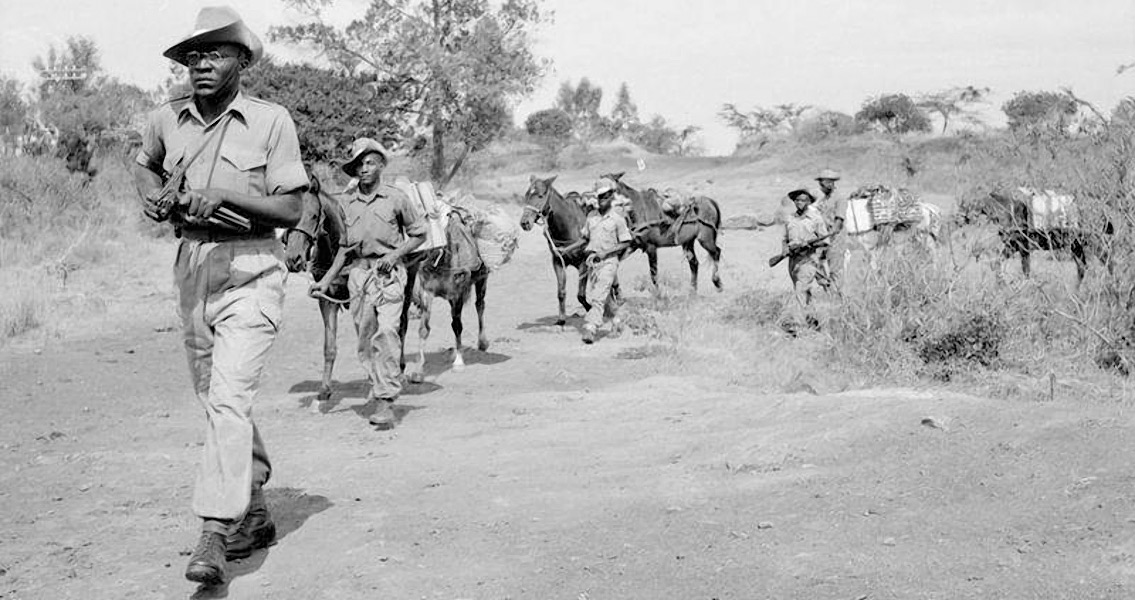
concentration camps created in the Boer War. 1.5 million Kikuyu, Embu and Meru civilians were feared to hold allegiances to the Mau Mau. As Dr Huw Bennet wrote in a 2015 Guardian article: “Africans living in the so-called Kenya Emergency areas were deemed guilty until proven innocent.” The majority of those people living in the Emergency Area were either sent to detention camps or forcefully relocated to new villages where they could be kept under heavy surveillance. Official records described these detention camps as rehabilitation centres, places where occupants received classes in home-crafts and civics. Any acts of violence or brutality reported were deemed isolated incidents, exceptional cases far from the norm. It is a description which matches the broader narratives given by defenders of the British Empire, a description that suggests a benevolent, civilising imperialist force. As the years went on however, sickening cracks started to appear in this account of British involvement in the Mau Mau uprising. Accusations of torture, beatings and sexual assault in the detention camps started to arise. Recent work by historians such as Bennet, David Anderson and Caroline Elkins has started to unravel the scale of the detention camp system. The figure for the number of detainees has been brought into question. Official accounts state 80,000 were held in the camps, while Elkins’ work suggests that number was in fact somewhere between 160,000 and 320,000. Meanwhile, the work of journalists and investigators at the time who exposed human rights abuses has also been revisited, helping paint a more detailed image of what truly happened. A pivotal question is to what extent the abuses at the camps in Kenya were the result of British government policy, as opposed to the excesses of individuals. It’s a controversy which garnered particular attention in 2014, when a group of elderly Kenyans launched a £200 million damages claim against the UK Government. In 2013, then UK foreign minister William Hague had admitted “The British government recognises that Kenyans were subject to torture and other forms of ill-treatment at the hands of the colonial administration”. Still, the true extent of the atrocities in the Mau Mau uprising and the level of complicity of the British government remain shrouded in ambiguity, in large part due to severe gaps in the records available. The eight years of the Mau Mau uprising saw 1,800 African civilians killed, an unknown number of Mau Mau rebels killed, 32 white settlers killed and 200 British soldiers killed. Beyond that, it stands as an atrocious moment at the close of Britain’s imperial history, the true extent, nature and meaning of which is still being unraveled. ]]>

The Times of Israel, dig leader Gilad Itach remarked that the figurine was discovered on the very final day of excavations, just prior to modern construction efforts commencing at the site. The pot itself is relatively characteristic of the period, Itach stated, but the statue that was added after it had been created is unique, as there have never been any discoveries of such a figurine in previous digs. Archaeologists say that the sculpture features an incredible attention to detail for its age. The arms and legs, as well as the face, seem to have been added on to the neck of the jug which was used as the base for the formation of the upper torso of the figure. Along with the figure, which measures seven inches in height, a large number of other items were found as well. Sheep and donkey bones were discovered at the dig site, in addition to an ax head, arrowheads and daggers. The items were likely used as burial goods, Itach explained, probably for the grave of one of the Canaanites who inhabited the region during the Middle Bronze Age. It would have been customary to provide a large number of funeral goods for prominent members of the community, the researcher remarked, as beliefs were that the objects individuals were interred with would have traveled with them to the next world. To Itach’s knowledge, this is the first burial to feature such a wide assortment of objects, especially the remarkable pottery find. The resemblance to “The Thinker” is quite uncanny. The face of the figure rests on one of its hands as it sits on the pot, looking as if it is lost in thought. There’s no way of telling whether the potter who created the jug added the figure or if a second craftsman did so, Itach added. The Yehud dig site yielded more than just the unique set of burial goods. Several other artifacts were discovered that date even older than the Middle Bronze Age, including a shattered earthenware butter churn and the remains of what might have been an ancient well dating to the Chalcolithic period, around 6,000 years in the past. Meanwhile, an earlier archaeological dig in Yehud in close proximity to the location of the statue revealed a massive necropolis dating to the Bronze Age containing nearly 100 pit graves. The remains of men, women and children were found within, complete with grave goods that included jewelry, animal bones, scarabs, pins, daggers and pots. Researchers say that the location saw continued use as a cemetery for several centuries afterwards as well. Images of the newly discovered artifact can be found here: here ]]>


Live Science. That was not always the case, however. “There are literally many thousands of Safaitic inscriptions and petroglyphs in the Jebel Qurma region, which suggests that people intensively used the area.” The petroglyphs (rock art) include renderings of lions, horses, gazelles and large birds – possibly ostriches. The writing found near the petroglyphs is mostly short texts of names. Several texts contain information on the activities of people, while a few hint of a conflict between the people of Jebel Qurma and the Nabataeans, the people responsible for building the ancient city of Petra. One such inscription reads: “I am on the lookout for the Nabataeans.” Other inscriptions describe the challenges and obstacles encountered by the residents of Jebel Qurma. “May there be strength against hunger,” one text reads, while another describes a man who was “distraught over his beloved.” Specialists are analyzing petroglyphs and texts to get a clearer understanding as to their meaning and the reason they were created. “The precise reason for producing rock art — inscriptions and/or representations — is still unclear and open to discussion. What was the message which the producers of the rock art tried to convey?” Akkermans asks in Live Science. In addition to the inscriptions and rock art, archaeologists discovered the remains of shelters, camps and tombs which were used by the people living in the area, who were likely nomadic. The team continues to look for additional evidence indicating what the environment may have been like in ancient times and how the landscape turned into the desolate region of today. “Our excavation at one site revealed masses of charcoal from the third century A.D., which appeared to represent several taxa [groups] of trees, which needed water year-round,” Akkermans says in the Live Science article. “Hence, the conditions in at least the third century A.D. may have been quite different from today. This is certainly something I wish to explore in the next field seasons, by coring for pollen.” The goal of the Jebel Qurma Archaeological Landscape Project is to study the extraordinary archaeological heritage in Jordan’s Black Desert. The project involves field surveys and excavations in the Jebel Qurma range east of the oasis of Azraq, close to the Jordan-Saudi border. The findings have been published in the American Journal of Archaeology. ]]>

Live Science, researchers from the Norwegian Institute for Cultural Heritage Research (NIKU) say that they have found the remains of the church where the Norwegian king’s body was taken in 1031, when he was raised to sainthood and became known as Saint Olaf. The former Viking raider was baptized into the Roman Catholic faith in 1013, shortly before embarking on a quest to unite the disparate kingdoms of Norway under a single ruler – a task he accomplished in 1016. Olaf ruled as king until 1028, when he was deposed and forced to flee to Russia. In 1030 he attempted to retake the throne, only to be killed in battle at Trondheim, where he was buried. The following year, after rumors had spread how the dead king had been associated with the performance of many local miracles, his body was exhumed. Upon discovering that Olaf was in a state that satisfied the church’s requirements for miraculous preservation, the English Bishop Grimkell declared Olaf a saint, having him reinterred in St. Clement’s Church. While the earthly remains of St. Olaf no longer reside on the site – they were relocated to the site of Trondheim’s Nidaros Cathedral at a later date – NIKU researchers now believe they have found the stone foundation of the original St. Clement’s Church. Additionally, a small rectangular stone platform was uncovered at the east end of the building, which archaeologists surmise as the base of the altar of the church – the very same alter that would have been constructed over the grave of Saint Olaf. Anna Petersén, the site’s excavation director, remarked that the church has a unique place in the intersection of Norwegian politics, culture, and religion. Put in a historical perspective, a large proportion of the Norwegian national identity has its roots in the canonization of Olaf Haraldsson, and the recently discovered church is literally the place where that process began. In life, King Olaf was arguably Christian in name only, as while he had been baptized to the Catholic faith his rule is categorized historically as harsh enough to warrant him becoming deposed in 1028. A former Viking raider, Haraldsson spent time in England, where he pledged his sword to King Ethelred to fight against the Danes, a common enemy – King Canute of the Danes was instrumental in providing support to the Norwegian nobles that overthrew their heavy-handed monarch a little over a decade into his reign. While Bishop Grimkell declared the dead king a saint in 1031, he was not officially recognized as such by the Roman Catholic Church until 1164, when he was canonized by Pope Alexander III. Despite his problematic reign, Saint Olaf is seen as a figure of Norwegian independence. The Norwegian coat of arms features a representation of Saint Olaf in the form of the ax held by a crowned rampant lion on a red field. ]]>