Categories
Breaking News

History News of the Week – St. Francis of Assisi Myth, Neanderthal Children, and the Rapa Nui

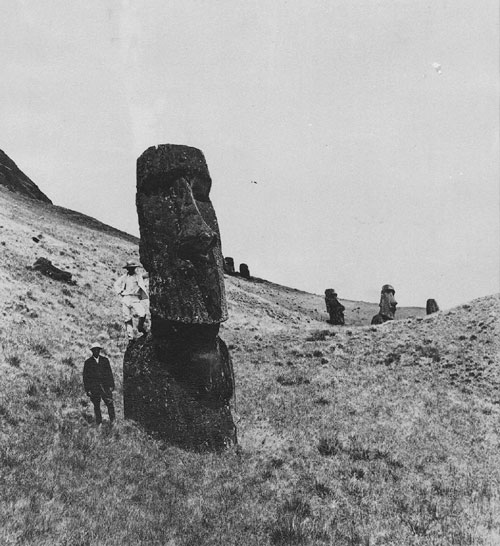
Saint Francis of Assisi Myth Proven true? For more than seven centuries the Friary of Folloni near Montella in Italy has gone to great lengths to protect some small fragments of textile. This is because of a myth claiming the fragments originate from a sack of bread that appeared on the doorstep of the friary in the winter of 1224, a sack allegedly sent from Francis of Assisi and carried to the friary by an angel. Now, an international team of scientists has determined that at least part of this myth is true. C-14 analysis has confirmed that the textile can be dated to between 1220-1295, while there is also evidence that bread had been kept in the sack. “Our studies show that there was probably bread in the sack. We don’t know when, but it seems unlikely that it was after 1732, where the sack fragments were inmured in order to protect them. It is more likely that bread was in contact with the textile in the 300 years before 1732; a period, where the textile was used as altar cloth — or maybe it was indeed on the cold winter’s night in 1224 — it is possible,” said research leader Kaare Lund Rasmussen, a specialist in archaeo-chemical analysis from the University of Southern Denmark, and the leader of the research team. Unfortunately, the researchers have not been able to address the question of how the bread sack ended up at the friary. “This is maybe more a question of belief than science,” said Rasmussen, in a statement. The results of the study have been published in the journal Radiocarbon. New Insights Into How Neanderthals Grew Pioneering research has shed light on how Neanderthals, the closest extinct evolutionary cousins to modern humans, grew. A study led by Antonio Rosas, researcher at the Spanish National Research Council (CSIC), looked at the fossilised remains of an eight-year-old Neanderthal child’s skeleton to establish whether there are any differences in the growth of Neanderthals and Homo sapiens. Published in the journal Science, the study determined that both species do indeed regulate their growth differently. Neanderthals had a greater cranial capacity than modern humans, an intracranial volume of 1,520 cubic centimetres for a Neanderthal adult compared to 1,195 cubic centimetres for a modern human. Tellingly, the intercranial volume of the Neanderthal child had already reached 1,330 cubic centimetres at the time of his death. In other words, it had reached 87.5% of the total by around eight years of age. For a modern human child, the full development of cranial capacity would already have been reached by that age. “Developing a large brain involves significant energy expenditure and, consequently, this hinders the growth of other parts of the body. In sapiens, the development of the brain during childhood has a high energetic cost and, as a result, the development of the rest of the body slows down,” Rosas explained. According to the research, the skeleton and dentition of the young Neanderthal present a physiology which is similar to that of a sapiens of the same age, except for the thorax area, which corresponds to a child between five and six years, in that it is less developed. “The growth of our Neanderthal child was not complete, probably due to energy saving”, explains CSIC researcher Antonio Rosas. It was also determined by the study that the maturation of the Neanderthal child’s vertebral column occurred around two years later than it would in an anatomically modern human. In all hominids, the cartilaginous joints of the middle thoracic vertebrae and the atlas are the last to fuse, but in this Neanderthal, fusion occurred about two years later than in modern humans. “The delay of this fusion in the vertebral column may indicate that Neanderthals had a decoupling of certain aspects in the transition from infancy to the juvenile phase. Although the implications are unknown, this feature could be related to the characteristic enlarged shape of the Neanderthal torso, or slower brain growth”, says Rosas. New Insight into the Size of Rapa Nui’s Population When Europeans first arrived on Rapa Nui (aka Easter Island), they estimated the population to be between 1,500 and 3,000, numbers which seemed strikingly low considering the nine hundred giant stone statues located around the island. Now, a new study hopes to give a new estimation of the population of Rapa Nui, based on the island’s farming potential, and hopefully provide some explanation as to how the spectacular statues could have been built. “Despite its almost complete isolation, the inhabitants of Easter Island created a complicated social structure and these amazing works of art before a dramatic change occurred,” said Dr. Cedric Puleston, lead author of the study, from the Department of Anthropology, University of California, Davis, USA. “We’ve tried to solve one piece of the puzzle – to figure out the maximum population size before it fell. It appears the island could have supported 17,500 people at its peak, which represents the upper end of the range of previous estimates.” He added: “If the population fell from 17,500 to the small number that missionaries counted many years after European contact, it presents a very different picture from the maximum population of 3,000 or less that some have suggested.” Rapa Nui’s history has long been a source of controversy. Much archaeological evidence has suggested that the population had been much higher than the small number encountered by the first Europeans to arrive at the island. What caused this massive population drop-off however, has remained shrouded in mystery, with theories ranging from war to the island’s resources being exhausted through over use. Puleston and colleagues examined the agricultural potential of the island, to calculate how many people the island could have sustained. “We examined detailed maps, took soil samples around the Island, placed weather stations, used population models and estimated sweet potato production. When we had doubts about one of these factors we looked at the range of its potential values to work out different scenarios,” Puleston explained. “The result is a wide range of possible maximum population sizes, but to get the smallest values you have to assume the worst of everything. If we compare our agriculture estimates with other Polynesian Islands, a population of 17,500 people on this size of island is entirely reasonable.” ]]>
Categories
Breaking News

History News of the Week: Earthquakes Shaped Ancient Greek Culture

Did Earthquakes Shape Ancient Greek Culture? New research claims that earthquake faults could have played a central role in shaping the culture of Ancient Greece. Professor of Geoscience Communication Iain Stewart MBE, Director of Plymouth University’s Sustainable Earth Institute, has presented a host of documentaries about how the power of earthquakes has shaped landscapes and communities. Now, he claims the Ancient Greeks could have deliberately built sacred or treasured sites on land affected by seismic activity. It has previously been argued that Delphi, once home to a legendary oracle, gained its important role in Classical Greek society as a result of a scared spring and intoxicating gases that emanated from a fault line formed by an earthquake. Stewart argues that Delphi might not be the only such case, suggesting that the cities of Mycenae, Ephesus, Cnidus and Hierapolis could have all been constructed around fault lines. “Earthquake faulting is endemic to the Aegean world, and for more than 30 years, I have been fascinated by the role earthquakes played in shaping its landscape. But I have always thought it more than a coincidence that many important sites are located directly on top of fault lines created by seismic activity,” Professor Stewart said. “The Ancient Greeks placed great value on hot springs unlocked by earthquakes, but perhaps the building of temples and cities close to these sites was more systematic than has previously been thought.” The Aegean region has an abundance of fault lines and ruined ancient settlements, but Stewart claims that many seismic fault traces in the region run through the heart of some ancient settlements’ most sacred structures. In Delphi, for instance, a sanctuary was destroyed by an earthquake in 373BCE. The city’s temple was subsequently rebuilt directly on the same fault line. It’s previously been suggested that legendary tales of individuals descending into the underworld to gain oracular status, could be referring to caves or grottoes formed by seismic activity. Professor Stewart concludes: “I am not saying that every sacred site in ancient Greece was built on a fault line. But while our association with earthquakes nowadays is that they are all negative, we have always known that in the long run they give more than they take away. The ancient Greeks were incredibly intelligent people and I believe they would have recognised this significance and wanted their citizens to benefit from the properties they created.” Frog and Salamander Ancestors had a Full Mouth of Teeth Modern frogs and salamanders are close to toothless, but a new study from the University of Toronto highlights that this was far from the case with some of their ancestors. According to the study, published online in the journal PeerJ, the ancient amphibian ancestors had a full array of teeth, large fangs and thousands of tiny hook-like structures called denticles on the roofs of their mouths that would snare prey. The authors of the paper, Professor Robert Reisz and his colleagues Bryan Gee and Yara Haridy, two graduate students, believe that the tooth bearing plates “were ideally suited for holding on to prey, such as insects or smaller tetrapods, and may have facilitated a method of swallowing prey items via retraction of the eyeballs into the mouth, as some amphibians do today.” In many vertebrates, ranging from fish to early synapsids (ancestors of mammals), denticles are commonly found in dense concentrations on the bones of the hard palate (roof of the mouth). However, in one group of tetrapods, temnospondyls (which are thought to be the ancestors of modern amphibians), these denticles were also found on small, bony plates that filled the large soft part of the palate. Suspended in soft tissue, these toothy palettes are often lost during the process of fossilisation. “Denticles have all of the features of the large teeth that are found on the margin of the mouth,” says Reisz. “In examining tetrapod specimens dating back ~289 million years, we discovered that the denticles display essentially all of the main features that are considered to define teeth, including enamel and dentine, pulp cavity and peridontia.” The team’s study saw them analyse specimens unearthed from the fossil rich Dolese Brothers Limestone quarry near Richards Spur, Oklahoma. Reisz and colleagues claim that the next area of study will be determining why modern amphibians have reduced or no teeth, but their ancient ancestors had mouths full of them. Nazi Relics Discovered in Austrian Parliament A range of Nazi artefacts have been discovered in the Austrian parliament building in Vienna during renovation works, the Jerusalem Post reports. Two busts of Hitler, four Nazi era paintings and a relief were discovered in a box hidden in the building’s basement, reports claim. Following the Anschluss, when Nazi Germany annexed Austria in 1938, the parliament building was turned into a “Gauhaus”, a local Nazi party headquarters. It continued to serve as the Nazi base in Vienna until the end of the Second World War. According to the Jerusalem Post, the Nazi artefacts have now been handed to University of Vienna historians Bertrand Perz and Verena Pawlowsky, who are exploring the building’s Nazi history. They will make recommendations on how best to preserve the relics for the future, the Jerusalem Post writes, citing Austrian newspaper Der Standard. Image courtesy of Free On Line Photos [Copyrighted free use], via Wikimedia Commons]]>

Categories
Breaking News

History News of the Week – Viking Women, Cultural Exchange in the Bronze Age and a Discovery at Hadrian’s Wall

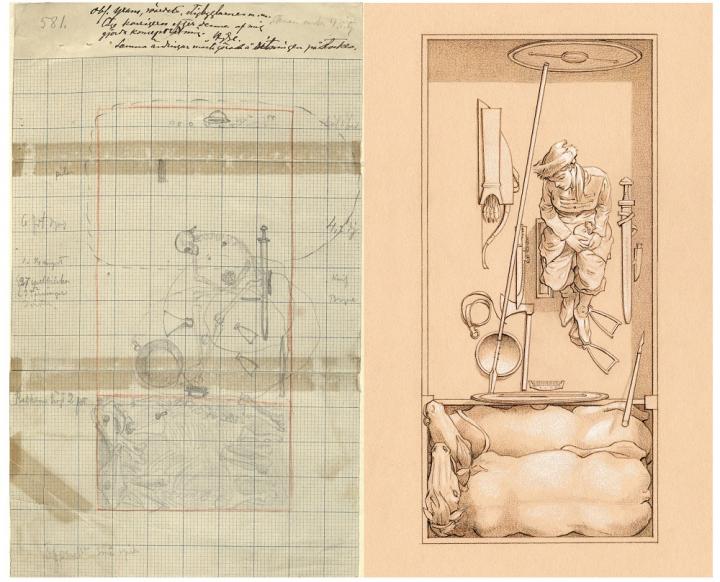
Viking Woman was a Warrior and a Leader Viking society was not as male dominated as one might expect, a new study claims. According to new research from the universities of Stockholm and Uppsala, Viking women took on leadership roles on the battlefield. Charlotte Hedenstierna-Jonson, who led the study, explained: “What we have studied was not a Valkyrie from the sagas but a real life military leader, that happens to be a woman”. At the heart of the research, published in the American Journal of Physical Anthropology, is the grave of a woman Viking warrior, complete with the remains of two horses and a selection of weapons. Significantly, the burial also contained a set of gaming pieces and a gaming board among the remains. “The gaming set indicates that she was an officer,” said Hedenstierna-Jonson. “Someone who worked with tactics and strategy and could lead troops in battle”. Buried in the Viking town of Birka during the mid-tenth century, isotope analysis has shown that the woman had an itinerant lifestyle, commonplace in the martial society that was prevalent throughout Europe between the eighth and tenth centuries. First discovered in the 1880s, it was long assumed that the Viking warrior in the burial had been a man. Thanks to new research techniques however, that assumption has been comprehensively put to bed, allowing the remains to present a fascinating new dimension to Viking culture. Anna Kjellström, who also participated in the study, said: “The morphology of some skeletal traits strongly suggests that she was a woman, but this has been the type specimen for a Viking warrior for over a century, [which was] why we needed to confirm the sex in any way we could.” The team turned to genetics to confirm the Viking woman’s sex, retrieving a molecular sex identification based on X and Y chromosomes. “This burial was excavated in the 1880s and has served as a model of a professional Viking warrior ever since. Especially, the grave-goods cemented an interpretation for over a century,” said Jan Storå, lead author of the study. “The utilisation of new techniques, methods, but also renewed critical perspectives, again, shows the research potential and scientific value of our museum collections”. Women drove Bronze and Stone Age Cultural Exchange A new study has shown the importance of female social mobility for cultural exchange in Bronze Age Europe. Findings published in the Proceedings of the National Academy of Sciences reveal a fascinating trend among Bronze Age families in the Lechtal, south of Augsburg in what is now Germany. While the men in these families had tended to stay in the region of their birth, many of the women came from outside the area, possibly from Bohemia or Central Germany. According to the findings, the pattern of female mobility was not a short-term trend, but one that can be observed over an 800-year period during the transition from the Neolithic to the Early Bronze Age. “Individual mobility was a major feature characterising the lives of people in Central Europe even in the 3rd and early 2nd millennium,” stated Philipp Stockhammer from the Institute of Pre- and Protohistoric Archaeology and Archaeology of the Roman Provinces of the Ludwig-Maximilians-Universität München, the leader of the collaborative research project. The researchers suggest in their study that this mobility was significant in the exchange of ideas and objects, something which increased significantly in the Bronze Age and in its wake encouraged the development of new technologies. For this study, the researchers examined the remains of 84 individuals using genetic and isotope analyses in conjunction with archaeological evaluations. The individuals were buried between 2500 and 1650 BCE in cemeteries that belonged to separate homesteads, and that contained between one and several dozen burials made over a period of several generations. “We see a great diversity of different female lineages, which would occur if over time many women relocated to the Lech Valley from somewhere else,” remarked Alissa Mittnik from the Max Planck Institute for the Science of Human History, a contributor to the study. Corina Knipper, from the Curt-Engelhorn-Centre for Archaeometry explained: “Based on analysis of strontium isotope ratios in molars, which allows us to draw conclusions about the origin of people, we were able to ascertain that the majority of women did not originate from the region.” The burials of the women did not differ from that of the native population, suggesting that the formerly foreign women were integrated into the local community. As well as shedding new light on the role female mobility played in cultural exchange in the Bronze Age, the new findings point to the immense scale of human mobility in general in the period. “It appears that at least part of what was previously believed to be migration by groups is based on an institutionalised form of individual mobility,” concluded Stockhammer. Roman Barracks Unearthed Near Hadrian’s Wall Archaeologists have unearthed a 2,000-year-old Roman Barracks near Hadrian’s wall, the Guardian reports. Over the course of the last two weeks a “treasure trove” of thousands of artefacts has been unearthed, including military and personal possessions from Roman soldiers and their families, according to the Guardian. Remarkably, the barracks itself actually predates Hadrian’s Wall, allowing the findings to provide unique insight into the military build-up in the area prior to the Wall’s construction. Cavalry lances, arrowheads and ballista bolts are among the weapons found at the site, alongside combs, bath clogs, hairpins, brooches and stylus pens. The barracks, which date from 105CE, were discovered under the fourth century fort of Vindolanda, south of Hadrian’s near Hexham in Northumberland. According to the Guardian, the artefacts survived because they were concealed beneath a concrete floor laid by the Romans about 30 years after the barracks was abandoned, shortly before 120CE. The concrete created oxygen-free conditions that helped preserve materials such as wood, leather and textiles. Featured Image: Reconstruction of the Grave in Birka – The drawing is a reconstruction of how the grave with the woman originally may have looked. Credit:The illustration is made by Þórhallur Þráinsson (© Neil Price).]]>