Categories
Breaking News Editorial

Why Homo sapiens survived (and other hominins didn't)

Map of the potential distribution of archaic hominins, including H. erectus, H. floresiensis, H. neanderthalenesis, Denisovans and archaic African hominins, in the Old World at the time of the evolution and dispersal of H. sapiens between approximately 300 and 60 thousand years ago.
Credit: Roberts and Stewart. 2018. Defining the ‘generalist specialist’ niche for Pleistocene Homo sapiens. Nature Human Behaviour. [/caption]

Homo sapiens surviving extreme conditions

Archaeological and palaeoenvironmental datasets from the Middle and Late Pleistocene eras have come under critical review in the recent collaboration between the Max Planck Institute and the University of Michigan. Hominin movement and biological development within and beyond Africa proves our species’ ability to occupy diverse and ‘extreme’ settings around the world. This could well explain how Homo sapiens became the last surviving hominin on the planet. Previously, it was thought that early homo sapiens had stayed close to the coast or savannahs, not infiltrating extreme environments until around 15,000 years ago. But this new evidence has shown humans were in tougher climates far earlier, affecting the debate over what it means to be human – as a Homo sapien, at least.

What does it mean to be human?

“So much focus has gone into finding the next artwork, the next fossil, that in the search for a sort of ‘modernity’ as it is often put – other fundamental elements were neglected,” says Dr Patrick Roberts from the Max Planck Institute for the Science of Human History. Under this new theory, investigations into what separates Homo sapiens from our ancestors would shift away from attempts to uncover the earliest traces of art, language and technological complexity. They’d move, instead, towards understanding what makes our species ecologically unique.

New ideas of Neanderthal creativity

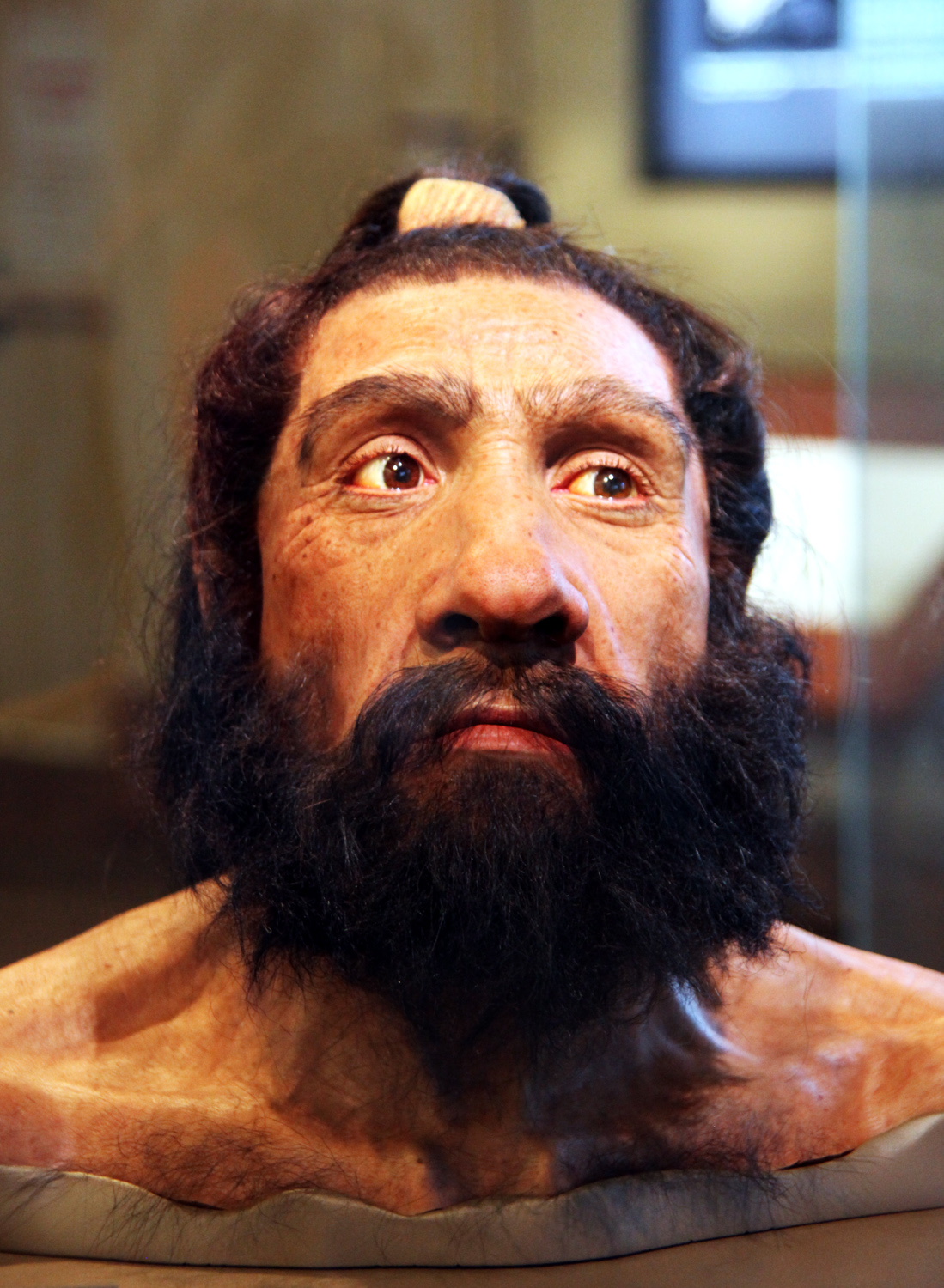
Recent research exposed the fact that our Neanderthal cousins created art before Homo sapiens, and were therefore capable of creating symbolism independently. Because of this, the lines between Homo sapiens and our ancestors are becoming increasingly blurred. You can read more about Neanderthal creativity and the recent discoveries that probe into it here. [caption id="attachment_8774" align="aligncenter" width="500"] A model an adult Neanderthal male head and shoulders on display in the Hall of Human Origins in the Smithsonian Museum of Natural History in Washington, D.C. Credit: Tim Evanson[/caption]

Ancestral ecologies

In contrast to other hominins, our species not only colonised environments as varied as deserts, tropical rainforests, high altitude settings and the palaeoarctic, but also flourished in these extreme conditions. Looking at our ancestral ecologies, we know that the genus Homo is highly diverse. Although often given the blanket name of ‘human,’ both academically and colloquially, using one term is certainly deceptive. There were a range of Homo species, all of which comfortably developed to reflect their surroundings. Homo erectus and Homo floresiensis (also known as ‘the Hobbit’) are thought to have occupied resource-scarce tropical rainforests from 1 million to 100,000 and 50,000 years ago respectively. The Neanderthals (Homo Neanderthalensis) occupied the high latitude areas of Eurasia between 250,000 and 40,000 years ago. To some extent, they backed themselves into an ecological corner, by only developing hunting skills in specialised environments.

What is the difference between ‘humans’ and Neanderthals?

While it might seem like there were gulfs between Homo sapiens and Homo Neanderthalensis, it would be remiss not to point out that the Neanderthals were our closest hominin relatives. In fact, Homo Neanderthalensis shares 99.7% of DNA with Homo sapiens. The history, appearance, intelligence and behavioural similarities and differences between the two are explored by Daryl Worthington on the New Historian – click here to read more.

Rapid Homo sapien colonisation

In contrast to the rest, Homo sapiens had spread to higher-elevation niches by around 80-50,000 years ago. By 45,000 years ago, the species was rapidly colonising both palaeoarctic and tropical rainforest conditions in Asia, Melanesia and the Americas. In order to decipher how our species demonstrated its colonising capacity elsewhere in places like northwest India and the high elevations of Tibet and the Andes, better-dated and higher resolution environmental datasets are required.

Homo sapiens: the ‘generalist specialist’

Ultimately, the new theory is that Homo sapiens were a ‘generalist specialist’. The ’generalist specialist’ is a new ecological niche: one that reflects Homo sapiens’ ability to occupy a huge diversity of environmental settings across the majority of the Earth’s continents by the Late Pleistocene. Dr Patrick Roberts has written: “A traditional ecological dichotomy exists between ‘generalists’, who can make use of a variety of different resources and inhabit a variety of environmental conditions, and ‘specialists’, who have a limited diet and narrow environmental tolerance.” He continues: “However, Homo sapiens furnish evidence for ‘specialist’ populations, such as mountain rainforest foragers or palaeoarctic mammoth hunters, existing within what is traditionally defined as a ‘generalist’ species.”

How did Homo sapiens become a ‘generalist specialist’?

Dr Brian Stewart, from the Department of Archaeology at the University of Michigan, thinks that this new niche was carved out through extensive cooperation between non-kin individuals. He writes: “Non-kin food sharing, long-distance exchange, and ritual relationships would have allowed populations to ‘reflexively’ adapt to local climatic and environmental fluctuations, and outcompete and replace other hominin species.” It comes down to empathy, as well as an ability to accumulate and pass on cultural knowledge.

How our species became the last surviving hominin on the planet

“As with other definitions of human origins, problems of preservation also make it difficult to pinpoint the origins of humans as an ecological pioneer. However, an ecological perspective on the origins and nature of our species potentially illuminates the unique path of Homo sapiens as it rapidly came to dominate the Earth’s diverse continents and environments”, says Roberts. He writes: “Understanding this ecological niche provides a framework for discussing what it means to be human and how our species became the last surviving hominin on the planet.”]]>

Categories
Breaking News

800-year-old 'massive' Viking skeletons found in Sicily

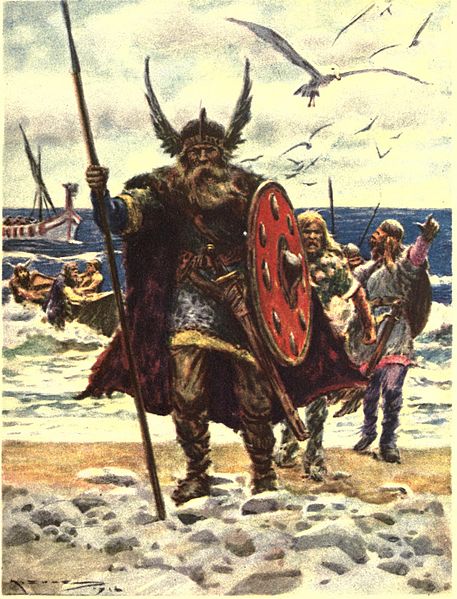
Credit: Henrietta Elizabeth Marshall, born 1876, interprets the Vikings[/caption]

‘Massive’ skeletons

An examination of the burials determined that three of the graves belonged to women, and another two to children. The remaining skeletons are still in the process of being identified. As no grave goods were found, the researchers were not initially sure of their heritage; but an anthropologist was able to inform the team that they were likely from Western Europe – meaning that they were probably Normans from northern France. Moździoch, who comes from the Institute of Archaeology and Ethnology of the Polish Academy of Sciences in Warsaw, says: “According to the local anthropologist, the tallness and massive build of skeletons of people buried here indicate this origin.”

Why were Vikings in Sicily?

So what were the Normans doing in Sicily? During the second half of the 11th Century, the island was recaptured by a Norman nobleman, Roger de Hauteville, after having been occupied by the Arabs. It was quite usual for the Normans to send out expeditions to southern Italy, Sicily, and of course, England, Wales, Scotland and Ireland. Vikings about to invade England (4)

Western European architecture

The cemetery where the bodies were found was associated with a church hospital mentioned in a 12th Century document; but no medical equipment was found on the site. They did, however, find coins that were minted in Champagne and Lucca, indicating that the builders and users of the church would have from the north of the Apennine peninsula. At the time of the church’s construction, nearby Palermo was held by Arabs. Moździoch says that the church was fortified and built on a hill so as to provide a strategic position for battle. The architecture of the church backs up the theory that these bodies were those of Viking descendants. “The Western European form of the church… [indicates] that its builders and users could have come from Normandy,” Moździoch says. “Our research has changed the previous theories concerning the church structure. It indicates that its form referred more to the western European churches of the 11th and 12th centuries than to the buildings of this type erected in Sicily during that period. To put it simply, the concept of construction was directly transferred from the north by the craftsmen brought from there,” he concluded.]]>

Categories
Editorial

Meet Ching Shih: the prostitute-turned-pirate who banned rape in her 50,000-man fleet

Obscure beginnings Like so many politically influential women before (and after) her, Ching Shih went undocumented by history for a shockingly long time. In fact, her legacy was only first explored in depth in 1987, when Dian Murray published Pirates of the South China Coast, 1790-1810 – 143 years after the pirate lord died. Records call her Ching Shih, Madam Ching or Zheng Shi, all meaning ‘widow of Zheng Yi’; though she was born Shil Gang Xu, a girl from the Guangdong (Canton) province of south east China. At one point, it seems she worked as a prostitute on a floating brothel; though there is scant documentation of her life before 1801.  

A pirate’s life for Shih

At this point, she had a chance encounter with Zheng Yi, pirate commandeer of the Red Flag Fleet. Legend would have us believe that he pillaged the floating brothel and captured her; other stories suggest that he proposed, but that she refused unless he would sign over half his fleet. If this is true, it was the first significant negotiation of what turned out to be an astute strategic mind. Either way, they married; and Zheng Yi did indeed gift her an equal partnership in leadership of his 200 ships.  

The Red Flag Fleet grows

Zheng Yi hailed from a long lineage of pirates. His name commanded a great deal of respect; and the ever-strategic Ching Shih advised him to unite the various pirate fleets of the South China Sea under the banner of the Red Flag Fleet. In 1804, just three years after their marriage, accounts tell us that the fleet had grown to either 300 or 600 ships of 50-100 pirates each. At the very least, that would mean 15,000 pirates were answering to the couple. At the most, it would have been 60,000. At the height of its power, some records provide estimates of 1,800 ships. Later that year, the fleet issued a blockade of a Portuguese trading port in Macau. The Portuguese squadron quickly fell to the power of the Red Flag and even the British Royal Navy stepped back from the conflict.  

Navigating a power vacuum

Six years into her marriage, Ching Shih was widowed. As is typical for their story, there are multiple accounts of Zheng Yi’s cause of death: he is alleged to have died in the Tay Son Rebellion in Vietnam in 1807, but also to have died in a typhoon or simply fallen overboard. As his heir, some even point fingers at Ching Shih. However he might have died, Ching Shih had to act fast – lest her empire crumble. She formed an alliance with her adoptive son, Cheung Po Tsai. Together, their secured the loyalty of a selection of Zheng Yi’s relatives, all of whom were leaders in the fleet. The wife of Cheung Po Tsai’s lieutenant, Cai Qian Ma, was a Western weaponry expert who spoke fluent English. Within the fleet, she was notorious for her viciousness in battle, addiction to opiates, and sexual exploits. But as well as this, Cai Qian Ma was an expert negotiator. She was able to provide Ching Shih and Cheung Po Tsai with strong connections to Western weapon dealers – thereby supplying the fleet with British guns. [caption id="attachment_8849" align="aligncenter" width="450"] The merciless pirate lord, Ching Shih. Credit: thefemalesoldier.com[/caption]

Seeing red: the merciless Madam Ching

As Ching Shih secured her position, her code of conduct tightened. If a town sent a makeshift army out to fight the fleet, the Red Flag would sink the army and go ashore to kill all adult males they found. Often, resisters had their feet nailed to the decks before a beating. However, towns that did not resist and instead paid a tribute were rewarded with protection. Any pirate who tried to loot a town that had previously paid tribute to the Red Flag was beheaded and buried at sea. A violent death also befell any pirate who disobeyed an order, went ashore without permission, stole treasure or raped a female captive. Even if the sex was consensual, he’d be beheaded. However, pirates were permitted to marry attractive female captives, which would elevate the women to normal members of the fleet with rights and duties. Their husbands were bound to be faithful to their wives (upon pain of death, obviously). Ugly women, it is said, were released with no harm done. Interestingly, deserters weren’t killed. They’d simply have their ears cut off.  

Ching Shih’s financial policy

Any money seized in a raid would be accounted for and registered before it was distributed. Ching Shih worked out a system whereby the ship responsible for the capture would receive 20% of the loot. The remainder went into a large collective fund to be spread among the entire fleet. Failure to comply with her policy would result in severe public whippings or beheading.  

Why didn’t the Qing government stop Ching Shih sooner?

There had never been a great naval tradition in the Chinese empire. A small selection of the Qing fleet were copies of captured pirate ships, but most of its fleet was made up of converted merchant vessels. Even then, they were greatly outnumbered by the technologically superior Red Flag ships. After a vicious exchange that saw the death of notable pirates including Cai Qian Ma, as well as government officials, the Qing government and the Red Flag fleet engaged in a pitched naval battle in 1808. The pirates enjoyed a glorious victory, causing the Qing government to reach out to Portugal and Britain again. Despite concessions offered to the two external powers, they were unable to help.  

The tide turns against Ching Shih

In 1809, the tide turned. The imperial government continued to pour resources into their destruction and it became a question of attrition. The following year, the government issued amnesty for all pirates willing to lay down their arms. Cheung Po Tsai entered into a negotiation with the Qing forces, but was unable to make any headway. Ching Shih took the reins and walked, unarmed, into the governor’s office in Guangdong.  

Shih who dares, wins

Due to her conversational prowess, all but 400 of her pirates would be able to walk free without ceding any of their wealth – on the condition that they all kneel before the governor and pay homage. Ching Shih refused. She expertly steered the conversation to a resolution, whereby she and Cheung Po Tsai would kneel – but only if their legal relationship as mother and son could be dissolved and they were allowed to be married. The two were wed with the governor as witness, and as per tradition, they knelt to thank him. Ching Shih had negotiated freedom for all but 400 of her fleet, kept all of their riches, not had to pay homage outside of usual marriage ritual, was able to marry the man she loved – and both became members of the Chinese aristocracy ‘by Imperial decree’. [caption id="attachment_8850" align="aligncenter" width="440"] Ching Shih is immortalised in Disney’s Pirates of the Caribbean franchise as ‘Mistress Ching’.[/caption]

Ching Shih: the family woman

Cheung Po Tsai died at sea 9 years later, and his widow would go on to marry another former underling. They returned to the Guangdong province, where she opened a gambling house and brothel. Ching Shih lived to see her son and grandchildren grow up, and died in her bed, surrounded by her family, in 1844.]]>
Categories
Breaking News

14,400-year-old flatbread proves baking predates agriculture by 4,000 years

14,000 year old food practices The excavation at Shubayqa 1 has unearthed 254 examples of food remains. Charred evidence of a flatbread baked 14,400 years ago has caused researchers to confirm that baking predates the advent of agriculture by at least 4,000 years. The findings indicate that bread production encouraged gatherer-hunters to cultivate cereals – therefore contributing to the agricultural revolution in the Neolithic period. The research team was comprised of academics from the University of Copenhagen, University College London and the University of Cambridge. [caption id="attachment_8845" align="aligncenter" width="500"] Dr. Amaia Arranz-Otaegui and Ali Shakaiteer sampling cereals in the Shubayqa area. Credit: Joe Roe[/caption]

From calories to culture: the evolution of eating

Nutritionally speaking, the process of making bread is entirely uneconomic. After harvesting wild cereals, the people of Shubayqa 1 had to separate the seeds, grind them down, make the dough, flatten the dough and cook it. They would have suffered a net loss of calories during the process – which suggests that the bread was not made for survival purposes. That leads us to the idea that this discovery represents a pivot in the history of human eating practices. No longer were people seeking pure nutrition from their food. For the people of Shubayqa 1, eating was now imbued with cultural, social and perhaps ideological significance. To strengthen this theory, the date and location of the flatbread places it close to the erection of the world’s oldest monumental buildings. Inside, ceremonies and rituals took place; perhaps with the first instances of socio-ideological feasting. [caption id="attachment_8846" align="aligncenter" width="500"] One of the stone structures of the Shubayqa 1 site. The fireplace, where the bread was found, is in the middle. Credit: Alexis Pantos[/caption]

Sedentary lifestyles lead to diet changes

The Danish Council for Independent Research has recently approved further funding for research into food production during the transition to the Neolithic period. University of Copenhagen archaeologist Tobias Richter, who led the excavations at Shubayqa 1 in Jordan, comments: “Natufian hunter-gatherers are of particular interest to us because they lived through a transitional period when people became more sedentary and their diet began to change.”

What came first: the chicken or the bread?

Professor Dorian Fuller from the UCL Institute of Archaeology says: “That it was produced before farming methods suggests it was seen as special, and the desire to make more of this special food probably contributed to the decision to begin to cultivate cereals.” Richter continues: “The flat bread found at Shubayqa 1 is the earliest evidence of bread making recovered so far, and it shows that baking was invented before we had plant cultivation. “So this evidence confirms some of our ideas. Indeed, it may be that the early and extremely time-consuming production of bread based on wild cereals may have been one of the key driving forces behind the later agricultural revolution where wild cereals were cultivated to provide more convenient sources of food.” The discovery comes shortly after new research revealed that barley spread across the world via multiple routes – suggesting human choices were made based on nutritional and perhaps cultural needs. Read more here.]]>

Categories
Book Reviews

How Love Makes Us Real – The Velveteen Rabbit Reviewed

The Velveteen Rabbit by Margery Williams (Author) and William Nicholson (Illustrator) Initially published in 1922, The Velveteen Rabbit was written by Margery Williams and illustrated by William Nicholson. Since its initial publication, this children’s book has become an award-winning classic. It has been republished multiple times for each generation of children (and their parents) to enjoy. Brief Synopsis of the Plot The plot of The Velveteen Rabbit appears simple enough for a children’s story, but it also offers complexity and depth, with deeper meanings for life lessons. The story is centered around the main, titular character—a velveteen rabbit. He starts his journey as a Christmas present for a young boy. When the young boy is more interested in his other toys, the rabbit feels sad. Fortunately, he receives guidance from the other toys. One, the Skin Horse, advises the rabbit that a child’s love will make him real. The rabbit wants to become real but is unsure how to make that happen. When the young boy loses one of his more favored toys, the Velveteen Rabbit gets a chance to become a part of his life. Suddenly, he is favored. The young boy does treat him as being a real rabbit and he starts to regard himself in the same way. Unfortunately, everything starts to shatter when the young boy becomes ill. To disinfect the boy’s room, all his toys must be burnt. The Velveteen Rabbit nearly faces his end before a bit of magic gives him a reprieve and he ultimately gets what he always wanted. Relevant Themes in the Text For a children’s story, The Velveteen Rabbit has complex themes. These make the book enjoyable for children and adults alike. It also makes the book into an allegory that young children can learn from: Love Makes Us Real The wisdom offered by the Skin Horse in the novel is that the love of a child will make any toy real. That advice becomes a key theme of the book—receive love and become your real self. When the Velveteen Rabbit finally receives the love he has been seeking, he feels more real and alive than he had before. This relationship is mutually beneficial as his companionship also offers much to the young boy. In this case, love is connection, acceptance, and comfort. Dreams Come with Risk Throughout the book, the Velveteen Rabbit seeks love because he believes it will make him real. When he finally finds that love and subsequent happiness, it is dashed with the realities of life. This illustrates that while dreams may offer very rewarding outcomes, they also come with risks and sometimes unexpected consequences. Yet, if you continue to hold them in your heart (as the Velveteen Rabbit does), then there is still a possibility of achieving exactly what you want. Appearances Can Be Deceiving In this book, appearances are often deceiving. Unbeknownst to the young boy, his toys have minds and hopes and dreams and essentially lives of their own. Though they do also rely on him. Appearances are also deceiving in the sense that the young boy is initially drawn to his modern and fanciful toys but can find true happiness with a simple stuffed rabbit. Sometimes what one seeks is right in front of them, but they cannot quite see it. Finally, when it comes down to who is real versus not, the surface appearance may not always be an immediate give-away. When the Velveteen Rabbit meets some actual rabbits in the woods, he is brought back to the stark reality that he is not truly a real rabbit. Yet, his introspection and self-awareness might make him more “real” then any of them. Analysis of Writing Style The Velveteen Rabbit is an older book and the writing style reflects this. Some modern children’s books dumb things down, but this book does not. The writing lends itself to a soothing bedtime story read by the parent. As children develop their cognitive abilities, they will be able to grasp the language themselves. The older writing style may even help them to develop their more advanced reading skills. The author uses certain key elements to drive the plot. One is an internal frustration that the rabbit feels about his limitations and inability to make his own future. He must rely on others to help him reach his dreams. Yet, he grows through the story, gaining both self-esteem and increased confidence. All this is done through the style of personification as this stuffed rabbit is written with very human qualities. Relevant Themes for Today If you have ever watched Toy Story and cried during the montage where Jessie laments the loss of her child, then The Velveteen Rabbit is a book you will thoroughly enjoy. But why do people like books and movies about the plights of toys?  It is certainly because every child and every inner child truly did believe their dolls and stuffed toys were real (at least they were to them). The themes seen in the book, also continue to be relevant today. Talk to any therapist and they will surely tell you that giving and receiving real love allows people to be their genuine and authentic selves. Yes, love does make you real, when it is healthy and allows you to be your true self. Yet, love does also bring risks. Sometimes it brings loss, make ups and break ups, and new challenges that can change a person over the course of their life. But that is real too, for most people, just like the Velveteen Rabbit, it is all part of the journey. These are the lessons that you and your children can take from this book. Final Recommendations When you stock your child’s library and make nightly selections for bedtime stories, do not neglect the option of The Velveteen Rabbit. This book is a true beloved classic that any child of any generation can still connect with and enjoy. There is whimsy and magic. And, yes there is loss and sadness too. Children can handle that and even learn a few real-life lessons along the way. Indeed, this sweet story about a small stuffed rabbit, will actually let any child learn more about life and relationships. This book may also be a particularly good choice for children who are themselves experiencing an illness, or some other life change such as the loss of someone that they love. The book may even leave them with the consoling thoughts that the ones they lose are never truly gone. This story is available as an ebook from Forgotten Books or in print at Amazon.

]]>

Categories
Breaking News

How barley spread across the world & helped culture formation

Different routes – an indicator of different cultures? Due to the fact that there were a number of different eastward routes for the spread of the barley population, the study suggests humans were choosing routes based on particular attributes of acting according to environmental adaptation. Choice and environment, therefore, are crucial factors for the spread of staple foods in prehistory. These different routes include ones to the north and south of the Iranian Plateau; through the Inner Asian Mountain Corridor in Central Asia, possibly connecting up to the Chinese section of the Silk Road; a high altitude spread on the southern edge of the Tibetan Plateau; a high latitude spread through the northern steppe; two distinct spreads into Japan; and a maritime route from South Asia. As previous research has provided radiocarbon dates, we know when the routes were followed. [caption id="attachment_8836" align="aligncenter" width="728"] Map showing proposed routes of spread of six different ancestral populations of barley landraces. Direct radiocarbon dates from archaeological barley grain have enabled the timing of these different routes to be elucidated. Credit: D. Lister[/caption]

Impacting rice-growing in East Asia

Lead author Dr Diane Lister, a researcher at the McDonald Institute for Archological Research at the University of Cambridge, says: “One barley population is widespread, particularly around the coastlines. This population may have travelled eastwards via a maritime route from South Asia, via Southeast Asia. This particular population is made up of winter-sown varieties of barley, which are thought to be important in rice-growing areas of East Asia, where a crop of rice is commonly grown in the summer months, and barley adapted to winter-sowing regimes can be planted after the rice harvest. The development of multi-cropping practices during prehistory is thought to have greatly increased productivity and stability, enabling more complex societies to develop.” [caption id="attachment_8837" align="aligncenter" width="257"] Diane Lister at work in the Glyn Daniel laboratory for archaeogenetics at the McDonald Institute for Archaeological Research, University of Cambridge Credit: A. Clarke[/caption]

Moulding Tibetan culture

“Another barley population predominates on the high Tibetan Plateau. This barley has a naked grain, making it a particularly attractive staple, as it doesn’t require the pearling process that hulled barley requires for human consumption. Along with the herding of yak, this naked type of barley is an essential for the Tibetan way of life, and their importance are clearly seen in the offerings of naked barley grains and yak butter in Tibetan Buddhist temples around the region. The staple carbohydrate eaten by the Tibetans is tsampa, made from roasted naked barley flour and mixed with salty Tibetan butter tea.” [caption id="attachment_8835" align="aligncenter" width="590"] Ethnically Tibetan women winnowing naked barley on a road on the edge of the Tibetan Plateau, near Xiahe, Gansu Province, China.
Photo credits Diane Lister[/caption]

New findings contribute to conversation around climate change

So what does this mean for today? Lister concludes: “Barley is an extremely hardy crop, able to grow in regions where other crops are unable to grow, and is an important staple in such environments. Understanding the spread of its cultivation during prehistory, and the various factors that affected its establishment in different regions of Eurasia, will contribute towards our understanding of climate change and its current and future effects on agriculture.” The paper has been published as a part of the Food Globalization in Prehistory project, funded by the European Research Council and awarded to Prof. Martin Jones. Additional funding was provided by a Royal Society International Joint Project grant.]]>

Categories
Breaking News

How intense Ice Age fishing led to the invention of pottery as we know it

Jōmon pottery from the Kanagawa Prefecture, Japan. Credit: Nara National Research Institute for Cultural Properties.[/caption] Examined over a course of three years by researchers from Japan, the Netherlands, Sweden and the University of York’s BioArCh, the findings indicate that ceramics were used by our gatherer-hunter ancestors to initially store and process fish. As fishing techniques evolved and intensified, the range extended to include shellfish, freshwater and marine fish and even mammals. Until recently, ceramic vessels were associated with the arrival of farming. This study, however, debunks that theory. We now know that pottery was a much earlier gatherer-hunter innovation, and was used for the consumption of fish. Professor Oliver Craig, from the Department of Archaeology and Director of the BioArCh research centre at York, who led the study, said: “Our results demonstrate that pottery had a strong association with the processing of fish, irrespective of the ecological setting.” Some of the pottery dates from the end of the Late Pleistocene period: a time when our ancestors were navigating glacial conditions. Other ceramics included in the study are from the post-glacial period, when the climate reached a level close to our current temperature, allowing pottery to be produced in a much greater quantity. Craig continues: “Contrary to expectations, this association remained stable even after the onset of warming, including in more southerly areas, where expanding forests provided new opportunities for hunting and gathering. “The results indicate that a broad array of fish was processed in the pottery after the end of the last Ice Age, corresponding to a period when hunter-gatherers began to settle in one place for longer periods and develop more intensive fishing strategies. [caption id="attachment_8832" align="aligncenter" width="634"] A reconstructed early pottery vessel from Torihama, Japan, dating to the end of the Late Pleistocene (ca 12,000 years old). Chemical analysis revealed that such vessels were used to process fish during the late Glacial period. Credit: Wakasa History and Folklore Museum, Fukui, Japan[/caption] “We suggest this marks a significant change in the role of pottery of hunter-gatherers, corresponding massively increased volume of production, greater variation in forms and sizes and the onset of shellfish exploitation.” Researchers used advanced technologies to recover diagnostic lipids from the charred surface deposits of the vessels. Most of the compounds derive from the processing of freshwater or marine organisms. Because of findings like this, we now know that ceramics played a key role in the ways pre-historic gatherer-hunters consumed fish. Lead author, Dr Alex Lucquin, from BioArCh, Department of Archaeology, University of York, said: “Thanks to the exceptional preservation of traces of animal fat, we now know that pottery changed from a rare and special object to an every-day tool for preparing fish. “I think that our study not only reveals the subsistence of the ancient Jomon people of Japan but also its resilience to a dramatic change in climate.” Dr Simon Kaner, from the University of East Anglia, who was also involved in the study, added: “The research highlights the benefits of this kind of international collaboration for unlocking some of the big questions about the human past, and the potential of engaging with established research networks as created by the Sainsbury Institute over the years.”]]>

Categories
Editorial

Melanesian cargo cults and the unquenchable thirst of consumerism

Credit: https://godshotspot.wordpress.com/2016/05/02/the-cargo-cult-belief/[/caption]

Outsiders come to the islands

During the Second World War, the US Army’s ‘island hopping’ strategy saw its troops occupy small, relatively unguarded but well-located islands in the South Pacific. From there, they could embark upon their path to invade Japan. In avoiding major islands and focusing on island hopping, American soldiers came into contact with people who had, until then, had little or no contact with the outside world. The G.I.s came with aeroplanes, manufactured goods, modern medicine, canned food and guns: all of which were new concepts to the islanders.

Perceiving new technologies

Having been colonised by the British Empire, the people of Tanna, a small island in what is now Vanuatu, had already encountered Westerners. Mass-produced goods, however, were new to them. Sci Fi writer Arthur C. Clarke’s assertion that ‘any sufficiently advanced technology is indistinguishable from magic’ was proven true: it wasn’t long before cults worshipping the American goods appeared in islands around the Pacific. Most notably, they cropped up in the islands of Vanuatu, Fiji and New Guinea.

The John Frum cargo cult

These foreigners and their apparently miraculous supplies caused the people of Tanna to mix their existing beliefs (which included an anti-colonialist cult as well as Keraperamun, a volcano god) with their new experiences. The result came to be known as the John Frum cargo cult. To this day, the members of the cult worship a god named John Frum, who is usually depicted as an American solider in full uniform. A neighbouring cult from the same island also worships a god called Tom Navy. These were not considered to be ‘new’ gods, but instead extensions of their existing deities.

Absence leads to fetishism

As the war came to an end, the Americans went back home. The islanders, however, continued to worship their newly evolved deities in an effort to convince the gods to return and bring with them an abundance of cargo. To the people of Tanna, John Frum, Tom Navy and the other deities became messianic figures who would one day return in ships and aeroplanes laden with fascinating goods. A kind of fetishism emerged, as members of the John Frum cargo cult started to build symbolic runways out of bamboo. Adding to this, they erected wooden air control towers and designed life-size replicas of aeroplanes out of the wood and straw from the island. [caption id="attachment_8823" align="aligncenter" width="500"] Members of the John Frum cult with a replica of an aeroplane. Credit: http://purgingtalon.com/diabologue/wp-content/uploads/2009/01/cargocult1.jpg[/caption] In 1957, this fetishism progressed further as the newly formed ‘Tanna Army’ emerged. It is a non-violent organisation that emulates the public parades and military mannerisms of the American army. Its ‘soldiers’ dress in red, white and blue; and to this day, a parade occurs on the 15th of February every year.

So what are the Melanesian cargo cults?

The definition of ‘cargo cults’ has thrown up a multitude of problems. In 1948, anthropologist Lucy Mair wrote ‘the motive force of cargo cult is a feeling of hopeless envy of the European with his immensely higher material standards’. This is by no means an accepted analysis of the movements; but it presents an interesting juxtaposition of the cults with modern consumerism. Loosely, we can now say that they are organised social movements of people in pursuit of ‘cargo’ by means of ritual action. Whether the cults were nativistic, and thus concerned with reviving waning traditions, or iconoclastic, and thus focused on replacing local culture with Western substitutes, continues to be subject to debate. We can say with absolute certainty, though, that over the past 7 decades, these movements have played a pivotal role in developing the communities and cultures currently in play on the islands of Vanuatu. Where there are leaders and prophets of these cults, they are concerned with social harmony and order. They insist that in order for new cargo to arrive on the islands, certain social rules have to be followed. Moral renewal and collectivism over individualism are common themes: to love one another, to perform different kinds of sexual relationships, and the rejection of stealing, lying and cheating. No order, no cargo. A prominent writer and researcher on the cargo cults, Peter Worsley, has argued that cargo cults ‘weld previously hostile and separate groups together into a new unity’ and that ‘by projecting his message on to the supernatural plane’, a cargo cult luminary establishes that his leadership ‘transcends the narrow province of local gods and spirits associated with particular clans, tribes or villages’.

Cargo cults: a comforting reflection of the human condition

Despite having largely faded away, stories of cargo cults are constantly doing the rounds. A quick internet search of the term will throw up seemingly endless analyses and hypotheses; and if you are so inclined, you can purchase a bottle of John Frum alcohol to sip at your leisure. Many documentaries have been made about the faction that specifically worships Prince Philip, Duke of Edinburgh. So why the obsession? Simply put, they epitomise modern, consumerist desire. It is a desire that cannot be satiated. We have endless opportunities to shop for our own cargo, and yet the acquisition of goods never seems to satisfy us. When we get our cargo, it doesn’t quash the desire. It intensifies it. Unending desire and the constant strive to be better, have more, and achieve dominance is human nature – whether it’s on the shores of Tanna or in the heart of Manhattan. To Westerners, cargo cults seem to be as futile as they are relatable. It’s the modern condition, reflected in a place that feels like another world.]]>

Categories
Book Reviews

A Farewell to Arms by Ernest Hemingway

A Farewell to Arms was published to critical acclaim. The book quickly became a best-seller and it remains a popular portrait of World War I. However, Hemingway’s classic novel is so much more than a war story. It also contains timeless themes of love and tragedy. Brief Synopsis of the Plot The plot of A Farewell to Arms is centered around the main character, Frederic Henry, a lieutenant in the Italian Army ambulance corps. Given Hemingway’s own history in that profession, it is believed that at least some elements of the novel are inspired by his own personal experiences. As a paramedic, Henry’s time at the warfront is cut short by a significant injury. Yet, that injury also allows him the opportunity to grow close to his love interest, Catherine Barkley, while he recovers at hospital. The two form a relationship that is wrought with challenges from the war, and life in general. Although primarily thought of as a book about the toils of war, Hemingway’s book is simultaneously a romance novel with some painful twists that make it a tragic read. A focused reading reveals the following themes and imagery that highlight the complexity of the characters and the overall plot: Relevant Themes in the Text Literary scholars have long analyzed Hemingway’s great work, A Farewell to Arms for relevant themes and images that would provide deeper meanings to the story. A modern reading can reveal those same elements against the current context. You may find these themes seem not so different from what you might see in your other favorite books, as well as in your favorite songs, television shows, and films.

War-What is it Good For?

That old song may have had it just about right—what is war good for? Absolutely nothing. Or at least very little, according to Hemingway. In A Farewell to Arms, the characters see very little value in the war effort. Their participation is not met with feelings of honor, but rather with feelings of fear and a belief that their time (and lives, in some cases) have been wasted.

It is this aspect of the book that most lends itself to the title. When Hemingway’s characters are saying their farewells to arms (aka war), it is because they see it as only bringing pain and suffering. It is really a cautionary tale—give up this approach or face greater loses for humanity.

Love is a Battlefield

As it has been said, Hemingway’s novel is generally considered a portrait of war. However, it is also secretly a tragic romance novel, not unlike many that were so popular in the past and still so popular today. The romantic aspects of the book do bring much of the drama to the story.

When Henry is injured, it provides him with the opportunity to fall in love. The only problem is, his love interest is fresh off a previous relationship, in which her fiancé died. She is quick to run into Henry’s arms, but seemingly as an escape from her pain and grief. Sadly, that impulsive and poorly thought out choice is only met with greater and greater challenges as the story unfolds.

Here Comes the Rain Again

In many great works, rain is used as a symbol of growth and renewal. This makes sense because rain serves to wash away all that is old, and it feeds new life. However, Hemingway subverts this traditional approach. In this novel, the rain is associated with impending doom and failure. Since it occurs quite frequently, as a reader you might be left thinking “when it rains, it pours.”

Yet, the rain is not just a portent foreshadowing doom and gloom, it also does serve to wash away the fantasies that the characters illusion themselves with. When the rain goes away (and the sun does not really emerge), the characters are left with only a stark and harsh reality.

Analysis of Writing Style A Farewell to Arms is not just a classic because of its timeless themes, it also earned this spot in literature because of the writing style. Hemingway is a wordsmith, but he also does not mince words. He composed this novel with a high level of detail that was, at times, graphic. Hemingway’s depiction of war was brutal and realistic, leaving little to the imagination. By the end of his highly descriptive battlefield descriptions, most readers will also be inclined to say farewell to arms. Further, all the primary characters of the novel are well-crafted. Each feels like a real person (even someone you could know). Their wartime struggles will evoke strong emotional reactions. Relevant Themes for Today If you have ever heard the saying ‘everything that is old, is new again’ then you may also know everything new is actually inspired by something old. It is not only today’s war movies that take inspiration from the stylings of Hemingway, today’s romance novels and romantic dramas do too. Truly, you may be surprised to learn that if you enjoy a good complex and sometimes tragic love story, perhaps something in the Nicholas Sparks realm of book or book-to-movie adaptation, then you will also enjoy A Farewell to Arms. You need only read the book yourself to see the truth in this comparison. Final Recommendations For many people, when they think of a text such as A Farewell to Arms, they assume an older book, about a war, will be dry and boring. They assume it will have little relevance to them and that they will be unable to connect with the characters and the story. However, Hemingway’s classic is a timeless work that speaks to the tragic challenges any one can face at any time in human history. If you enjoy books that simultaneously chronicle the common experiences any one may have (love, loss) and the most challenging times of the human condition (war, great tragedy), then you will likely find A Farewell to Arms to be a worthwhile read. In fact, you may even find it ranks with your other favorites.    ]]>

Categories
Breaking News

Humans left Africa 270,000 years earlier than we thought

One of the tools from the discovery site in Shangchen, China. Credit: Professor Zhaoyu Zhu[/caption] Prior to this discovery, the earliest evidence of humanity outside Africa was a collection of skeletal remains and stone tools found in Dmanisi, Georgia, which have been dated to 1.85 million years ago – 270,000 years after the new discovery in Shangchen in the southern Chinese Loess Plateau. The research, published in the journal Nature, also suggests that the ancient humans returned to the same site repeatedly, possibly for hunting. The collection includes a notch, scrapers, cobble, hammer stones and pointed pieces. Each item shows sign of human use. The hammer stones, for instance, had been intentionally flaked. Fragments of animal bones that would have been contemporaneous with the items were also found. Most of the artefacts were made of quartzite and quartz, suggesting that the materials were sourced from the foothills and streams of the Qinling Mountains around 5 to 10 kilometres from the site. [caption id="attachment_8815" align="aligncenter" width="425"] The extensive collection of 2.1 million years old artefacts is causing archaeologists to reconsider the overall story of human migration. Credit: Professor Zhaoyu Zhu[/caption] Because the 96 stone artefacts were found in 17 different layers of fossil soils that had developed over a period of one million years, we now know that early humans occupied the Chinese Loess Plateau under varying climatic conditions between 1.2 and 2.12 million years ago. Professor Dennell says: “Our discovery means it is necessary now to reconsider the timing of when early humans left Africa.” The find “may add a new chapter to the story of hominin evolution, suggesting that some of these species left Africa far earlier than once believed and managed to travel over 8,000 miles east of their evolutionary birthplace,” The New York Times reports. The age of the tools “suggests that the hominins who made them were neither tall nor big-brained. Instead, they may have been small bipedal apes, with brains about the size of a chimpanzee’s.” Michael Petraglia, a paleoanthropologist at the Max Planck Institute for the Science of Human History comment:S “The implications of all this are large. We must re-evaluate our understanding of human prehistory in Eurasia.”]]>