Categories
Breaking News

41,000 Year Old Fires Shed Light on Hobbits' Fate

Homo floresiensis, the extinct ‘hobbit’ species of human. Published in the Journal of Archaeological Science, the new study presents evidence that modern humans (Homo sapiens) were likely using fire at Liang Bua 41,000 years ago. It’s a conclusion that narrows the gap between the disappearance of Homo floresiensis and the arrival of the first modern humans on the Island of Flores, and could provide new insight into the fate of H.floresiensis. Called the discovery of the century, the first H.floresiensis remains were unearthed in the Liang Bua cave on Flores in 2003. Surrounded by stone tools and animal remains, the female H.floresiensis would have been 3.5 foot (1.06 metres) tall and thirty years old at the time of her death. Subsequent discoveries of eight similarly diminuitive individuals led scientists to conclude in a study published in 2009 that the initial discovery had not been an anomally. The latest discovery on the Island of Flores provides some of the earliest evidence yet found of the presence of modern humans in South East Asia. Lead author of the study Dr Mike Morley, a research fellow and geoarchaeologist at UOW’s Centre for Archaeological Science (CAS), said the discovery could be “extremely important” in the mission to determine how and why the hobbit species disappeared, roughly 50,000 years ago. In March, a study published in the journal Nature revised the initial dating estimates for the original hobbit skeleton, concluding the bones were between 190,000 and 60,000 years old, much older than previous studies that claimed the creature survived on Flores until as recently as 12,000 years ago. With the most recent stone tools on the island dated to 50,000 years old, scientists were suddenly presented with a glaring gap in the chronology of the site’s sediment sequence: What happened there, and who lived there between 46,000 and 20,000 years ago? Dr Morley and colleagues, including CAS geoarchaeologist Professor Paul Goldberg and archaeologist Thomas Sutikna, have now been able to fill in some of that gap. On top of detailing environmental changes at the site between 190,000 and 20,000 years ago, they found evidence of fire places that were in use between 41,000 and 24,000 years ago. With no evidence that H.floresiensis used fire in their 130,000 year occupation of the site ever discovered, Morley’s team believe these fire places were most likely the work of modern humans. “We now know that the hobbits only survived until around 50,000 years ago at Liang Bua. We also know that modern humans arrived in Southeast Asia and Australia at least 50,000 years ago, and most likely quite a bit earlier” Dr Morley said in a press release from UOW. “This new evidence, which is some of the earliest evidence of modern human activity in Southeast Asia, narrows the gap between the two hominin species at the site.” A technique known as micromorphology was part of the team’s study, allowing sediments from the site to be examined in microscopic detail. Sediment blocks from the rear of the cave, an area separate from where the fossils were discovered, were extracted and shipped to UOW. Wafer thin slices (just 30 microns thick) were studied under microscopes, subjected to spectroscopic analyses and radiocarbon dated to determine the age of each layer. The team’s findings add further support to the idea that modern humans dispersed through South East Asia and Australia around 50,000 years ago. The researchers at Liang Bua are now looking for more evidence to narrow the time gap between modern humans and H.floresiensis; allowing them to decipher exactly when humans first inhabited the island, and perhaps even revealing a cross over between the two species. Image courtesy of University of Wollongong]]>


Categories
Breaking News

Sumerian Workers Paid in Beer, Cuneiform Tablet Reveals

New Scientist, the tablet bears specific symbols including a stylized human head eating from a bowl (which meant “ration” to the Sumerians) and a conical vessel for containing an alcoholic beverage (the cuneiform for “beer”). Around the tablet appear markings that record how much beer a specific worker was entitled to, the article explains. Mesopotamians weren’t the only ones to use alcohol as a currency. In fact, ancient Egyptians were often paid anywhere from 4 to 5 liters of beer a day for working on the pyramids. The custom persisted until much later in history, records exist from as late as the fourteenth century, such as the 252 gallons of wine a year which was part of Geoffrey Chaucer’s salary as decreed by King Richard II. This system differs from even more ancient evidence indicating that many prehistoric settlements were more egalitarian – instead of getting paid for work, everyone within the community would share the work and then reap the rewards collectively. While this has changed, and while it seems a no-brainer to award workers with alcoholic beverages to keep them in line, there’s more at play here than just keeping workers happily drunk. Ancient beer doubled as a food item, as it was loaded with starches that made it an excellent choice for nutrition. Meanwhile, popular thought from the Middle Ages included the belief that consuming wine regularly was excellent for your health. Some historians believe that wine might have been the healthier choice during times that Europe was gripped by plague, as water supplies could easily become tainted; wine sealed in casks and bottles, by comparison, would have been relatively safe to drink. The tradition isn’t without its modern adherents as well. The city of Amsterdam began a controversial new initiative in 2013, aimed at helping alcoholics and encouraging them to become functioning members of society once more, that involves reimbursing them in beer for picking up trash. Less strange is the common practice of many Silicon Valley companies providing free drinks to their staff on Friday afternoons. However, with this newly-translated pay stub, one that stretches back literally thousands of years, it’s clear that the modern practice of compensating workers with a few alcoholic beverages now and again is hardly a new or controversial idea but instead one that’s been present throughout recorded history. Image courtesy of Wikimedia Commons user: BabelStone]]>

Categories
Breaking News

Ancient Stone Furnaces Discovered Under a Road to Russian Tourist Spot

Siberian Times. “The first finds were made in 1998 and the numerous discoveries came in the following years showing us that the Baikal region was one of the largest metallurgical regions in Asia at the end of first millennium B.C., and early in the first millennium A.D.” Despite the migration processes occurring at the time, these metallurgical technologies not only continued, they were improved upon and passed on to future generations. The earliest known metal used by humans appears to have been gold which is naturally occurring. Small quantities of natural gold have been unearthed in Spanish caves used during the late Paleolithic era (around 40,000 BCE). Silver, tin and copper can also be found in their native form, and allowed for limited metalworking in ancient cultures. ]]>

Categories
Editorial

Tragedy, Poison and The Jungle – The Pure Food And Drug Act

Appeal to Reason to write an undercover report on the meat packing industry in Chicago. His investigations eventually culminated in his most famous novel, The Jungle, one translated into seven languages and praised by figures as well known as Winston Churchill. Designed to highlight the poor conditions for workers in Chicago’s meat packing industry, The Jungle, published in February 1906, in fact caused more indignation for its depiction of bad meat. Laying bare the procedures and practices behind the meat industry, the novel grew wider and wider circulation, and placed increasing pressure on the government to act. Other journalists and writers had written investigative pieces on the meat industry, but The Jungle, due to both its popularity and the fact it was published shortly before the passing of the Pure Food and Drug Act, is often regarded as the most influential. The obligations and legal mechanisms incorporated in the Pure Food and Drug Act are now common place around the globe, to the point they can often be taken for granted. On the 110th anniversary of the passing of the Act in the USA, its history provides a pertinent reminder of the multitude of factors behind the implementation of such crucial legislation. ]]>

Categories
Breaking News

Discovery in Devon Expands the Boundary of Roman Rule in Britain

This article was changed on 1st July 2016. The original wrongly claimed that the Roman Empire had ruled over the entirety of Great Britain]]>

Categories
Breaking News

WWII-Era Japanese-American Internment Camp Excavated

Categories
News

Thomas Cromwell Sentenced to Death

Categories
Breaking News

Return to Antikythera Shipwreck Yields New Treasures

Categories
News

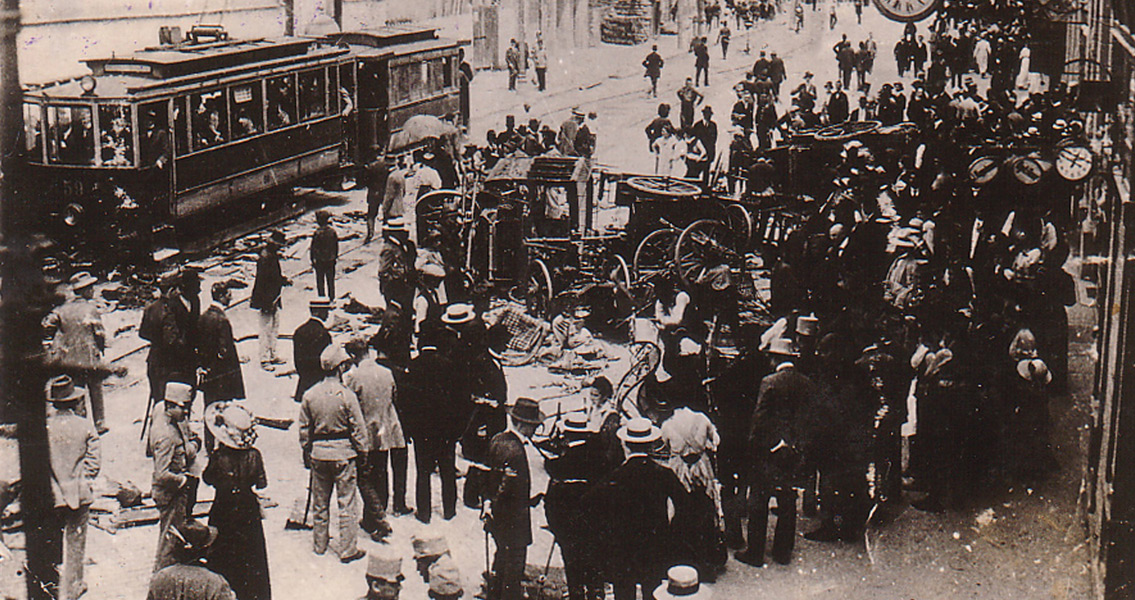
Archduke Franz Ferdinand Assassinated

Categories
Breaking News

Evidence Found Supporting the Oral History of Indigenous Tribe