Categories
Origin of April Fools' Day


www.hournals.cambridge.org Image courtesy of Wikimedia Commons user: Adam Cuerden]]>
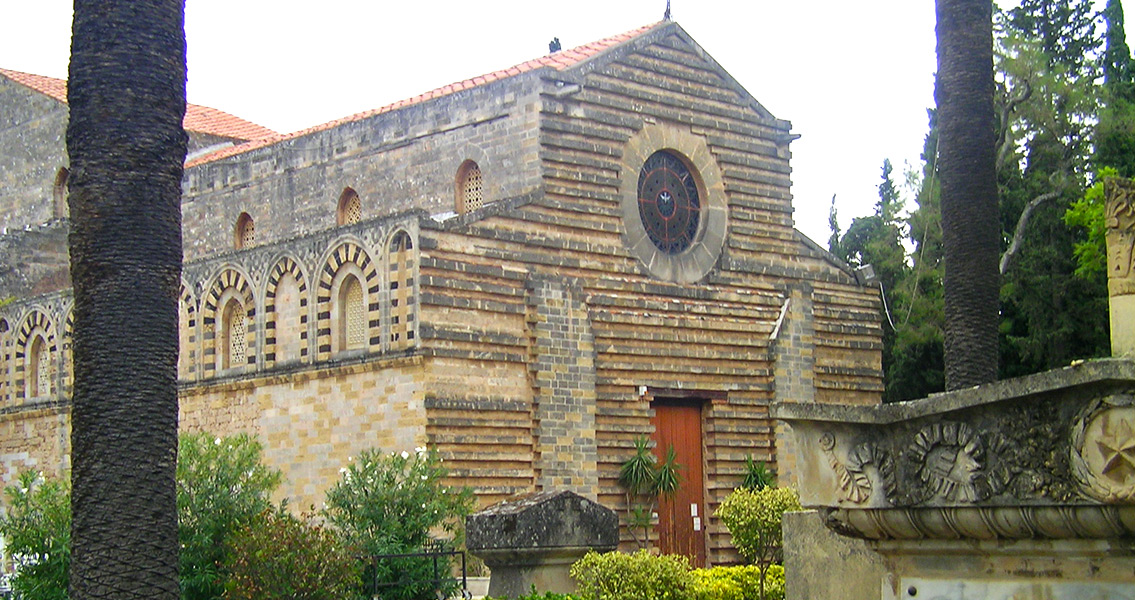
Sicilian Vespers came to an end. The night of rioting and massacre which had started on Easter Monday proved crucial in the history of Sicily and also had a significant impact on the broader history of the Mediterranean in this period. The revolt, which gets it name from the Hour of Vespers ceremony where it supposedly began, started on the 30th March and is believed to have been triggered by an Angevin soldier stopping a Palermitan woman outside the church of Santo Spirito di Palermo, to search her for weapons. Although details of the event of course vary depending on the source, it seems the soldier somehow offended the woman, triggering a riot against the Angevin-French among the local community. Reflecting the deeply ingrained tensions in Sicily’s multicultural society, the rioting spread through Palermo and then the whole of the island. The local Sicilian population attacked and killed Angevin people wherever they could be found, going as far as murdering monks and nuns. The rioters supposedly used a simple test to determine the Sicilian population from Angevin. Anyone believed to have originated from Anjou was asked to say the word “ciciri”, something native French speakers could not do in a convincingly Sicilian accent. In the annals of Medieval history, the revolt was a unique event. A spontaneous, popular uprising which affected political change. Following the night of the 30th to the 31st March the Angevin-French fled Sicily, and the people of the island eventually secured the support of the King of Aragon who sent troops there in August 1282. Although the revolt seemed to have occurred without any pre-planning, it is important to acknowledge that the uprising against the Angevin-French rulers was not completely without premeditation. Since 1266 Charles of Anjou, with the support of the papacy, had ruled Sicily from Naples. Deeply unpopular in Sicily, Charles’ strict rule incurred the wrath of normal Sicilians, but his unpopularity in a broader context was just as significant. A group of Italian nobles, known as the Ghibellines, supported the authority of the Holy Roman Emperor rather than that of Charles and the papacy. Peter III of Aragon, a rival of Charles for the Neapolitan throne and one of the main beneficiaries of the uprising, also had a clear interest in altering the status quo on Sicily. The Night of the Sicilian Vespers may have been a demonstration of popular dissatisfaction at Charles’ tyranny, but there were a diverse range of groups with an interest in ending the Angevin presence on Sicily. The revolt was followed by series of sea skirmishes and land battles between Angevin and Aragonese forces, sometimes referred to as the War of the Vespers. The fighting finally came to a close in 1302, with the Peace of Caltabellotta. The treaty saw Charles II, the son of Charles of Anjou, concede Sicily to King Frederick, a relative of Peter of Aragon. Sicily was now firmly under the sphere of Spanish influence, a situation which would persist for another five centuries. Historians have since argued that the Sicilian Vespers, and the subsequent war, proved crucial in the failure of the crusades in the Eastern Mediterranean. Charles of Anjou and the Vatican had been planning to send troops to take Constantinople when the uprising started. The need to divert resources to Sicily put this campaign on hold. Although one of many factors which ultimately led to the failure of the crusades, it is not a coincidence that the fall of Acre in 1291, a pivotal defeat for Christians in the Middle East, took place during the War of the Vespers. Indeed, the significance of events in Sicily in the broader context of Mediterranean history in this period can be seen in the theory that the Aragonese and Sicilian forces received financial support from Byzantine. Although the scope and nature of this support cannot be confirmed, it hints at the complex political workings of the period. The Sicilian Vespers revolt was an expression of popular dissatisfaction at the harsh rule of Charles of Anjou over Sicily. This moment of rebellion by Sicilians however, can only be truly understood in the broader context of Medieval history. Image courtesy of Wikimedia Commons user: Enzian44]]>
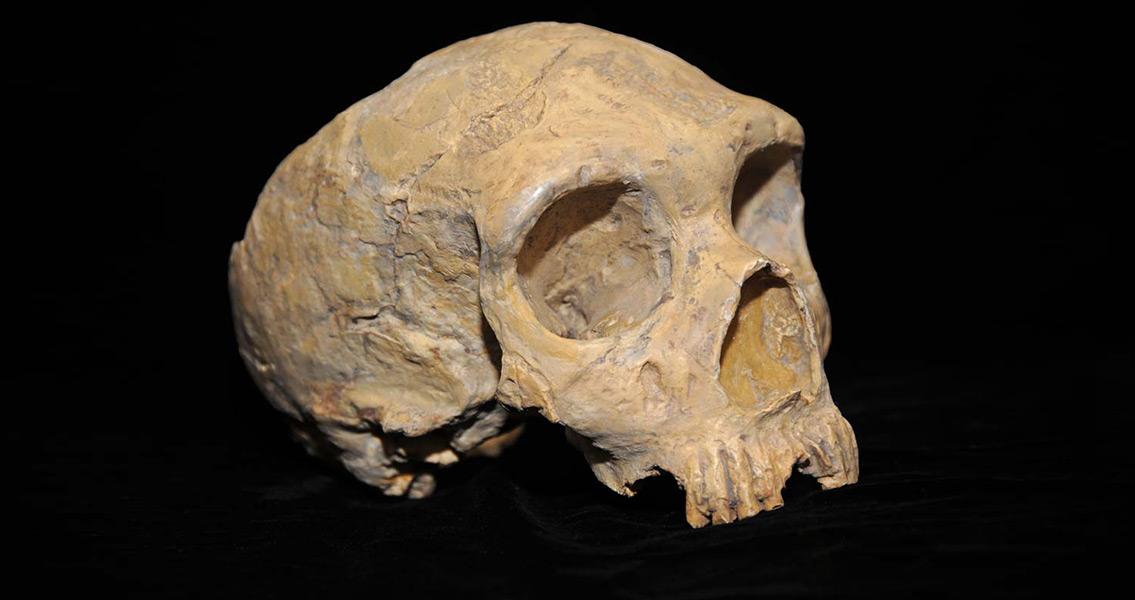
Journal of Human Evolution. “Neanderthals [however] might not have had such extreme sex-related specialization, at least in terms of the provisioning of food, with both males and females participating in the hunting of big game.” No previous work has explored what happened after Neanderthals had sufficient food, however. The Neanderthal teeth which Estalrrich and Rosas examined were taken from three different sites: El Sidron Cave in Spain, l’Hortus in France, and Spy in Belgium. All the Neanderthal teeth showed signs of significant wear. Interestingly, this wear was different to the damage usually caused by chewing food. Neanderthals are known to have had extensive anterior dental wear and their teeth often show scratches and chips. This is due to Neanderthals having used their front teeth as a tool for tasks such as food preparation, tool production and preparing skins. It is thought that Neanderthals used their mouths as a third hand, for activities other than the provisioning of food. “The fundamental observation is that all of the individuals present instrumental striations and dental chipping, regardless of provenance, age, and sex,” the team wrote. “Thus, similar behaviors could be expected among them, with all members of the groups performing tasks involving their teeth as tools, and leaving similar type of marks.” The division of labour amongst Neanderthal communities, therefore, was flexible. All Neanderthals, regardless of sex or age, used their teeth as tools. Subtle differences, however, were found between male and female Neanderthals. Teeth from female Neanderthals have more striations (linear marks or blemishes revealing wear on tooth enamel) than males, and the striations are longer. Extrapolating from these striations, Estalrrich and Rosas inferred possible behavioural situations. They believe that females were cutting different material to males and doing it more often. “That could mean a separation between sexes, or a sexual division of labor in activities other than foraging,” they wrote. Estalrrich and Rosas have decisively proved that Neanderthals used their mouths as tools. They have shown that teeth were not just for food preparation, but were useful in making tools and fashioning animal skins. Moreover, different striation patterns hint at social divisions amongst Neanderthal communities. “The results presented here illustrate how Neanderthals used their mouth as a third hand, and may indicate some subtle differences suggesting individual roles within the groups,” the report concludes. Image courtesy of Wikimedia Commons user: AquilaGib www.sciencedirect.com ]]>
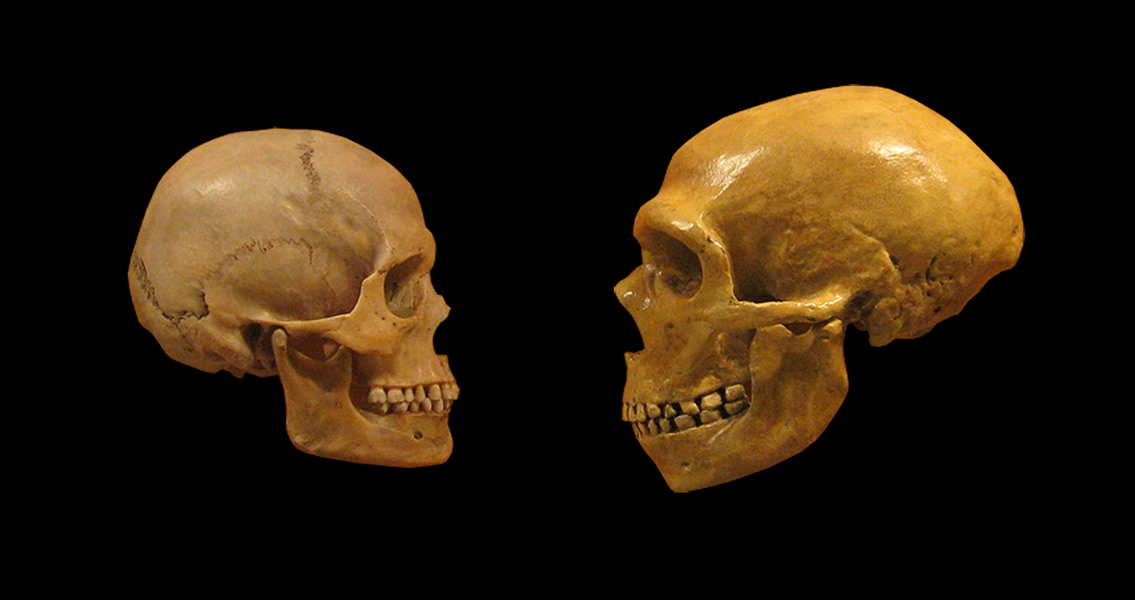
Homo, had evolved from smaller early humans becoming taller, heavier and longer-legged. This process eventually resulted in Homo erectus, which was able to migrate out of Africa and colonise Eurasia. Whilst we know that small-bodied H. erectus, averaging less than five feet tall and weighing under 50 kilograms, were living in southern Europe by 1.77 million years ago, the origin of the larger body size associated with modern humans has been elusive. The paucity of knowledge about the origins of larger members of the Homo genus is primarily a result of a lack of evidence. Previous estimates of body size had been based on well-preserved specimens which were easy to assign a species to. Since these samples are rare and disparate in terms of both space and time, little is known about geographical and chronological variation in the body sizes of the early Homo. A joint study between the Universities of Cambridge and Tübingen has shown that increases in body size occurred thousands of years after H. erectus left Africa; this growth in Homo body sizes primarily took place in the Koobi Fora region in modern Kenya. “The evolution of larger bodies and longer legs can thus no longer be assumed to be the main driving factor behind the earliest excursions of our genus to Eurasia,” said Manuel Will, co-author of the study which has been published in the Journal of Human Evolution. By using tiny fragments of fossil, the team were able to estimate our earliest ancestors’ height and body mass. Their findings, rather surprisingly, indicate a huge diversity in body size; this is particularly surprising as the wide variation we see in humans today was thought to be a relatively recent development. “If someone asked you ‘are modern humans 6 foot tall and 70kg?’ you’d say ‘well some are, but many people aren’t,’ and what we’re starting to show is that this diversification happened really early in human evolution,” said Dr Jay Stock, co-author of the study. Stock and Will are the first scientists in 20 years to compare the body size of humans from between 2.5 and 1.5 million years ago. They are also the first to use fragmentary fossils – many as small as toes, none longer than 5cm – to estimate body sizes. By comparing measurements of fossils from sites in Kenya, Tanzania, South Africa and Georgia, the researchers have revealed substantial regional variation in the size of early humans. Groups who lived in South African caves, for example, were 4.8 feet tall on average. Some of the skeletons found in Kenya’s Koobi Fora region would have stood nearly 6 feet tall, a height comparable to the average height of modern British males. “Basically every textbook on human evolution gives the perspective that one lineage of humans evolved larger bodies before spreading beyond Africa. But the evidence for this story about our origins and the dispersal out of Africa just no longer really fits,” said Stock. It appears that Stock and Will have rewritten the history of the development of early humans; diversity has deep roots amongst the Homo genus. www.sciencedirect.com Image courtesy of Wikimedia Commons user: DrMikeBaxter]]>

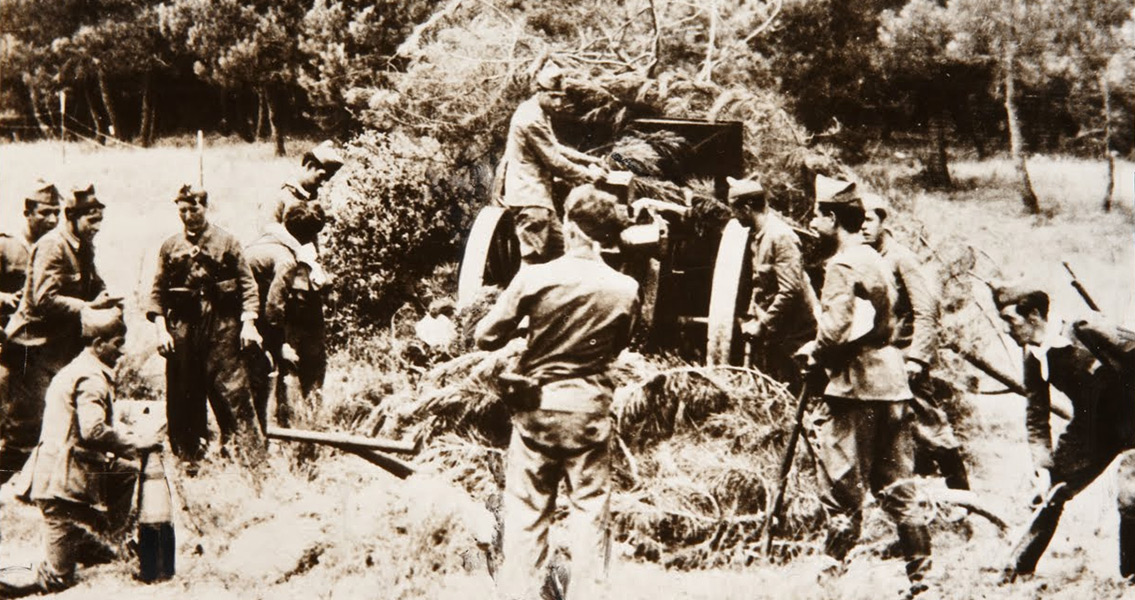
Homage to Catalonia. Clearly, the divisions in Spanish society were taken to symbolise something much broader, a set of competing values which many felt had an international importance. By 1939 the Republican forces were in disarray, Barcalona was captured in January and the situation had clearly become unwinnable. The Republicans attempted to sue for peace but Franco refused to negotiate. Madrid was soon surrounded and the city eventually became divided when sections of the Republican forces began fighting with each other. On 28th March, Franco’s forces marched into Madrid. It marked the end of a conflict which had seen over a million people lose their lives and whole cities leveled by the shocking power of modern military technology. The reality of the consequences were most directly felt in Spain, but in some ways people around the world had felt a connection to the Spanish Civil War. ]]>