Categories
News

From Time to Time: a short history of calendars

Egypt Around 4000 BC the Egyptians transitioned from a straight lunar calendar to a sun- and star-based calendar. Their New Year happened in high summer (in July by the current Gregorian calendar) on the day when Sirius rose above the eastern horizon again after staying below the horizon for seventy days. This was significant for religious reasons; Sirius was associated with the earth-goddess Isis, and was also said to be the source of spiritual energy, as the sun was of physical energy. That date was also important for agricultural reasons: on or shortly after Sirius’ reappearance the Nile began to flood. The Egyptian calendar year was divided into three four-month-long seasons: flood season, emergence season, and low water. Each month was divided into three ten-day ‘decans’, and the last two days of each decan were kept as holidays. Each year also contained 5 days that were not assigned to any month; on those days the birthdays of gods were celebrated.

Sumer

The ancient Sumerians also began with a strictly lunar calendar. A new month began whenever a new crescent moon rose. By 2400 BC the Sumerians began experimenting with a lunisolar calendar. This calendar had alternating 29-day and 30-day months, so that each day of the month remained correlated to a given moon phase. There were twelve lunar months in a year. Whenever the lunar year got too far out of sync with the solar year, an additional month was added to the year’s end. Initially each city decided independently when or whether to add new months. Around 380 BC the Persians, who were then ruling the Sumerian empire, worked out a standardized cycle for every city to use: a 19-year cycle where the 3rd, 6th, 8th, 11th, 14th, 17th and 19th years had thirteen months while the rest had twelve. This kept the lunar and solar years more or less in harmony.

China

Between 2000 and 1000 BC the Chinese developed a detailed solar calendar. The solstices and equinoxes were given fixed dates, and seasons were held to begin halfway between them (summer, for instance, began halfway between the vernal equinox and the summer solstice.) A total of twenty-four ‘node days’ evenly divided the year. The Chinese also observed alternating 29-day and 30-day lunar months, and used the same cycle as the Sumerians for adding extra months to years so that the lunar and solar years mostly kept pace with each other. The date of the New Year was changed for political reasons by successive dynasties until it was finally settled as the second (or sometimes, in a thirteen-month year, the third) new moon after the winter solstice.

South America

The Mayans and some other pre-Columbian peoples used two distinct calendars. The Haab, the basis for the agricultural year, was a solar calendar with eighteen twenty-day months and one five-day month. In some cultures the five-day month was a sacred time. Others kept festivals on other dates set by the Haab calendar. There was another calendar, the Tzolk’in, which seems to have been mostly used to set ceremonial dates. The Tzolk’in is divided into twenty periods of thirteen days. New Year’s Day was celebrated at the beginning of each Tzolk’in cycle. The two calendars were combined to produce the Calendar Round, which gave dates according to their Haab and Tzolk’in reckoning. A given Haab and Tzolk’in combination would recur every 52 years. Some Mayans believed that a person attained the wisdom of an elder after living through one full Calendar Round cycle. Finally, there was the “Long Count’ calendar which measured each day’s position relative to what was believed to be the 7,885 years which spanned from the beginning of the world to its destruction and rebirth. European guesses about the origin point of the Long Count calendar led to the popular rumors that the world would end in 2012.

Islamic Calendar

The Islamic calendar, like the Tzolk’in, is not tied to the solar year. It is strictly measured in lunar months based, not on a count of days, but on the actual observation of the new crescent moon. It begins from the date of the Hegira, the prophet Mohammed’s journey from Mecca to Medina (July 15, 622 by the Gregorian calendar.) Each year is made up of twelve lunar months. Saudi Arabia and some other Middle Eastern countries use the Islamic calendar for their official calendar.

Roman, Julian, and Gregorian Calendars

The Roman Republic in the 500s BC used a solar calendar with four 31-day months, seven 29-day months, and one 28-day month. This totaled 355 days; a leap month was added every 2 or 3 years to keep the calendar year in sync with the seasons. The Pontifex Maximus, or high priest, was responsible for declaring leap months. But since the priest’s term of authority was tied to the calendar year, there was some concern about priests adding unnecessary leap months in order to extend their terms. Under Julius Caesar the leap month was eliminated, regular months were lengthened, and a leap day was added to February once every four years. This nearly approximated the actual solar year, but the leap years occurred a little too often, leaving a calendar 4-year period a little longer than a solar 4-year period. In 1582 AD Pope Gregory announced a new calendar formulation with slightly less frequent leap years, and also ordered an abrupt change in date to bring the dates back in line with the seasons. Those countries which adopted the change immediately dropped 10 days. But the adoption of the calendar was slow in some parts of the world. The United Kingdom and its colonies changed over in 1752, dropping 11 days; Turkey changed over in 1926, dropping 13 days. Read more about early calendars at the links below: Ancient lunar calendars: https://sservi.nasa.gov/articles/oldest-lunar-calendars/ Egyptian and Sumerian calendars: http://www.webexhibits.org/calendars/calendar-ancient.html#anchor-babylonian Chinese calendar: http://www.math.nus.edu.sg/aslaksen/gem-projects/hm/Chinese_Calendar.pdf Mayan calendar: https://maya.nmai.si.edu/calendar/calendar-system Roman calendar: https://www.timeanddate.com/calendar/roman-calendar.html Julian/Gregorian: https://www.timeanddate.com/calendar/julian-gregorian-switch.html      ]]>

Categories
News

The Real Christmas Wars

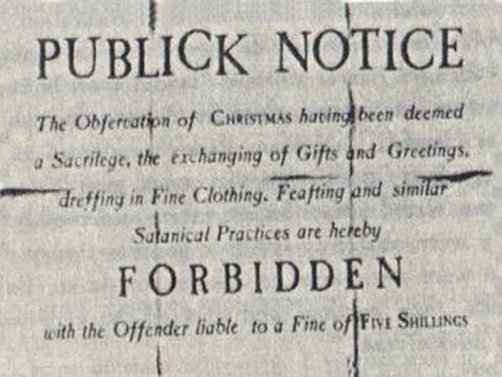
“told them that if they made it mater of conscience, he would spare them till they were better informed. … [Later] he found them in the street at play, openly; some pitching the barr and some at stoole-ball, and such like sports. So he went to them, and took away their implements, and told them that was against his conscience, that they should play and others work. If they made the keeping of it mater of devotion, let them keep their houses, but there should be no gaming or revelling in the streets. Since which time nothing hath been attempted that way, at least openly.” Apparently open attempts resumed soon thereafter; in 1659, the Massachusetts Bay Colony passed a law strictly forbidding Christmas observance, saying the law was necessary “for preventing disorders” associated with “such festivals as were superstitiously kept in other countries.” The Puritan Mayor of Canterbury attempted to enforce a similar ban in 1647 when the Puritan Parliament was governing England, ordering shopkeepers to open for business as usual on Christmas Day. When many shopkeepers disobeyed, the Mayor set out to rebuke them, flanked by soldiers. He got as far as threatening one defiant shopkeeper with the stocks before an angry crowd knocked him down, vandalized the shops which had opened, and began a very rough game of football up and down the streets. Officials and Puritan preachers who tried to stop them were pelted with anything that came to hand; most wisely retreated indoors. Attempts to legally punish the leaders of the so-called “Plum Pudding Riots” were met with furious demonstrations in favor of Anglicanism and the King. Why did some Christians object so fervently to Christmas? As with most questions of history and religion, the answers are complicated.

“Mad Mirth”

The Puritans objected to the way in which people observed Christmas. Some (like Governor Bradford) saw it as an excuse for idleness. Others were concerned about just how that idleness was used. New England Puritan minister Increase Mather lamented that people who celebrated Christmas were “consumed in… revellings,in excess of wine, in mad mirth.” Christmas celebrations often featured heavy drinking and gambling, which the Puritans understandably saw as unwholesome. There was also controversy over the tradition of wassailing, in which poorer people banded together and went to the homes of the rich, where they sang or put on pantomimes and expected to be given food and drink. Sometimes this seems to have been a pleasant and friendly interchange all round; but fights sometimes developed when the rich folk were unwilling to play host. Puritans were also unhappy with mummers who tramped the streets and visited houses in elaborate costumes, often cross-dressing and sometimes engaging in highly bawdy antics.

Paganism and Power

There was also some actual religious controversy around the holiday itself. Some reform-minded Christians pointed out that the Bible said nothing about Christ’s birth date. They saw Christmas as a thinly disguised pagan revel, given that it fell at the same time as the earlier Roman Saturnalia, which also featured costumes, feasting, bawdy revelry and gift-giving, as well as incorporating other Pagan traditions such as the burning of the Yule log, the setting up of Christmas trees and the hanging of mistletoe. But their objection may have been to certain Christian groups as much as to Pagans.   The battle for Christmas arose in the context of English civil wars with a heavy religious component. England had broken with Catholicism and established the Anglican Church in 1533 under King Henry VIII. Depending on which historians you believe, this was a cynical move prompted entirely by Henry’s wish to divorce wives as often as he liked until he got get one who’d bear him a son, this was a principled protest against the Catholic Church’s own cynical political moves and repression of freethinkers, or this was some combination of the two. After Henry’s death his Catholic daughter Mary took the throne and attempted to forcibly reimpose Catholicism; after Mary’s death her Anglican sister Elizabeth attempted to forcibly quash Catholicism, which she saw as linked to rebellion; religion and politics were entangled in a way that did no good to either. Under Queen Elizabeth I people began to speak derisively of “Puritans,” hard-line Protestant reformers who wanted to move the Anglican Church further from Catholicism. Many of the Puritans were “middling sort of people,” yeomen and artisans from the cities eager for a less hierarchical version of politics and religion; some were people of high position, and many found their way into the English Parliament. King Charles I and the Parliament clashed bitterly over issues of religion, economics and politics, and another bloody civil war followed. As in any civil war, all the cultural differences between groups became occasions for violent animosity. This was the backdrop of the Canterbury Christmas Riot, which took place while Parliament was ruling and the King out of power; it was also the backdrop for the emigration of many Puritans to America after the monarchy and the rule of the Anglican Church were restored.

Peace On Earth?

The battles over Christmas didn’t end in one deliberate truce; they seem to have fizzled out over time as the larger wars which had spawned them faded into the past. Nineteenth-century Books like Dickens’ “A Christmas Carol”and (in the US) Washington Irving’s “The Sketchbook of Geoffrey Crayon” are widely credited with giving Christmas a newer, tamer image as a pleasant domestic holiday and an occasion for charity. For a vivid account of the Canterbury Christmas riot, see http://www.vaguelyinteresting.co.uk/canterburys-cancelled-christmas-and-the-plum-pudding-riots/ For a closer look at the pagan roots of some Christmas traditions, see https://www.thoughtco.com/history-of-yule-2562997 For a glimpse of the history of Christmas controversy in the early US, see http://www.newenglandhistoricalsociety.com/wont-go-get-new-england-colonial-christmas-traditions/ For a brief look at the history of the Puritans, see http://bcw-project.org/church-and-state/sects-and-factions/puritans]]>

Categories
News

What was the Berlin Conference?

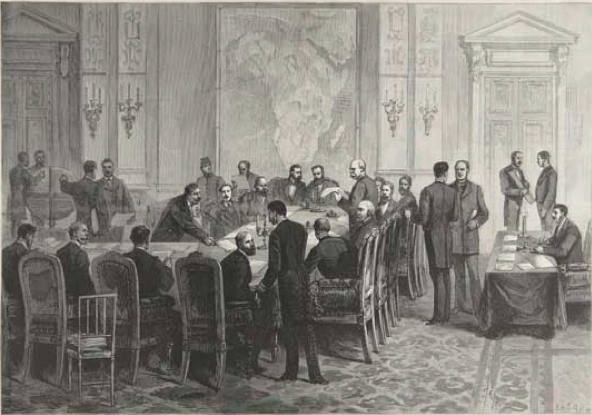
thcentury. At the end of the 18thcentury, European explorers started mapping out the interior of Africa and by 1850, most of the African continent had been discovered by European explorations.   This newly discovered land, however, led to increased tensions between European states that were already competing for colonial dominance. In 1884, at the request of Portugal, Germany’s first chancellor Otto von Bismarck organized a conference for all the major western powers to negotiate the issue of control over Africa.   This event became known as the Berlin Conference of 1884-1885 (aka the Congo Conference or the West Africa Conference). Not only was this a turning point in the history of Africa, it was also the establishment of Germany as a colonial power.   At the time, 80% of the African continent remained independent and indigenous people were treated as trading partners. But over time, due to various factors, such as diplomatic maneuvers, colonial explorations, and the discovery of numerous valuable resources (i.e. gold, timber, rubber, etc.), interest in the continent increased dramatically.   The Berlin Conference aimed to end the competition between European powers during the “Scramble for Africa”. The following fourteen countries were represented at the Conference: Austria-Hungary, Belgium, Denmark, France, Germany, Great Britain, Italy, the Netherlands, Portugal, Russia, Spain, Sweden-Norway (who were unified in 1814-1905), Turkey, and the USA.   The General Act covered several key points. For one, the Conference “resolved” the issue of slavery, as it contained a clause prohibiting the transatlantic slave trade. Furthermore, the Free State of Congo was established, which was one of the initial and key causes of the conflict. The 14 signatories were allowed to trade freely throughout the Congo Basin, and the Niger and Congo rivers were made free for ship traffic.   The Principle of Effectivity was established, which meant that European powers were not allowed to set up colonies in name only. Moreover, the act established regional boundaries for each colonial power, giving them an exclusive right to “pursue” the legal ownership of land in the eyes of the other European powers.   The conference sped up the process of colonization, and by 1914, the African continent was fully divided into fifty countries. Britain was the biggest “winner”, gaining control over Egypt, Sudan, Uganda, Kenya, South Africa, Zambia, Zimbabwe, and Botswana. Furthermore, they also controlled the Gold Coast with Nigeria and Ghana.   France came in second with control over most of western Africa, including the Ivory Coast, Benin, Mali, French Guinea, Mauritania, Niger, and Senegal. Other notable colonial powers were Belgium, that controlled the Democratic Republic of Congo, Portugal, Italy, Germany, and Spain.   The outcome was an ill-defined, rigid grid of borders that divided the continent into irregular territories. The new boundaries were superimposed over the existing borders, completely disregarding the pre-existing division of indigenous cultures. The consequences are still evident today, as it merged together disparate groups who were historically enemies, leading to numerous conflicts on the African continent.]]>

Categories
News

The Immigrant Invasion That Wasn’t

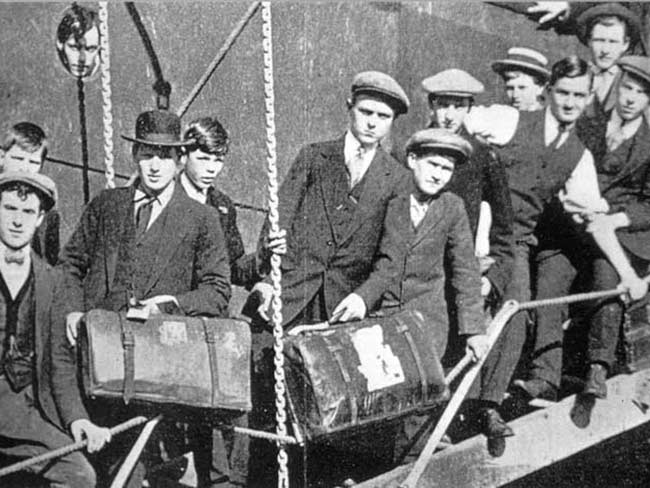
Reasons for Leaving Many of the Irish immigrants in the 1800s were no more eager to leave their land for the US than Coxe and his ilk were to receive them. But living conditions in Ireland had become untenable. This was the result of a process that started long before the infamous potato famine. In the late 1100s Norman-English soldiers arrived in Ireland to help one side in a civil war and stayed on uninvited. Soon after, England’s King Henry II sent further troops and laid claim to Ireland. Over the centuries that followed, Irish laws were changed and Irish lands confiscated. By the 1700s, only 14% of Irish land was owned by Irish people. A considerably larger portion was worked by Irish farm laborers who grew food for export, sometimes going hungry themselves. In the early 1800s, Anglo-Irish landlords found it more profitable to raise livestock than crops for export. Tenant farmers were evicted in order to make room for larger pastures. Some of the evictees found day labor at other jobs. Some managed to get small plots of land and grow enough potatoes to keep themselves alive. Others, unable to make a living in their native land, emigrated to America. In the mid-1840s the fungal disease called late blight swept the country, rotting the potato crop in the field. In 1845 forty per cent of the crop was lost. Families who had been barely getting by began to starve. By 1855 one million people had died of hunger and disease (as food continued to be exported from Ireland to England). Many more emigrated to the United States. As smallholders fled, their land was bought up and enclosed for pastureland; even after the blight subsided in the 1850s, the problem of dispossession remained.

In the New World

The immigrants found work in the New World—often difficult work that offered little pay and less respect. Most of the women, who made up more than half of the exodus, became domestic servants or factory workers; most of the men found work building roads, railroads and canals or mining. Some US employers spoke quite frankly of hiring Irish laborers for jobs so dangerous that native-born workers wouldn’t take them. Some native-born workers complained that the Irish were impoverishing them by competing for jobs, driving down wages and taking charity. Certainly the landscape was changing fast. In the mid-1850s the majority of New York’s residents were immigrants, and the majority of recorded charity recipients were Irish. Some writers and speakers explained that this showed that the “Hibernian race” was naturally inferior to the Anglo-Saxon—conveniently overlooking the role played by Anglo-Saxons in displacing and impoverishing Irish emigrants. Irish immigrants were also the subject of wild conspiracy theories, often focused on their religion. Many writers alleged that the Catholics owed their true loyalty to the Pope rather than to any democratic government, and once sufficient numbers had arrived they would rise up violently, overthrow the Constitution, and subject Americans to a new Inquisition. Some went so far as to claim that a new Vatican would be founded in Ohio. In 1836 Maria Monk wrote what claimed to be a memoir about her life as a nun, in which priests were accused of lurid sexual misbehavior and routine child-murder; it was pointed out that she had actually never been a nun and the ‘memoir’ was actually a novel, but that didn’t hinder book sales. Sometimes anti-Catholic hostility led to apparently spontaneous rioting and violence, as in Philadelphia’s 1844 “Bible Riot,” over whether Catholic children should be allowed Catholic Bibles in school, left twenty people dead and three Catholic churches burned. In the 1850s anti-Catholicism found organized political expression in what was formally known as “The American Party.” The American Party appealed to “native Americans”—by which it meant US-born whites, not American Indians—to pledge “eternal hostility to foreign and Roman Catholic influence.” It sought to deport “foreign beggars and criminals,” bar Catholics from public office, and make immigrants wait 21 years for naturalization. This party successfully elected more than one hundred US Congressmen as well as gaining control of several state legislatures. The party began as a secret society whose members were instructed to answer any questions about outsiders with “I know nothing,” and the American Party was also known as the Know Nothing Party, the name by which they are mostly remembered today.

Race Questions

The American Party’s rise to power was checked, not by a sudden outbreak of sanity and ethnic solidarity, but by the rise of an even more explosive conflict: the Civil War. While the Know Nothings agreed on suspecting immigrants, they didn’t agree on the question of slavery, and those questions tore the party apart. Many Irish-Americans also had ambivalent attitudes about slavery, liberty and black Americans. 19th-century Irish immigrants were stigmatized not only for their religion but also for their ethnicity; some writers lumped them in with black Americans as members of irresponsible and inferior races, and some cartoonists portrayed both Irish and black Americans as simian. This led some Irish-Americans to speak against race prejudice, others to differentiate themselves from black Americans by emphasizing their own whiteness. Irish and black Americans sometimes competed for jobs that native-born whites wouldn’t do. During the war one Irish paper in Massachusetts warned its readers, “The North is becoming black with refugee Negroes from the South. These wretches crowd our cities and, by overstocking the market of labor, do incalculable injury to white hands…” And in 1863, when a law was passed saying that rich people could escape the military draft by paying the government $300 to hire a substitute, Irish-led protests in New York City against this unequal treatment of rich and poor devolved into violent attacks against black Americans, whom rioters blamed for the war.

Rising Acceptance

After the war ended Irish-American immigrants still faced prejudice—witness Coxe’s jeremiad and the ferocious cartoons of Thomas Nast and others—but they had also established a foothold in their new land, and their children were advancing quickly. Many first-generation immigrants had had little chance for education, but they saw to it that their children attended schools. By the turn of the century a higher proportion of Irish Catholics than of Protestants attended college. Some Anglo-Saxon Protestant Harvard students were skeptical of their new schoolmates, but Harvard’s President, Abbott Lawrence Lowell, stressed that education would help to assimilate the Irish and teach them to share “our prosperity and our sentiments,” since they—unlike non-white people and Jews—were clearly assimilable and worthy of “universal political equality.” By 1910 20% of Northern schoolteachers—and 33% of Chicago schoolteachers—were Irish women, while Irish men composed 30% of municipal workers in New York City, Boston, Chicago, and San Francisco. Irish-Americans formed a powerful voting bloc, and they also took leadership in trade unions. While some unions were strongly nativist, some prominent Irish-American labor leaders, including Terence Vincent Powderly of the Knights of Labor and Mike Boyle of the International Brotherhood of Electric Workers, recruited black workers as well as Europeans of different ethnicities. Perhaps they remembered their own family stories of struggling against discrimination. By 1960, while vestiges of anti-Irish prejudice remains, Americans elected an Irish Catholic President. Many of today’s Supreme Court Justices are also Catholics who have spent their professional lives interpreting and defending the Constitution which Coxe thought their people could not value. Coxe’s essay can be read here: https://books.google.com/books?id=LchZAAAAYAAJ&pg=PA597&lpg=PA597&dq=a+cleveland+coxe+government+by+aliens&source=bl&ots=whGjicbA5B&sig=qp05rZGrmUZOLz2_PU3FtTPfqNM&hl=en&sa=X&ved=2ahUKEwiT487Uu5DfAhVo7oMKHZ4BDYQQ6AEwA3oECAYQAQ#v=onepage&q=a%20cleveland%20coxe%20government%20by%20aliens&f=false   A thoughtful discussion of the causes of Irish emigration, the process of Irish-American assimilation and the complex relationship between Irish Americans and Black Americans in the 1800s can be found in chapter 7 of Ronald Takaki’s book “A Different Mirror: A Multicultural History of America.”   More information on the Know Nothings can be found at https://www.smithsonianmag.com/history/immigrants-conspiracies-and-secret-society-launched-american-nativism-180961915/]]>
Categories
News

Who was Manco Cápac?

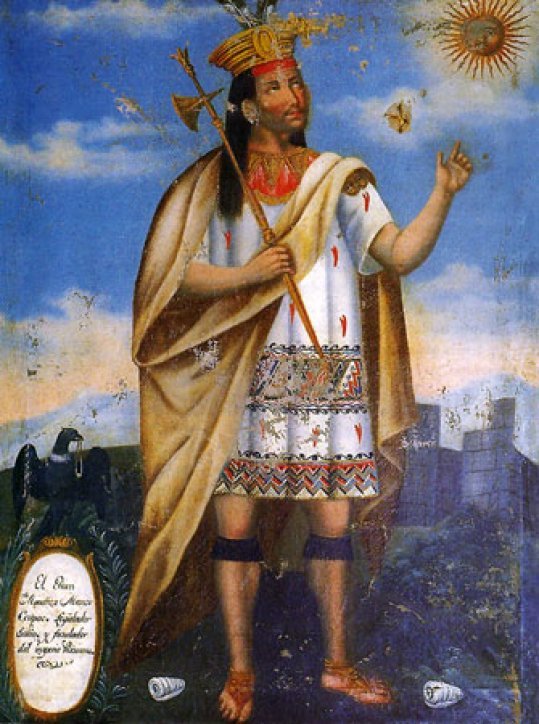
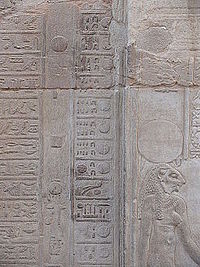
thcentury, people around Lake Titicaca lived like savages and Inti believed that this was due to their lack of religious beliefs that brought them together.   Thus, he sent his sons and his daughter, Mama Ocllo, to teach the savages about civilization. Upon arrival on earth, Manco Cápac killed his brothers by trapping them under or turning them into stone and married his sister.   His next step was to find fertile land upon which he could build his empire. According to one version of the legend, his father had given him a golden staff, who instructed him to use it as a tool to find fertile where he was to build a temple to teach the people about the Sun God.     According to the instructions, he had to plant this staff in the ground. The location where it sank without resistance would be the perfect location for him and his people to settle.   Following his father’s demands, Manco Cápac ventured through the Andes Mountains and the surrounding valleys searching for good land. He finally came across the Cusco valley where he thrust his golden staff into the earth.   It sank into the earth without resistance. So, Manco Cápac led his sister/wife and his people to this location where they settled circa 1200.   This is the foundational myth of the Inca empire, however, there is also historical proof of Manco Cápac’s existence. Historians believe that he was born in Tamputoco, which is located in the province of Pumaurco in present-day Peru.   The city of Tamputoco was a refuge for many nomads that were exiled by the Aymaran invasions. According to some sources, Manco Cápac became the head of the Ayllu people after the death of his father, Manqu Qhapaq.   The Ayllu was a nomadic tribe comprised of several dozens of families. The trajectory of their journeys through the Cusco valley coincides with Manco Cápac’s journey as told in the legends.   Their settlement in the Cusco valley wasn’t effortless, however. The area was divided into four districts and the Ayllu people only occupied a small fraction. At the time, the other districts were inhabited by larger, more powerful tribes.   Manco Cápac and the Ayllu people were regarded as invaders and were thus often attacked. It wasn’t until the late 14thcentury, with the expansion of the Inca empire, that their people became the most powerful tribe.   Manco Cápac died of natural causes and left his son, Sinchi Roca, in charge of the city of Cusco and their tribe. His body was mummified and kept in the city until the reign of Pachacuti in the 15thcentury, who demanded its move to Lake Titicaca. Today, only a statue of him remains in the city of Cusco to honor his legacy.]]>

Categories
News

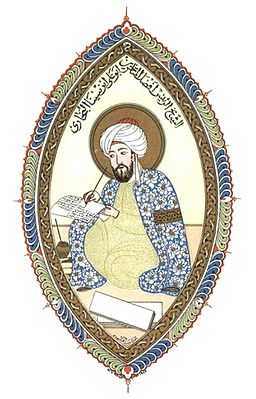
Ibn Sina, Medieval Father of Modern Medicine

Origins Ibn Sina was born around 980 CE to a scholarly family near Bukhara (which was then in Iran and is now in Uzbekistan.) By the age of ten he had memorized the Quran. In the following years he continued to reflect on the Quran’s meaning and to study Islamic jurisprudence. He also studied logic and read the works of the Greek philosophers, mathematicians and metaphysicians, first under a tutor and then on his own. At the age of sixteen, Ibn Sina gave his attention to medicine—reading up on theory and also taking every opportunity for direct observation. Before turning twenty he undertook to treat the ailing Sultan of Bukhara, whose court physicians had failed to diagnose or treat his malady. Ibn Sina succeeded where the rest had failed. Unfortunately we don’t know what the diagnosis or the treatment were, only that the Sultan healed and, in his gratitude, opened the royal library to Ibn Sina, who was delighted to have access to many new works of science and philosophy.

Writings

Soon after this Ibn Sina himself began writing books setting forth the nature of the universe.   This included broad theoretical explorations of philosophy, theology and metaphysics, observations on astronomy, mathematics, music and poetry, and practical advice on politics, household management, personal ethics, and medicine. His book “The Cure” seeks to draw the different branches of knowledge together and show them in their proper relation to each other, while many of his other works focus on specific branches of knowledge which had attracted his wide-ranging curiosity. Ibn Sina saw all knowledge as necessarily connected and made no sharp distinction between the academic and the practical. “Every science,” he observed, “has a theoretical and a practical side.” He added, “It is established in the sciences that no knowledge is acquired save through the study of its causes and beginnings, if it has had causes and beginnings; nor completed except by knowledge of its accidents and accompanying essentials.” This holistic view was particularly important in Ibn Sina’s theory and practice of medicine.

Medicine

Today Ibn Sina is best known for his “Canon of Medicine,” a comprehensive guide to medical treatment. In this book he wrote about the ancient physicians—Chinese, Persian and Greek—whose works he had read, and about the fundamental similarities which undergirded their rather different approaches to medicine. He also realized that the classical authors hadn’t known all that was necessary, that medical knowledge still had a long way to go. So Ibn Sina included a detailed record of his own medical observations, and advised other physicians on how to record and evaluate their own observations. He wrote about the importance of starting drug treatments at a low dosage and increasing the dose gradually; he also wrote about what type of consistent results were required in order to be sure of the effects of any particular drug.   Michael McVaugh and other historians have described Ibn Sina as the first proponent of what we now call evidence-based medicine. He had a very optimistic view of what medical knowledge could eventually encompass: he wrote, “There are no incurable diseases, only lack of will; there are no useless herbs, only lack of knowledge.” While Ibn Sina paid considerable attention to details of particular medical conditions (he may have been the first to recognize the distinctive sweet smell of the urine of diabetics), he also emphasized the importance of understanding the mental and physical health of the whole patient. He wrote, “Medicine is the science by which we learn the various states of the human body in health and when not in health, and the means by which health is likely to be lost and, when lost, is likely to be restored back to health….” He recognized that lack of health in one area of the patient’s life might show up in other areas—for instance, that apparent urinary tract problems might result from blood infections (a recognition which is said to have originated with him) or psychological disturbances. And he gave his attention to methods of preventing diseases as well as curing them, emphasizing diet and environmental factors. He studied how contagious diseases spread, not only though direct contact between people, but also through soil and water.

Travels and Travails

Ibn Sina’s brilliance, and his success in curing the Sultan, won him the favor of important people, and he held important positions in more than one royal court. Given the feuding and the shifting politics of the time, this was not entirely safe for him. His autobiography repeatedly describes his leaving courts “because of necessity,” usually left vague; he traveled frequently, and at one point he was jailed amidst a political struggle. While his location and his patrons varied, his commitment to learning and teaching remained unwavering. Other people’s accounts of him paint varied pictures, some admiring his brilliance, others criticizing what they saw as his arrogance (expressed in his authoritative and sometimes unconventional statements) or impiety (shown by a tendency to drink alcohol and have affairs). It appears that in his last illness he was unlucky enough to have attendants who thought ill of him and added toxic ingredients to the medicines he had prescribed for himself. He died at the age of fifty-seven.

Influence

Ibn Sina’s philosophical writings were studied, and in some cases admired, by European Christian scholastic theologians including Thomas Aquinas. His medical fame and influence were even more widespread. The Canon of Medicine was translated into Latin in the 1100s CE and became a standard European medical textbook, reprinted and revised frequently in the 1400s. Ibn Sina is still remembered and studied by homeopaths, naturopaths and holistic healers. For more information on Ibn Sina’s philosophy, which there wasn’t room to cover in this article, see https://www.iep.utm.edu/avicenna/#H3 For more on The Canon of Medicine, see Evelyn B. Kelly’s article “The Significance of Ibn Sina’s Canon of Medicine in the Arab and Western worlds” at https://www.encyclopedia.com/science/encyclopedias-almanacs-transcripts-and-maps/significance-ibn-sinas-canon-medicine-arab-and-western-worlds    ]]>

Categories
News

What was the Dutch Republic?

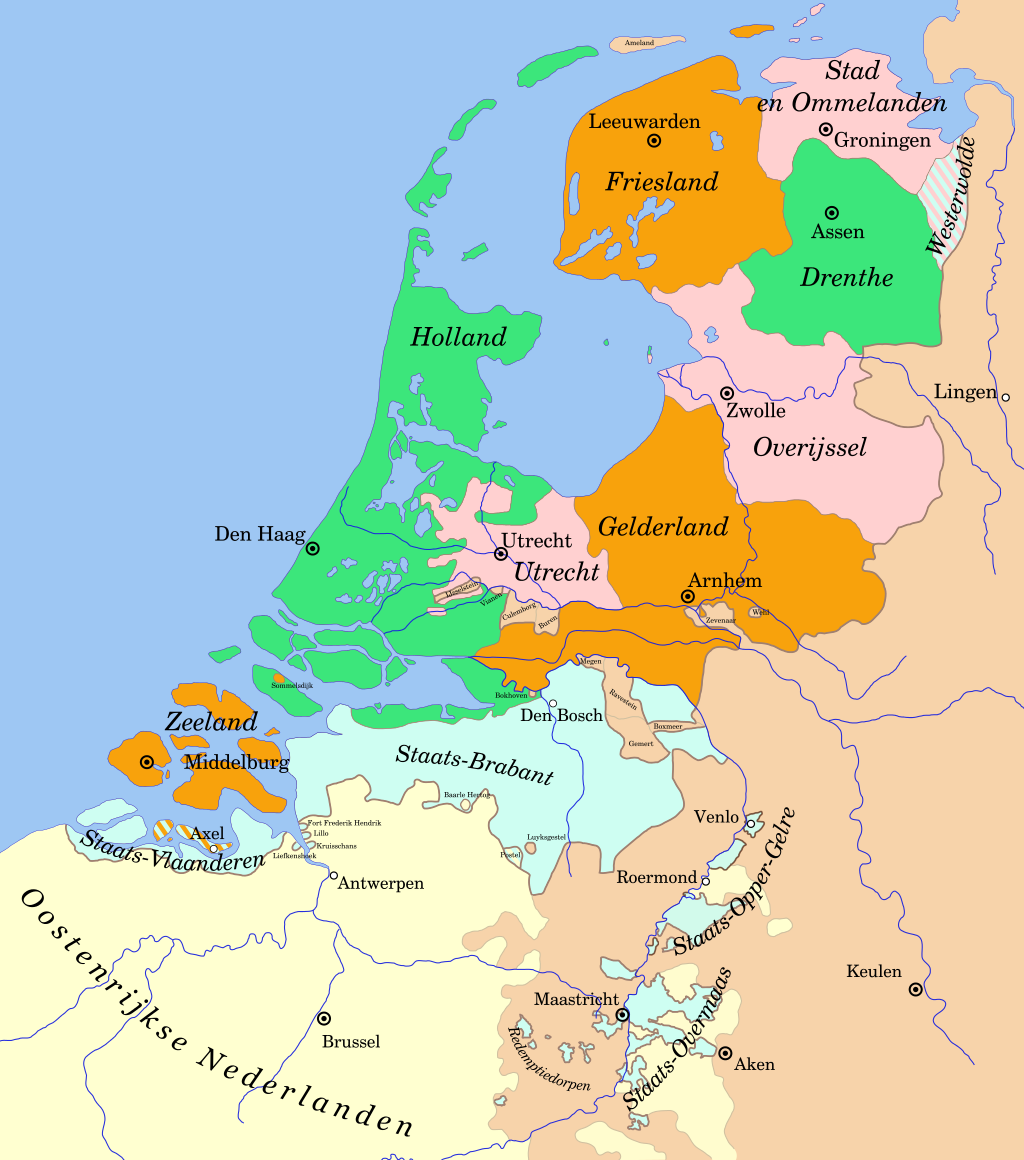
thcentury, the United Provinces did not exist as a single entity. It was comprised of numerous provinces known as the Low Countries (today’s Netherlands, Belgium, and Luxembourg). These were under the control of the Roman Emperor Charles V and his son Philip II of Spain. As an ardent Catholic, Philip II was reluctant to allow the continuing development of Protestantism in the Low Countries.   Revolts began in 1566 with the Petition of Compromise to the governor of the Netherlands; Margaret of Parma. Margaret capitulated on the issue which led to an upsurge in Protestant protests.   The protests escalated in 1568 which led to the start of the Eighty Years’ War with Spain. Under the leadership of Prince William of Orange, Count of Nassau, seven Low Countries provinces (Holland, Zeeland, Utrecht, Gelderland, Groningen, Friesland, and Overijssel) formed a defensive political alliance known as the Union of Utrecht.   One of the main reasons for the alliance was resistance to Spain’s attempts of centralization of authority. The new Union was, therefore, designed as a confederacy of states in which each province operated its own independent government. In 1581 the Union signed the Act of Abjuration which declared independence from Spain.   Needless to say, Philip II did not agree, and the war intensified. In 1582 the United Provinces invited Francis, Duke of Anjou to lead them in the war. However, after a failed attempt to take Antwerp in 1583, the duke left the Union again. Both Henry III of France and Elizabeth I of England declined to recognize sovereignty of the Union, after the assassination of William of Orange in 1584.   England, however did agree to turn the Dutch Republic into a protectorate of England, however, this plan also failed in 1588 and the provinces went back to being a confederacy. This was not recognized by the Spanish Empire until the Peace of Westphalia in 1648 which was also the end of the Eighty Years’ War.   The century that followed became known as the Dutch Golden Age. After the Union officially gained independence, the Dutch East India Company started dominating world trade. Conquering a vast colonial empire and operating the largest fleet worldwide, the County of Holland became the wealthiest and most urbanized region in the world.   The success of the Dutch Republic eventually came to end at the start of the 18thcentury. There had been a long-lasting rivalry between the two main factions in Dutch society, the Republicans (Staatsgezinden) and the Royalists (Prinsgezinden). In 1672 William III of Orange became the last stadtholder and the Royalists regained power, eventually establishing the Kingdom of the Netherlands.]]>