Categories
Breaking News

Found at last: the $17 billion ‘holy grail of shipwrecks’

Action off Cartagena, 28 May 1708. Oil by Samuel Scott.[/caption] With the help of an underwater autonomous vehicle, the Woods Hole Oceanographic Institution was able to locate and observe the shipwreck for the first time in 2015. The project has been kept secret, says Rob Munier, WHOI’s vice president for marine facilities and operations: “We’ve been holding this under wraps out of respect for the Colombian government.” New details about the discovery have recently been released with permission from the agencies involved in the search, including the Colombian government. [caption id="attachment_8677" align="aligncenter" width="500"] The wreck was partially sediment-covered, but with the camera images from the lower altitude REMUS missions, the crew was able to see new details, such as ceramics and other artefacts. REMUS image, Woods Hole Oceanographic Institution[/caption]  

Origins of the San Jose mystery

During a trip from South America to Spain, the galleon sunk on June 8th, 1708 during a battle with British ships in the War of Spanish Succession. 600 people were on board the San Jose, as well as a great collection of gold, silver and emeralds from Potosi in Peru. By modern day standards, the contents of the ship are worth about $17 billion.  

Deep water exploration

Due to its reputation in the field of deep water exploration, Massachusetts-based WHOI was invited to join the search. It brought with it an autonomous underwater vehicle, known as the REMUS 6000. The vehicle had played a pivotal role in finding the wreckage of Air France 447 in 2011, which crashed hundreds of miles off the Brazilian coast in 2009. In November 2015, REMUS 6000 took side sonar images, showing the San Jose in more than 600 metres of water. Positioned just 9 metres above the wreck, the vehicle was able to take several photos. Some showed the distinctive dolphin engravings on the San Jose’s cannons. “The wreck was partially sediment-covered, but with the camera images from the lower altitude missions, we were able to see new details in the wreckage and the resolution was good enough to make out the decorative carving on the cannons,” says expedition leader Mike Purcell. Munier describes the phone call from Purcell as a ‘great moment’: “It was a pretty strong feeling of gratification to finally find it.”  

What about the San Jose treasure?

As the San Jose holds such a significant haul of gold, silver and rare jewels, it has been the subject of legal battles between several nations. Private companies, too, have weighed in on the legal conversation. This isn’t the first time that researchers have thought they have found the ship. In 1981, US-based Sea Search Armada announced that it had located the San Jose, which sparked off a long, fraught legal battle over the treasure. In 2011, it was decided that Sea Search Armada and Colombia could split the cargo equally, after the Columbian government had recovered its cultural patrimony. However, the 2015 discovery is based on a wealth of information from many more sources and in recent weeks, UNESCO has called on Colombia not to make commercial gains from the wreck. Decisions regarding the future of this momentous discovery are set to unfold over the coming years.]]>

Categories
Breaking News

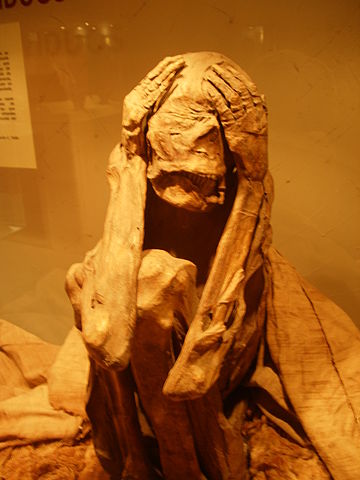
Archaeologists discover 1,000 year old Ychsma mummy in Peru

th Century. It was there that the team came across a startling discovery: a mummy from centuries before Inca settlement.

A surprise discovery

Pre-dating the Inca rule, the mummy was made by the Ychsma people, who were native in the region from the 10th Century, until they were conquered by the Incas five centuries later. In his statement on behalf of the team, Professor Peter Eeckhout said: “The deceased is still wrapped in the enormous funeral bundle that served as a coffin.” “Discoveries like this one are exceptionally scarce, and this mummy is incredibly well preserved. Samples were collected for carbon-14 dating, but the area in which it was discovered, and the type of tomb, suggest this individual was buried between 1000 and 1200.”

An untouched chamber

This was just one of thousands of mummies discovered at the site. So far, 300 have been excavated by the team working on the Ychsma Project. However, most of them had suffered from various disturbances, such as looting. Prior to the arrival of the Inca at Pachacamac the site was looted by Spanish conquistadors. Much of it was left in complete disarray, but one funeral chamber was left intact. When Professor Eeckhout’s team discovered the mummy, it was in such good condition that it could be studied without the need to unwrap it.

Pilgrimage in the Inca Empire

After the arrival of the Incas, the site underwent a period of dramatic change. It was established as a large pilgrimage centre on Peru’s Pacific coast, where the worship of certain deities contributed to an empire-wide collective identity. It is assumed that worshippers were responsible for leaving a number of other objects found at the site, including Spondylus shells, which symbolise fertility. The research team also found an Inca monument for rituals, as well as a chapel for foreign pilgrims. Inside, they found offerings such as vases, and even some animals. A 17th Century description of the site from Spanish monk Antonio de la Calancha matches up with the findings. The results of the project confirm the role of Pachacamac as a site of pre-Columbian pilgrimage under the Inca Empire: ‘Deities and their worship played a major part in the life of Pre-Colombian societies,’ says Professor Eeckhout. ‘The Inca understood this very well, and integrated it into how they wielded their power. By promoting empire-wide worship, they contributed to creating a common sense of identity among the many different peoples that made up the empire. Pachacamac is one of the most striking examples of this.’

Future plans for the Ychsma mummy

Professor Eeckhout and his team now plan to use medical imaging techniques, including x-ray scans, axial tomography and 3D reconstruction, to contextualise and explore their discovery. They will be working in collaboration with Christophe Moulherat from the Musée du Quai Branly, Paris. By working out the position of the person inside, testing whether they had any diseases and analysing any offerings that may be buried with them, the team will be able to paint a more detailed picture of life for the Ychsma people.   Title image by Thomas Quine]]>

Categories
News

Mass-anxiety in Strasbourg: what was the dancing plague of 1518?

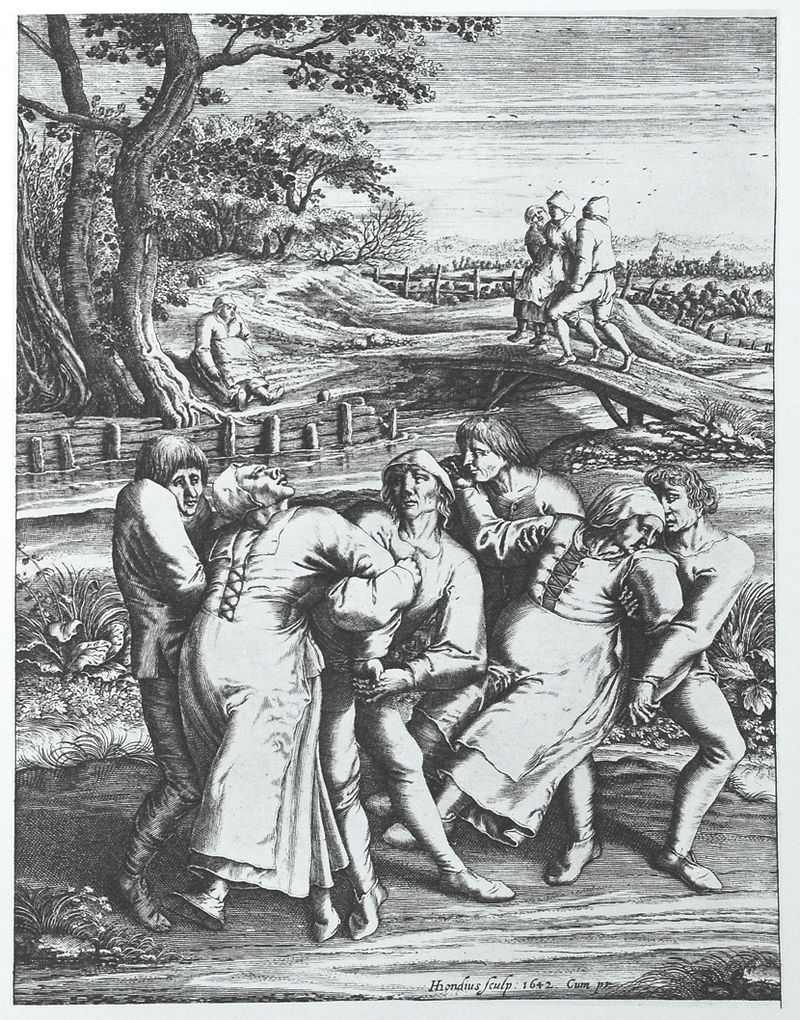
th July 1518, a townswoman named Frau Troffea began to dance in the streets of Strasbourg. For hours she swayed, gathering a small crowd of bemused onlookers. Eventually, she collapsed from exhaustion. When she came to, she recommenced her jig; this time with frenzied abandon, dancing until her feet were bruised and bloody. Rumours flew about the town. Supernatural in their beliefs, the people soon decided that she had succumbed to a dancing curse bequeathed by St. Vitus. To calm divine rage, they carted her off to a shrine in the Vosges Mountains. But Frau Troffea was not alone in this curse. As the days turned into weeks, between 200 and 400 people fell victim to St. Vitus’ Dance. An outbreak of frantic delirium had the city of Strasbourg in its grip. What caused it? What cured it? And what relevance does it have today? As the dancing plague, or choreomania, was a psychological affliction, we must first understand the psychology of the townsfolk. Like much of medieval Europe, Strasbourg was steeped in supernaturalism. Their Christianity functioned on a foundation of saint-worship, and the clergy was responsible for the immortal path of every individual. The local reputation of the Strasbourg clergy had been declining for decades. Repeated accounts of moral indiscretions (the usual: sex, alcohol and excess) were further substantiated when, during times of famine, the Church was unwilling to provide aid to starving townsfolk. In private, ale-fuelled discussions questioned the opulence of the Church, and bitterly remarked on the contrast with Christ, for all his sublime poverty. Famines continued during the years leading up to 1518. The chilling uncertainty of a world in which disease could suddenly sweep away family and friends left people with a constant, bubbling anguish. With death constantly looming, it was essential for one’s soul to be in the hands of a responsible clergy. For the superstitious and anxious residents of Strasbourg, the afterlife was an increasingly alarming concept.   The cult of St. Vitus Psychologically, there’s an argument to say that the victims were expecting demons to commandeer their souls. Legends of dancing plagues, culturally connected to St. Vitus, had passed down generations. Day to day, insults like “God give you St. Vitus” were thrown about, weaving the cult of St. Vitus into common parlance. Perpetuating their worry, the people of Strasbourg believed their own baptisms to be phony, as their priests associated with prostitutes. This pessimism mixed with mysticism to make the people paranoid of the touch of a raging St. Vitus. [caption id="attachment_8660" align="aligncenter" width="640"] Modern Strasbourg. Photo by R Roletschek.[/caption] Finding a cure The city’s council was tasked with finding a cure for the curse. Frau Troffea may have been taken off into the mountains, but the remaining afflicted were subject to panicked ideas of treatment. At first, it was thought that the plague came from ‘hot blood,’ and as such, only continued dancing could sweat it out. The council erected a stage, hired musicians and dancers and made sure that the afflicted continued to dance at a fast pace. Matters worsened. Many of those hired fell subject to the curse, as did petrified onlookers. Within a few days, the council’s theory of forcing the dance to extinguish ‘hot blood’ had been discredited. For the dancers, medical attentions were irrelevant. They needed the mercy of St. Vitus and support from a neglectful Church. Luckily, the flattering attentions of priests were about to be bestowed upon them. They were given sacred red shoes and started a pilgrimage to Saverne. It involved a gruelling climb to a remote monastery, which was thick with incense and candle smoke. This extravagant ritual awoke something in their deep-rooted piety. Between holy relics and religious imagery, they had reason to believe the curse would be raised. and the curse was lifted.   Why did the pilgrimage lift the curse? Dr. John Waller, author of A Time To Dance, A Time To Die, hypothesises that ‘the large number of people who recovered through the power of religious suggestion reveals that even when self-awareness is impaired, our minds can still receive, process and respond to appropriate external stimuli.’ These were a people calling out for attention from the Church. They’d been neglected for years, but in the recent weeks, civic and religious leaders had changed their attitudes toward their flock. Just as neglect has immense psychological potential, so too does religious attention.   Cultural conventions and pathological anxiety In the decades that followed, Martin Luther’s attractively egalitarian ideals diverted the Christian psyche away from supernaturalism. Outbreaks of choreomania disappeared; but the phenomenon provides a fundamental commentary on group psychosis. Biologically speaking, 500 years is not a long time. When under pressure, the human brain still causes relatively expected behaviour. A person may appear to have lost control completely, but they still reflect some kind of cultural prescription. Whether supernatural or not, cultural conventions play a key role in the expression of pathological anxiety. Set in the context of a people who feared St. Vitus, the dancing plague of Strasbourg offers us a fascinating insight into the ways pathological anxiety can play out.]]>

Categories
Breaking News

Who do you think you are?

The DNA test uses some of the most advanced autosomal testing technology. Science combines with the store of information now available on line to map ethnicity going back through multiple generations. This is all achieved through a simple saliva test. The test looks at a person’s entire genome and covers both the maternal and paternal sides of the family tree. However, some pundits maintain that ethnic testing is not reliable. The methods used for ancestral DNA testing are not the same as DNA testing for other purposes. The autosomal testing base is considered to be one the less reliable forms of DNA testing. Further, the results are partly based on responses from a pool of other people who have had similar testing, what are described as a reference population. So the results could come across as a little skewed. Arguably until many more people have put themselves forward for ethnicity testing, there will remain naturally limiting factors. Some ethnicities are easier to identify than others, for example, Jewish results seem to be highly accurate. But if you look at the evolution of the European landmass, war followed by shifting borders followed by more war and so on, most Europeans are actually an ethnic mix. In the same way, the inhabitants of the British Isles are a mix of invaders and the resident population who were themselves probably also invaders at an earlier point in time. Living ancestry is becoming a real thing and there are people who create heritage tours. These are based on documented evidence of past family members and genetic testing. The idea is to make it possible for you to stand on the same soil as your ancestors. But ethnicity testing has a long way to go if it is going to catch up and compete with hard historical evidence when it comes to clear and factual accuracy.    ]]>

Categories
Breaking News

A totally new perspective on being an egghead

st century, the phrase ‘egghead’ remains in use and is the name of a popular television quiz show still supporting the concept that a big egg-shaped head holds a large and intelligent brain. As medical science developed, phrenology was largely discredited in the late nineteenth century but it experienced something of a revival amongst criminologists in the twentieth century. Phrenology sits within the field of Anthropological Criminology which supports the theory that the crime is somehow linked to the physical characteristics of the perpetrator.   The idea behind Phrenology was that different parts of the brain were attributed with distinct mental abilities or capacity. As the brain developed, so did the shape of the skull. A particular shape to the skull would therefore indicate either an over or under development of a certain part of the brain. An over development was viewed as a lump or bump and an under development as a dip or depression.  This is something akin to the line that the Collauga were working along. Phrenology always had its critics and dissenters even when there was little alternative knowledge offered by way of medical science. Phrenologists spent much time in the dissection room, analysing the brains of convicted criminals in relation to the shape of their skulls. Discredited now, it is easy to look back with all the advances in medical science and think of it as nonsense but at the time, with little to counter it, Phrenology held sway amongst a hardened group of believers.]]>

Categories
Breaking News

Wasn’t the ark…well, just ark shaped?

The Middle East department at the museum has a huge collection of clay tablets with cuneiform inscriptions. Dr Finkel’s department researches and decodes the inscriptions, linking the tablets together where possible to provide a linear story. This is where the true revelation about Noah’s Ark came from. Cuneiform is an ancient system of writing used in the Middle East. The word, Cuneiform, means wedge-shaped and indeed the script comprises wedge-shaped marks on clay tablets. A clay tablet of some 4,000 years old in the British Museum has revealed that the famed vessel was, in fact, round and not as has been thought and portrayed, rectangular. Not only has the tablet revealed this piece of information but it has also detailed the materials used to build the ark and the precise measurements. The discovery was a chance find made by deciphering the Cuneiform and linking it to other tablets to compile the ancient Babylonian story, the Story of the Flood. The ark was constructed out of wooden ribs and palm fibre rope with hot bitumen used after construction to render the vessel waterproof. The instructions were given by a Mesopotamian god and the dimensions are translated to be 3,600 square metres, with walls to a height of six metres. This equates to an area around two thirds the size of a modern football field. The sixty lines on the tablet also include the order that the animals must enter, ‘two by two’. The odds surrounding this discovery were revealed to be even greater when the story of how the tablet came into the possession of the Museum was recounted by Dr. Finkel. A man called Douglas Simmonds came into the museum with a clay tablet which he wanted identified, a normal day at the office for Dr. Finkel. The tablet was a family piece given to the owner by his father as a reward for passing his exams. The tablet had been acquired by Mr Simmonds’ father, Leonard, along with a few other less interesting bits and pieces in the late 1940s after serving with the RAF in the Middle East. This unique tablet recounts the story of the ark and is far older than the known biblical accounts. Finkel has described the discovery of the tablet as one of the most important human records ever found but in a shocking paradox, is absolute in his belief that the ark never actually existed. The tablet remains on display at the British Museum where it has been since 2014 on loan from Mr Simmonds.]]>

Categories
Breaking News

Thieves' Coins

th century birch bark manuscript. Russian pickpocketry takes on a different form now in this modern age, and with arguably a far greater reach than merely arms’ length. Russia has a fearsome reputation as home to some of the most deadly and serious cyberhacking groups such as Anonymous International and the Koobface Gang. They are to modern cyber crime what their villainous ancestors were to the pockets and valuables of eighteenth century Russia.   Sometimes hackers are motivated by political ideology and a cause to believe in but Russian hackers simply seem intent on emptying other peoples’ bank accounts, and not a thieves’ coin in sight.          ]]>

Categories
Breaking News

RAF Centenary

st April 1918 just prior to the end of the Great War as the Royal Flying Corps with planes made from canvas and wood, the service rapidly developed and changed to meet the needs of more modern warfare a short 21 years after its formation.   The defence of the British Isles by Spitfires and Hurricanes was pivotal in preventing Nazi invasion and the inclusion of heavy bombers later on the war, whilst controversial, secured victory in Europe for the Allies. The bombing raids across Europe resulted in a casualty rate higher than that incurred by the other two services during the Second World War.   Other iconic aircraft have followed as scientific and global developments have demanded. The Typhoon Jet has a speed of 1,550 miles per hour; compare that to the very first plane, the BE2, which had a maximum speed of just 70mph.   What is interesting about the RAF is its meritocracy; even from its infancy, men of all social classes rubbed shoulders together, not the case at all in either the Army or the Navy which reflected the UK’s class-ridden society. Women were also included in the force during the Second World War, not as main crew but within the Air Transport Auxiliary which delivered aircraft to their destinations from the factories.   The female contingent had to wait until 1994 to see the first female RAF jet pilot, Jo Salter, flying a Tornado and until 2009 to see the first all female jet crew who were deployed to Afghanistan.   The motto for the service, ‘per ardua ad astra’ was chosen by a junior officer and is translated as, ‘through adversity to the stars’. The man to whom this choice is accredited, Lieutenant J.S. Yule, is believed to have taken the phrase from a novel by Sir Henry Rider Haggard entitled, ‘The People of the Mist’ and it is thought Rider Haggard himself borrowed it from the Irish Mulvany family who have had this as their family motto for centuries. Red Arrows Still so relevant today in modern conflicts in the Arab state, the RAF is held in great affection by the British people. The UK is awash with a year of events and celebrations to mark the first one hundred years of the RAF.   With an eye watering budget of £8 million, concerts, flypast and tattoos are all planned. A commemorative £2 coin has been struck by the Royal Mint featuring five different designs.   The Ministry of Defence has released an iconic set of pictures to tell the story of the RAF through the decades. Some of the pictures have been colourised by an expert which is a relatively modern technique designed to breathe life into old pictures. The colourised versions convey a depth of feeling and atmosphere that is not present in the black and white originals.]]>
Categories
Book Reviews

The Last Slave

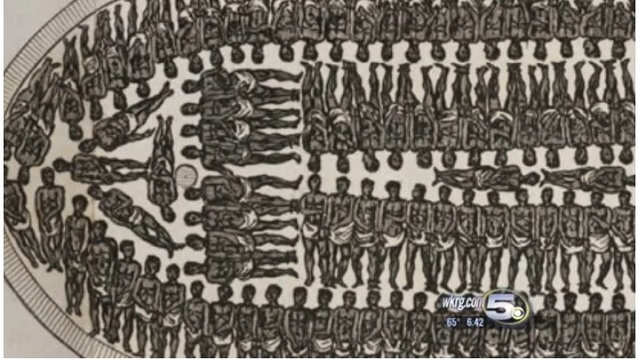
Barracoon: The Story of the Last ‘Black Cargo’ by Zora Neale Hurston was refused publication and then languished unseen for the next 87 years in a dusty archive. That is, until now.   ‘Barracoon: The Story of the Last ‘Black Cargo’ is the tale of Cudjo Lewis born in 1840 and kidnapped in 1859 from his West African village.   He was transported along with one hundred others to Alabama in the US, despite the fact that African slavery had been abolished in America in 1807.   The word ‘Barracoon’ is the term used to describe the barracks where the slaves were housed before their buyers collected them. Lewis is widely held to be the last black African to be sold into slavery and arrived on the last slave ship.   Hurston interviewed Lewis, whose African name was Kossola, when he was approaching 90 years of age. The interviews formed the basis of Hurston’s book which ended up in the archives at Howard University after the books’ failure to publish and Hurston’s death in 1960. Harper Collins have agreed to publish the manuscript in its original form; Kossola’s African dialect appears intact, the main basis for rejection of the manuscript all those years ago.   Kossola was freed in 1865 after working for six years for a shipping business on the Alabama River. The man behind the slave transport, Timothy Meaher, escaped prosecution for breaking the law. The ship on which they were all transported, the Clotilda, was burned by the ship’s Captain, William Foster upon arrival in the US.   [caption id="attachment_8617" align="aligncenter" width="950"]Clotilda discovered in Alabama Remains of the Clotilda[/caption]   All of the slaves were either sold or kept for personal use by Meaher and Foster. After the Civil War in 1865 when he became free, Kossola along with other former slaves founded Africatown in Alabama, where they remained and where Hurston came to interview him in the late twenties.   The author spent a lot of time living in Africatown with Kossola, where the men spoke their own language and kept up their traditional, African customs. She walked alongside Kossola as he cleaned the church and accompanied him on his crabbing trips to the bay. Some of their time was spent in silence, itself speaking volumes about Kossola’s loss of his people and homeland even after so many years.   Her time spent with Kossola moved Zora Hurston hugely and she was profoundly affected by his story. During one of her last visits to his home, she asked to photograph him. Kossola appeared in his best suit but without any shoes. He told Hurston that he wanted to look like he would if he were in Africa as this is where he really wanted to be.   This work was one of her earliest projects following the end of her studies; Hurston studied Anthropology at Barnard College and then Howard University. Hurston was part of the Harlem Renaissance which was an intellectual and social movement within Harlem during the 1920s also sometimes known as, ‘the New Negro Movement’.   Her Biography, ‘Wrapped in Rainbows: The Life of Zora Neale Hurston’ by Valerie Boyd portrays the effect that the interviews with Kossola had on Hurston quite vividly. Hurston’s work is truly unique because it is the first hand testimony of a man who was there, a living record from a truly shameful period of history.]]>
Categories
Breaking News

Who First Domesticated Horses? The History News of the Week

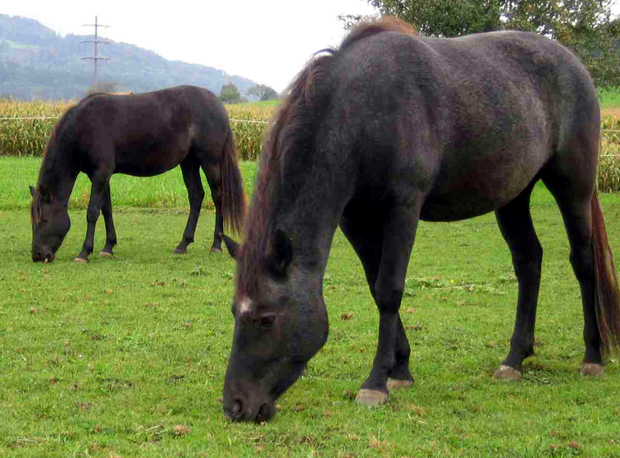
Answered: Who First Domesticated Horses? A new study claims that horses were first domesticated by descendants of hunter-gatherer groups in Kazakhstan. Exactly when, where and who first domesticated horses is shrouded in mystery. A popular theory is that it was the Yamnaya culture (3300 BC–2600 BCE), yet the new research is dispelling this idea. “The successful spread of the Indo-European languages across Eurasia has puzzled researchers for a century. It was thought that speakers of this language family played a key role in the domestication of the horse, and that this, in combination with the development of wheeled vehicles, allowed them to spread across Eurasia from the Yamnaya culture,” explained Dr. Guus Kroonen, historical linguist at University of Copenhagen, in a press release. In the new study, published in the journal Science, it is shown that in fact horses were already being used by the Botai people 5,500 years ago, and much further east in Central Asia, completely independent of the Yamnaya pastoralists. An inter-disciplinary team analysed ancient and modern DNA samples from humans and compared the results – the 74 ancient whole-genome sequences studied by the group were up to 11,000 years old and were from Inner Asia and Turkey. The results found no genetic link between the Yamnaya and Botai. Intriguingly, the Botai were eventually pushed out of the central steppe region by migrations from the west. The Botai horses were also replaced, suggesting domestication of horses had already occurred elsewhere. “We now know that the people who first domesticated the horse in Central Asia were the descendants of ice age hunters, who went on to become the earliest pastoralists in the region,” stated Professor Alan Outram from the Department of Archaeology at the University of Exeter “Despite their local innovations, these peoples were overrun and replaced by European steppe pastoralists in the middle and later Bronze Age, and their horses were replaced too.” [caption id="attachment_8613" align="alignnone" width="1440"]Leprosy Skull Skeletal remains showing evidence of leprosy from the Odense St. Jørgen cemetery in Denmark, which was established in 1270 and existed until 1560.
Credit:
Dorthe Dangvard Pedersen[/caption] Did Leprosy Originate in Europe? Leprosy may have originated in Europe, innovative new research is claiming. The study by the Max Planck Institute for the Science of Human History, the University of Tübingen, EPFL Lausanne and the University of Zurich sequenced 10 new ancient genomes from the leprosy causing bacterium Mycobacterium leprae. This included the oldest leprosy genome sequenced to date, from around 400CE in the UK. The results have shown there was much more diversity in Medieval European strains of leprosy than previously thought. 90 sets of remains with skeletal deformations characteristic of leprosy from across Europe were studied, dating from 400CE to 1400CE. Previous research on the bacterium suggested that it clusters into several strains, only two of which had been present in Medieval Europe. However, the scientists found strains from Medieval Europe that are traditionally associated with locations such as Africa, Asia and the Americas. At the same time, multiple strains were also often detected in a single cemetery, giving an insight into the diversity of the disease. “We found much more genetic diversity in ancient Europe than expected,” explains Johannes Krause, senior author of the study and a director at the Max Planck Institute for the Science of Human History. “Additionally, we found that all known strains of leprosy are present in Medieval Europe, suggesting that leprosy may already have been widespread throughout Asia and Europe in antiquity or that it might have originated western Eurasia.” Interestingly, the results add growing support to the idea that the squirrel fur trade played a role in the spread of leprosy. The oldest leprosy genome sequenced in the study, from Great Chesterford, England, is the same strain found in modern day red squirrels. “The dynamics of M. leprae transmission throughout human history are not fully resolved. Characterisation and geographic association of the most ancestral strains are crucial for deciphering leprosy’s exact origin” states lead author Verena Schuenemann of the University of Zurich. “While we have some written records of leprosy cases that predate the Common Era, none of these have yet been confirmed on a molecular level.” The research has been published in the journal PLOS Pathogens. Image credit: Pottok [GFDL (http://www.gnu.org/copyleft/fdl.html) or CC-BY-SA-3.0 (http://creativecommons.org/licenses/by-sa/3.0/)], via Wikimedia Commons ]]>