Categories
Ancient Mexican Burial Found
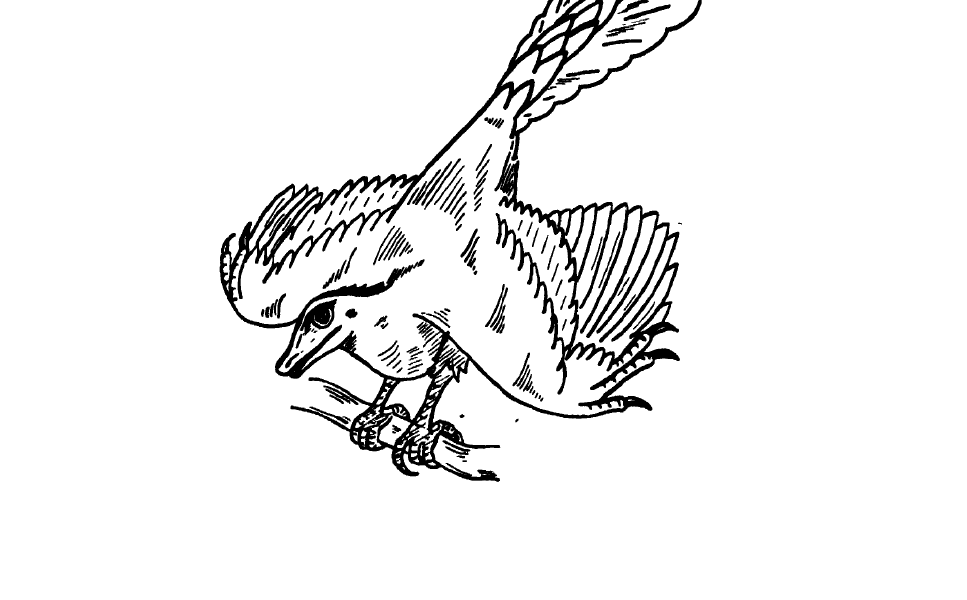
Kulindadromeus zabaikalicus, which had feathers. For nearly two centuries it has been taught that dinosaurs were large reptiles that had tough scales and a lizard-shaped head. The recent discovery may prove years of schoolwork wrong. The dinosaur found was 4.5 feet (1.5m) long, beaked, with large legs, short arms, a long tail and is thought to have been bipedal. This is actually not the first feathered dinosaur of its kind to be found. Way back in the 1990s, scientists have found at least five species of dinosaurs in China that had feathers. These dinosaurs were theropods (a type of dinosaur) and carnivores. The infamous Tyrannosaurus rex is a part of this group. However, the dinosaur that was recently found was a herbivore and from a different dinosaur family, which meant that it could not have been related to the older feathered species found. The Kulindadromeus must have evolved differently than the rest of these dinosaurs, and hence many other dinosaurs may be the same way. Because of this, scientists are rethinking what dinosaurs may have looked like. The Kulindadromeus genus of dinosaur lived in Siberia, near the Kulinda River. Its legs and elbows were feathered, and there were streamlined feathers on its back. At least six skulls of this dinosaur was found in a fossil bed at the bottom of a lake, and they were all juveniles, which has scientists believe that they did not die in a catastrophe, but rather separate events. The skulls were buried under volcanic ash, preserving much of the feather imprints on the fossil bones. “Kulindadromeus” means “Kulinda River running dinosaur”, while “zabaikalicus” relates to the region of Siberia where it was discovered, Zabaikalsky Krai. The skin of the dinosaur resembled the skin of some birds, which provides even more evidence that today’s birds have evolved from the dinosaurs, according to the study. Lead author on the paper, Pascal Godefroit, is a paleontologist from the Royal Belgian Institute of Natural Science in Brussels. He and his colleagues state that while this find is significant, more studies should be done on this subject. There is a lack of evidence that feathers developed in all dinosaurs, since fossil records with feathers are in the minority. Before this, birds were thought to have come from the line of the archaeopteryx and other winged creatures. These feathers may have served as a method for insulation, such as in the case of Kulindadromeus, which lived in colder climates. Larger dinosaurs also may have had fewer feathers than smaller dinosaurs, as they would conserve heat more easily. We’re still a long way off from confirming whether or not all dinosaurs had feathers, but what it does mean is that feathers did not start off with birds, instead they evolved very early in history with the dinosaurs.]]>
Related Books ]]>
Related Books
 Uncle Tom’s Cabin
Or Life Among the Lowly
Vol. 2Vol. 2
by Harriet Beecher Stowe
[gap height=”20″]]]>
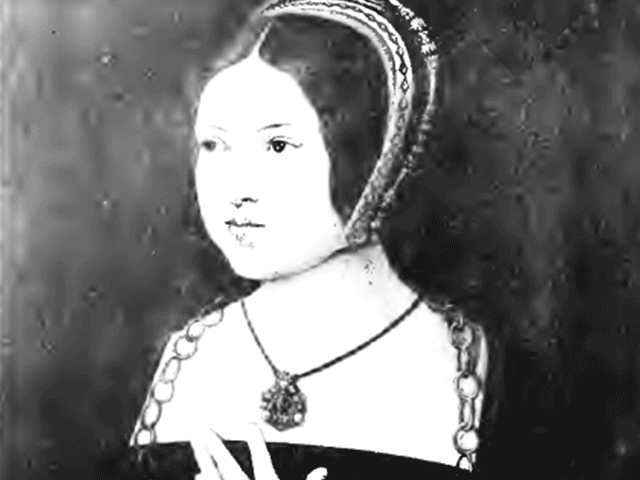
BBC History Extra magazine: “The similaritiesbetween the carvings on the chest and the illuminations in the Book of Hours are striking. Three illuminated documents relating to the royal wedding all show the IM monogram (James and Margaret) tied together with a similar love knot, just as it is carved on the chest.” Indeed, the distinctive artwork became something of a trademark for the wedding. Alongside the couple’s initials is a knot made of thistles – the symbol of the Stewart family. This was a symbol of James’ loyalty to the Scottish throne, and a reminder for Margaret. The design was replicated beyond wedding just paraphernalia. It also decorated the floor tiles of Linlithgow Palace, the residence of Scottish royalty during the fifteenth and sixteenth centuries, and James’ gift to Margaret. James and Margaret’s marriage was one that would go on to be hugely significant in the history of the United Kingdom and represents something of a turning point in the relationship between England and Scotland. The marriage was agreed on the day of the signing of the Treaty of Perpetual Peace in 1502. The treaty was intended to stop the intermittent skirmishes between the two kingdoms. It laid out rules for the administration of the country’s borders, and put in place systems to resolve conflicts before they escalated. A century later the true significance of the marriage would become apparent. Until the seventeenth century, Margaret’s line in the Tudor succession had been excluded. However this began to change, as Elizabeth I’s reign came to an end it became increasingly difficult to find an acceptable successor. James VI, Margaret and James’ IV grandson, was ultimately selected as the most appropriate heir. This ‘Union of the Crowns’ marked the first time England, Scotland and Ireland were ruled by a single monarch. It also marked the end of the Tudor line, as Elizabeth proved to be the dynasty’s last monarch. In 1707, the transition to a single United Kingdom was complete, as the Act of the Union united the three countries under a single monarch The marriage that the oak chest commemorates came to symbolise the start of great changes in the United Kingdom. It was central to the unification of Scotland and England into the Kingdom of Great Britain, and facilitated the eventual closing of the Tudor Dynasty. Its discovery is particularly poignant as Scotland prepares to vote on whether it should be an independent country. As the future of the union is about to be decided, this oak chest is a reminder of the marriage that helped create the Union in the first place.]]>