Categories
Breaking News

The Spanish Civil War: How it all started and its aftermath

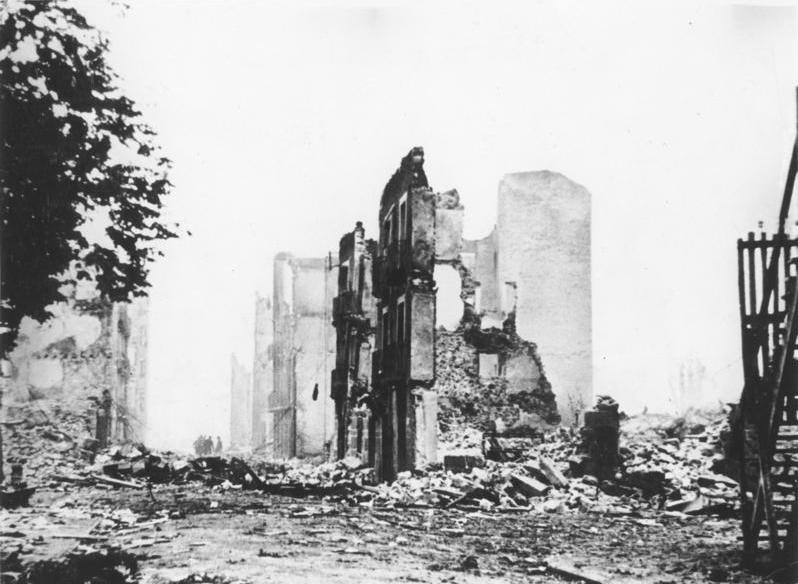
The Spanish Civil War (La Guerra Civil Española in Spanish) took place from 1936 to 1939. On the political left side were the Republicans fighting the Nationalists, who were on the political right. 

The war was mostly a struggle between democracy and fascism. Ultimately, the Nationalist front won, and Spain was ruled by Francisco Franco’s dictatorship until 1975, when Franco died. 

The Spanish Civil War was one of the worst atrocities in Spanish history, so how did it all start?

Spain in the 19thcentury

The 19thcentury was a tempestuous time in Spain. The country faced many different reforms, with the liberals advocating for limited powers for the monarchy. In 1812, King Ferdinand VII dissolved the Constitution.

Twelve successful coups were carried out, subsequently. Although these coups and public uprisings reduced some of the ultra-conservatism of the monarchy, discontent among the people was still prevalent. 

In 1874, the Carlists and Anarchists were formed in opposition to the monarchy. The Radical Republican Party helped bring republicanism to the fore front of Spanish politics.

During the First World War, Spain remained neutral. The threat of communism, as perceived by the public, kept growing during this time. Eventually, King Alfonso XII gave in to popular pressure and established a republic in 1931. 

This was the start of the Second Spanish Republic, which remained in power until the escalation of the Spanish Civil War.

Preparations by Franco and the Nationalists

Numerous suspicious military officials, including Francisco Franco, were sacked and moved to Spanish territories abroad. For instance, Franco was transferred to command of the Canary Islands. 

Francisco Franco

His disloyalty only grew after this. With the help of the British Secret Intelligence Service, Franco managed to escape Spanish supervision and fled from the Canary Islands to Spanish Morocco. 

In the following year, several extrajudicial police killings took place. Public resentment continued and the Socialists and Communists demanded that arms be distributed to the people before the military took over. 

Outbreak of the Civil War

On July 18, 1936, the right-wing Nationalists, led by General Franco, began a revolt. He broadcasted a message calling for all army officials to join the coup d’état and overthrow the existing leftist government. 

Within three days, the Republican government managed to capture Morocco, much of northern Spain, and several key cities in the south. For a while, the government managed to subdue the rebellion.

Franco, who was well-respected by officials in the Army of Africa, planned to bring them over to the European mainland to join the fight. The Nationalists were aided by the conservative Moroccan troops who were also opposed to the leftist government in Spain.

Workers and peasants fought alongside the Nationalist rebels, but in many cities, they were denied weapons. In conservative regions the Nationalists quickly seized control with little bloodshed.

However, in other more liberal regions, such as the city of Bilbao, the fight resulted in many casualties. The revolt against the Spanish navy largely failed. Nevertheless, Franco managed to sail his Army of Africa from Morocco. 

This was a gamechanger and in the following months, Nationalist forces rapidly overran many Republican-controlled regions. In November 1936, Madrid was put under siege. 

In 1937, Franco united the Nationalists with the Falange, Spain’s fascist party, while the Republicans aligned themselves with the communists. 

With those ideological oppositions, both sides sought foreign help. Germany and Italy aided Franco’s fascist rebellion, while the Soviet Union helped the Republican government. 

Additionally, thousands of communists and other radicals from France, the Soviet Union, America, and other places formed International Brigades to support the communist Republican cause. 

A significant achievement from the foreign contribution was the successful defense of Madrid until the end of the war. 

In June 1938, the Nationalists managed to cut the Republican territory in two. Franco mounted a major attack against Catalonia and in January 1939, its capital, Barcelona, fell. Soon after, the rest of Catalonia was also captured. 

This was the end of the Republican cause. Its leaders did try to negotiate a peace deal with Franco, but he refused. On March 28, 1939, the Republican government surrendered Madrid.

Impact on Europe

The Spanish Civil War underlined opposing political sentiments that existed throughout Europe. The right and the Catholics supported the Nationalists as a counter measure to the expansion of Bolshevism.

Meanwhile, labor unions, students, intellectuals, etc. united on the left to support the Republicans to stop the spread of fascism. 

Moreover, anti-war and pacifist movements were widespread as well. Many countries in Europe were concerned that a Civil War in Spain could spark a Second World War. In fact, the Spanish Civil War was an indicator of the growing instability within Europe.

Many non-Spanish citizens also participated in the war, either as soldiers or advisors. Britain and France, as the heads of a political alliance of 27 nations, promised not to intervene in the Spanish Civil War. The USA unofficially aligned themselves with this stance. 

Germany, Italy, and the Soviet Union singed the non-intervention agreement officially, but still participated in arms deals with Spain. 

After the War

Franco served as the leader of the newly formed fascist Spain. He implemented harsh reprisals against his former enemies. Thousands of Republicans were imprisoned and at least 30,000 executed. Furthermore, many were put in forced labor camps. 

Hundreds of thousands of Republicans fled the country after the war. Some 500,000 went to France. 

Shortly after the end of the Spanish Civil War, the Second World War broke out in the rest of Europe. Spain did not officially join the Axis powers, although Franco did write to Hitler offering to join the war on 19 June 1940.

Instead, Spain supplied Germany with the Blue Division to fight specifically on the Eastern Front against the USSR in recognition for the aid that Spain received during its civil war from Germany and Italy. 

The actual death toll of the Spanish Civil War is a controversial topic. Particularly, the part related to war and post-war repressions. Many historians, encyclopedias, dictionaries, etc. only provide vague numbers and general descriptions.

The figures vary from 250,000 to 1 million victims. The main reason for the ambiguity in the numbers are the different methodologies used to count the victims. Various researches have included different casualties ranging from combat related deaths, terror attack related deaths, to post-war deaths, and extra-judicial killings.

]]>
Categories
Breaking News News

How did the Partition of India happen and what were the consequences?

In August 1947, one of the largest mass migrations in human history took place. This was after India regained its independence from the British Empire. This might have been the end of the British Raj, but it was merely the beginning for India, Pakistan, and many of its surrounding regions. 

The subsequent chapter in history, known as the Indian Partition, sparked a large conflict and resulted in the death of many people. Even today, the struggle has not ended with the continuation of the Kashmir conflict. 

This was undoubtedly one defining moment in the world’s history, but how did the partition of the British colony take place? This article endeavors to shed more light on the creation of the separate nations of India and Pakistan. 

The Two-nation theory

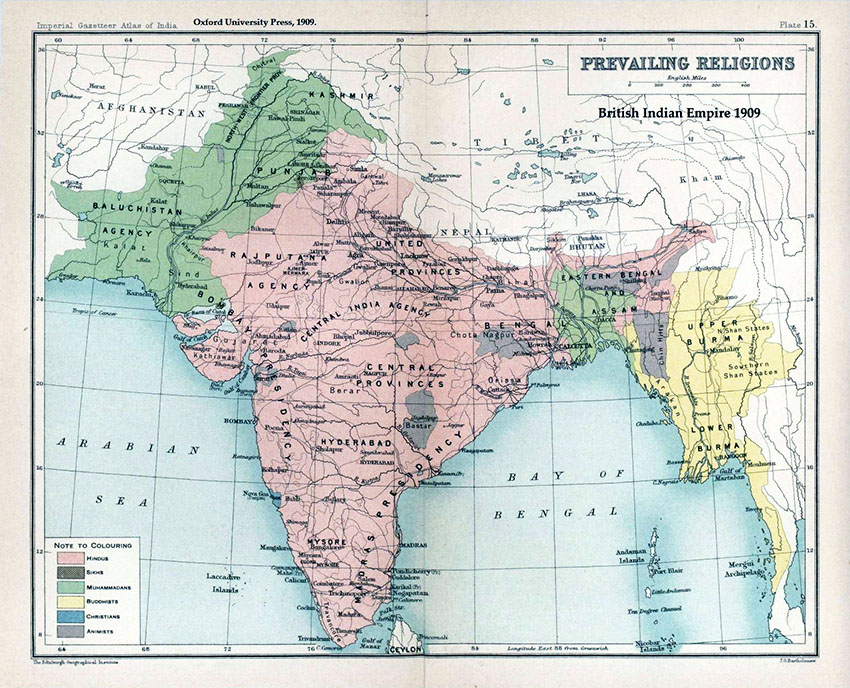
At approximately 25% of its population, Muslims were the largest religious minority in British India.  The conflict between India’s Muslim population and its Hindu population were apparent long before the Partition.

The notion of a two-nation state had been promoted throughout the second half of the 19thcentury. This theory claims that religion is the determining factor in defining the nationality of a group. Following that definition, Indian Muslims were entitled to be a sovereign nation where Islam could be practiced as the primary religion. 

During the British rule, religious sovereignty was not the biggest issue. The British government insisted on speaking of Indians as “the people of India”, instead of speaking of an “Indian nation”. 

This was the justification for British rule, as “Indians were not a nation”. This type of governance allowed some autonomy among the Muslim minority. 

Under imperial rule, they enjoyed a protected minority status with a system of reserved legislative seats and separate electorates. This style of governing was often referred to as “divide and rule”.

Yet, when it became apparent that the British rule might come to an end, the All-India Muslim League started a Muslim identity movement. In 1945-1946, the League won a majority of Muslim votes in provincial elections.

Following this victory, the claims for an independent Pakistan became stronger. As the Second World War approached, the political stakes in India were significantly higher. 

The end of the British Raj

In 1939, when the Second World War escalated, Britain brought India into the war without consultation. This was the beginning of the end for the British Raj. 

It sparked widescale national protests which culminated in the 1942 Quit India movement led by Mahatma Gandhi.

Mohandas Karamchand Gandhi

In the meantime, the war called for more local allies. The Muslim League saw this as an opportunity to offer its aid in exchange for future political security. In March 1940, the Muslim League introduced the “Pakistan Resolution” calling for the creation of a “separate state”. 

Historians are still debating whether this demand was merely a bargaining chip or a firm objective. Either way, it might have intended to solve the Muslim minority issue, but it ended up aggravating the situation.

Due to financial issues, Britain recognized that it could not sustain its empire. In June 1948, an Act of Parliament was issued as a deadline for the transfer of power. 

What this Act failed to address, however, was the issue of India’s Muslim minority. It proposed a loose federation, but this idea was rejected by both Congress and the Muslim League, which vowed to fight for an independent “Pakistan”. 

Meanwhile, civil killings continued. In August 1946, the Great Calcutta Killing took place which left some 4,000 people dead and an additional 100,000 homeless. 

Eventually, an ultimatum was presented which left politicians with little choice but to agree to the separation of the state. On August 14, 1947, Pakistan celebrated its independence. The new official borders split the provinces of the Punjab and Bengal in two. 

A nation divided

A partition of such a magnitude did not go by without backlash. Riots were started with mass casualties and a colossal wave of migration. Some 14 – 16 million people moved from one side of the border to the other. 

The direction in which they travelled depended on their religion. Hindus and Sikhs came together in a conscious effort to separate themselves from the Muslims. 

This chapter, unfortunately, did not go by without casualties. The death toll of the partition ranges anywhere between 200,000 to two million victims. Many were killed by members of their own communities and sometimes their own families.

Especially, women were targeted as a symbol of community honor. Reportedly, up to 100,000 women were abducted or raped. 

One of the reasons why the partition sparked such extreme emotions was because many people were not only very deeply attached to religious identity, but also to territory. Furthermore, British troops were reluctant to maintain law and order. 

Another unforeseen side-effect was the ultimate homogeneity of Pakistan. The Muslim League had anticipated that Pakistan would contain a substantial non-Muslim population, whose presence would safeguard the Muslim population remaining in India. Instead, in West Pakistan, non-Muslim minorities comprise only 1.6% of the population. 

Pakistan was evidently created as a “safe land” for India’s Muslims, but not all Muslims supported its formation. Thus, many decided to remain in India and still form the largest minority group in independent India.

This led to ongoing conflicts. The nationally beloved icon, Mahatma Gandhi, was assassinated in January 1948 by a Hindu nationalist extremist who blamed him for being too supportive of the Partition. 

Happy ever after

After the Partition, both states faced substantial problems accommodating and rehabilitating post-Partition refugees. When the two nations went to war over the disputed territory of Jammu and Kashmir, the number of refugees skyrocketed.

Unfortunately, the relationship between the two nations has hardly improved since the 1950s. Kashmir still remains a territory of conflict.

Since the Partition of India, the two nations have fought three wars over the region: the Indo-Pakistani Wars of 1947 and 1965, and the Kargil War in 1999. 

To make matters even worse, both nations are now nuclear-armed and terrorist attacks are frequent. In February 2019, one of the deadliest attacks took place. A Kashmir separatist terrorist group, Jaish-e-Mohammed, carried out a suicide attack on a military convoy killing over 40 Indian soldiers.

]]>
Categories
News

Hildegard of Bingen: A Renaissance Woman Before Her Time

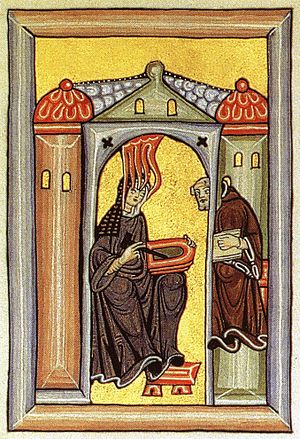
In The Beginning Hildegard was the tenth child of a wealthy and devout family which gave her ‘as a tithe’ to the church when she was only eight years old, sending her to a Benedictine monastery at Disibodenberg which had just begun to accept nuns. When she entered the monastery Hildegard had already begun to have visions which came to her surrounded by ‘a light so bright that [her] soul trembled.’ She had also figured out that other people didn’t see that light, and had decided to keep her experiences to herself—although she couldn’t conceal the physical sickness which often accompanied or followed them. Under the care of a brilliant and ascetic nun named Jutta, Hildegard learned to read and write, studied a variety of holy texts in Latin, and took holy vows when she was old enough. Jutta became Mother Superior, and on her death she chose Hildegard, who was then thirty-eight, as her successor.

Coming Out

Hildegard’s administrative duties didn’t stop the visions pressing on her. She tried to keep these secret, but the effort exhausted her and finally made her seriously ill. She confided her visions to a monk who helped her record them.  In the midst of her illness she heard a voice which told her to speak and write of her visions, and she obeyed, recording them as they happened and also writing long commentaries on her interpretations of those visions and the flashes of insight which accompanied them.  These drew some anxious scrutiny from people higher up in the Church, but the examiners eventually decided that her visions were legitimate. The Pope wrote to Hildegard expressing his approval. Hildegard wrote back telling him to work harder to reform the Church. As the record of her visions spread far and wide, many girls and women came to study and live under Hildegard.  The women’s quarters in the monastery became crowded; Hildegard may also have felt the need for more independence from the monastery’s abbot. Hildegard had absorbed her teacher Jutta’s learning, but not her asceticism; she believed in moderation, and seems to have regarded the human body with fascination rather than suspicion. Most importantly, Hildegard believed God was calling her to leave the monastery and found a new convent and church for her nuns. The abbot was very reluctant to let them go, but Hildegard persisted and finally persuaded an archbishop to overrule the abbot. She purchased land and oversaw construction of their new House at Rupertsberg near Bingen on the Rhine. Hildegard paid attention to details of the building (which included water pumped in through pipes, an unusual feature at the time) as well as administration (the nuns were free to elect their own Mother Superior without interference from the Disibodenberg monastery.)  She did send part of the dowry money that had come with the nuns back to Disibodenberg. At last Hildegard had the space and freedom to pursue the physical and spiritual understandings which she prized.

 Works

Hildegard wrote many books explaining the order of the natural world, the cosmos, the human body and the human soul—all of which she saw as naturally and inextricably interrelated.  The dichotomy between science and nature would have been alien to Hildegard. So would the treatment of people as somehow separate from their environment. In her book Scivias (Know The Way) she wrote,” “The soul in the body is like sap in a tree, and the soul’s powers are like the form of a tree … The intellect in the soul is like the greenery of the tree’s branches and leaves, the will like its flowers, the mind like its bursting first fruits, the reason like the perfected mature fruit, and the senses like its size and shape. And so a person’s body is strengthened and sustained by the soul….” Elsewhere she described humans as responsible for helping God to redeem, not only all humanity, but also all the living world. Hildegard’s Book of the Subtleties of the Diverse Nature of Creatures combined religion and philosophy with explanations of natural history and practical remedies for all kinds of wounds, infections, poisonings and diseases. She even included a section on veterinary medicine. Some of the herbal remedies she recommended resemble those that are commonly used today—though given the long gap of time, the things we’ve learned since, the vagueness of the dosages and the errors introduced as the book was copied over and over by hand, it’s not recommended to use her book as a practical basis for treatment today. Hildegard’s creativity extended to music as well as writing.  She wrote a compendium of 70 religious songs and also composed musical plays. In her view music allowed humans to join the angels in praising God, and much of her music came to her in visions. Ensembles are still recording her music today—or at least some approximation of her music; musical notation in her day was quite different and somewhat obscure, taking the form of neumes instead of notes.

Influence and Controversies

Hildegard ‘s visions also urged her to instruct other people firmly in God’s will, and she seems to have done this without fear of consequences.  She wrote firm letters admonishing the Holy Roman Emperor Friedrich Barbarossa (the ruler of Germany) for planning to dismiss a bishop of whom she approved; later, when two different Popes were named by different factions of the Church, she opposed the Emperor’s choice and told him so in no uncertain terms. Despite this she was not punished as many others were who dared to challenge the Emperor.  Besides this she wrote letters to many other prominent people and went on preaching journeys even when she was elderly and in ill health. Hildegard was eighty years old when she buried a knight who had been excommunicated by the Church in holy ground. She explained that he had confessed and received the last rites, and he clearly deserved Christian burial. Cathedral authorities ordered her to exhume him. She refused and concealed the grave so no one else could dig him up.  Placed under Interdict, she continued to insist that she was right, and eventually the Church gave way—in time for her to be buried in honor and in peace. To learn more about Hildegard see https://www.bingen.de/en/tourism-culture/hildegard-of-bingen/her-life]]>

Categories
Breaking News

What was Watergate?

In light of Robert Mueller’s investigation into Donald Trump’s possible ties to Russian interference in the 2016 US Presidential election, it is worth looking back at the Watergate scandal. Comparing the two situations, one cannot help but get a sense of déjà vu. 

President Richard Nixon was involved in a widescale scandal that eventually led to his resignation. History does tend to repeat itself, as the US president is once again wrapped in an international political scandal. On that note, this article aims to shed light on what really happened during the Watergate Scandal. 

Who was Richard Milhous Nixon?

Before he became president, Nixon was a lieutenant commander in the US Navy during World War II. Afterwards, he became a Californian congressman and senator. He continued climbing the political career ladder and served as US vice president to Dwight D Eisenhower for eight years, before he decided to run for president himself.

In 1960, he entered the presidential race, but lost to John F Kennedy. Needless to say, Nixon was not happy with this outcome. He blamed the media for favoring his opponent. He did eventually make it to the White House in 1968, but that resentment never went entirely away. 

During Nixon’s five-and-a-half years presidency, he waged five overlapping wars: on the media, Democrats, the US judiciary, US history, and not-surprisingly, on the anti-war movement itself. 

His goal was to undermine anyone who he saw as an enemy, including people who leaked the Pentagon Papers. In response, Nixon appointed the so-called ‘White House Plumbers’, who were tasked with stopping the leak of classified documents. Eventually, the ‘Plumbers’ were tasked with other illegal activities. 

The Watergate robbery

In the early morning of June 17, 1972, several burglars were arrested in the Watergate buildings in Washington DC which was the office of the Democratic National Committee. This was no ordinary robbery though. The crime was connected with Nixon’s reelection campaign.

Investigations showed that they found wiretapping phones and stolen documents on the burglars. One of the robbers was identified as E Howard Hunt, an ex-CIA officer and one of Nixon’s ‘Plumbers’. 

As a matter of fact, Nixon never ordered the break-in. However, to make the matter more suspicious, Nixon went to great lengths to cover the crime up. The real scandal was the subsequent collusion to distance himself and his administration from the crime. 

Reportedly, six weeks after the burglary, Nixon ordered his chief of staff Bob Haldeman to cover the incident saying: “They have to be paid. That’s all there is to that.”

Nixon’s second term

Somehow, Nixon was able to overcome the growing discontent surrounding the Watergate break-in and he won the re-election in 1972. He beat his democratic opponent George McGovern with one of the most substantial margins in US history.

During his second term, Nixon’s attempt to obstruct justice continued. Later investigations highlighted how Nixon and his aides planned to instruct the CIA to impede the FBI’s investigation. This plan did not work, however, and in January 1973 seven conspirators were indicted. Five of them pleaded guilty and the other two were convicted in trial. 

Two important personas in uncovering the Watergate scandal were Washington Post reporters Bob Woodward and Carl Bernstein. They later won a Pulitzer Prize for their reporting. 

Their work included following the money trail which led the burglary back to Nixon’s people. As they kept investigating the issue, their stories were continuously and vehemently denied by the White House and its press secretary at the time, Ronald Ziegler. 

Much of the information that they received came from an anonymous whistleblower only known as ‘Deep Throat’. Many years later, in 2005, it was revealed that the anonymous source had been W. Mark Felt, a former associate director of the FBI.

The infamous tapes

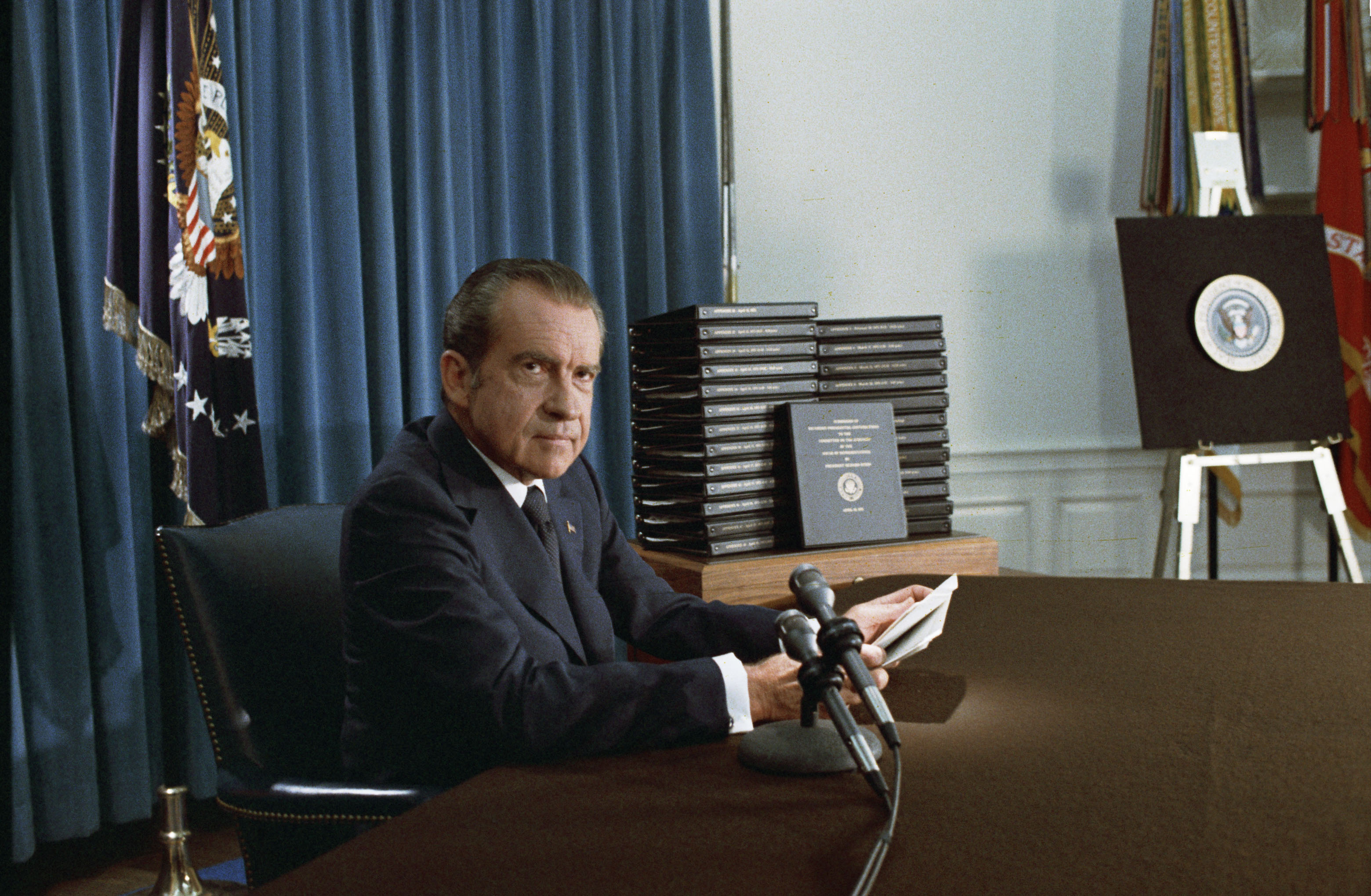
Several of Nixon’s aides testified in front of a grand jury. Some admitted that the president had secretly taped every conversation that took place in the Oval Office. During the summer and fall of 1973, Nixon tried everything to protect the tapes.

The prosecution would not give up that easily though. A special prosecutor named Archibald Cox was adamant about obtaining the tapes. When Nixon realized that he was not going to give up, he ordered for him to be fired. 

In protest, several officials of the Department of Justice resigned. This event took place on Saturday October 20, 1973, which came to be known as the Saturday Night Massacre. 

The saga continues In March 1974, when seven of Nixon’s officials were indicted. They became known as the Watergate Seven. Meanwhile, the battle over the Oval Office tapes continued and went all the way to the US Supreme Court. Eventually, the court ruled unanimously that the tapes had to be released. 

It came to light that 18 minutes of the recording had been erased. Nixon’s personal secretary Rose Mary Woods claimed that she had done this by accident, but further investigations proved that the tape had purposely been erased in several sections. 

In August 1974, a new audio tape surfaced which contained a recording in the Oval Office in which Richard Nixon and Bob Haldeman hatched a plan to block FBI investigations, claiming that national security was the reals issue in the Watergate break-ins. 

This particular extract from the tape was henceforward known as the ‘smoking gun’. Nixon’s own lawyers later stated that it “proved that the President had lied to the nation, to his closest aides, and to his own lawyers for more than two years.” 

The end of the Nixon era

It was clear that this was game-over for President Richard Nixon. Facing certain impeachment, he decided to resign. On August 9, 1974, Nixon and his wife left the White House. As he stepped into the helicopter, he gave his famous v-sign salute which later became one of his best-known trademarks.


The famous Nixon v-sign

He was succeeded by President Gerald Ford, who issued a presidential pardon for Nixon. Thus, Richard Nixon himself never faced any charges, but in total the scandal resulted in 69 government officials being charged and 48 being found guilty. Reading this story in 2019, one cannot help but be alarmed by the similarities between the Watergate Scandal and the current Russia investigation. As the world continues to watch the American presidency, this might be the year in which President Donald J. Trump’s fate will be decided. 

]]>