

Sarmientosaurus Musacchioi. Based on a partial neck fossil and a complete skull discovered in Patagonia, it’s been determined to be a new Titanosaurian dinosaur – a kind of sauropod which ranged in size from that of a cow to the size of a large sperm whale. They were plant-eaters which had long tails and necks and might have been the most common of the large herbivores that roamed the landmasses of the Southern Hemisphere in the Cretaceous period. Despite their numbers, the skulls of these dinosaurs are exceedingly rare and critical to determining specific facts related to their biology. Only four semi-complete complete skulls out of the more than 60 known Titanosaurs have been found. Researchers associated with the latest discovery utilized computerized (CT) imaging to closely examine the anatomically primitive, well-preserved neck and skull fossils from Sarmientosaurus. Researchers discovered the Sarmientosaurus brain was small compared to its huge body, a typical trait of sauropods. But they also discovered evidence of higher sensory capabilities than almost all of the other sauropods. This suggests that Sarmientosaurus had bigger eyeballs and better vision, in addition to an inner ear which might have been better tuned for hearing airborne sounds at a low-frequency compared to other Titanosaurs. Additionally, the organ in the inner ear which affects balance suggests this dinosaur might have routinely held its head in such a manner that the snout faced downward. “Discoveries like Sarmientosaurus happen once in a lifetime,” study leader Rubén Martínez told PLOS One, “That’s why we studied the fossils so thoroughly, to learn as much about this amazing animal as we could.” There have been numerous dinosaur discoveries in Argentinian Patagonia, a few of the most outstanding have been: * Giganotosaurus Carolinii, discovered in 1993 and considered to be the world’s largest carnivore (13.5 m in length, 4.6 m tall at its hip, and 9,500 kg in weight. * Argentinosaurus Huinculensisis, the biggest herbivore found to date. (larger even than Carolinii). * Andesaurus Delgadoi was found in 1987, under several meters of water in Lake Exequiel Ramos Mejía. The discovery happened when the lake fell to its lowest recorded level due to a drought. Delgadoi was named after its discoverer, Alejandro Delgado. * Rebbachisaurus Tessonei is the most complete dinosaur specimen discovered in South America, and was found in 1988. Also a sauropod, this herbivorous dinosaur weighed around 10,000 kilos and measured 17 meters long. * Gasparinisaura Cincosaltensis, a herbivorous dinosaur which stands out for its small size, 1.50 meters, as well as it’s supposed graceful quick movement. Sarmientosaurus Musacchioi was named for the town of Sarmiento which is located in Chubut Province, close to the discovery site. The study has been published in PLOS ONE, an open-access scientific journal. Rubén Martínez, with UNPSJB, is the author of the study. Image courtesy of Mark A. Klingler, Carnegie Museum of Natural History and WitmerLab, Ohio University]]>
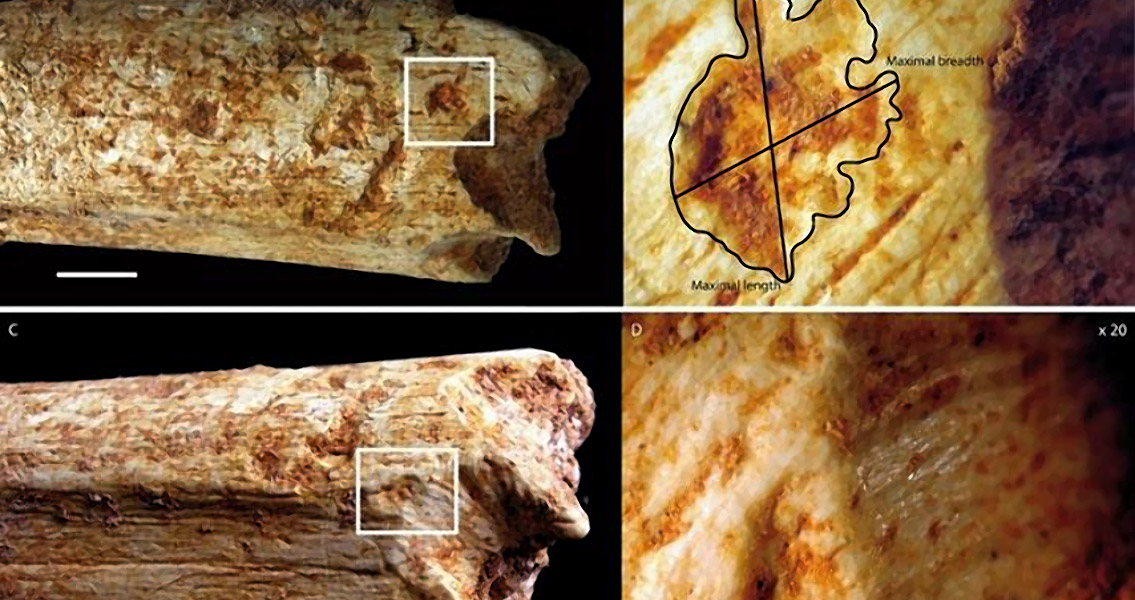
PLOS ONE Image courtesy of C. Daujeard PLOS ONE e0152284]]>


PLOS ONE, offers fresh insight into the fate of the Neanderthals, suggesting their adaptable subsistence strategies actually put them at a disadvantage compared to humans during the Last Glacial Maximum. The Neanderthal lineage existed successfully throughout Europe and Asia, surviving the harsh and shifting environments of glacial/interglacial cycles from the Pleistocene onward. However, as the climate commenced the deterioration which would result in the Last Glacial Maximum, just after the first humans had entered Eurasia, the Neanderthals disappeared. What happened to them is unclear, but the outcome is not, Western Eurasia was subsequently populated by just one homo species: modern humans. Led by Sireen El Zaatari from the Paleoanthropology department at the Eberhard Karls Universität Tübingen, Germany, the authors of the study analysed the fossilized molars of 52 Neanderthals and Upper Paleolithic Homo sapiens (modern humans). Their aim was to glean insights into the possible influence of dietary strategy, in particular by analysing the degree of microwear on the teeth. This information could be used to draw conclusions about diet type, which was then linked to prevalent climatic conditions. Surprisingly, the team found that dental microwear among Neanderthals varied significantly depending on ecological conditions. “Analyses of the data show that within the Neandertal lineage, dental microwear signatures are significantly associated with paleoecological conditions.” they wrote in the new study, published this week. Neanderthals that lived in wooded or mixed habitats possessed more complicated dental microwear than those from open habitats. The conclusion to be drawn from this is that Neanderthals adapted their diets to the resources available as climates and habitats changed. In cold, barren, open steppe environments, the Neanderthals had a diet made up mostly of meat. In forested landscapes they supplemented their diet with more plants, seeds and nuts. For modern humans, the situation was completely different. “For the Upper Paleolithic humans, unlike the case for the Neandertals, no significant correlation is detected through the paleoecological ranks.” Crucially, the modern humans’ adhered to the same dietary strategy despite environmental changes, retaining a large proportion of plant based foods. This could have fostered technical innovations which gave humans a distinct advantage. “To be able to do this, they may have developed tools to extract dietary resources from their environment” said El Zaatari, in a press release. Neanderthals had an opportunistic approach which allowed them to flourish throughout much of their history, eating whatever was available in the habitat they called home. Modern humans however, strove to access the same food resources despite the changing conditions, eventually pushing them to develop tools. According to the study, as humans’ technical complexity increased their diet started to change dramatically, as they were able to exploit their landscape much more effectively. When Neanderthals and modern humans came into contact and started to compete for resources, this technical superiority would have undoubtedly given the humans a significant advantage. El Zaatari and colleagues’ study offers a new take on the mystery surrounding the demise of the Neanderthals, suggesting their opportunism could have ultimately been a disadvantage. For more information: www.plos.org Image courtesy of Sireen El Zaatari PLOS ONE e0153277]]>

Gonium pectorale, a simple green algae comprising only sixteen cells. Following an international collaboration between Kansas State University, the Universities of Arizona and Tokyo, and Wits University, the genome of the algae has been sequenced, allowing an in depth study of its DNA. Volvocine green algae, the group to which G.pectorale belongs, is an invaluable model system for studying multicellularity. As Durand explained, “The evolutionary transition to multicellularity has occurred numerous times in all domains of life, yet the evolutionary history of this transition is not well understood. However, the volvocine green algae include a diverse variety of unicellular, colonial, and multicellular species.” The volvocine group is a diverse one, meaning it is possible to study members of varying degrees of complexity. They also evolved relatively recently, during the Triassic period, meaning there is enough evidence to study their origns. According to the study, group formation in the algae evolved by co-option of the retinoblastoma cell cycle regulatory pathway. “Significantly, expression of the Gonium retinoblastoma cell cycle regulator in unicellular Chlamydomonas causes it to become colonial. The presence of these changes in undifferentiated Gonium indicates extensive group-level adaptation during the initial step in the evolution of multicellularity.” the authors write, in the abstract to the study. Although only scraping the surface of the complicated transition from single to multicellular organisms, the team have succeeded in uncovering some of the genes that regulate cellular growth and division within the G.pectorale. It helps explain how single cells lived in groups, and could prove a vital starting point in shedding light on other aspects of multicellular transition. For more information: www.nature.com Image credit: The Volvocales Information Project by Aurora Nedelcu]]>
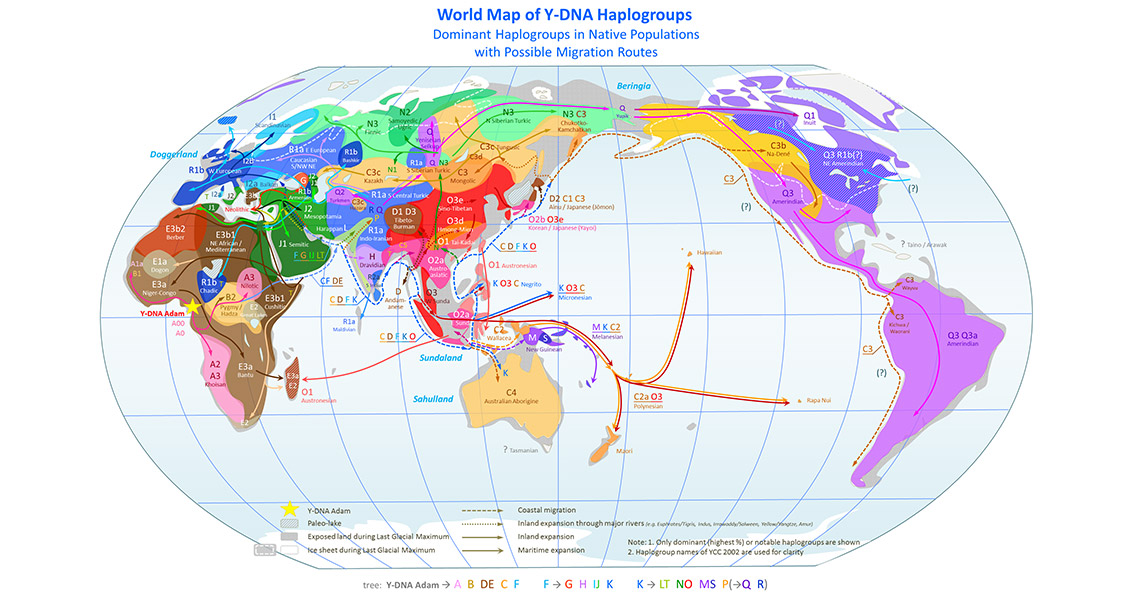
Nature Genetics Image courtesy of Wikimedia Commons user: Chakazul]]>

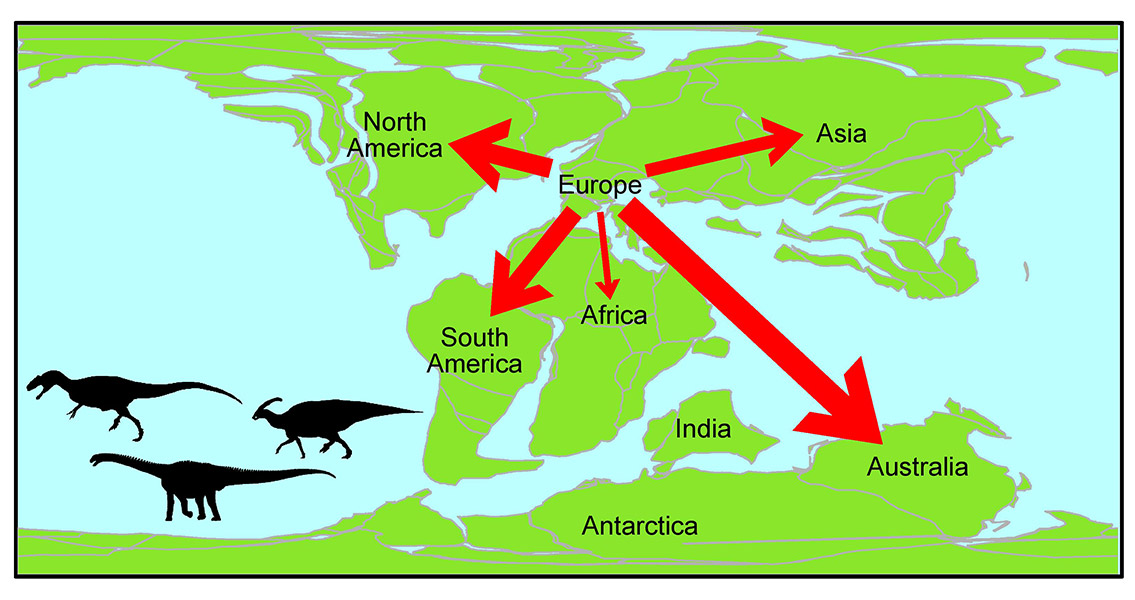
www.onlinelibrary.wiley.com Image courtesy of Alex Dunhill, University of Leeds ]]>