 Poems of John Donne
by John Donne
PIBN: 1000146331
[gap height=”20″]]]>
Categories
Poems of John Donne
by John Donne
PIBN: 1000146331
[gap height=”20″]]]>
Reviewed Book
 The Mayor of Casterbridge
A Story of a Man of Character
by Thomas Hardy
PIBN:1000229356
[gap height=”20″]]]>
The Strength of Edwardian Britain There is no denying that there were plenty of reasons why the Britons of 1914 would want to take pride in their country’s achievement. The country had faced no serious threat of foreign invasion for a century, and no battle had taken place on British territory since the Jacobite Rebellion of 1745. The Industrial Revolution in the late eighteenth and early nineteenth century had transformed Britain into a leading industrial and commercial power. Coal production in 1913 reached a record level never ever to be surpassed. British goods, locomotives and other machinery were in demand all around the world. A look at a world map showed that a quarter of the globe was now absorbed in the British Empire. The state visit of the newly crowned King George V to India in 1913 with the colourfully clad Indian princes paying tribute to the Emperor was as clear a demonstration as you could ask of Britain’s greatness. Behind the Imperial Façade If you look deeper into the fabric of Edwardian Britain the impression of one long summer’s day of peace and prosperity appears in a different light. The rejection on health grounds of so many volunteer soldiers in the Boer War (1899-1902) shocked the public with details of the extent of malnutrition and stunted development of the youth in the country’s industrial cities. In 1899 social researcher Seebohm Rowntree carried out a survey of living standards in the city of York. Although York was a major railway junction it was not part of the northern industrial belt yet Rowntree’s study found that 27% of the city’s inhabitants were living at a level as low as that found in the slums of Manchester, Glasgow and other major industrial conurbations. While the elites of British society may have been enjoying the delights of motoring, country house parties and Rag Time music, many more of Britain’s inhabitants were living in great deprivation. Although the terrors of the Workhouse described by Dickens in “Oliver Twist” had been ameliorated to some extent people still lived in fear of ending their days in this dismal institution. The level of popular discontent can be judged by the tide of industrial unrest that swept Britain in the decade prior to the outbreak of the First World War. The growing power of the trade union and Labour movement expressed itself in national strikes on the railways, mines, ports and other key industries. The strikers enjoyed some success in forcing the employers to improve their wages. Although trading conditions were generally favourable, it can be seen in hindsight that Britain was losing its position as the world’s leading economic power. The growth of the German economy outpaced that in Britain. The advantages of the superior technical education available in Germany and France were already making themselves felt as those nations took up newer technologies with more enthusiasm than their British counterparts. The political scene was becoming increasingly confrontational. The 1906 General Election returned a substantial number of working class Labour MPs to challenge the hegemony of the Liberal and Conservative parties. The Suffragette movement had turned increasingly militant with breaking of shop windows and even arson attacks in an attempt to have women granted the franchise. Far more menacing were the voices coming from Ireland. After many attempts to introduce Home Rule for Ireland the Liberal government was close to passing the necessary legislation. The opposition of the House of Lords was overcome by a threat to swamp the House with newly created Liberal peers. The Protestant population of Ulster were strongly opposed to anything that would weaken the tie with the British mainland. Under their leader Edward Carson they organized a formidable militia determined to resist Home Rule by force. They had a number of sympathisers in key positions in the British army. The possibility of violent conflict tearing the nation apart had never been closer. Even in distant New York a small number of Indian political activists laid the foundation of the campaign for Indian independence. Some historians thus contend that the outbreak of World War One actually saved Britain from violent unrest or even revolution. The cessation of industrial and political unrest as most people united behind the war effectively relieved pressures that might have otherwise torn the nation apart.]]>
The history of Orient Express is filled with mystery, intrigue, culinary excellence and luxury. Elegant and historic train, the Orient Express made its maiden journey from Paris to Vienna on June 5, 1883. The train left for Vienna from Strasbourg on its final journey on December 12, 2009, completing an illustrious 126 years connecting people with heritage. Orient Express has a long and interesting history of bringing people and heritage together. The train is steeped with copious amounts of intrigue and mystery and is peppered with luxury, adventure and timeless heritage. The two popular words in the history of international travel – ‘Orient Express’ – are commonly linked to Paris and Istanbul, the original destinations of this historical train. This passenger train service was launched by the Compagnie Internationale des Wagon-Lits. Its maiden journey from Paris to Vienna was on June 5, 1883. It was called Express d’Orient during the initial years and in 1891, it was officially renamed as Orient Express. Initially, in the year 1882, a train called the ‘Train Éclair de luxe’ was used by Georges Nagelmackers, son of a Belgian banker, as a test train. It left Paris on the 10th of October, 1882 and arrived in Vienna on the 11th of October, 1882. The Orient Express is not only known for its enchanting beauty and culinary excellence, but also famous for its constantly changing train route. One of the reasons why the name ‘Orient Express’ is steeped in romance is connected to the routes it travelled – three of Europe’s most popular and romantic destinations – Paris, Vienna and Istanbul. The Orient Express had 10 wood paneled compartments with either a single bed or double beds (one over the other). There were no baths or showers on board, only a washbasin was available. The compartments were used as sleeper compartments in the night and during the day; they were converted into sitting rooms. They were quickly converted into luxurious carpeted sitting rooms, complete with a sofa and table. The beauty and elegance of the Orient Express, perhaps, was in its peak during 1920s, just a few years before the World War I. The services of the train were suspended during the period of the War and resumed after the hostilities ended in 1918. However, soon after resuming the services, Orient Express regained its popularity and patronage by the rich and wealthy. The 1930’s can, perhaps, be considered the golden period in the history of this train. Three parallel services, namely, the Orient Express, the Arlberg Orient Express and the Simplon Orient Express were being operated. This was the period when Orient Express came to be known as one of the most luxurious and elegant vehicle on wheels. It started carrying a number of sleeping cars that offered permanent service, and restaurant cars where exotic food was prepared. A number of celebrities, diplomats, royalty, and business people – the rich and the famous – started frequenting the Orient Express. However, the services were disrupted during the Second World War as well and they did not resume until after 1945. The Orient Express stopped running in the year 1962 and it was replaced with a slow service train called the Direct Orient Express that ran from Paris to Belgrade every day and from Paris to Istanbul and Athens twice weekly. In fact, the Direct Orient Express services were completely withdrawn in the year 1977. Many considered this to be the end of the Orient Express, but a similar service of the same name ran from Paris to Bucharest until the year 2001. During the final years of the Orient-Express, the train ran as a EuroNight service from December 14, 2008 to December 2009. The popularity of the Orient Express reached its zenith when its glamour and history ensured that it made its way into popular culture. It became a part of literature featuring in books, films and documentaries. One of the most famous plots and murder mystery stories of all time, Murder on the Orient Express by Agatha Christie was based on the events happening onboard the train. Although the name suggests Orient Express, it actually takes place on the Simplon Orient Express. In the famous book Dracula by Bram Stoker, the Orient Express is mentioned. In fact, movies Orient Express (1934) and Orient Express (1954) are film adaptations of a book by Graham Greene called Stamboul Train and a plot involving passengers of the train respectively. Orient Express has left an indelible mark on the cultural and historical landscape of the world of travel. The rich history and intrigue surrounding this train is amazing; everyone remembers this train to be the one where Hercule Poirot solved the mystery of the murder, the same train which James Bond rode from Istanbul to London to save the world – yet another time, and the same train from where Alfred Hitchcock’s young lady disappeared from. Everything about the train: from its constantly changing route map to its popularity with spies, to its exotic cuisine to its enchanting décor, continues to enthrall people world over.]]>
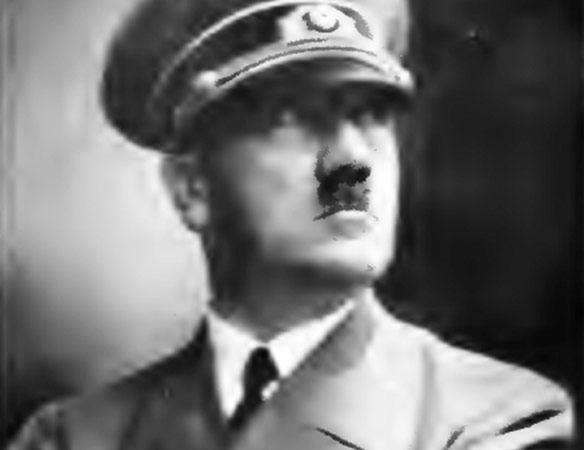
Hitler was not only a war-machine, but also a money-making machine as well. He had numerous financial schemes that made him money, including copyrighting his image, which earned him royalties for every stamp that was sold with his face on it. Most of these money-making schemes were running in the country unbeknownst to Germany’s tax authorities. Copies of Mein Kampf, which were given to newlyweds on their wedding day, are thought to have earned him the equivalent of at least $1 million a year in royalties. The makers of the documentary surmise that Hitler owed the German tax authority over $3 million in tax in today’s money. Shortly after his death his will was found by a German Jew, Herman Rothman, working in British Intelligence, and questions were raised about his fortune. Mr. Rothman, now in his 90s, told the makers of the documentary that the Counter Intelligence Unit that he was working with spotted a man dressed in civilian clothing whom they believed was a Nazi. They captured him and took his jacket, which contained a seven-page document detailing Hitler’s last will. In this will, Hitler blamed the Jews for starting the conflict, and from the second page onwards, it is seen how much of a shrewd investor he was. Earning money from different appearances, speeches, and royalty claims, he built himself a personal $6 billion empire. It is even said that his family members living today could claim a portion of those missing billions from his image rights alone, although it is yet to be seen if anyone will come forward. “The Hunt For Hitler’s Missing Millions” aired on Britain’s Channel 5.]]>
Reference:
 Dracula
by Bram Stoker
PIBN: 1000280764
[gap height=”20″]]]>
th century. The library at Harvard holds over 15 million books but librarians still have no clue as to how many in that collection are actually bound by human skin. The books in question include “Des destinées de l’ame…,” by Arsène Houssaye; A book about French philosophy, a book on medieval law (Spanish) dating back to the 17th century and a collection of Roman poetry . Although the book on Spanish medieval law contains suggestive inscriptions at the back of the book, they have turned out to be inaccurate. Laboratory tests on proteins found in the binding have concluded that it is sheepskin, rather than human. There is no distinct difference these books when compared to other books, and without an inscription that states what material makes up the covers there is no real clue as to what the material of the covers consist of. The books do not really resemble human flesh and skin bindings are only recognizable to someone who is an expert; the discolored look similar to books that have been around for many years makes these books look fairly normal. The law book includes an inscription that suggests that it was done in honor of a dear friend rather than something fiendish. “the bynding of this booke is all that remains of my dear friende Jonas Wright, who was flayed alive by the Wavuma on the Fourth Day of August, 1632. King Mbesa did give me the book, it being one of poore Jonas chiefe possessions, together with ample of his skin to bynd it. Requiescat in pace.” Lawrence S Thompson, states that the practice of anthropodermic bibliopegy i.e. binding books in human skin goes all the way back to the 13th century with a French Bible. The practice took shape in the 17th century however, with evidence stated in a Crimson article. The article reports that on exhibition was the “finest collection of miniature books”. Included among the collection was a book bound in skin. The most famous book that has been bound as human skin is the book by James Allen, entitled “The Highwayman; Narrative of the Life of James Allen alias George Walton”. The book lies at the Athenaeum and is bound by Allen’s own skin at his request. He asked that the book be presented to a man he tried to rob. Other books have been tested including the book entitled “Practicarum quaestionum circa leges regias Hispaniae”. The results were inconclusive regarding whether or not it was indeed human skin]]>