Categories
Editorial

Olaudah Equiano – From Slave to Abolitionist

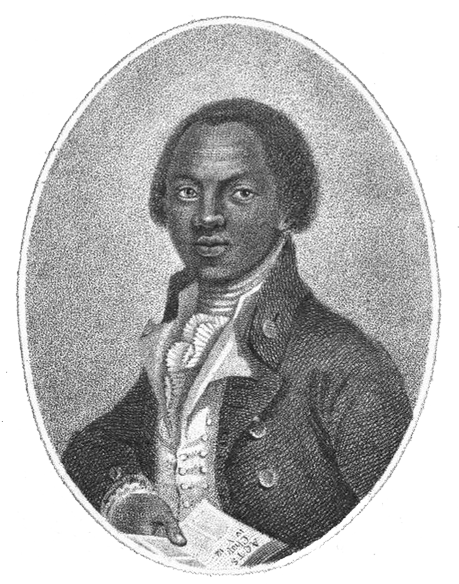
The Interesting Narrative of the Life of Olaudah Equiano or Gustavus Vassa, the African, Equiano’s autobiography, published in 1789, marked a significant turning point in the fight to abolish slavery. Describing his capture in Africa and subsequent life as a slave, the autobiography shone a light on the horrors of the slave experience, making its brutality tangible to those who had been born free. It became a rallying point for the abolitionist cause. It began with a petition for abolition addressed to the British parliament, and ended with an antislavery letter to the Queen. In between it detailed Equiano’s life, providing a rare insight into slavery through the eyes of one of its former victims. Translated into several different languages, The Interesting Narrative… would go on to be read by tens of thousands. Just as significantly, Equiano himself worked tirelessly to promote the book and the abolitionist cause. He embarked on extensive lecture tours across Britain and Ireland, and spent much of the 1790s passionately campaigning for abolition – drawing more and more attention to the issue, notably working closely with Granville Sharp and Thomas Clarkson in the Society for the Abolition of the Slave Trade. Olaudah Equiano’s life was a remarkable one, even before he became a leading figure in the battle to abolish slavery. Born in what is now Nigeria, Equiano was kidnapped and sold into slavery as a child – forcibly transported across the globe, to Barbados and then Virginia. In 1757, Equiano was bought by a naval captain named Henry Pascal, who named him Gustavus Vassa and brought him back to England. For years he served as Pascal’s slave on navy ships, participating in major battles of the Seven Years’ War. The period proved deeply influential on Equiano’s life. Fellow soldiers taught him to read and write, and the basics of mathematics, while Equiano also converted to Christianity, getting baptised in 1759. Freed by Pascal at the end of the Seven Years’ War, Equiano was again enslaved in 1762, shipped from London to the West Indies and taken on by a merchant shipping company. Again, the experience proved hugely influential on Equiano, his relatively high rank meaning he was actually involved in organising the sale and transportation of other slaves. “I was often a witness to cruelties of every kind, which were exercised on my unhappy fellow slaves. I used frequently to have different cargoes of new Negroes in my care for sale; and it was almost a constant practice with our clerks, and other whites, to commit violent depredations on the chastity of the female slaves; and these I was, though with reluctance, obliged to submit to at all times, being unable to help them.” Shrewdly, Equiano traded and saved hard during his time in the West Indies, and by 1766 had raised enough to buy his freedom. After working for several years as an able seaman, he eventually returned to London where he first met anti-slavery campaigner Granville Sharp. It marked the beginnings of Equiano’s career as one of the most influential, if seldom acknowledged, anti-slavery campaigners. He became involved in the Sierra Leone Resettlement Project, which aimed to provide a safe place for freed slaves to live and work; founded the Sons of Africa, which campaigned for abolition through public speaking, letter writing and lobbying; and even appeared in the House of Commons to call for improved conditions on slave ships. Soon, he realised that one of the most potent arguments for abolition he could offer however, was his own life story…]]>
Categories
News

Lord Dunmore Offers Emancipation at a Price

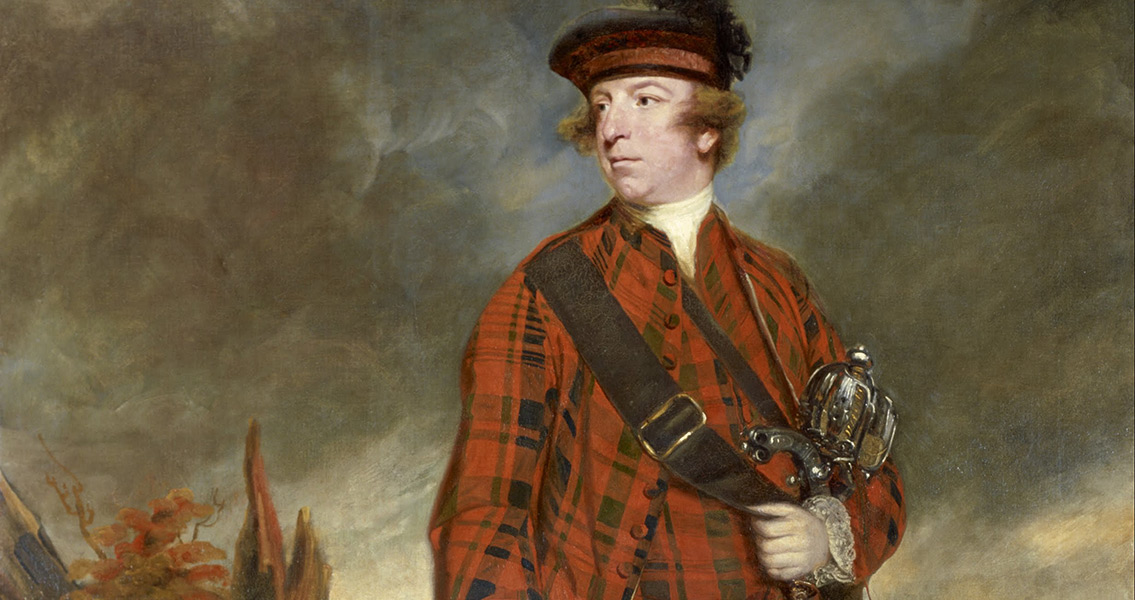
Fowley. For several months he and the royal forces survived by launching guerilla style raids, stealing supplies from the colony. As early as 1772 Dunmore had made clear his belief that Virginia’s 180,000 strong slave population had the potential to be a formidable weapon if pushed to rebel against their masters. Initially, Lord Dunmore feared that an enemy power would take advantage of the slaves’ desire for freedom to sow discord in the colony, but by 1775 he was willing to use this weapon to his own ends as he desperately tried to counter the growing Patriot militia. Word of the plan spread. At the first signs of unrest in the colony, slaves began to offer their services to Dunmore. Once he had taken refuge on the HMS Fowley, Dunmore started recruiting slaves to his cause, building a force to bolster his perilously outnumbered troops. On 7th November Dunmore’s proclamation was drafted, and published soon after. The rebellion quickly escalated. The aim was clear. Slave insurrection would distract the patriots, forcing them to deal with slave rebellions while also crippling production in the colonies. At the same time, it would swell the forces willing to fight for Dunmore, whose armies had been cut off from reinforcements stationed in Boston. In practice the proclamation infuriated the colonists. Plantation owners who had hitherto remained uninvolved in the rebellion were suddenly pushed into action against the crown, incensed by Dunmore’s seemingly reckless actions. Around 800 slaves managed to break free and join Dunmore’s forces, 300 of them being inducted into ‘Lord Dunmore’s Ethiopian Regiment’. It wasn’t enough however, and by June 1776, Dunmore’s forces had been devastated by a small pox outbreak and a string of victories by the Patriots. Longer term however, Dunmore’s Proclamation was hugely significant. The British never repudiated it, and as the Revolutionary War wore on thousands of black slaves were encouraged to risk everything in an attempt to break free and join the British forces. Long after the American War of Independence had drawn to a close, the momentum continued; slaves continued to fight for emancipation, and more and more abolitionists in the USA and Britain were drawn to support the cause.]]>

Categories
News

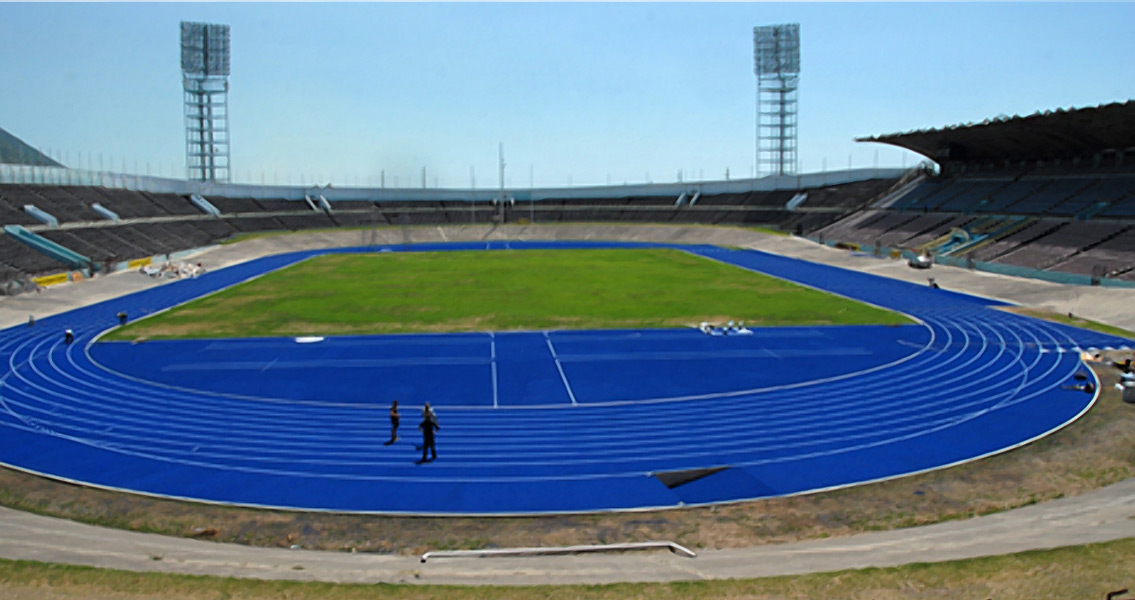
Jamaican Independence Day

Categories
News

The Amistad Mutiny

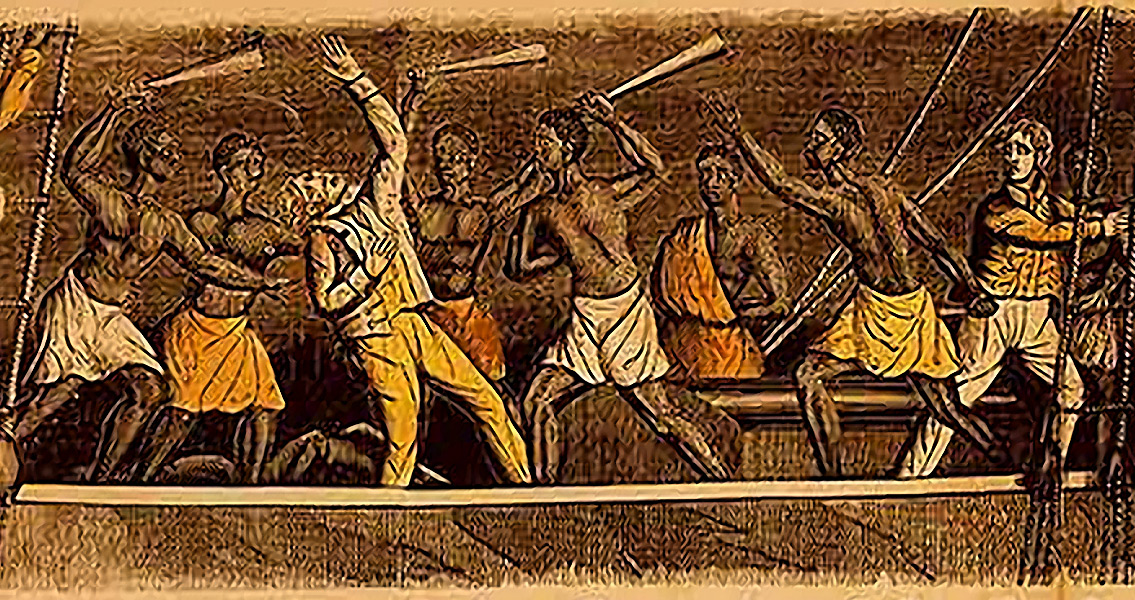
Amistad. The event became the basis for one of the most significant court cases in US history and a defining moment in the development of the abolition movement in the United States. Sometime in April 1839 Clinque, a 26 year old man from Mende in Sierra Leone, was captured alongside hundreds of others from the West African tribes by Spanish slave merchants. With his wife and three children still free and living in Sierra Leone, Clinque and 500 other slaves were taken, chained hand and foot, aboard the Portuguese slave vessel Teçora to the Caribbean. Teçora finished its voyage by entering Cuba under the cover of night. The secretive approach was because of Anglo-Spanish treaties which had made the trade of slaves from Africa a capital crime. Slavery was legal in Cuba however, meaning once smuggled ashore it would be possible to trade the slaves on the Cuban market. Highlighting the horrendous conditions endured by the captives aboard Teçora, a third of the slaves had died by the time the ship reached Havana. Clinque and 53 other slaves, including four children, were bought by two Spaniards: Jose Ruiz and Pedro Montes. The slaves were collected aboard the Amistad, a small schooner built in Baltimore especially for the slave trade. It set sail on a 300 mile journey to transport the slaves from Havana to Puerto Principe, on another part of Cuba. The mutiny started three days into the voyage. Clinque used a nail to pick the locks of his chains and free the other captives. The escapees, armed with machete like weapons they had found in the vessel’s stores, stormed the ship, killing the Amistad‘s captain and cook, and injuring Montes and Ruiz. The lives of the two Spaniards were spared for their navigational skills, and they were tasked with sailing the ship back to Africa. Montes and Ruiz deceived the captives and had the ship sail back and forth along the coast of the Americas. After two months at sea the vessel was spotted by the USS Washington off the coast of Long Island. The difficult voyage had seen around a dozen of the slaves perish. The US Navy ship escorted the Amistad to Connecticut, where Montes and Ruiz were freed and the Africans were imprisoned pending an investigation into the mutiny. Quickly the mutiny escalated into an international issue which engaged directly with the long standing controversies over slavery. A group of evangelists, led by Lewis Tappan, worked to publicise the incident as a means to expose the evils of the slave trade. A key turning point took place when they found two other men from Sierra Leone who could serve as translators for Clinque, allowing his side of the story to be publicised. Increasingly, abolitionists painted and spread a vivid depiction of the horrendous conditions endured by the slaves. They launched a case, arguing that the Africans had been enslaved illegally and had thus broken no laws in trying to escape from bondage. On the other side, Montes and Ruiz sued the slaves, on the basis that they had been deprived of their property. They demanded the return of the slaves, which they fraudulently claimed had been born in Cuba. The Spanish government was eager for the slaves to be returned to Cuba to stand trial for piracy and murder. Tremendous diplomatic pressure was therefore placed on US President Martin Van Buren to find a quick solution to the mutiny which would appease the Spanish demands. An interesting sub-plot to the case was the Spanish awareness that if Mortes and Ruiz were found guilty of having kidnapped the slaves from Africa, Spain’s infringement of the treaty banning the African slave trade would be revealed. This, in turn, would provide the British with justification to intervene in Cuba. An initial trial, in January 1840, ruled that the slaves had been imprisoned illegally. As such, they would not be forced to return to Cuba to stand trial but instead freed and returned to Africa. Shockingly, Van Buren and the Spanish government both intervened in the case, and appealed the verdict to the Supreme Court. In March 1841 the Supreme Court confirmed the original verdict, ruling again that the slaves had been imprisoned illegally. With financial assistance from the abolitionists that had backed their campaign, the Africans from the Amistad set sail for West Africa in November 1841. For the United States, the verdict of the trial was pivotal. It revealed the growing momentum of the abolition movement, and the growing contradictions between US law and the moral principles supposedly embodied in the country’s Declaration of Independence. The event became a public as well as political spectacle, highlighting the divisions between slave owners and abolitionists. The result set an important legal precedent concerning the importance of ‘natural law’ over the property rights of the slave owners and as such, the outcome of the Amistad trial was a crucial step in the process which ultimately culminated in the Thirteenth Amendment in 1865.]]>

Categories
Breaking News

Enslaved Africans' Origins Traced

Proceedings of the National Academy of Sciences. Dr Schroeder and her colleagues performed genome analyses on the remains of three enslaved Africans, found buried in the Zoutsteeg area of Philipsburg on the Caribbean island of Saint Martin. It is understood from previous studies that the ‘Zoutsteeg Three,’ one adult female and two adult males, were buried in the seventeenth century and most likely came from Africa, rather than having been born in the New World. The new study enriched the poorly preserved DNA of the Zoutsteeg Three using a technique known as whole genome capture. “Those remains had essentially been lying on a Caribbean beach for hundreds of years so their preservation was really not good,” Dr Schroeder explained. “But by enriching the poorly preserved DNA in those samples we were able to obtain enough data to be able to dig deeper into the genetic origins of those three individuals we analyzed.” Dr Schroeder and her colleagues found that one of the Zoutsteeg Three had originated among Bantu-speaking groups in northern Cameroon. The other two came from a different area, most likely from non-Bantu speakers in the area which is now Nigeria and Ghana. “To our knowledge, these findings provide the first direct evidence for the ethnic origins of enslaved Africans,” writes Dr Schroeder in her study. “The data suggest that the Africans who reached Saint Martin were drawn from diverse cultures and societies.” The study has several major implications for the study of history. Most importantly, it clearly shows that it is possible to get extensive genome data from poorly-preserved archaeological remains; Dr Schroeder’s work clearly shows the value of her whole-genome capture method, which enables us to use samples which were previously thought to be too poorly degraded. This is particularly important in the Caribbean as artefacts deteriorate considerably in tropical settings. Genome-wide analyses are very useful for tracing the genetic origins of individuals, in this particular case victims of the transatlantic slave trade. Dr Schroeder’s work provides an alternative record which enhances our understanding of a long-standing historical problem, one where documentary sources can not tell us enough. For more information: www.pnas.org Image courtesy of Wikimedia commons user: Jgdc47B ]]>