here]]>
here]]>

Molecular Biology and Evolution, can be found here Image courtesy of Zhen Wang, Shanghai Institutes for Biological Sciences, Chinese Academy of Sciences, Shanghai, P. R. China ]]>
in Science Daily. Titled ‘Archaic Hominin Admixture Facilitated Adaptation to Out-of-Africa Environments’, the study by Rachel M. Gittelmann, Joshua G. Schraiber, Benjamin Vernot, Carmen Mikacenic, Mark M. Wurfel and Akey has been published in the journal Current Biology. It argues that as humans left Africa, interbreeding with Neanderthals and other archaic hominins allowed them to develop various traits for survival. Neanderthals left Africa hundreds of thousands of years before modern humans, around 300,000 years ago. Modern humans made their way away from the continent sometime between 100,000 and 60,000 years ago. It has been well established that as modern humans made their way to new parts of the world, they encountered and sometimes had children with various archaic humans, such as Neanderthals and Denisovans. Remains of this breeding can still be seen in people today. Previous studies have shown that non-African humans inherited about 2% of their genome from Neanderthals. People of Melanesian ancestry take between 2% and 4% of their genome from Denisovan ancestors. In the study, the researchers searched a sample of 1,500 individuals from East Asia, Europe and South Asia, as well as 27 from Island Melanesia, for archaic DNA sequences in their human genomes. In particular, the team were searching for archaic DNA sequences which appeared at a higher frequency than one would expect unless the genes were beneficial in some way. Neanderthal and Denisovan DNA sequences are typically found at low frequencies, generally less than 5%. However, Gittelmann et al found 126 locations where the archaic sequences exist at much higher frequencies, up to 65%. 31 of those regions are involved in human immunity, while seven play a role in determining characteristics of our skin. These attributes inherited from archaic hominins could have played a vital role in our survival after leaving Africa, allowing human populations to spread. “The ability to increase to such high population frequencies was most likely facilitated because these sequences were advantageous,” Akey explained. “In addition, many of the high-frequency sequences span genes involved in the immune system, which is a frequent target of adaptive evolution.” As humans left Africa they encountered a host of unfamiliar, challenging environments. Tellingly, the team’s results suggest that many of the genes received from Neanderthals and Denisovans are connected to interactions with the environment. Hybridization through interbreeding, therefore, could have been the most efficient way for humans to adapt to the potentially hostile new lands they were encountering.]]>

www.science.sciencemag.org]]>
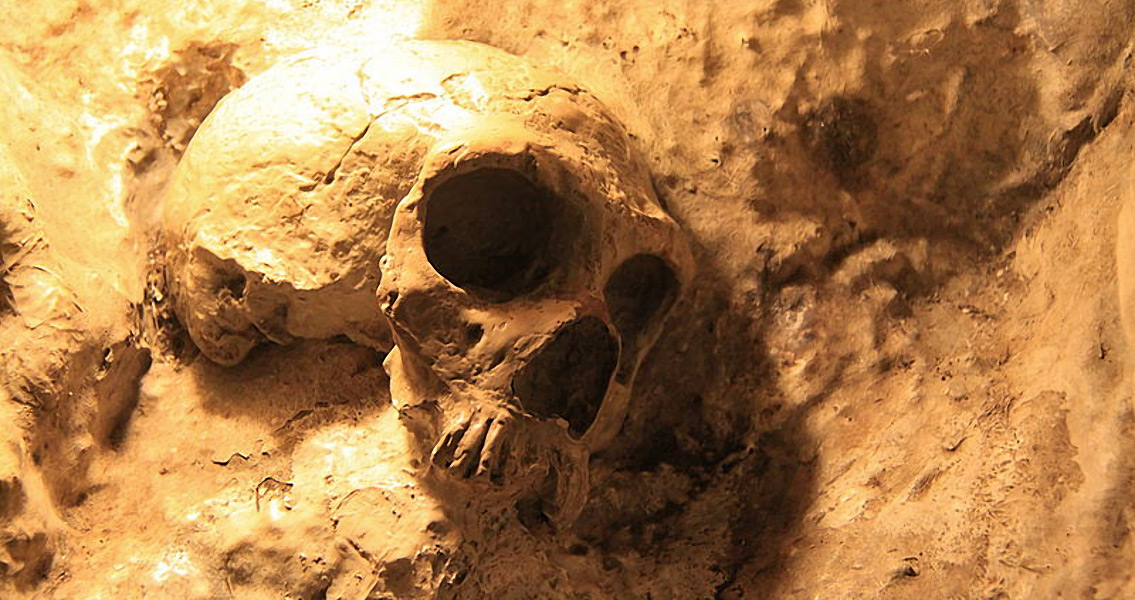
Homo heidelbergensis, the species believed to have given rise to both the Neanderthals and modern humans. Homo heidelbergensis lived in Europe, Asia, and Africa around 600,000 to 250,000 years ago, according to the Science report. Later, however, tracing the origins of these fossils became complicated. Two years ago, analysis of mitochondrial DNA – the non-nuclear genetic information in the cell that is inherited on the maternal side only and is very useful in tracing a person’s ancestry – revealed that the Sima de los Huesos fossils did not have as much in common with Neanderthals as they did with another ancient hominin species, the Denisovans. Researchers suggested that the inhabitants of the Sima de los Huesos cave had interbred with Denisovans or maybe that this Denisovan mitochondrial DNA actually belonged to a common ancestor, possibly Homo erectus. This is when the Max Planck Institute of Human Evolution joined the study and tried to extract and sequence nuclear DNA to settle the matter. This took two years, with Matthias Meyer’s team focusing on a tooth and a leg bone fossil from which they managed to extract enough fragments to work with. According to Meyer, they got as many as a couple of million base pairs – not a lot but enough for a reasonable level of accuracy in the results, which were in the form of unique genetic markers for Neanderthals, modern humans, and Denisovans. What these results showed was that the occupants of the Sima cave had split from the ancestor they shared with the Denisovans more than 430,000 years ago and they were Neanderthals, the Mail Online quotes Meyer’s report from the meeting. The implications of these results are that first of all, the Neanderthals are much older than previously believed, and also that the split between them and modern humans occurred much earlier. Talking about the findings to Mail Online, palaeoanthropologist Chris Stinger from the Natural History Museum in London said the results suggested modern humans and Neanderthals split around 650,000 years ago, while Neanderthals and Denisovans separated some 450,000 years ago. This constitutes a serious shake-up of the human evolution tree, adding further evidence to the idea that it was much more complex than previously believed. Image courtesy of Wikimedia Commons user: Bjorn ]]>
