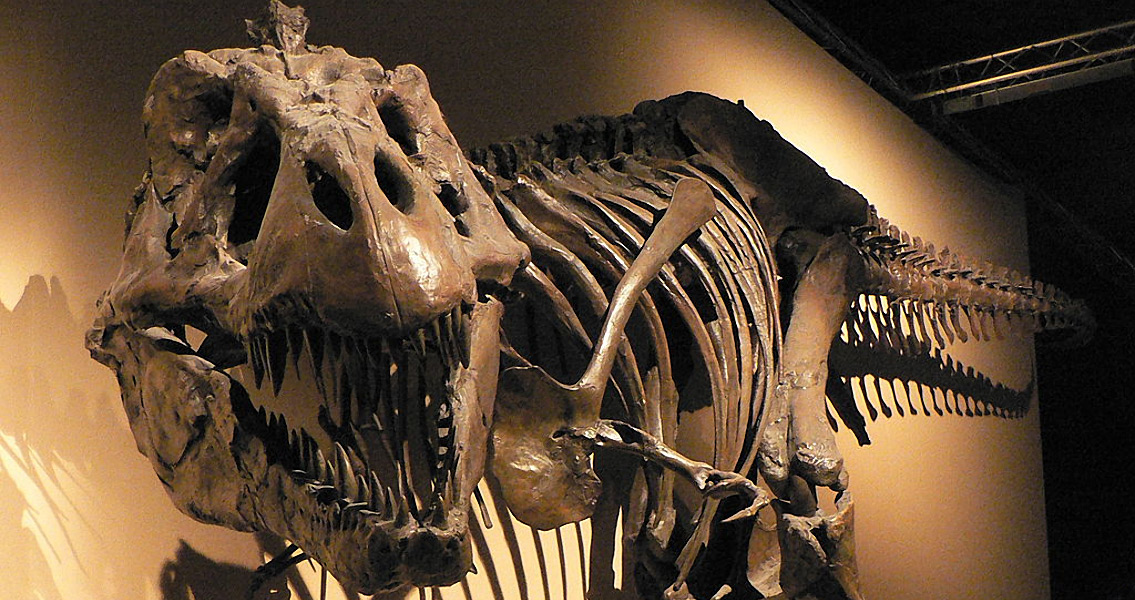
a study of Tyrannousaurus fossils in museums in North America revealed four specimens which had bite marks on them, made by a large animal. Since the largest carnivore in the region at the time was the T-Rex, the researchers concluded that the eater must have been another T-Rex, suggesting cannibalism was a common behaviour among Tyrannosauri. Earlier this year, British researchers studied in Alberta, Canada, the remains of a Daspletosaurus, another species from the Tyrannosaurus family, which bore traces of multiple fights and cannibalism. The Daspletosaurus was smaller than the T-Rex and had apparently become a victim of a bigger genetic cousin, who also snacked on it after its death. The evidence pointing in that direction included bite marks and even one puncture wound to the back of the head, which was the result of a particularly hard bite, according to the researchers who studied the skull. The cousin in question, however, was not T-Rex because the Daspletosaurus lived 75 million years ago, the BBC writes, before that most famous of the Tyrannosaurids came onto the scene. For more information: TYRANNOSAUR CANNIBALISM: A CASE OF A TOOTH-TRACED TYRANNOSAUR BONE IN THE LANCE FORMATION OF EASTERN WYOMING Image courtesy of Wikimedia Commons user: David Monniaux]]>

Pliobates cataloniae, seems to have lived before this split between great and lesser apes occurred. This suggests that either the two branches of apes co-existed or that instead of lesser apes evolving from great ones, it was the other way round, one of the authors of the study, published in Science, told EurekAlert. Sergio Almecija, an anthropologist at George Washington University, added that the species provides a missing chapter to the beginnings of human and ape evolution. This missing chapter fills a void in the fossil record; the reason scientists believed that lesser apes originated from great apes was the lack of lesser ape fossils from the time when great apes first evolved. While the authors of the study lean towards the suggestion that lesser apes contributed to the evolution of great apes, other scientific sources, cited by Science News, counter with the argument that Pliobates cataloniae could be an ancestor of just lesser apes, having nothing to do with great apes. In support of this argument, these critics note that lesser apes are believed to have split from the great ones around 14 million years ago, even though their origins remain shrouded in mystery. To arrive at their conclusions, the research team that analysed the fossils, led by David Alba from the Catalan institute, conducted more than 300 measurements of the 70 bones – of the teeth, the skull, and the lower body. These measurements revealed that the ancient species was closest to the modern ape family of several other ancient and now extinct ape-like species known to science. Alba told Science News that based on the analysis of the Pliobates cataloniae fossils, it could be suggested that the last common ancestor of apes and humans may have been much smaller than previously believed. In fact, P. cataloniae was really tiny: at between four to five kilos, it was as small as the smallest modern gibbons. Its facial characteristics were also very gibbon-like, the researchers note. Yet it also had monkey-like features, such as wide ear openings. The question remains open as to whether the small animal was a descendant of a common ancestor of humans and lesser apes but one thing seems to be more or less clear: its discovery in Spain could turn out to be the first evidence that lesser apes migrated from Africa to Europe, the research team’s leader noted. For more information: Miocene small-bodied ape from Eurasia sheds light on hominoid evolution Image courtesy of Wikimedia Commons user: Matthias Trautsch ]]>

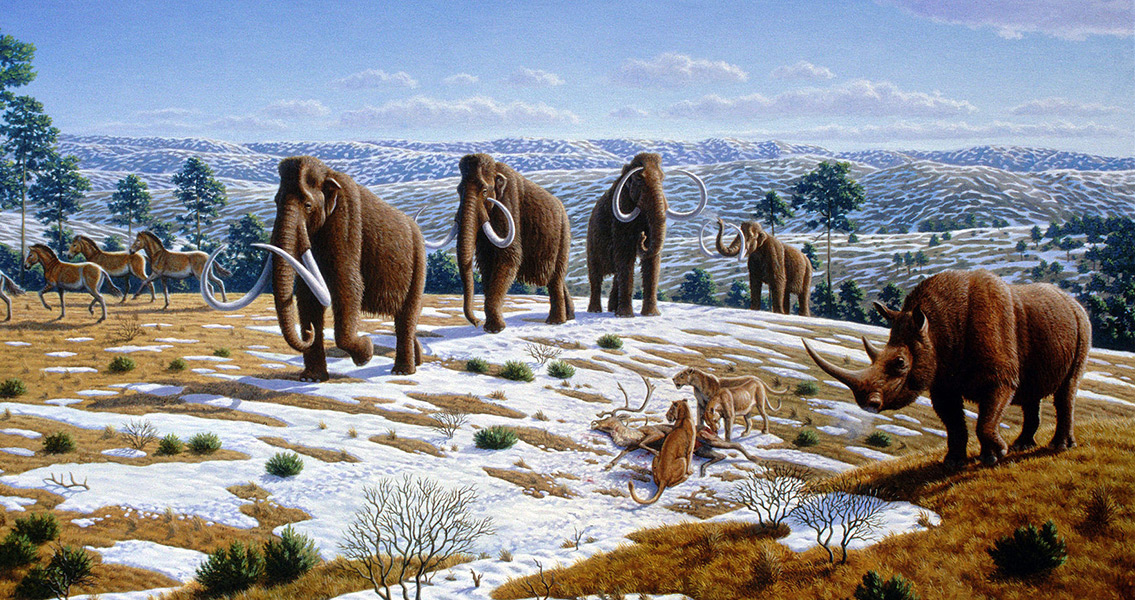
with giant reptiles. Another one, from this month, suggested that humans change the habitats they enter much more quickly than previously thought, at least in some ecosystems. For more information: Test of Martin’s overkill hypothesis using radiocarbon dates on extinct megafauna ]]>


the tomb was actually built for Nefertiti and her body is hidden in a secret chamber. In addition to the hoped for benefits to science, the “Scan Pyramids” project is expected to revive Egypt’s tourist industry, which has been severely affected by the years of political instability. Image courtesy of Wikimedia Commons user: Kamelot]]>

“Cooperation is related to dispersal patterns in Sino-Tibetan populations ” Image courtesy of Wikimedia Commons user: Zoharby ]]>
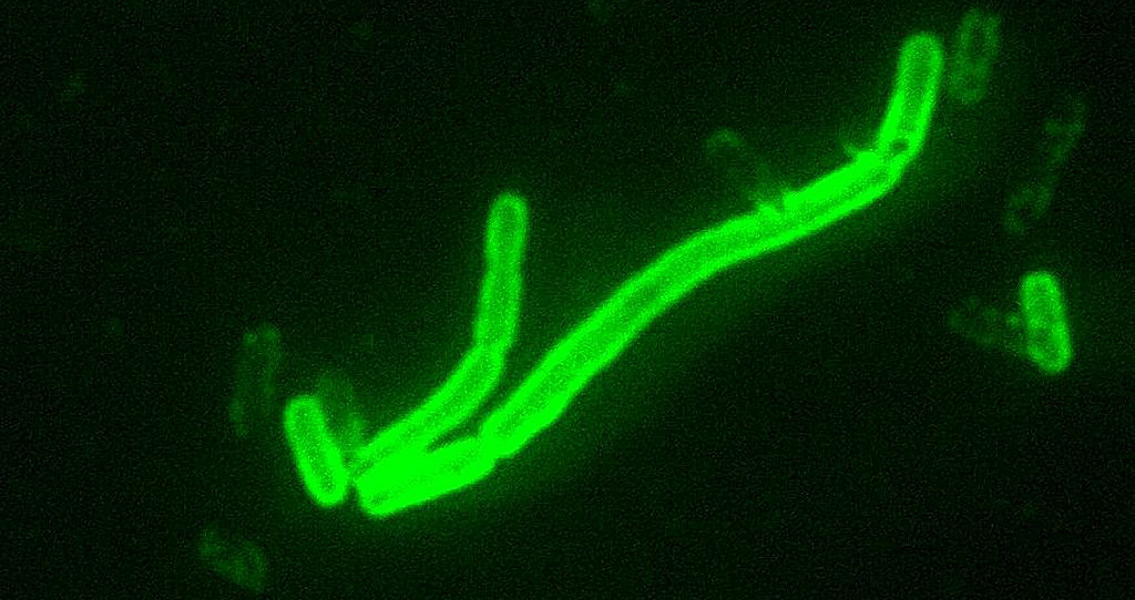
Yersinia pestis, was common among humans much earlier than the first historical records of plague epidemics suggest. An analysis of DNA extracted from Bronze Age human teeth showed that Y. pestis affected people in Asia and Europe as far back as 4,800 years ago. However, it was not for another thousand years that the bacterium developed characteristics allowing it to cause bubonic plague, the disease typically associated with it. What led the scientists, from the Universities of Gothenburg and Copenhagen, to believe that the plague is much older than commonly thought was an earlier genomics study they did on people from the Bronze Age, EurekAlert reports. That study revealed that the period, between 3000 BCE and 1500 BCE, was very dynamic in terms of migratory trends. These trends were found to have had a substantial effect on the modern-day demographic make-up of Europe and Asia. The team’s interest was sparked by the reasons behind these migrations. One of the authors of the study, Morten Allentoft from the Centre of GeoGenetics at the University of Copenhagen, told EurekAlert that one of the reasons for migration could have been epidemics that drove people away from a certain area, or decimated the population in another area, creating conditions for its repopulation. The question they asked themselves was whether these epidemics may have been caused by pestilence. To find an answer, they studied 89 billion raw DNA sequences extracted from the teeth of 101 Bronze Age and early Iron Age individuals taken from archaeological digs and museums. In seven of the samples, dated to between 2794 BCE and 951 BCE, there was evidence of the Y. pestis bacterium. Further analysis suggested that the original pathogen that Y. pestis evolved from first emerged around 5,783 years ago. To compare, the first historical records of plague-like epidemics appear in the common era, first in the sixth century, with the so-called Plague of Justinian, and then, of course, in the Middle Ages, when the Black Death took the lives of as much as half the population of Europe. There have been suggestions that Y. pestis was responsible for the Plague of Athens from 2,500 years ago and the Antonine Plague, but no hard evidence in support of this suggestion has been presented so far. Interestingly, the DNA analysis showed that even though they could get infected by the pathogen, Bronze Age people did not get it from fleas, which are among the main vectors of plague transmission. The bacterium apparently only developed the gene that allowed it to survive in the gut of fleas later, in the Stone Age. One earlier study that New Historian recently reported, suggested that the plague is in fact older than humans, by tens of millions of years, and even as early as that a strain of it could be transmitted by fleas. For more information: “Early Divergent Strains of Yersinia pestis in Eurasia 5,000 Years Ago” ]]>