Science Online, human remains from On Your Knees Cave, dated to around 10,300 years old, were found to be closely related to a trio of ancient skeletons found along the Canadian coast of British Columbia. In turn, these three ancient individuals hold close relation to the Haida, Nisga’a and Tlingit tribes that inhabit the region today, revealing a direct line of descent to these tribes. Begun a generation ago thanks to an amicable collaboration between archaeologists and the Tlingit tribe living near the Alaskan remains, the research revolved around DNA extraction from the 10,300 year old skeletal remains. Named Shuká Káa, or “Man Ahead of Us”, the remains were first checked for maternally inherited mitochondrial DNA (mtDNA). Initially, there were no matches between the Tlingit tribe’s mtDNA and the data extracted from Shuká Káa, but it was revealed that the man had been an ancient mariner based on the isotopes in his teeth, which indicated a diet rich in seafood. Shuká Káa was ceremonially reburied in 2008, but with the advent of new DNA sequencing technology, researchers sought permission from the local Tlingit tribe as well as other tribes native to the region to take nuclear DNA samples from Shuká Káa. The three other ancient skeletons, one 750-year-old skeleton from Prince Rupert harbor in British Columbia, a 2500-year-old skeleton from the same region, and a 6075-skeleton located on Lucy Island in British Columbia, were all included in the survey. While the DNA sample taken from Shuká Káa was too damaged to sequence his genome completely, around 6% of it was recovered. The other three sets of remains were able to yield between one-third and two-thirds of their genomes as well, easily enough to compare genetic markers between these ancient humans and modern ones. The results of this study revealed that the Tsimshian tribe, and other Pacific Northwest tribes, were closely related to the Prince Rupert harbor and Lucy Island humans. Meanwhile, Shuká Káa seems to be a closer match to modern Southern and Central American tribes like the Ticuna, Surui, and Karitana of the Amazon. However, researchers say that the genetic markers aren’t particularly strong, and could simply represent a link to DNA shared by ancient ancestors living in Beringia or Asia before migrating to the Americas. Taken together with Shuká Káa‘s maternally inherited mtDNA, his nuclear DNA does raise the suggestion that he is also closely related to the younger skeletons found in British Columbia. Researchers played connect the dots between all four sets of remains, proposing that Shuká Káa is an ancestor of all related groups in the Pacific Northwest related to the Tsimshian. Meanwhile, there were genetic similarities found between the group and the remains of two other Paleo-indians: Kennewick Man, who is around 8545 years old and who was found in Washington state, and Montana’s 12,600-year-old Anzick child. The new research, published in the Proceedings of the National Academy of Sciences, is available online

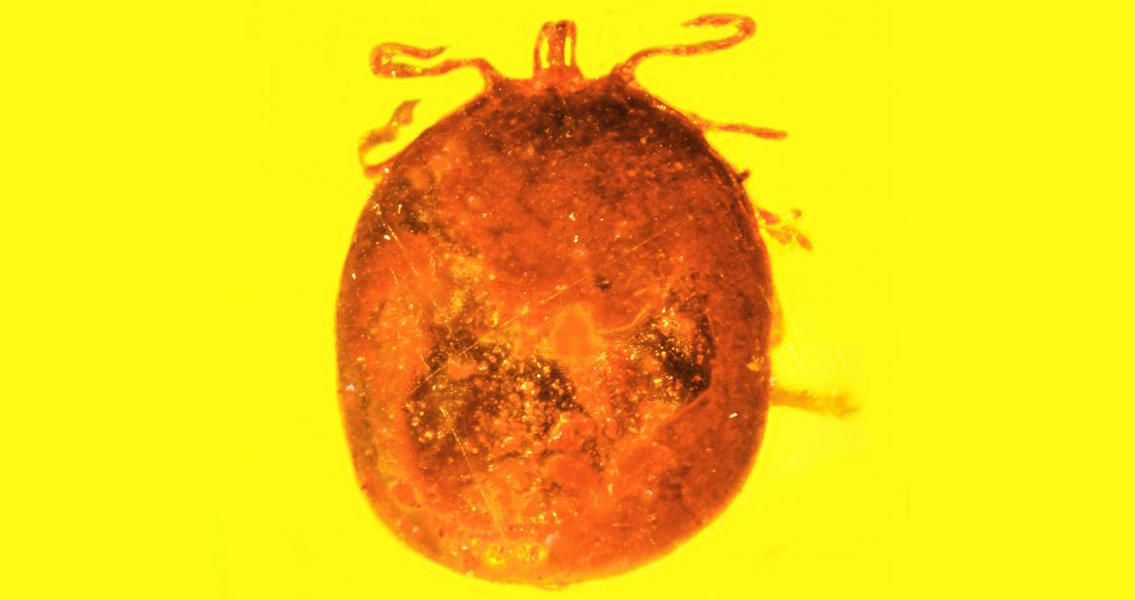
Babesia microti, a parasite that has survived to this day and is still transmitted by ticks to humans and other mammals. With its stomach distended by its last meal, the engorged tick looks as if it tumbled into a patch of tree sap after it was freshly plucked from a mammal sometime between 20 and 30 million years ago. Two small holes on its back, likely indicative of a primate pulling it off itself or a mate during grooming, were even oozing blood at the time the tick became encased in what would eventually become the piece of amber. Study author George Poinar, Jr., professor emeritus of Oregon State University’s College of Science, says the state of the tick speaks volumes of life millions of years ago in what would have been a tropical jungle in the modern Dominican Republic. The professor, an international expert on fossilized amber, added that the fossilized blood cells within the tick, which were infected with the B. microti parasite, are so detailed as to be “amazing.” B. microti can lead to a disease in humans known as babesosis, which mimics malaria in its symptoms and can be just as fatal. A genetically similar parasite is well-known for causing Texas cattle fever in live stock, a problem that has plagued plains states in the past. More than 500,000 acres of land in Texas have already been quarantined this spring because of an outbreak of the disease. Today, B. microti can be carried by the common deer tick, which is also known to carry Lyme disease. In a press release from Oregon State University, Poinar says that the life forms discovered in amber can unveil untold wonders concerning the evolution and history of diseases that modern humans are still plagued with to this very day. It’s now clear, thanks to the newly-discovered amber fossil, that B. microti was around well before humans ever evolved, and had adapted to flourish in our primate ancestors and other hosts, the scientist added. One of the unique facets of this find is how remarkably well-preserved the parasites and blood cells are within the amber-fossilized tick, Poinar said. The researcher likened it to a professional job, remarking that it was almost if they had been prepared in a laboratory in order to be subjected to study. In fact, the amber embalming process showcased the texture and the density of the parasites, which were different enough from the red blood cells harboring them to make them clearly identifiable. The new research study, which appears in the Journal of Medical Entomology, can be found online here Photo by George Poinar, Jr., courtesy of Oregon State University]]>
here Image courtesy of Ohio State University]]>

National Geographic, the Edicule housed within the Sepulchre and thought by the faithful to be the final resting place of Jesus Christ, is at “very real risk” of collapse because of the church’s crumbling foundation. To make matters worse, the Edicule itself rests on a mix of rubble, mortar, and warren-like passageways and tunnels, all of which have compromised the integrity of the ground beneath it. Ironically, the discovery of the damaged floor was made during a $4 million project to restore and renovate the church itself to protect it for future generations of visitors. In some cases, more than four feet of unconsolidated rubble lie beneath the floor, which is doing its best to support the stone pillars that in turn hold the rotunda of the Church’s roof above the Edicule; each of these pillars is thought to weigh more than 20 tons. NTUA’s chief scientific supervisor Antonia Moropoulou spoke in dire terms of the foundation of the Edicule failing. Saying it’s a matter of when, not if, it occurs, Moropoulou remarked that the process will be slow but catastrophic. Such an event is unlikely to occur, however, considering the deep religious significance of the church to the world’s Christians. A newly-proposed project, drafted by the NTUA, calls for a $6.5 million excavation to shore up the foundation, which would take nearly a year and involve replacing rotted mortar and ancient rainwater and sewage drain systems around the holy site. The history of the site itself is inextricably tied with the state of the Edicule’s foundation, researchers say. In the time of Christ, the site was likely an old limestone quarry that had been repurposed as a burial ground for influential Israelites. Additional tombs discovered on the grounds lend credence to this theory. During the Roman occupation of Judea, a temple was built over the site sometime after it had become the supposed resting place of Christ. This temple was razed to the ground in 324 CE, revealing what the first Christian Emperor assumed to be the tomb of Jesus. Constantine built a shrine around the tomb, which stood until the seventh century CE when Persian invaders partially destroyed it. It was again razed by the Fatimids in the early eleventh century before being rebuilt once again. Periods of rebuilding punctuated the site’s history after this, from attempts by Europeans during the Crusades to later reconstruction efforts in the sixteenth and nineteenth centuries. Many of these construction phases are encompassed by the Church’s existing edifice. The dome of the rotunda, held up by those massive pillars on the Edicule’s crumbling foundation, is thought to mark the foundation of the original shrine erected by Constantine. Researchers hope that the new restoration work will provide opportunities for archaeologists to learn more about the church and its shrine, though there are fears that the cadre of religious authorities that oversee the site will not permit the activity. ]]>

Geographica in around 150 CE. By comparison, the Arras culture’s grave sites date back as far as the Middle Iron Age – around 800 BCE – and stretch to approximately 70 CE. Parisi and Arras culture territories overlap to some degree, though the Parisi are thought to have had stronger ties to continental Europe than the Arras. Chariot burials appear in both cultures. ]]>


The Fame, a Dutch merchant vessel lost in a storm in 1631. The ship, long known as the ‘Swash Channel Wreck’ after the location it was found, was discovered lodged in a sand and shingle bank outside Poole Harbour. The rudder of the wreck was raised in 2013 from the seabed after nearly ten years of investigation and excavation. Pulling the 28-foot rudder from the depths revealed a male face, complete with moustache, had been carved into it. The rudder has been placed on display for the public at Poole Museum after historians confirmed it belonged to The Fame. The timbers of the rudder were analyzed and historical records were studied in order to match the rudder with the ship says Dave Parham, a marine archaeologist from Bournemouth University. Parham said that while one can never be sure, everything from investigations into the rudder fits the theory that it belongs to The Fame. The timbers are the right age, according to the marine archaeologist, and the dates and names all match historical records. The likelihood that the ship had been traveling from the Netherlands to the Americas, using Poole as a port of call, is high. The discoveries add a human element to the wreck and provide a lens to view the history of Poole, according to Parham. Dr. Ian Friel, the historian who carried out the lion’s share of the research into the rudder, called the find “remarkable”. While there wasn’t any central shipwreck record dating back to the seventeenth century, Dr. Friel was able to discover local accounts attesting to how the wreck was considered a danger to shipping after it broke up and sank on a sandbank after dragging its anchor. The historian also surmised, according to the records he was able to find, that The Fame could have sailed without any cargo in its hold at the time of its watery demise. It would have set sail from Hoorn, a port near Amsterdam, in January of 1631, bound for the West Indies with around 45 people aboard. While the ship broke up on Hooks Sand in February 1631 after dragging its anchor in a storm, there were no fatalities when The Fame sank. According to Dr. Friel, this precluded the sunken ship from being legally considered a “wreck”. Despite this, there’s evidence that much of the ship’s contents, including its cannon, were looted. The wreck was originally discovered in 1990, when a dredger struck the ruins. It took two long years to raise the rudder of The Fame, which was brought up alongside the bowcastle of the ship in 2013. York Archaeological Trust then undertook a three-year conservation effort to dry and preserve the raised rudder before placing it on display at Poole Museum alongside other artifacts from the wreck. The rest of The Fame has since been covered in sand to protect it from the corrosive effects of seawater. ]]>
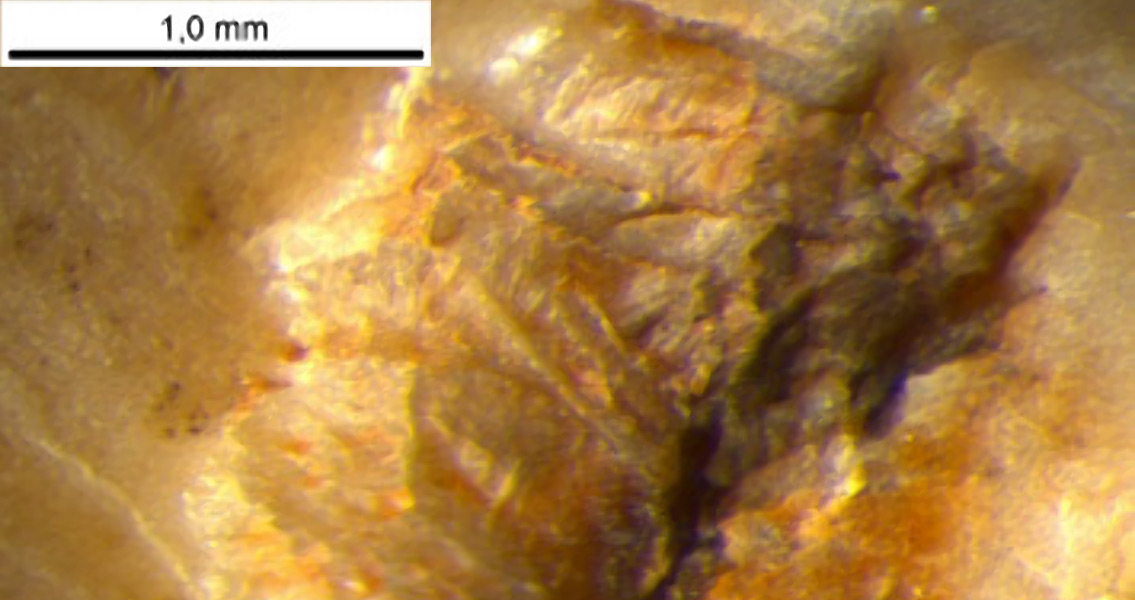
Ars Technica, the remains in question show no signs of violence, indicating that the bodies were likely consumed after death. Identifying cannibalism can be a tricky business, but Morales-Pérez and his team say the evidence was clear. The bones themselves were discovered buried alongside the remains of other, non-human animals; bore signs of being burned and butchered, and evidence of being bitten and scraped. Radiocarbon dating has set the age of the bones to between 9,000 and 10,000 years old. Finding evidence of the practice of cannibalism during this time period is not unheard of, though this is the first time that cannibalism has reared its ugly head in Spain during the Mesolithic. Other archaeological finds throughout Europe and the Levant dating to this time period have yielded evidence of humans eating their own. Additional questions have arisen after discovering the cannibalism. One such question – one that may not ever be able to be answered – is why the humans inhabiting this cave in Spain decided to turn to the practice in the first place. Necessity due to starvation is always one reason for cannibalism, but the multitude of animal remains found in the cave indicates that the food sources for the humans living there were varied and apparently abundant. Occasional periods of privation do occur of course, and the evidence of cannibalism could represent a desperate time in the lives of the people who lived there when food sources were scarce. However, the possibility that the cannibalism might have been ritual in nature cannot be discounted – there’s precedent of complex rituals for eating the flesh of the deceased, often important members of the community, dating back thousands of years. The beginning of the Mesolithic also represented a time period when humans were beginning to transition from their hunter-gatherer existence of the earlier Paleolithic, and taking up the trappings of a more sedentary, agrarian lifestyle. The conflict between these two ways of life could have precipitated some funerary practices that would seem gruesome and barbaric to our own modern sensibilities, researchers say. The state of the remains seems to contradict the idea that they were consumed as part of a ritual. Seemingly dumped unceremoniously in a midden heap at the rear of the cave, these butchered, fire-processed and chewed human bones don’t seem to have been treated with much care. However, with literally ten thousand years having passed between the event and the discovery of the evidence of that event, there’s no way of knowing if the remains had at one time been buried with reverence and then ended up in a new location due to rain runoff and soil erosion. The new research study, published in the Journal of Anthropological Archaeology, can be found online here Image courtesy of Journal of Anthropological Archaeology]]>

here Image courtesy of NASA/JPL/USGS]]>

Yijenplatycnemis huangi in honor of the donor of the amber, Huang Yijen from Taiwan. The preserved Y. huangi specimens showcased large, expanded pod-like forelegs that would have improved chances of mating successfully by both attracting females as well as helping to fend off other suitors. These characteristics are commonly found in similar modern insects, the most common being the male Platycypha caligata damselfly found in Africa, who use their enlarged forelegs in an almost identical manner. East Asian damselfly species also exhibit similar traits as well, including feather-like legs that are only apparent in males. These modern East Asian damselfly males put on a display with their legs in front of females, and Dr. Zheng and Professor Wang believe the legs of Y. huangi would have been used in a similar manner. The fossil specimens have legs that are much more expanded than any other modern damselfly species, which could be an indication that Y. huangi’s forelegs were an extreme adaptation for courtship behavior. The excessively large forelegs of Y. huangi could have also played other crucial roles – both making males more easily noticeable by females of the species and also in warding off predators. The researchers say that Y. huangi’s forelegs were so large that they would have moved slower due to air resistance, attracting female attention more efficiently and increasing mating opportunities. Meanwhile, the pod-like shape and coloration of the ancient damselfly’s legs could have been used to distract or intimidate predators. The pigmentation of the legs, which are partially covered with a pair of brown bands and feature an eye-shaped spot, are similar to the wing spots on some modern butterfly species. These wing spots were also present on a species of extinct lacewings from the Early Middle Cretaceous. Dr. Zheng and Prof. Wang state in their study that the spots on Y. huangi’s legs were likely too small to do much in the way of deflecting predators. Instead, these dots may have been more similar to the “eyespots” on peacock feathers, providing yet another way to garner the attention of the females of the species. The research paper, recently published in the journal Scientific Reports, can be found here Image courtesy of Image by YANG Dinghua]]>