Categories
Breaking News

Nan Madol Earliest Pacific Settlement Ruled by a Chief

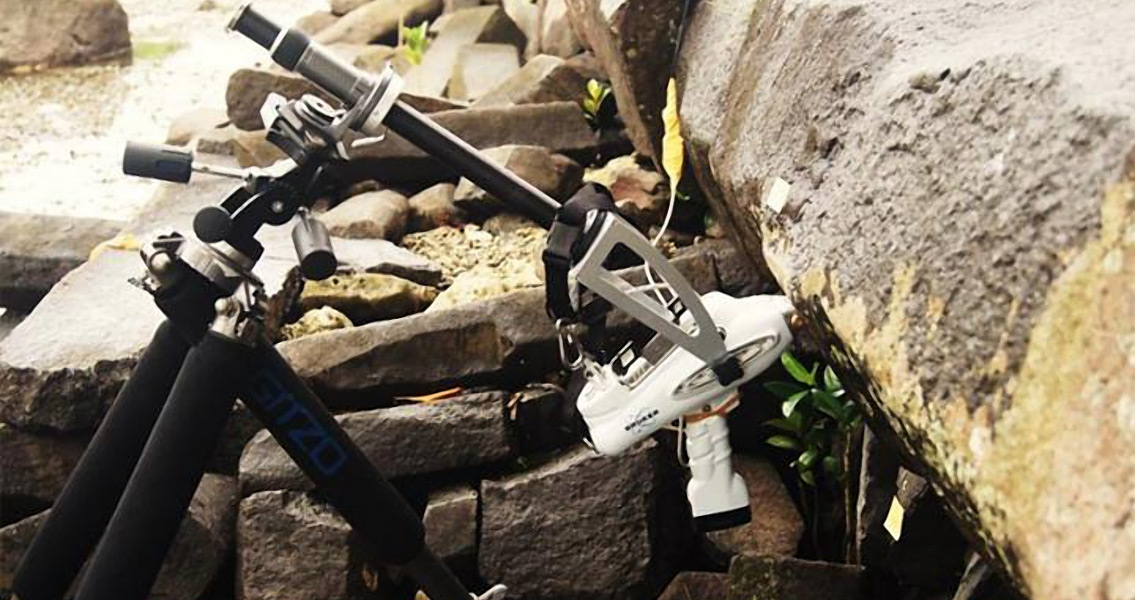
Science Daily: “The kind of society that we live in today, it wasn’t born last year, or even 100 years ago. It has its roots in a pre-modern era like Nan Madol where you have a king or chief. These islanders invented a new kind of society — that is a socially creative achievement. The idea of chiefs, someone in charge, is not a new thing, but it’s an extremely important precursor. We know tribes and bands predate chiefdoms and states. But it’s not a straight line. By looking at these intermediate stages we get insight into that social phenomenon.” The research team is the first to use uranium-thorium series dating, a significantly more precise method than radiocarbon dating, to determine the age of the stone structures that comprise the site of Nan Madol. Portable X-ray fluorescence (XRF) geochemically matched the basalt stones to natural sources found on the island. The uranium-thorium technique calculates a date based on characteristics of the radioactive isotope thorium-230 and its radioactive parent, uranium-234. “The thing that makes this case special is Nan Madol happened in isolation, it happened very recently, and we have multiple lines of evidence, including oral histories to support the analysis,” McCoy is quoted as saying in Science Daily, “And because it’s an island we can be much more specific about the natural resources, the population, all the things that are more difficult when people are on a continent and all connected. So we can understand it with a lot more precision.” Previous dating indicated that Nan Madol, a UNESCO World Heritage Site, had been established in 1300 CE. McCoy’s team has narrowed that to a 20-year window over 100 years earlier, between 1180 CE and 1200 CE, which means the dynasty of Saudeleur chiefs who ruled the island society for over 1,000 years was also established earlier than previously believed. Uranium dating shows that by 1180 CE, the huge stones used to construct the tomb were being transported from a volcanic plug located on the opposite side of the island, and that by 1200, the island’s chief was interned there. Pohnpei Island is an inactive volcano (for a million years at least), much larger than neighboring islands at 128 square miles (334 square kilometers). It was originally settled around 1 CE by islanders from the Vanuatu or Solomon island groups. To construct the tomb and other structures, basalt boulders, weighing tons apiece, were moved somehow from quarries on the other side of the island to the lagoon where they remain today. The research has been published in the journal Quaternary Research. Image courtesy of Mark McCoy ]]>
Categories
Breaking News

Homo Naledi May Not Be Such a Distant Relative

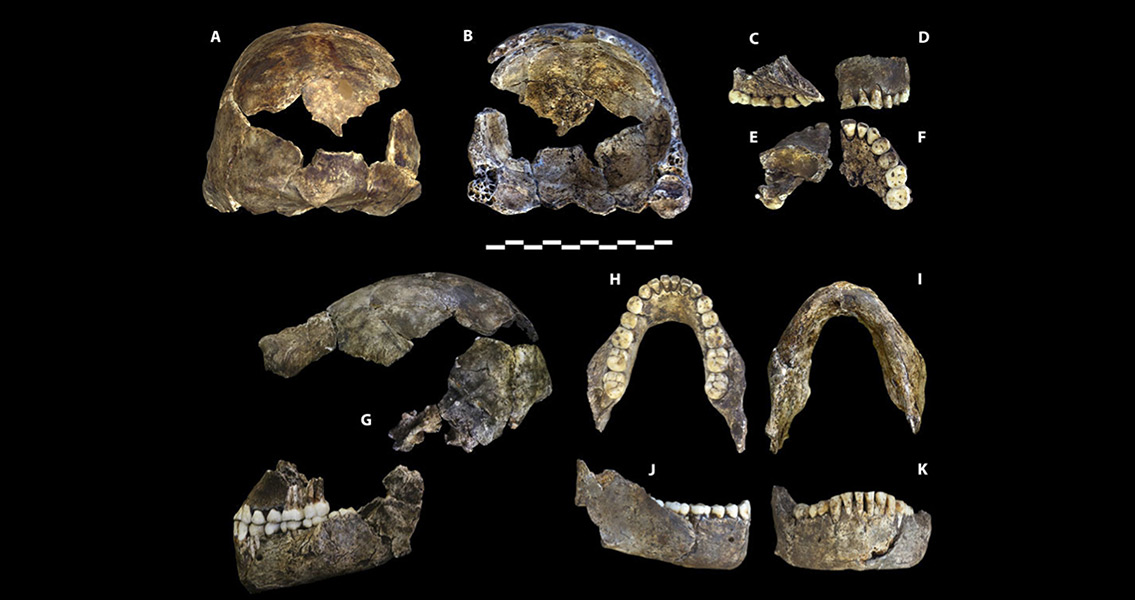
H. floresiensis may have done in Southeast Asia with the larger-brained H. erectus and H. sapiens. H.naledi was first discovered in 2013, when fossil skeletons of 15, at minimum, individuals (over 1,550 specimens in total) were unearthed in South Africa’s Rising Star Cave system, which is part of the Cradle of Humankind World Heritage Site. There are some signs which indicate the individuals might have been placed in the cave deliberately at the time of their death. The word “naledi” means “star” in the Sotho language, chosen in reference to the cave system where the specimens were found. It’s estimated that adult males stood approximately 150 cm (5 ft.) tall and weighed about 45 kg (100 lbs.), while females were likely somewhat shorter and lighter. These sizes are within the range of sexual dimorphism associated with small-bodied humans. A skeletal analysis suggests H. naledi stood upright and walked on two legs, and his hands appear much better suited for manipulation of objects than earlier humans, with thumb, wrist and palm bones that were more modern, yet his fingers were curved, like those of earlier humans. Homo naledi first impressed researchers with the Rising Star Expedition for being remarkably similar to Australopithecus, given the number of shared features between it and the ape-like species. Ultimately, it was determined the species shared even more features with the Homo group, and thus landed in our genus. These same archaic features also led researchers to believe H. naledi existed around 2 million years ago. Now, paleoanthropologist Mana Dembo with the Simon Fraser University in Burnaby, Canada, and her research team, have provisionally dated H. naledi as having lived less than a million years ago. After analyzing 60,000 potential evolutionary trees to determine which one provided the best fit for the tooth and skull measurements of 21 hominid species, chimpanzees, gorillas and H. naledi, they’ve dated H. naledi based on the rate of development of these features. While the new research affirms H. naledi’s place in our genus, which hominid species he’s most closely related to, whether Homo sapiens, Australopithecus sediba or Homo floresiensis (hobbits), remains uncertain. The team found no indications the bones of H. naledi presented as a variant of Homo erectus, as argued previously. H. erectus originated in Africa around 1.8 million years ago and spread quickly into West Asia. Additional statistical comparisons which would include measurements of trunk and limb bones may help in clarifying these evolutionary relationships. This research can be found in the Journal of Human Evolution. Image courtesy of Lee Roger Berger research team ]]>

Categories
Breaking News

Discovery of Bronze Age Burial Site As Good As It Gets

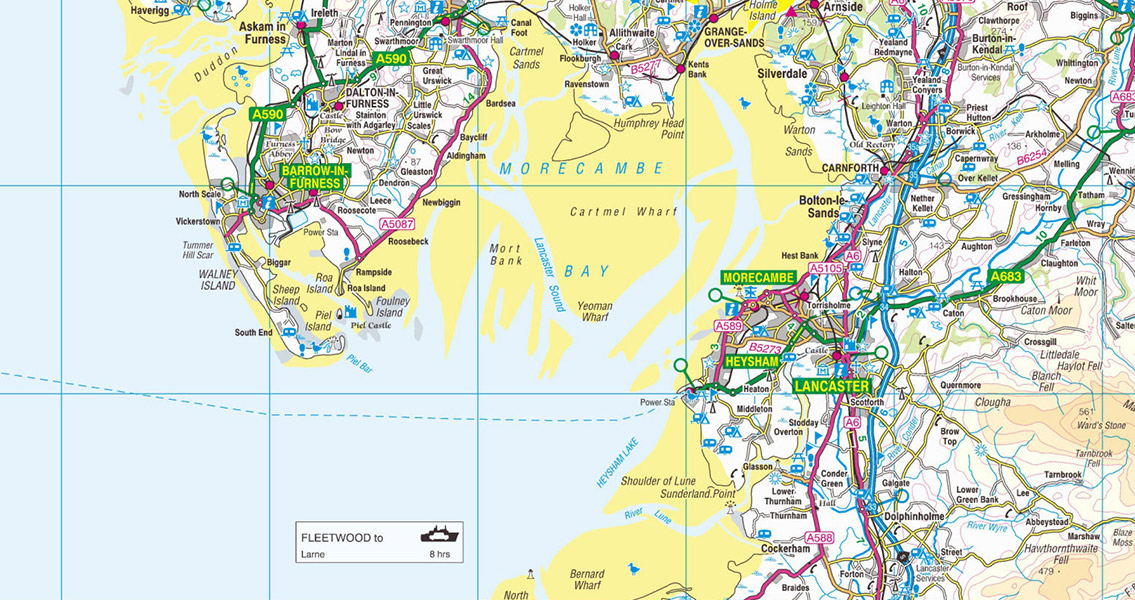
the Sun newspaper as saying the find is “as good as it gets”. Hepworth and David Kierzek first came across a well-preserved chisel as well as several other objects. Archaeologists were contacted by Hepworth, following procedures outlined by the Portable Antiquities Scheme which encourages voluntary notification of archaeological finds by the public in Wales and England. Archaeologists investigating the site found the barrow (a stone and earth mound built over a grave). Early exploration has dated the burial site to 2500 BCE. The very rare find is extraordinary because most burial sites from the bronze age have typically been ploughed over or looted. Additionally, the Morecambe Bay site is significant because of its size, which initial investigations have put at 35 meters by 25 meters. It’s likely that the site was overlooked for millennia because, according to what project director Brendon Wilkins told the Sun, it “looks like any other field”, adding that barrows are “the best windows” into a time period. Ben Roberts, from Durham University and a former curator of bronze age collections at the British Museum, told the Sun, “The potential is huge because untouched, undiscovered sites are very rare indeed. What’s really special about our site is that no one knew about it before … The barrow appears to be intact and its pretty substantial”. Morecambe Bay, despite what the name suggests, isn’t a bay at all but rather a huge multiple estuary, located in northwest England, south of the Lake District National Park and east of the Isle of Man. Covering an area of 310 square kilometers (120 square miles) it’s the largest expanse of sand and intertidal mudflats in the United Kingdom. Both Hepworth, who had also found Viking silver in the same area, and Kierzek have been invited to work alongside archaeologists at the site when excavations scheduled for July begin. The work will also involve the rest of the community. The local council has agreed to provide a so-called incident room where finds can be put up for display immediately following their discovery and where footage of the dig will be broadcast. In addition to support from the Heritage Lottery Fund, excavation at the Morecambe Bay site is also partially financed as a crowdfunding project called DigVentures. DigVentures is a social enterprise headquartered in London that was founded by three archaeologists – of which Wilkins is one– to address the severe budget cuts made by local authorities and the decrease in research archaeology funded by universities. DigVentures has supporters from around the world, from ordinary people to professional archaeologists who donate money to various archaeological projects in return for the opportunity to participate in some capacity at the actual excavation site. According to their website, the enterprise is designed to put ‘archaeology in your hands”. Image courtesy of Ordnance Survey ]]>