Categories
Book Reviews

For Whom the Bell Tolls by Ernest Hemingway

For Whom the Bell Tolls is a book with important themes that still hold relevance today. The book is semi-biographical as Hemingway took inspiration for some of the characters and events from his own experiences in the Spanish Civil War. Brief Synopsis of the Plot The story is centered around American-born Robert Jordan, a dynamiter, who is tasked with blowing up a bridge near the Sierra de Guadarrama mountain range that is located between Segovia and Madrid. The plot is tight as the action occurs over the course of just four tense days and three sleepless nights. Wrought with the brutality of war, For Whom the Bell Tolls contains imagery and themes that reveal the even deeper meanings of an already complex and rich story: Relevant Themes in the Text Like any great work, For Whom the Bell Tolls has been analyzed by literary scholars. Most agree on central themes to the story. As a reader, you can look for each theme in your own reading of the text, seek out your own as well, and take personal lessons from the messages Hemingway intended. Camaraderie based on loyalty A key theme in the text is friendship and love or more broadly camaraderie based around shared ideals, shared loyalty to those ideals, and ultimately shared loyalty to one another due to common goals. In the brief span of the time depicted in the text, Robert Jordan experiences intense friendship with his comrades and an intense relationship with his newfound love, Maria. On the one hand, this theme can all read as romanticized. After all, it seems lovely to think of a group of people quickly banding together over a shared mission. It might be easy to scoff at the way things play out. However, research does show that when placed in life and death situations, brain chemistry does allow for these fast and furious bonds. It aids survival after all. Sacrifice for the greater good of all If a main theme of For Whom the Bell Tolls is the coming together of different peoples over a common goal to promote the survival of each, it may be surprising to learn that another theme of the text is personal sacrifice. Indeed, the characters of the book are putting themselves at risk not just for their own personal survival but to promote greater ideals and a greater good. The goal for Robert Jordan and his comrades is not just their own survival but the survival of something much greater than themselves. That is war. No person ever went to war just hoping to make it out alive. They knew they risked their life, but they did it with the hopes of making the world a better place. Hemingway illustrates this perfectly through the plot of the text. Defeat and death of one’s ideals Sadly, camaraderie and personal sacrifice do not always mean success. Throughout the text, Hemingway also weaves a theme of defeat, which is illustrated with repeated instances of hopelessness and inevitability for a less desired future. This is first illustrated when Robert Jordan visits the palm reader, whose prophecies serve to foreshadow the rest of the book. Death in a literal sense is also a key theme in the book. This is to be expected based on the title alone. Being set in a period of messy war tactics only increases the odds. The characters each know the risks they face in their situation, with death by enemy or self being the ultimate one. There is no skirting around it and Hemingway does not even try to. In fact, he highlights it. Analysis of Writing Style For Whom the Bell Tolls was lauded during its initial publishing. Today, however, there are millions of books to choose from and it might not be the first option you would turn towards. The book does contain some antiquated stylings that might make it seem less relevant and accessible to today’s reader. In writing the book, Hemingway nearly treated it as though it was a true account of the war, even “translating” the content from Spanish into English. As such, there are some phrasings that might make little sense to the common reader. Although, that can also reasonably happen with any aged book, wherein some phrases have simply been lost to changing styles that occur over time. Further, despite depicting the brutalities of war, Hemingway was simultaneously mindful of the sensibilities of the time-period he was writing in. As such, he modified “foul” language, often replacing those words with the terms “obscenity” or “unprintable.”  This makes reading the book akin to watching a show with words ‘bleeped’ out but the reader can still discern meanings from context clues. Relevant Themes for Today Despite its somewhat antiquated language and styling, For Whom the Bell Tolls still has great relevance to today. The text is considered a classic after all because the themes that Hemingway included and highlighted are ones that every generation will face in some form. Any person who has been in school, a club, a job, or some other setting will know the force that can come along with camaraderie and allegiance to others. It can make people do amazing things they could not have done on their own or engage in unspeakable acts under the guise of anonymity. When you watch the news and see that an innocent person has stepped in front of a gun to protect another innocent person, you know that personal sacrifice still abounds. Yet, when you watch the news too much, seeing death and destruction, you may also be met with the same feelings of hopelessness and inevitability about a dismal future that the characters in For Whom the Bell Tolls faced. Final Recommendations Ultimately, the question is whether you should take the time to read Hemingway’s classic novel For Whom the Bell Tolls. The answer is yes, you absolutely should. This book is a classic for a reason. It contains a piece of history not often depicted in books and movies. It also contains timeless themes. At the least you will be a more learned person for adding this classic to the bookshelf of your mind. You may also learn some valuable lessons about the human spirit. You may even learn more about what people (including yourself) are willing to do to protect the people they love and their shared ideals.

 ]]>
Categories
Breaking News

Forensic Analysis Answers 40,000-Year-Old Question

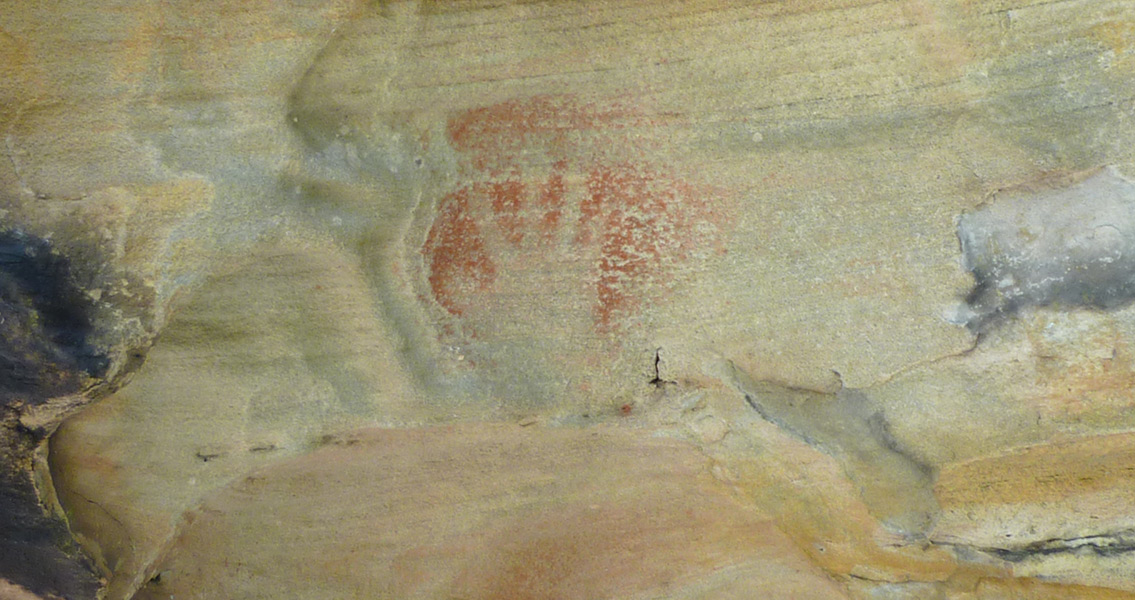
Phys ORG: “Archaeologists are interested in hand stencils because they provide a direct, physical connection with an artist living more than 35,000 years ago. Now, using a new experimental application, results from our study indicate it is possible to determine with more than 90% accuracy the sex of someone who lived tens of thousands of years ago from the shape and size of their hand outline. We have even applied the method to hand stencils where digits are missing – common in Paleolithic art – something prior studies have not been able to do.” The hand stencils were created by blowing pigment over a hand as it was held against a stone surface, when the hand was removed it left behind an outline of its shape. Hand stencils discovered in Sulawesi, Indonesia have been dated to 40,000 years ago, and the ones found in Europe are an estimated 37,000 years old, a time period referred to as the Upper Paleolithic. Prior to this research, experts studied the size of the hand and the length of the fingers to determine the gender of its owner, which often led to conflicting outcomes. For this project, researchers used geometric morphometrics to determine sex-based differences in the shape and form of the hand. By digitizing hand stencils from a known gender, along with a number of 2D landmarks, the true shape and the relative size of each sample could be statistically evaluated. Geometric morphometrics is the statistical analysis of a specific type of geometric data associated with an organism, data about the location of the parts of an organism in relation to each other. This technique combines morphometrics (the geometry of organisms) with engineering and computer science to focus on information at location points inside of, or on, organisms. Forensic anthropologist Dr. Patrick Randolph-Quinney told Phys ORG: “The problem with focusing on hand size and finger length is that two different shaped hands can have identical linear dimensions and ratios. To capture shape, we applied geometric morphometrics, a technique used in forensic studies that had never been tested on hand stencils before. This geometric approach is very powerful as it allows us to look at the palm and fingers independently. It revealed that the shape of the palm is actually most indicative of the sex of the individual, rather than the finger size or length.” The project was a collaborative effort between archaeologists, biologists, and anthropologists from the University of Central Lancashire (UCLan) and the University of Liverpool in the UK, and the University of the Witwatersrand (Wits) in South Africa. The research has been published in the Journal of Archaeological Science. ]]>

Categories
Breaking News

Homo Naledi May Not Be Such a Distant Relative

H. floresiensis may have done in Southeast Asia with the larger-brained H. erectus and H. sapiens. H.naledi was first discovered in 2013, when fossil skeletons of 15, at minimum, individuals (over 1,550 specimens in total) were unearthed in South Africa’s Rising Star Cave system, which is part of the Cradle of Humankind World Heritage Site. There are some signs which indicate the individuals might have been placed in the cave deliberately at the time of their death. The word “naledi” means “star” in the Sotho language, chosen in reference to the cave system where the specimens were found. It’s estimated that adult males stood approximately 150 cm (5 ft.) tall and weighed about 45 kg (100 lbs.), while females were likely somewhat shorter and lighter. These sizes are within the range of sexual dimorphism associated with small-bodied humans. A skeletal analysis suggests H. naledi stood upright and walked on two legs, and his hands appear much better suited for manipulation of objects than earlier humans, with thumb, wrist and palm bones that were more modern, yet his fingers were curved, like those of earlier humans. Homo naledi first impressed researchers with the Rising Star Expedition for being remarkably similar to Australopithecus, given the number of shared features between it and the ape-like species. Ultimately, it was determined the species shared even more features with the Homo group, and thus landed in our genus. These same archaic features also led researchers to believe H. naledi existed around 2 million years ago. Now, paleoanthropologist Mana Dembo with the Simon Fraser University in Burnaby, Canada, and her research team, have provisionally dated H. naledi as having lived less than a million years ago. After analyzing 60,000 potential evolutionary trees to determine which one provided the best fit for the tooth and skull measurements of 21 hominid species, chimpanzees, gorillas and H. naledi, they’ve dated H. naledi based on the rate of development of these features. While the new research affirms H. naledi’s place in our genus, which hominid species he’s most closely related to, whether Homo sapiens, Australopithecus sediba or Homo floresiensis (hobbits), remains uncertain. The team found no indications the bones of H. naledi presented as a variant of Homo erectus, as argued previously. H. erectus originated in Africa around 1.8 million years ago and spread quickly into West Asia. Additional statistical comparisons which would include measurements of trunk and limb bones may help in clarifying these evolutionary relationships. This research can be found in the Journal of Human Evolution. Image courtesy of Lee Roger Berger research team ]]>

Categories
Breaking News

Life on Earth Started Much Earlier Than Thought

3.8-Ga zircon that contains primary graphite inclusions”, states the study. The presence of graphite – pure carbon – is hugely significant. The zircon was completely crack free until the scientists opened it, meaning the carbon could not have come from contamination during another geological process. The distinctive signature of the carbon contained in the zircon, a specific ratio of carbon -13 and carbon 12, is one typically associated with the presence of photosynthetic life, giving an insight into the complexity of the organisms that might have existed over 4 billion years ago. “There is no better case of a primary inclusion in a mineral ever documented, and nobody has offered a plausible alternative explanation for graphite of non-biological origin into a zircon”, Harrison said in the UCLA press release. The ratio of uranium to lead in the zircon told the scientists that the zircon was 4.1 billion years old. The graphite must be older than the zircon itself, but it is impossible to determine exactly how much older. The results of the study, which has been published in the Proceedings of the National Academy of Science, could have far reaching consequences for the understanding not just of the development of life, but the history of the planet in general. It’s traditionally believed that around 4 billion years ago the world was a boiling, molten, hellish place. As Harrison explained in the UCLA press release, this assumption now seems increasingly unlikely, “The planet was probably much more like it is today than previously thought.” For more information: www.pnas.org]]>