Categories
Breaking News

Rare Medieval Black Death Burial Pit Discovered in England

The Telegraph. A total of 48 sets of skeletal remains – 21 of them belonging to children – were found at the site, which at one time was a monastery hospital. Researchers say that it seems quite clear that the local community was overwhelmed when the Black Death came to the region, forcing them to cope in the only way they could – by burying their dead in one mass grave. One of the worst plagues to ever blaze across humanity, the Black Death claimed the lives of anywhere from 75 to 200 million people in Europe from 1346 through 1353; according to historical records, Lincolnshire was struck by the disease in the early months of 1349. The Black Death as a whole completely changed the social landscape of Europe in a myriad of ways in addition to the massive loss of life. Sheffield University researchers partnered with scientists from Canada’s McMaster University, sending tooth samples from the deceased in order to extract ancient DNA from the pulp of these teeth. Analysis confirmed the presence of Yersinia pestis, the bacterium behind the Black Death, according to Sheffield University’s Dr. Hugh Wilmott. Dr. Wilmott, from the university’s Department of Archaeology, remarked that while the death toll in England from the disease was astronomical – up to 50 percent of the population – it’s extremely rare to find multiple graves within the country. For the most part, local communities seemed to simply treat fatalities from the Black Death in an ordinary way – in fact, the only other two sites dating to the fourteenth century where the Y. pestis bacterium has been found were London cemeteries with accompanying historical documentation detailing how the burgeoning numbers of urban dead necessitated the opening of new burial grounds. The discovery of this completely unexpected and previously unknown fourteenth century burial ground in the rural reaches of Lincolnshire stands as a unique event in the history of the Black Death in England, the scientist stated. If anything, it clearly illustrates how the community at the time was completely unprepared to withstand such a terrible threat. More analysis is slated to be undertaken, with research into the skeletal remains as a whole. This will enable researchers to identify the gender and age of each set of remains, as well as create a detailed study of any other illnesses and ailments they might have suffered from, using the telltale signs left behind in their skeletal structure according to the University of Sheffield’s Dr. Diana Mahoney Swales. ]]>

Categories
Breaking News

New Insight into the Deadly Reach of Sixth Century Plague

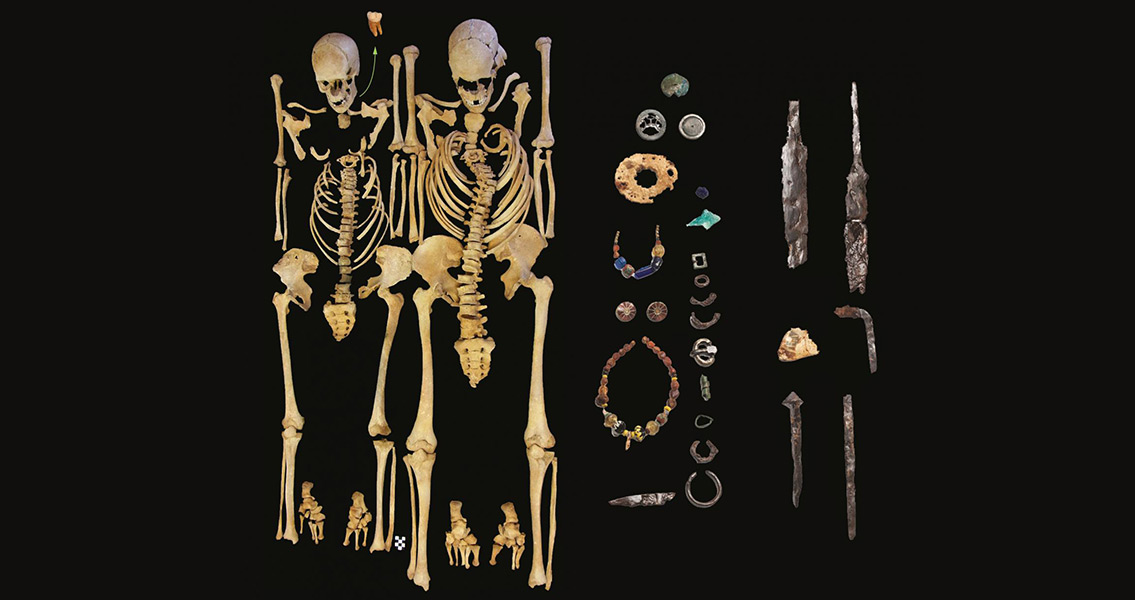
Yersinia pestis, the bacterium behind the Black Death, could also have been behind the sixth century plague epidemic. Michal Feldman, Johannes Krause and Michaela Harbeck, scientists based in Germany who are among the authors of the study, have recovered the bacterial culprit from sixth century skeletons found in Altenerding, an ancient southern German burial site near Munich. The genome found at Altenerding dates back to the beginnings of the outbreak of the plague, and confirms Yersinia pestis was the bacteria behind the outbreak. The new sequence reveals new insights into the molecular evolution of Yersinia pestis since the Byzantine period. It has also revealed new features that couldn’t be detected in a previous ‘draft genome’ of the bacterium, including 30 newly identified mutations and structural rearrangements unique to the Justinianic strain. “The fact that the archeological skeletons which gave these exciting insights were excavated over 50 years ago underscores the importance of maintaining well curated anthropological collections,” said Harbeck. “We were very fortunate to find another plague victim with very good DNA preservation in a graveyard just a few kilometers from where the individual analyzed in Wagner et al. [a recent study describing a draft genome] was found. It provided us with the great opportunity to reconstruct the first high quality genome in addition to the previously published draft genome.” Harbeck and colleagues’ results suggest that the strain of Yersinia pestis behind the Justinian Plague was more genetically diverse than previously thought. They are still unable to determine how and why the lethal pathogen reached Germany, however. Beyond simply analysing the development of a sixth century disease, the study could have far reaching applications. The authors have used the results to develop new guidelines that may improve the quality and authenticity of genetic data recovered from ancient pathogens. In addition, with plague re-emerging in certain regions of the world, the study provides a historical resource for the evolutionary changes, adaptation and human impact of the disease. “Our research confirms that the Justinianic plague reached far beyond the historically documented affected region and provides new insights into the evolutionary history of Yersinia pestis, illustrating the potential of ancient genomic reconstructions to broaden our understanding of pathogen evolution and of historical events,” said Feldman. “Our reanalysis of previous datasets stresses the importance of following strict criteria to avoid errors in the reconstruction of ancient pathogen genomes.” Image courtesy of State Collection of Anthropology and Palaeoanatomy Munich]]>

Categories
Breaking News

Black Death Wiped Out up to 45% of East England's Population

Antiquity. During the later half of the twentieth century, historians began to argue that the true devastation of the Black Death had been exaggerated. They suggested that in reality there was little evidence of ‘catastrophe cemeteries’ from the fourteenth century, while evidence of depopulation in England seemed to have occurred too late to be a direct consequence of the spread of the Plague. The new study, led by Professor Carenza Lewis from the University of Lincoln, has used discarded pottery shards as a means to measure demography. Based on extensive analysis, she has concluded that the pottery using population was 45% lower in Eastern England following the Black Death than it had been beforehand. Thousands of members of the public assisted in the study, digging 2000 test pits across six counties in search of pieces of broken pottery. As the most commonly excavated archaeological evidence domestic pottery is a valuable indicator of population size, due to its widespread daily use and the frequency with which it was discarded. By counting and comparing the number and weight of broken pottery from different date levels, patterns emerged of the historic demography of different sites. The sheer geographic scale of Lewis’ study means it has been possible to determine which towns and counties suffered, and to what extent. “As a result, we can now say with some confidence that the pottery-using population across a sixth of England was around 45% lower in the centuries after the Black Death than before.” Lewis writes in the study, due to be published in next month’s edition of Antiquity. “Furthermore, we can identify exactly where in the settlement landscape this contraction was most and least severely felt, at scales ranging from plot to region.” The results show that as extreme as the 45% reported population drop was, in some areas the consequences of the Black Death were even greater. At Great Shelford in Cambridgeshire, the weight of pottery excavated from different test pits dropped from 2kg to 200g at the levels linked to the Black Death. “Mapping these data reveals that this large village—which in the high medieval period sprawled continuously for more than 1200m from its river-side church along a high street and around two greens—was reduced to a single row running barely 200m immediately east of the church.” Shockingly, Lewis actually believes the results presented in her study could be conservative. The excavations focused on 55 currently occupied rural locations known to have been settlements in the fourteenth century. As such, any areas where the population was devastated to the extent a settlement was completely abandoned will not have been covered by the project. The Black Death was just one element of what many historians refer to as the Crisis of the Middle Ages, a period when centuries of demographic growth in Europe were abruptly reversed by a series of political, social and economic calamities on top of those caused by the great epidemic. The Great Famine of 1315-17, alongside civil and international conflicts such as the Hundred Years War and the War of the Roses, brought prosperity and population growth to a halt over the course of the thirteenth, fourteenth and fifteenth centuries. As well as providing chilling insights into the long and short term demographic effects of the Black Death in one region, Lewis’ study offers a new methodology which can be applied to a whole host of different times and scales. “Deployed sufficiently widely elsewhere in Eurasia, test-pit excavation could provide new data to inform our understanding of how the world we inhabit today came to be. Moreover, this potential extends beyond the era of the Black Death, as test-pits can produce material of any date that may illuminate demographic change in many periods.” she writes, in the conclusion to her study. More information about the study is available here Image courtesy of Wikimedia Commons user John Davey]]>

Categories
Breaking News

Ancient Lead Curse Tablets Discovered in Grave in Athens

here]]>

Categories
Breaking News

Metal Whip, Linked with Black Death, Found in Abbey

Categories
Editorial

Astrology, Antisemitism and Other Answers for The Plague

Compendium de Epidemia per Collegium Facilitatus Medicorum Parisius. Better knowledge about disease and bacteria has improved our understanding of the Black Death, and how it was able to spread so rapidly and devastatingly across Europe. Scientists have shown that the disease was spread by a bacillus called Yersina pestis. Possibly transferable between people pneumonically through the air, as well as through the bites of infected fleas, the Plague was spread through trade routes from Asia into Europe, and across the whole continent via major trade hubs such as Rome. Yet even now, some controversy and debate surrounds the disease, in particular regarding how it seemed to keep returning after decades of dormancy. ]]>

Categories
Breaking News

Unknown Reservoir Stored Plague For 300 Years

Y.pestis bacteria may have persisted in Europe from the fourteenth century to the seventeenth, a period which included the notorious ‘Black Death’, according to a new study. Published in the journal Plos One, the new research has the potential to broaden our understanding of the two devastating plague pandemics that struck Europe, suggesting that the long term persistence of the disease was facilitated by an as yet unknown reservoir. DNA from victims of the second plague pandemic were recovered and analysed by Lisa Seifert from Ludwig Maximilian University of Munich, Germany, and her colleagues. The 30 victims were excavated from two different burial sites in Germany, with the sample covering a three hundred year period. Eight of the thirty skeletons tested positive for Yersinia pestis-specific nucleic acid. From these eight, the team were able to carry out single nucleotide polymorphism (SNP) analysis on five individuals, to further study the Y.pestis bacteria. Four of these individuals were excavated from a grave in Bavaria and carbon dated to the fourteenth century, while the fifth was excavated from Brandenburg in a grave for casualties of the Thirty Years War which took place in the seventeenth century. “Despite a geographical distance of 500 km and in particular a time difference of 300 years, an identical Y. pestis genotype was detected in all five human individuals.” Seifert writes in the study, a conclusion which suggests a single genotype of Y.pestis bacteria existed in Europe for hundreds of years during the second plague epidemic. Fascinatingly, the SNP data from the five individuals in Seifert’s study were fully consistent with three plague victims from the East Smithfield Cemetery in London. “In conclusion, thus far only two different genotypes of Y.pestis have been detected among plague victims of the second pandemic in Europe of which one, described in the present study, covers a time period of 300 years.” Europe was ravaged by two plague pandemics in the Middle Ages, the ‘Plague of Justinian’ which struck the continent between the sixth and eighth centuries, and a second pandemic, (which Seifert’s study focuses on), that struck between the fourteenth and seventeenth centuries and peaked between 1346 and 1353 in a period often referred to as the Black Death. Both plagues took millions of lives, with almost a third of Europe’s population being wiped out during the Black Death. The etiologies of the two plagues have long been discussed among both historians and scientists. Until recently, many scientists believed the plague was in fact a viral disease, or that the two plagues had different origins. Only in 2013 was Y.pestis proven to have unequivocally played a role in both pandemics, when its 1500 year old genome was sequenced. Two main theories exist for how the two deadly pandemics lasted for several hundred years each. One argues that the plague was continuously reintroduced into Europe along major trade routes such as the Silk Road. Another hypothesis is that the plague persisted in Europe over a long period of time in a host that has yet to be identified, for example lice. Seifert et al’s results suggest a different hypothesis to explain the deadly pandemics. “In contrast to these hypotheses, the results of the present study clearly indicate that at least one genotype, which was introduced to Europe at the beginning of the Black Death from Asia, persisted in Europe from the 14th century until the Thirty Years’ War (1618–1648). We therefore suggest a model in which Y. pestis was introduced to Europe from Asia in several waves combined with a long-time persistence of the pathogen in not yet identified reservoirs.” For more information: www.journals.plos.org Image courtesy of Seifert et al ]]>