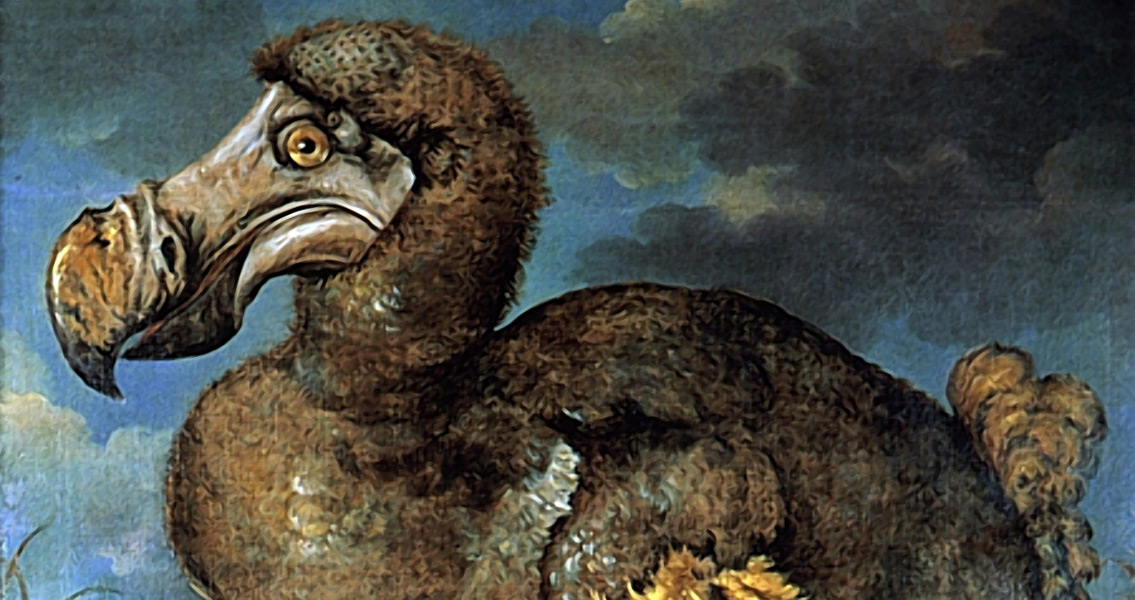
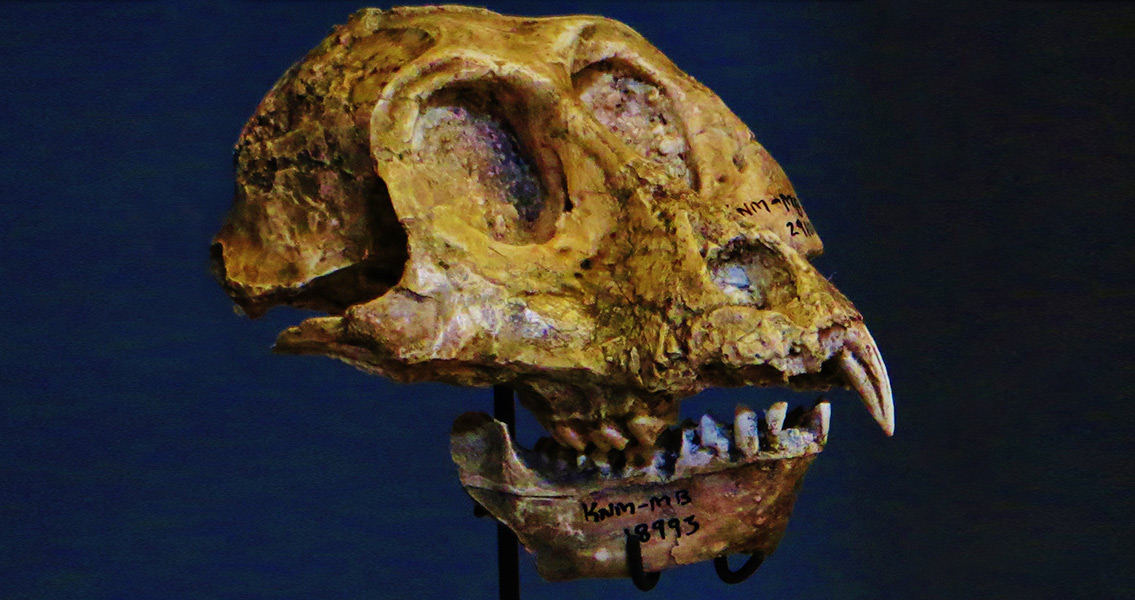
Raphus cucullatus, better known as the dodo, had a brain that was rather large for its size. The closest relative of the dodo, the simple and ubiquitous pigeon, has a brain-body size ratio roughly equivalent to that of its extinct cousin; pigeons can of course be trained, something that requires a modicum of intelligence. Dodos earned the reputation for being particularly dim thanks to the circumstances surrounding their extinction. The large-sized flightless bird was native to Mauritius, an island in the Indian Ocean, and was found there when sailors discovered the island at the end of the sixteenth century. With the birds having never encountered humanity before, they had no reason to fear the sailors that would coax them onto boats to be used as a source of fresh meat; by 1662 the last dodo had disappeared from the island. Invasive species introduced to Mauritius also contributed to the dodo’s decline and extinction, according to Stony Brook University’s Eugenia Gold, the lead author of the new research paper. In an interview with Heritage Daily, Gold recounted how she approached London’s Natural History Museum in her endeavor to learn more about the curious bird. The museum had a well-preserved dodo skull in its collection and permitted the researcher to scan it using high-resolution computed tomography (CT). Gold then compared the image to those she made of the skulls of several different pigeon species at the Microscopy and Imaging Facility at the American Museum of Natural History. Gold’s results were startling. She found that the size of the dodo’s skull, and therefore its brain, in relation to the rest of its body, was “right on the line” compared to the pigeon examples she scanned herself and those provided by collaborators from the National Museum of Scotland and the Natural History Museum of Denmark. While the researcher was quick to say that there’s more to relative intelligence than simple brain size, the results provide a basic measurement tool, one that may help dispel the myth that the dodo was an exceedingly stupid example of a bird. The research also unearthed an insight in the morphology of the dodo by revealing the bird had a much larger olfactory bulb than most bird species. Most birds have highly developed optic lobes, showing a preference for visual acuity over the ability to process smells, but as the dodo was flightless, Gold and her co-authors have made the suggestion that the species relied on scent to help it hunt and scavenge for food sources on the ground. While the diet of the dodo is still an unsolved mystery, it’s likely it would have fed on shellfish and other marine animals, smaller land vertebrates, and even fruit from trees on the island. As a final mystery, the semicircular canal of the dodo – the region of the bird’s ear where it would have derived its sense of balance – incorporated a curvature described by the researchers as “unusual”. There are currently no viable theories as to this atypical biological construction. Gold’s research, published in the Zoological Journal of the Linnean Society, can be found online here]]>