Categories
Breaking News

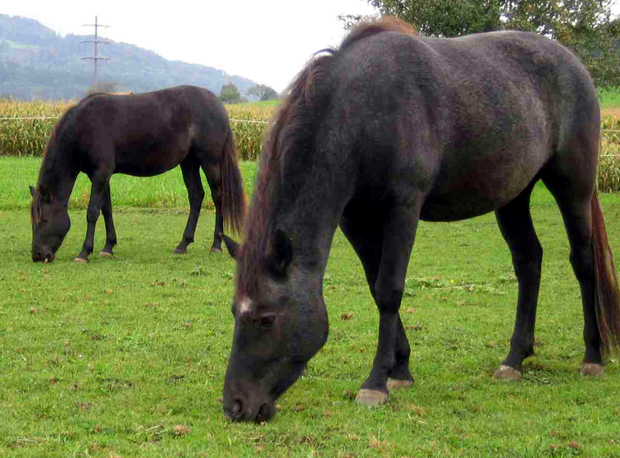
Who First Domesticated Horses? The History News of the Week

Answered: Who First Domesticated Horses? A new study claims that horses were first domesticated by descendants of hunter-gatherer groups in Kazakhstan. Exactly when, where and who first domesticated horses is shrouded in mystery. A popular theory is that it was the Yamnaya culture (3300 BC–2600 BCE), yet the new research is dispelling this idea. “The successful spread of the Indo-European languages across Eurasia has puzzled researchers for a century. It was thought that speakers of this language family played a key role in the domestication of the horse, and that this, in combination with the development of wheeled vehicles, allowed them to spread across Eurasia from the Yamnaya culture,” explained Dr. Guus Kroonen, historical linguist at University of Copenhagen, in a press release. In the new study, published in the journal Science, it is shown that in fact horses were already being used by the Botai people 5,500 years ago, and much further east in Central Asia, completely independent of the Yamnaya pastoralists. An inter-disciplinary team analysed ancient and modern DNA samples from humans and compared the results – the 74 ancient whole-genome sequences studied by the group were up to 11,000 years old and were from Inner Asia and Turkey. The results found no genetic link between the Yamnaya and Botai. Intriguingly, the Botai were eventually pushed out of the central steppe region by migrations from the west. The Botai horses were also replaced, suggesting domestication of horses had already occurred elsewhere. “We now know that the people who first domesticated the horse in Central Asia were the descendants of ice age hunters, who went on to become the earliest pastoralists in the region,” stated Professor Alan Outram from the Department of Archaeology at the University of Exeter “Despite their local innovations, these peoples were overrun and replaced by European steppe pastoralists in the middle and later Bronze Age, and their horses were replaced too.” [caption id="attachment_8613" align="alignnone" width="1440"]Leprosy Skull Skeletal remains showing evidence of leprosy from the Odense St. Jørgen cemetery in Denmark, which was established in 1270 and existed until 1560.
Credit:
Dorthe Dangvard Pedersen[/caption] Did Leprosy Originate in Europe? Leprosy may have originated in Europe, innovative new research is claiming. The study by the Max Planck Institute for the Science of Human History, the University of Tübingen, EPFL Lausanne and the University of Zurich sequenced 10 new ancient genomes from the leprosy causing bacterium Mycobacterium leprae. This included the oldest leprosy genome sequenced to date, from around 400CE in the UK. The results have shown there was much more diversity in Medieval European strains of leprosy than previously thought. 90 sets of remains with skeletal deformations characteristic of leprosy from across Europe were studied, dating from 400CE to 1400CE. Previous research on the bacterium suggested that it clusters into several strains, only two of which had been present in Medieval Europe. However, the scientists found strains from Medieval Europe that are traditionally associated with locations such as Africa, Asia and the Americas. At the same time, multiple strains were also often detected in a single cemetery, giving an insight into the diversity of the disease. “We found much more genetic diversity in ancient Europe than expected,” explains Johannes Krause, senior author of the study and a director at the Max Planck Institute for the Science of Human History. “Additionally, we found that all known strains of leprosy are present in Medieval Europe, suggesting that leprosy may already have been widespread throughout Asia and Europe in antiquity or that it might have originated western Eurasia.” Interestingly, the results add growing support to the idea that the squirrel fur trade played a role in the spread of leprosy. The oldest leprosy genome sequenced in the study, from Great Chesterford, England, is the same strain found in modern day red squirrels. “The dynamics of M. leprae transmission throughout human history are not fully resolved. Characterisation and geographic association of the most ancestral strains are crucial for deciphering leprosy’s exact origin” states lead author Verena Schuenemann of the University of Zurich. “While we have some written records of leprosy cases that predate the Common Era, none of these have yet been confirmed on a molecular level.” The research has been published in the journal PLOS Pathogens. Image credit: Pottok [GFDL (http://www.gnu.org/copyleft/fdl.html) or CC-BY-SA-3.0 (http://creativecommons.org/licenses/by-sa/3.0/)], via Wikimedia Commons ]]>
Categories
Breaking News

Vikings, Ancient Egyptians and the Spread of the House Cat

in up to 37% of homes in the USA. However, until now, little was known about the history of cat domestication. Indeed, scientists still debate whether the house cat can truly be called a domesticated animal, debating whether its behaviour and anatomy are truly that different from its wild relatives. “We don’t know the history of ancient cats. We do not know their origin, we don’t know how their dispersal occurred,” Eva-Maria Geigl, an evolutionary geneticist at the Institut Jacques Monod in Paris, told Nature. Geigl presented the study, along with her colleagues Claudio Ottoni and Thierry Grange. The team carried out the first ever large scale study of ancient feline DNA, taking specimens excavated from thirty archaeological sites in Europe, the Middle East and Africa. All together, they sequenced the DNA of 209 cats, dating from 15,000 years ago to the eighteenth century CE. Tellingly, a 9,500 year old human burial in Cyprus contained the remains of a cat. According to the authors of the study, this suggests that the connection between humans and felines dates back at least as far as the dawn of agriculture, which began in the nearby fertile crescent around 12,000 years ago. Geigl and colleagues’ results suggest that cat populations grew in two distinct waves. As early farming communities expanded into the Eastern Mediterranean they brought Middle Eastern wildcats with a particular mitochondrial lineage with them. Geigl suggests that the grain stockpiles of these early farming communities attracted rodents, which in turn attracted wild cats. Humans might have started to domesticate cats after seeing the benefits they offered in keeping stores free of rats and other rodents. Meanwhile, around 6,000 years ago wild cats started to be tamed in ancient Egypt, the civilisation’s feline fixation deepening to the point that millions of cats were mummified. Thousands of years after the Middle Eastern cat lineage had entered the Mediterranean, cats descended from Egypt started to spread across Eurasia. A mitochondrial lineage present in cat mummies from the fourth century BCE to the fourth century CE was also found in cats in Turkey, Bulgaria and Sub-Saharan Africa. Again, rodents were likely responsible for the spread of cats. The study suggests that sea-faring people likely used them to keep rodents in check on ships. Fascinatingly, the team also found cat remains from the Egyptian lineage at a Viking site in northern Germany dating to between the eighth and eleventh century. “There are so many interesting observations” in the study, Pontus Skoglund, a population geneticist at Harvard Medical School in Boston, told Nature. “I didn’t even know there were Viking cats.” Geigl’s team also analysed the DNA mutation responsible for the blotched coats found on tabby cats. They found the unique mutation didn’t occur until the Medieval period. The scientists now hope to sequence more nuclear DNA from ancient cats, to further our understanding of the mysterious, under studied history of our feline friends. This article was corrected on 25th September 2016. The original said that cats were kept as pets in over 75% of homes in the US. The correct figure is in fact between 30% and 37%.]]>

Categories
Breaking News

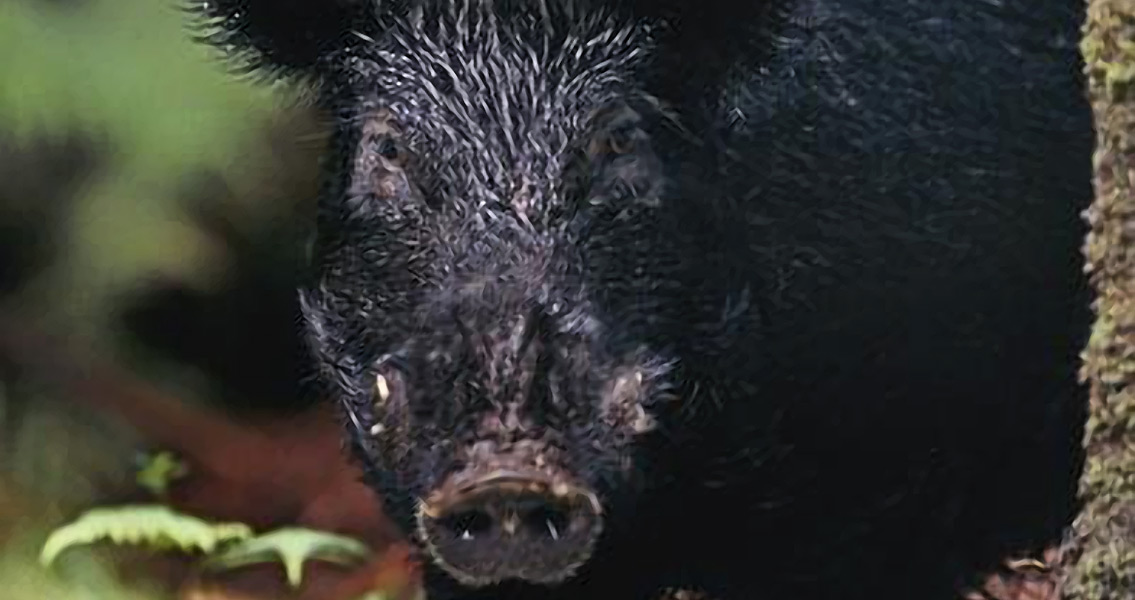
Black has Always Been the New Black Where Pigs are Concerned

Royal Society Journal, Open Science; the study argues that wild pigs would naturally have camouflaged coats. Human societies however, seem to have a preference for pigs with a black coloured coat, and have selectively domesticated pigs exhibiting that trait on at least three separate occasions in history. It seems that the Polynesians, Europeans and Chinese all had a penchant for black pigs, perhaps due to the novelty of the animals’ colour. The domestication history of pigs is incredibly complicated, in large part because it’s incredibly difficult to distinguish between domesticated and wild pigs in the archaeological record. Archaeologists believe that Sus scrofa (wild boar) were domesticated independently between 9,000 and 10,000 years ago in two locations: eastern Anatolia and central China. After this initial domestication, the pigs accompanied farmers as they migrated across Europe and Asia, eventually arriving in Polynesia. The focus of the latest study, led by Professor Greger Larson from Oxford University, were pigs on Hawaii. The animals have had an important cultural role on the isolated archipelago ever since they were first brought there by the Polynesians some 800 years ago. It has long been a source of debate however, whether the feral pigs there (populations once descended from domesticated pigs but now living in the wild) are descended from the initial Polynesian stock, or from European domestic pigs that arrived with explorer James Cook in 1778. Experienced sailors, Polynesians spread across the Pacific region, bringing dogs, sweet potatoes and chickens, as well as pigs, in their boats; allowing these flora and fauna to spread through the Pacific islands. Larson’s team carried out analyses on the DNA sequences of modern feral pigs on Hawaii, and discovered a ‘novel mutation’ was responsible for their black coat. This discovery was particularly surprising, as the team had expected to find either the European or Asian genetic mutation had led to the black fur. It’s a result which suggests that for thousands of years humans across the globe have been independently selecting and breeding pigs for their black colour. Professor Larson, from Oxford’s Palaeogenomics and Bio-Archaeology Research Network, explained the results in a press release. “The first pigs introduced to Hawaii by the Polynesians were kept as domestic animals. No wild boar have black colours since natural selection only allows camouflaged pigs to survive long enough to reproduce. Humans, on the other hand, love all kinds of coloured coats and have selected for black coats at least three times independently in domestic pigs in Europe, Asia, and the Pacific. In the case of pigs, black has always been the new black.” Image courtesy of Jack Jeffrey Photography ]]>

Categories
Breaking News

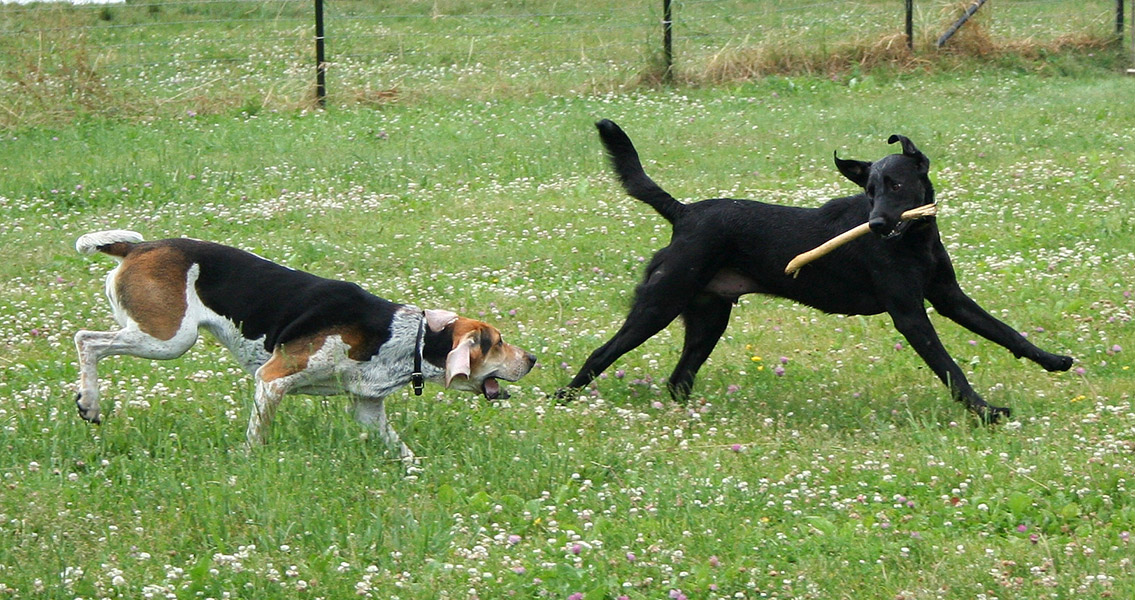
Genetic Tests Suggest Dogs Domesticated More Than Once

here Image courtesy of Wikimedia Commons user Peter Wadsworth]]>

Categories
Breaking News

Giant Species Were Crucial to Pumpkin Domestication

www.pnas.org Image courtesy of Wikimedia Commons user: Sergiodlarosa]]>

Categories
Breaking News

Bee Domestication Traced to The Stone Age

Categories
Breaking News

Did Dogs Come from Central Asia?

” target=”_blank”>”Genetic structure in village dogs reveals a Central Asian domestication origin” Image courtesy of Wikimedia Commons user: Peter Wadsworth ]]>

Categories
Breaking News

Researchers Pinpoint When Chickens Became Food

www.pnas.org Image courtesy of Wikimedia Commons user: Fir0002/Flagstaffotos]]>