Categories
Breaking News

Revealed: the secrets of pre-Viking whaling

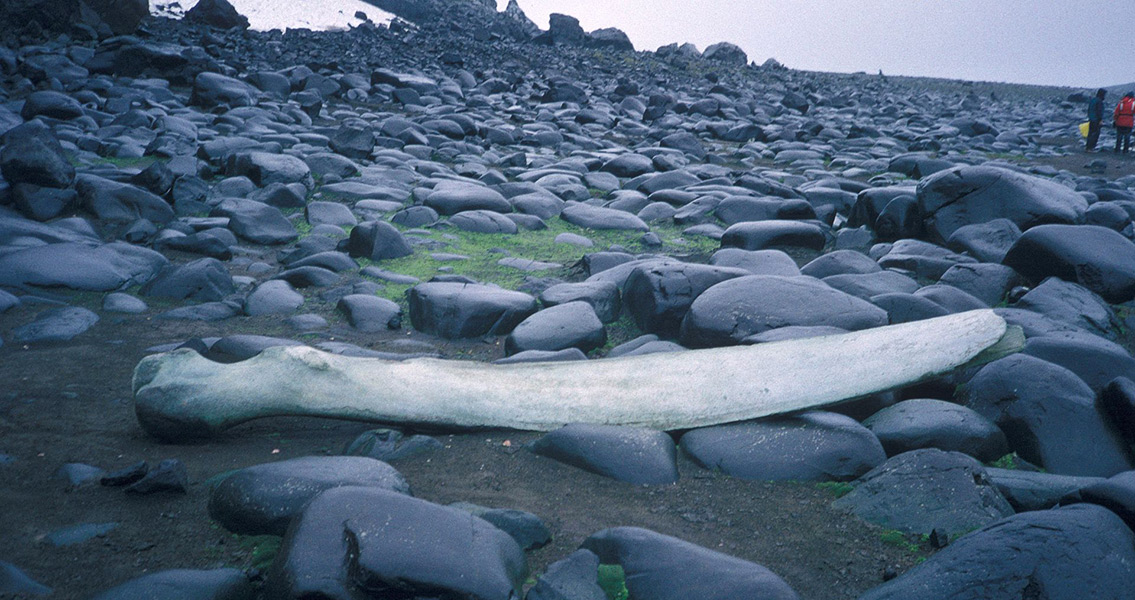
Credit: Wikimedia Commons[/caption]

Toys and games as evidence for early whaling

A visit to a typical Swedish museum will expose visitors to extensive collections of Iron Age board game pieces. Thousands of pieces have been found, helping to paint a picture of early Scandinavian culture and communication. But new studies from the University of York and Uppsala University have analysed the raw materials, showing that these toys were commonly made out of whale bone from the mid 6th Century. Suggesting an advanced method of production, they were created in large volumes and had standardised forms. As a result, researchers believe that a steady access to whale bone would have been necessary; and since it is unlikely that the carcasses of beached whales would have been in rich supply, we’re able to interpret this as evidence for early whaling. Adding to the theory, gaming pieces and toys made from whale bone appear at around the same time as larger boathouses, as well as production features for blubber, were becoming more common in Norway. It’s likely that the toys were made in this region, before being transported southwards and ultimately being used as playthings and burial gifts in Sweden.  

Whaling in folklore

Despite northern Europe’s large-scale whaling being discussed frequently, its origins have long been shrouded in mystery. Alleged sources have been controversial: 9th Century sagas about the Norwegian merchant Ohthere or Ottar, who was a guest and informant at the court of King Alfred the Great, mention his penchant for hunting large whales. Similarly, there are written sources that detect large-scale whaling during the Viking Age in Scandinavia. Neither source is unanimously regarded as true.  

Determining the species

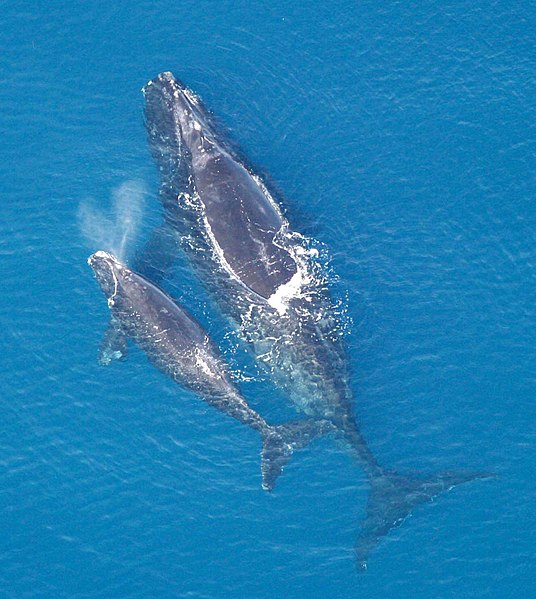
The team was able to determine the materials for a number of game pieces using Zooarchaeology by Mass Spectrometer, or ZooMS. The method revealed that all of the analysed pieces came from the North Atlantic right whale, the Eubalaena glacialis: a huge whale that typically weighs around 50 to 80 tonnes. The animal got its name because it was the ‘right whale’ to hunt. It was known for swimming slowly and close to the shore, and it contained so much blubber that it would float after being killed. With only 300 in known existence, the North Atlantic right whale is one of the world’s most endangered large whales. By shedding a light on the history of its hunt, this research could certainly affect calculations on the development of its population. [caption id="attachment_8733" align="aligncenter" width="500"] Atlantic Northern Right Whale mother and calf. Credit: Wikimedia Commons[/caption]
Pre-urban, pre-Viking trading networks

As well as shedding light on early whaling, the archaeologists believe these findings are an important component for researching extensive early trading networks. Alongside other goods such as bear furs, birds of prey, and an increased iron and tar production, whale bone products indicate that Scandinavia had developed strong, pre-urban trading routes – 200 years before the Viking Period. To complement the research, an in-depth supplementary study will analyse human influence on the marine ecosystems in relation to the population of whales in European waters, since the story of whaling goes back much further than we previously thought.]]>

Categories
Breaking News

New Whale Genus Discovered

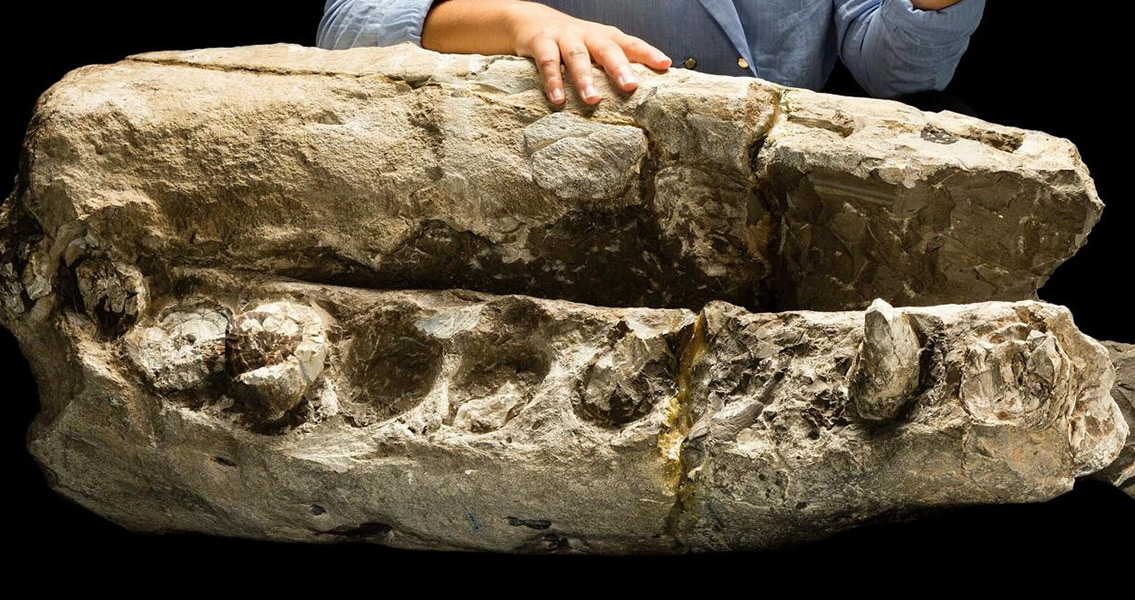
Ontocetus oxymycterus. Since then it has been determined that whales in the Ontocetus genus had tusks, rather than the cetacean teeth exhibited on the whale discovered in California. As a result, Boersma and Pyenson attribute the fossil to a new genus called Albicetus, making the 15 million year old whale a newly designated species known as Albicetus oxymycterus. A homage to Herman Melville’s Moby Dick, the genus was named Albicetus or ‘white whale’ after the researchers were struck by the bone white colour of the fossil. Although there are only three living species of sperm whale (Physeter macrocephalus, Kogia breviceps and Kogia sima), the fossil record shows that they have ecologically diverse origins. A plethora of sperm whales existed in the past which it is impossible to compare to the Phyester species living today in terms of body size and morphology. For their study, the authors from the Department of Paleaobiology at the Smithsonian Institution carried out a range of tests on the fossil sperm whale specimen, including morphological observations based on a new 3D model and a skeletal reconstruction. “Our redescription of the type specimen of Albicetus provides new morphological details, along with revisions to the stratigraphy and locality data, as can best be ascertained given the available historical information.” They write in the study, published in the open access journal PLOS ONE. There is not one distinguishing feature of Albicetus oxymycterus which makes it unique. As the authors make explicit in their study, all of the features found in the genus can be found in others. “However, it is the specific combination of these features seen in Albicetus that sets it apart from any of the other fossil physeteroid genera.” They summarise in the recently published work. Based on comparisons with the crania of other Physeteroids, they conclude that the specimen would have measured approximately six metres in length during life. Like other Physeteroids, A.oxymycterus had large, single rooted upper and lower teeth, but there were subtle differences, including evidence of the retention of enameled lower tooth apices. An analysis of A.oxymyceterus‘ body size in comparison with other physeteroids resolved it to have been a stem physeteroid. Put simply, this suggests that whales with large body sizes and unusually large teeth arose at various times in the evolution of sperm whales. One explanation is that these large, big toothed whales evolved in periods when the seas were rich in large prey, such as marine mammals like seals. Conversely, modern sperm whales have smaller teeth, perhaps as a result of them feasting on smaller prey which don’t require chewing, such as squid. For more information: www.journal.plos.org Image courtesy of Jame Di Loreto, Smithsonian]]>

Categories
Breaking News

4 Million Year Old Whale Remains Found in California

Categories
Breaking News

Ancient Whalebone Tells When East Africa Began to Rise

Categories
Book Reviews

Moby Dick

Related Books


Moby-Dick book

Moby-Dick
Or, the Whale Vol. 1 of 2Vol. 1 of 2
by Herman Melville

[gap height=”20″] ]]>