Categories
Breaking News

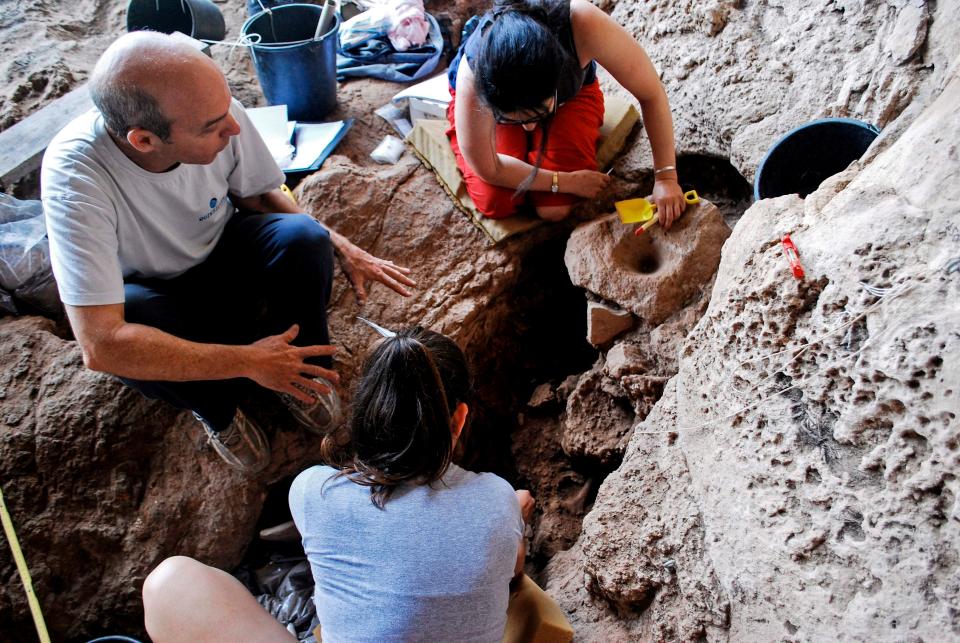
World’s oldest beer brewery discovered in Israel

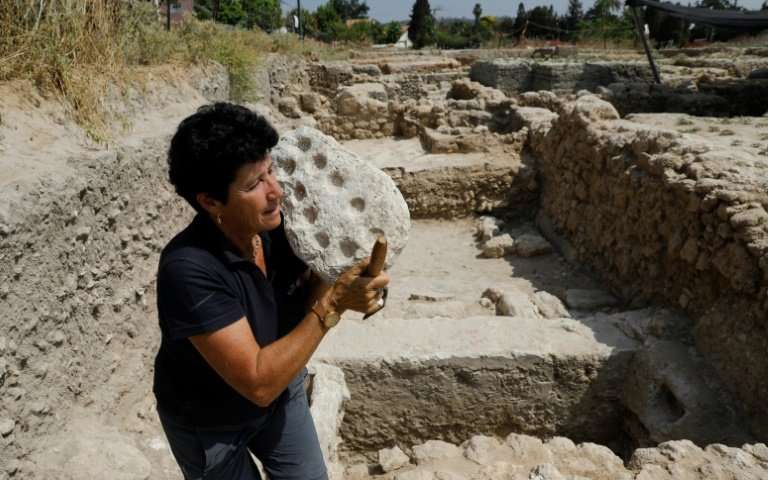
Archaeologists at the beer-making site in a cave near Raqefet, Israel
Photo credit: AFP[/caption]

Who were the Natufians?

The Natufians were semi-sedentary foraging people, living in the Eastern Mediterranean between the Palaeolithic and the Neolithic periods (after the last Ice Age). As part of their rituals, they collected locally available plants, stored malted seeds and made beer.  

A vivid and colourful picture of Natufian ways

Prof. Dani Nadel, Zinman Institute of Archaeology, University of Haifa, Israel, was on the excavation team: “The Natufian remains in Raqefet Cave never stop surprising us. “We exposed a Natufian burial area with about 30 individuals; a wealth of small finds such as flint tools, animal bones and ground stone implements, and about 100 stone mortars and cup marks. “Some of the skeletons are well-preserved and provided direct dates and even human DNA, and we have evidence for flower burials and wakes by the graves. “And now, with the production of beer, the Raqefet Cave remains provide a very vivid and colourful picture of Natufian lifeways, their technological capabilities and inventions.” The results of the study indicate that the Natufians exploited over seven types of plants associated with the mortars. That includes wheat or barley, oat, legumes, and bast fibres like flax. They would then pack plant foods in fibre-made containers and store them in boulder mortars. Bedrock mortars would be used to brew wheat and barley based beer, which would then have likely been served in ritual feasts. [caption id="attachment_8893" align="aligncenter" width="500"] This is the site location and artefacts analysed. (A) The location of Raqefet Cave and three additional Natufian sites in Mt. Carmel; (B) field photos of the studied boulder mortars (BM1,2) and the location of BM3 on the cave floor (scale bar and arrow: 20 cm); (C) a functional reconstruction of the mortars: a boulder mortar used to store plants in a basket with a stone slab on top, and a bedrock mortar used for pounding and cooking plants and brewing beer. Photo credit: Dror Maayan; Graphic design credit: Anat Regev-Gisis[/caption]

Fleshing out our understanding of Natufian society

In July, experts discovered the remnants of what may have been the oldest bread ever baked in Jordan at a site occupied by the Natufian people 14,400 years ago. The fact that beer was brewed at Raqefet Cave 13,000 years ago fleshes out our understanding of Natufian social and ritual realms. It is thought that the brewing of beer inspired people to cultivate cereals in southern Levant – supporting a hypothesis proposed by archaeologists more than 60 years ago.]]>

Categories
Breaking News

Not food scraps after all: turtle shells as Native American musical instruments

An example of a Native American flute, which was crafted by
Chief Arthur Two-Crows in 1987. Music and the animal kingdom share a deep connection. Photo credit: Jossi Fresco[/caption] Considering, more specifically, the music of Native American cultures, the voice and percussion are considered paramount. But with new research from Florida State University, we now know that turtle shells once played a significant role in this pocket of North America’s indigenous cultures.

Keeping the beat

In the past, turtle shells found at archaeological sites have often been dismissed as food remains. However, in an article published in academic journal PLOS One, Professor of Anthropology, Tanya Peres, says these turtle shells were used as rattles and other musical instruments. “Music is an important part of many cultures in ways we may not realize,” Peres comments. “Musical instruments have a deep ancient history in human society and are encoded with meanings beyond their sound making capabilities.”

Not just food

Peres worked alongside lead author Andrew Gillreath-Brown, a doctoral candidate from Washington State University. The research team closely examined the use of turtle shells as percussion instruments across the south eastern states. They identified and analyzed several partial Eastern box turtle shells from middle Tennessee archaeological sites that they believe were used as rattles. “It is important to explore and understand what other ways — besides food — prehistoric animal remains may have been used in the past,” Gillreath-Brown said. “Turtle shell rattles provide deep insights into human-environment and -animal relationships.”

Turtles: deeply symbolic in indigenous cultures

Gillreath-Brown notes that the belief that the world was formed upon a turtle’s back is a belief held across many indigenous groups. “This symbology and belief is imbued into the turtle shell rattles, which are meant to keep rhythm and thereby interjects powerful symbology and spiritual energy into dances and ceremonies,” he said. [caption id="attachment_8889" align="aligncenter" width="500"] The belief that the world was formed upon a turtle’s back is a belief held across many indigenous groups. Photo credit: kormandallas[/caption]

Consistent across cultures

The research draws upon turtle shell rattles that have been discovered throughout North America; from Florida to the north east, and all the way up to Canada. Each region is likely to attribute different meaning and levels of importance to these rattles; but their presence in such a widespread group of localities demonstrates that turtle shells were important to creating rhythm in ceremonies across prehistoric North America.

Rethinking food scraps

Peres says there are still many questions for researchers to investigate regarding the roles of turtles in indigenous populations. “We need to continue to bring together multiple lines of evidence and viewpoints so we can attempt a more nuanced understanding of past human-animal relationships,” she says. For now, the research has opened the door to re-examining curated turtle remains from archaeological digs, which may have wrongly been dismissed as food scraps.]]>

Categories
Breaking News

Easter Island's society: far more collaborative than we thought

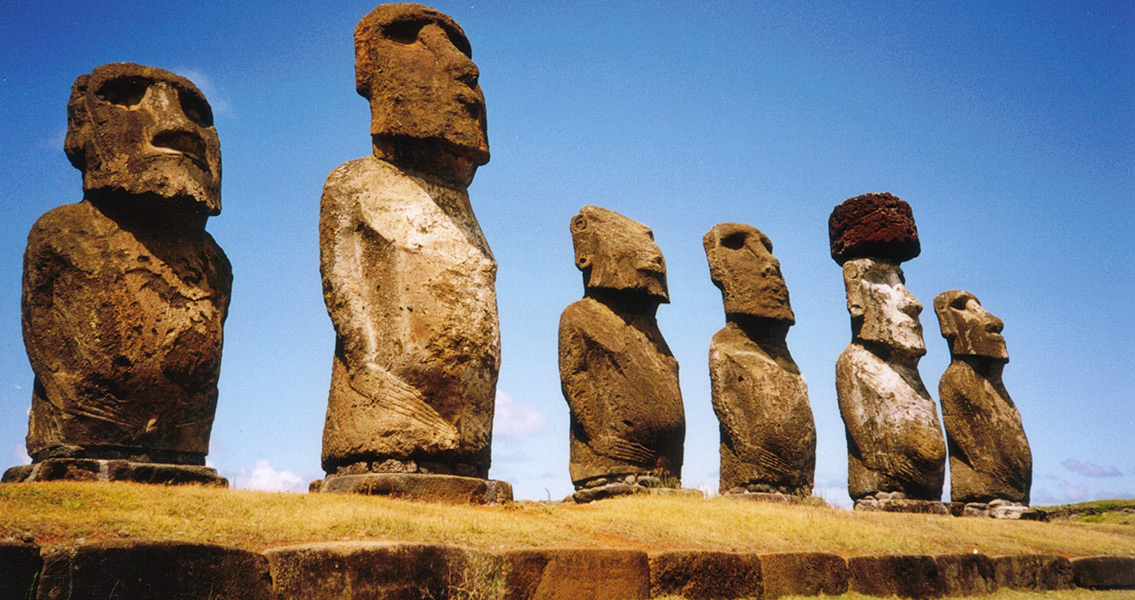
Credit: Wikimedia Commons[/caption]

The Easter Island heads: secrets spilled

Field Museum scientist Laure Dussubieux was one of the study’s authors. “For a long time, people wondered about the culture behind these very important statues,” she says. “This study shows how people were interacting, it’s helping to revise the theory.” Lead author Dale Simpson Jr., an archaeologist from the University of Queensland adds: “The idea of competition and collapse on Easter Island might be overstated… To me, the stone carving industry is solid evidence that there was cooperation among families and craft groups.” [caption id="attachment_8696" align="aligncenter" width="800"] Credit: Bjørn Christian Tørrissen via Wikimedia Commons[/caption]

The history of Easter Island

People first arrived on Easter Island around 900 years ago. The society was later scourged by colonists and slavers, but the Rapa Nui culture has persisted. According to oral tradition, the founding population was two canoes led by the island’s first chief. Over the years, the population rose to reach a number of many thousands, making up the complex society that carved the famous Easter Island statues, or moai. Easter_Island_c1880

Sociopolitical organisation

Although the moai are colloquially known as ‘the Easter Island heads,’ they are actually full-body figures that have been part-buried over time. There are nearly a thousand of the statues, with the largest standing at 70 ft tall. “Ancient Rapa Nui had chiefs, priests, and guilds of workers who fished, farmed, and made the moai. There was a certain level of sociopolitical organisation that was needed to carve almost a thousand statues,” says Simpson.

Rapa Nui excavation

Recent excavations of four statues were conducted by Jo Anne Van Tilburg of Cotsen Institute of Archaeology, UCLA and director of the Easter Island Statue Project, along with her Rapa Nui excavation team. Van Tilburg worked with Simpson and Dussubieux to analyse 21 of roughly 1,600 stone tools discovered in the excavations. Around half were fragments that suggested how they were used, giving us a better understanding of the society that erected the statues. Easter Island Maori

The Easter Island production industry

For Van Tilburg, the goal of the project was to gain a better understanding of how tool makers and statue carvers may have interacted, thus gaining insight into how the statue production industry functioned. Dussubieux explains: “We wanted to figure out where the raw materials used to manufacture the artefacts came from… We wanted to know if people were taking material from close to where they lived.” The results pointed to a society that involved consistent collaboration. “The majority of the [tools] came from one quarry complex–once the people found the quarry they liked, they stayed with it,” says Simpson. “For everyone to be using one type of stone, I believe they had to collaborate. That’s why they were so successful–they were working together.” Easter Island

An interactive society from day one

This level of large-scale cooperation flies in the face of the popular narrative that Easter Island’s inhabitants warred themselves into extinction after running out of resources. Van Tilburg urges caution in interpreting the study’s results. “The near exclusive use of one quarry to produce these seventeen tools supports a view of craft specialization based on information exchange, but we can’t know at this stage if the interaction was collaborative. It may also have been coercive in some way. Human behaviour is complex. This study encourages further mapping and stone sourcing, and our excavations continue to shed new light on moai carving.” Simpson says: “There’s so much mystery around Easter Island because it’s so isolated, but on the island, people were, and still are, interacting in huge amounts.”]]>

Categories
Breaking News

Climate change greatly impacted extinction of Neanderthals

What are stalagmites? Stalagmites grow in thin layers each year and any change in temperature alters their chemical composition. The layers therefore preserve a natural archive of climate change over many thousands of years. The researchers examined stalagmites in two Romanian caves, which revealed more detailed records of climate change in continental Europe than had previously been available. From looking closely at the layers of the stalagmites, the archaeologists were able to identify a series of prolonged cold and dry periods in Europe between 44,000 and 40,000 years ago. Temperatures would gradually cool, staying very cold for centuries or even millennia, and then warm up again very abruptly.

Neanderthal presence declined during cold periods

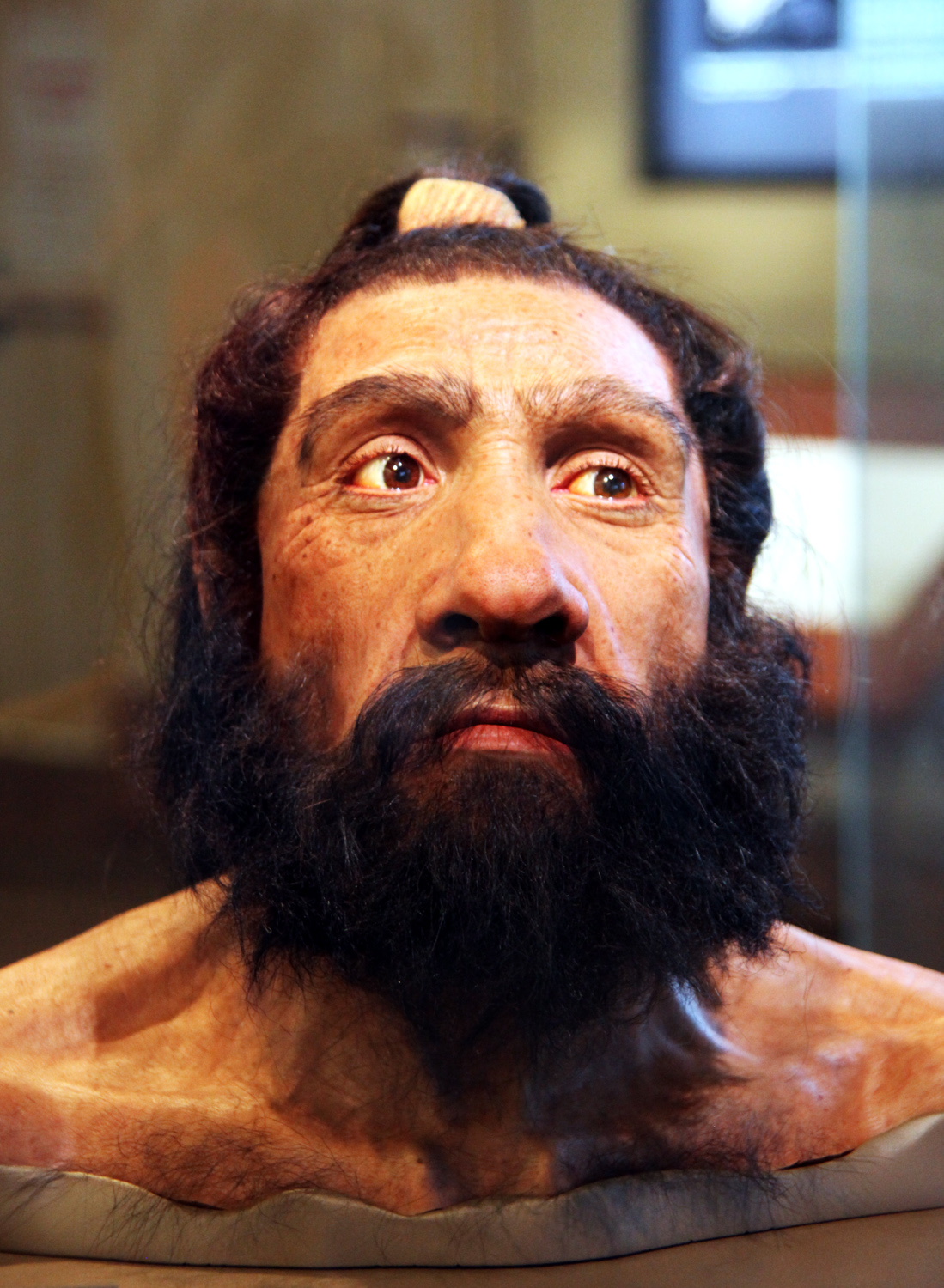
These cold periods coincide with the timings of a near complete absence of archaeological artefacts from the Neanderthals. From this, it has been suggested that changes in climate had a significant impact on the long-term survival of Neanderthal man. [caption id="attachment_8774" align="aligncenter" width="500"] A model an adult Neanderthal male head and shoulders on display in the Hall of Human Origins in the Smithsonian Museum of Natural History in Washington, D.C. Credit: Tim Evanson[/caption] Dr Vasile Ersek is co-author of the study and a senior lecturer in physical geography in Northumbria University’s Department of Geography and Environmental Sciences. He explains: “The Neanderthals were the human species closest to ours and lived in Eurasia for some 350,000 years. However, around 40,000 years ago – during the last Ice Age and shortly after the arrival of anatomically modern humans in Europe – they became extinct. “For many years we have wondered what could have caused their demise. Were they pushed ‘over the edge’ by the arrival of modern humans, or were other factors involved? Our study suggests that climate change may have had an important role in the Neanderthal extinction.”

Why did modern humans survive cold periods?

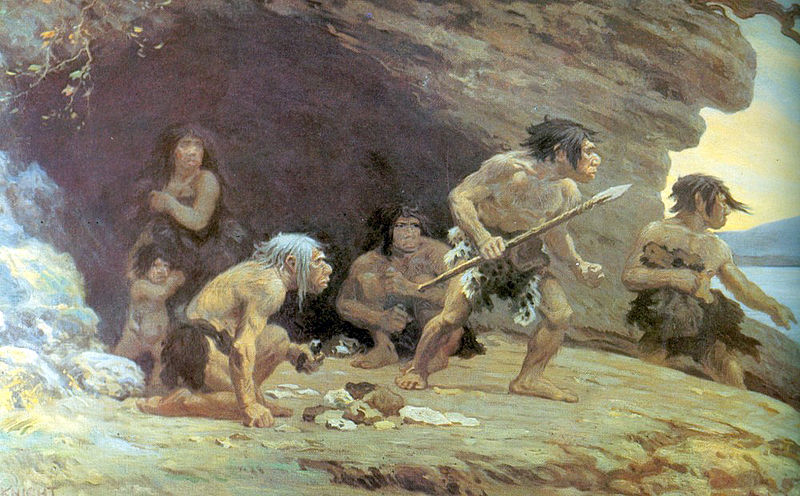
The researchers have stated that modern humans survived these cold conditions – known as stadial periods – because they were more adaptable to their environment. [caption id="attachment_8773" align="aligncenter" width="500"] Credit: Le Moustier Neanderthals by Charles R Knight, 1920[/caption] While Neanderthals were skilled hunters and were able to use fire, their diet wasn’t as diverse as that of modern humans. They lived mainly on meat, so when that food source became more scarce during colder periods, Neanderthals became vulnerable. By this time, modern humans had begun to incorporate fish and plants into their diet – potentially marking them for survival.

Depopulation, repopulation

According to Dr Ersek, the research team’s findings have indicated that this cycle of “hostile climate intervals” over thousands of years, in which the climate varied abruptly and was characterised by extreme cold temperatures, was responsible for the future European demographic. “Before now, we did not have climate records from the region where Neanderthals lived which had the necessary age accuracy and resolution to establish a link between when Neanderthals died out and the timing of these extreme cold periods,” he said, “But our findings indicate that the Neanderthal populations successively decreased during the repeated cold stadials. “When temperatures warmed again, their smaller populations could not expand as their habitat was also being occupied by modern humans and this facilitated a staggered expansion of modern humans into Europe. “The comparable timing of stadials and population changes seen in the archaeologic and genetic record suggests that millennial-scale hostile climate intervals may have been the pacesetter of multiple depopulation-repopulation cycles. These cycles ultimately drew the demographic map of Europe’s Middle-Upper Paleolithic transition.” Read more about the difference between Neanderthals and modern humans here.]]>

Categories
Breaking News

What do we know about the people who built Stonehenge?

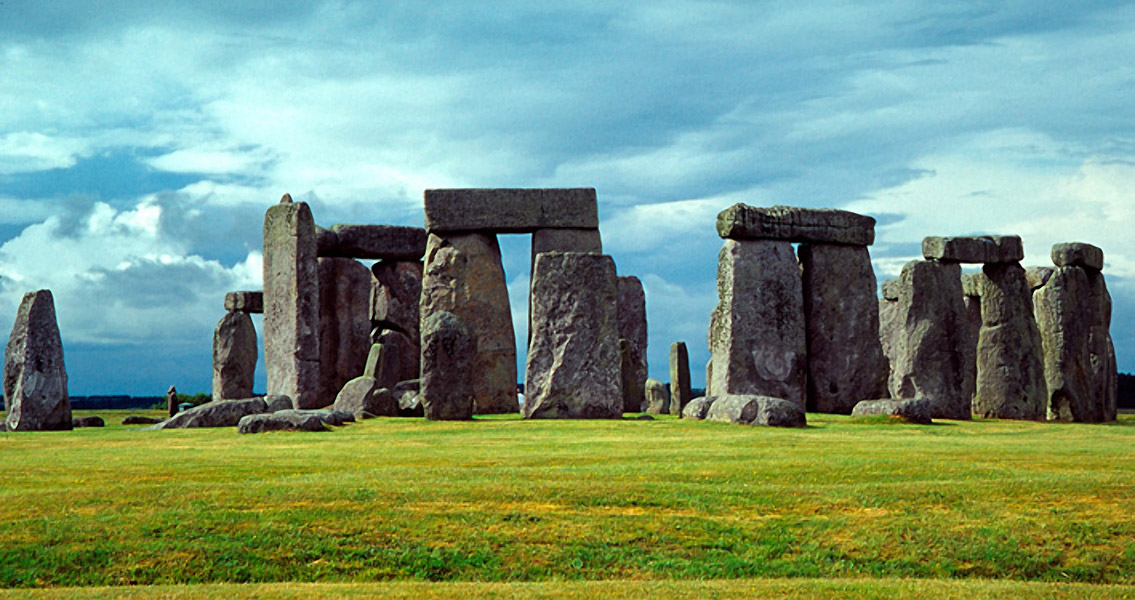
Stonehenge (3)

Who built Stonehenge?

The questions of how and why Stonehenge was built garner significantly more research than specifically who built it. That is partly down to the fact that many of the human remains were cremated, making it difficult to extract much useful information from them.

New technique unlocks ancient secrets

Lead author Christophe Snoeck, who is undertaking doctoral research at Oxford’s School of Archaeology, demonstrates that even cremated bone retains its strontium isotope composition, making it possible to investigate where these people had lived during the last ten years of their lives. He says: ‘The recent discovery that some biological information survives the high temperatures reached during cremation (up to 1000 degrees Celsius) offered us the exciting possibility to finally study the origin of those buried at Stonehenge.’ Professor Julia Lee-Thorp, Head of Oxford’s School of Archaeology and an author on the paper, says: ‘This new development has come about as the serendipitous result of Dr Snoeck’s interest in the effects of intense heat on bones, and our realization that that heating effectively “sealed in” some isotopic signatures.’

Stonehenge bodies travelled from Wales

The team analysed the skulls of 25 people who were cremated at the site around 3000 BC to better understand their lives. At least ten of them did not live near Stonehenge at the time of their death. They were far more likely to have been living in western Britain; a region that includes west Wales, the known source of Stonehenge’s bluestones. The research was conducted in partnership with colleagues from University College London, Université Libre de Bruxelles & Vrije Universiteit Brussel), and the Muséum National d’Histoire Naturelle de Paris, France. Rick Schulting, a lead author on the research and Associate Professor in Scientific and Prehistoric Archaeology at Oxford, explains: ‘Some of the people’s remains showed strontium isotope signals consistent with west Wales, the source of the bluestones that are now being seen as marking the earliest monumental phase of the site.’

Inter-regional connections in 3000 BC

The results emphasise the prevalence of inter-regional connections involving the movement of both materials and people in the construction and use of Stonehenge, providing rare insight into the large scale of contacts and exchanges in the Neolithic, as early as 5000 years ago.

A revolutionary analysis technique

Dr Schulting adds: ‘To me the really remarkable thing about our study is the ability of new developments in archaeological science to extract so much new information from such small and unpromising fragments of burnt bone.’ The technique is now regarded as a vehicle to improve our understanding of the past using previously excavated ancient collections. Schulting continues: ‘Our results highlight the importance of revisiting old collections. The cremated remains from Stonehenge were first excavated by Colonel William Hawley in the 1920s, and while they were not put into a museum, Col Hawley did have the foresight to rebury them in a known location on the site, so that it was possible for Mike Parker Pearson (UCL Institute of Archaeology) and his team to re-excavate them, allowing various analytical methods to be applied.’]]>

Categories
Breaking News

Ancient dirty dishes shed light on early climate change – and how farmers adapted

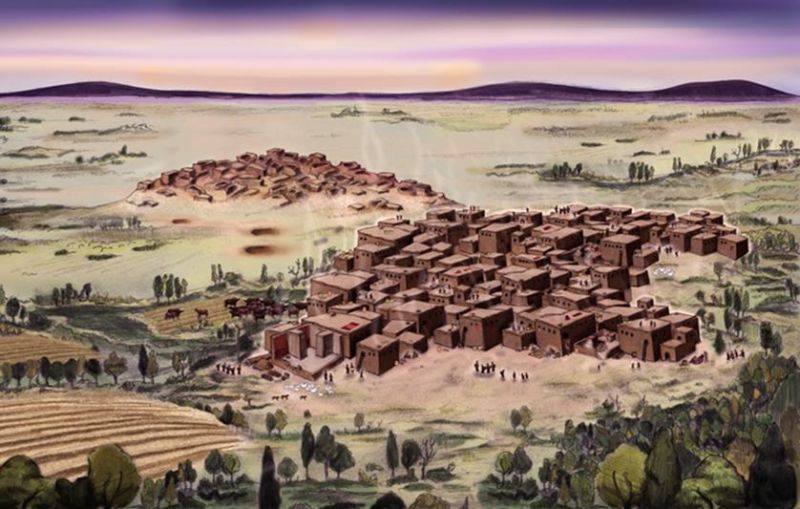
A major climate event Looking closely at the Neolithic and Chalcolithic city settlement of Çatalhöyük in southern Anatolia, Turkey, the study takes into account farming practices in the period spanning 7500 BC to 5700 BC. When the city was most intensely occupied around 8,200 years ago, there was a sudden decrease in global temperatures. It became a well-documented event in the history of climate change, and was caused by a huge amount of glacial meltwater from a massive freshwater lake in northern Canada.   [caption id="attachment_8875" align="aligncenter" width="800"] An artist’s reconstruction of the east and west mounds at Çatalhöyük. Image Credit: Çatalhöyük Research Project[/caption]

Pragmatic farming during drought

The research centres on animal bones found at the excavation site. Scientists have concluded that the herders of the city turned towards sheep and goats, as they fared better during times of drought than cattle. By looking at the cut marks on the animal bones, we can also find more information on butchery practices. They indicate desperation in the community: the high number of cut marks on the bones during the time of the temperature drop shows how the populace exploited any meat available as food would have been scarce.

Dirty dishes

Ancient cooking pots with traces of animal fats have also been analysed in the study, which makes this the first time compounds from animal fats found in pottery are shown to carry evidence for the climate event. [caption id="attachment_8874" align="aligncenter" width="500"] In situ pottery at the archaeological site of Çatalhöyük. The pottery has been at the centre of recent research shedding light on the ways ancient farming practices adapted to climate change. Image credit: Çatalhöyük Research Project.[/caption]

Inevitable impacts

The paper brings together researchers from the University of Bristol’s Organic Geochemistry Unit (School of Chemistry) and the Bristol Research Initiative for the Dynamic Global Environment (School of Geographical Sciences). Co-authors of the paper include archaeologists and archaeozoologists involved in the excavations and the study of the pottery and animal bones from the site. Dr Mélanie Roffet-Salque lead the research. She says: “Changes in precipitation patterns in the past are traditionally obtained using ocean or lake sediment cores. “This is the first time that such information is derived from cooking pots. We have used the signal carried by the hydrogen atoms from the animal fats trapped in the pottery vessels after cooking. “This opens up a completely new avenue of investigation – the reconstruction of past climate at the very location where people lived using pottery.” Co-author, Professor Richard Evershed, adds: “It is really significant that the climate models of the event are in complete agreement with the H signals we see in the animal fats preserved in the pots. “The models point to seasonal changes farmers would have had to adapt to – overall colder temperatures and drier summers – which would have had inevitable impacts on agriculture.”]]>

Categories
Breaking News

Ancient pottery factory discovered in Israel

Family wine businesses During the periods the factory was in use, wine was a major Israeli export. The main function of the jars was of course for the storage and shipment of wine, which was a flourishing industry employing a great number of local people. The remains of around 100,000 jars found buried at the site are thought to have been rejects discarded from the production line. The Israeli Antiquities Authority said in a statement: “The continuous production of these jars probably indicates that the business was a family one, which passed from generation, to generation, to generation.” [caption id="attachment_8870" align="aligncenter" width="500"] The excavation, funded by the Israel Land Authority, was carried out by the Israel Antiquities Authority with the participation of many youth, prior to the construction of a new neighbourhood in Gedera, next to the ancient Tel Qatra. The industrial site comprised a pottery workshop that manufactured storage jars from the third century CE for six centuries. Credit: MENAHEM KAHANA / AFP[/caption]

Gaza jars

The excavation site is not far from the town of Gedera, south of Tel Aviv. Gaza City lies about 30 miles (48 kilometres) southwest of Gedera, on the Mediterranean coast. During its long history, Gaza has been ruled by the Romans, Byzantines, Crusaders, Mamluks and Ottomans. Director of the excavation Alla Nagorsky told journalists at the site that from the 3rd Century AD, the planet produced vessels of a type known to historians as Gaza jars continuously for 600 years.

A luxury production site

Much more than just wine jars, the archaeologists have discovered a factory, an adjacent leisure complex, 20 bathing pools and a room that was used for board games. Alongside the factory were two Byzantine style bathhouses. At least one of them had a heating boiler. The 20 ‘finely constructed’ pools were connected by channels and pipes. “This kind of a place is not built in an instant,” Alla Nagorsky said. “An engineer worked on it. The site is very designed.” “The archaeologists consider that the water complex served both the local population and the many travellers along the ancient main road connecting the port of Gaza with the centre of the country,” the IAA said in its statement.

Backgammon and mancala games

The games room, in particular, was a shock find, with the IAA calling it a ‘rare and surprising discovery’. In it were boards used for playing backgammon and “mancala”, games which are still popular in the area. The statement said the Gedera pottery works may have built the leisure centre for its employees, just as today’s tech and start up companies provide recreation facilities for their workers. [caption id="attachment_8871" align="aligncenter" width="500"] Israel Antiquities Authority archeologist Alla Nagorsky shows a 1600 year-old Mancala game from the Byzantine time found during a large excavation in the central Israeli town of Gedera near the ancient archeological site of Tel Qatra on July 31 2018. Credit: MENAHEM KAHANA / AFP.[/caption]]]>

Categories
Breaking News Editorial

What is Taira rock art, and what does it tell us about ancient desert culture in Chile?

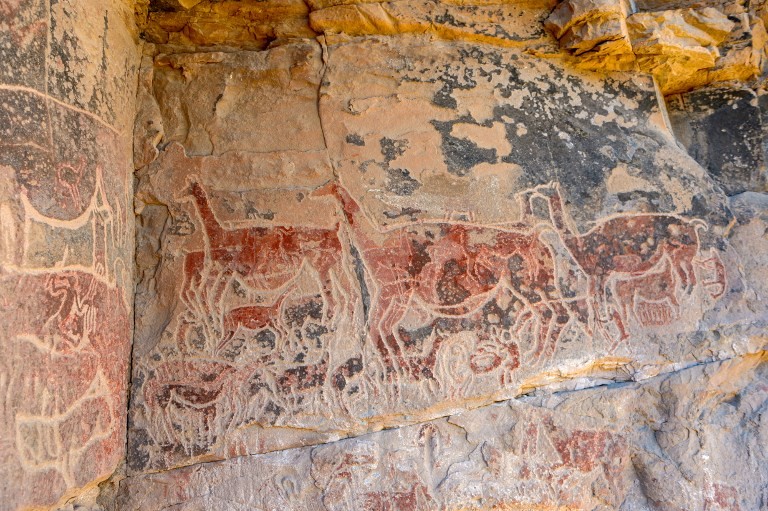
What does the Taira rock art depict? Roughly 90% of the artworks focus on llamas. Some are pregnant, others are suckling their young; and all represent life. The other 10% of the engravings depict the diversity of the desert, with foxes, snakes, ostriches, partridges and dogs featuring in scenes. Human figures are few and far between, and always drawn small. Archaeologists have posited that it is as if painting them small represents just how important desert animals were to their culture and economy. [caption id="attachment_8867" align="aligncenter" width="500"]
View of drawings at the Taira Cave in Chile, located at a height of 3,150 meters, on July 21, 2018. The paintings left by shepherds almost three millennia ago on the walls of the rocks that flank the course of the Loa River. Credit: AFP Martin Bernetti.[/caption]

The role of llamas in ancient desert culture

Archaeologist and curator at Santiago’s Museum of Pre-Colombian Art, Jose Bereguer, says that Taira art is ‘a celebration of life’. First rediscovered by Swedish archaeologist Stif Ryden in 1944, the gallery has been dated to c.400-800 BCE. 16 paintings remain, sitting 3,000 metres above sea level on the banks of the Loa River that traverses the desert. [caption id="attachment_8866" align="aligncenter" width="670"] Archaeologist Jose Bereguer, above, curator at Santiago’s Museum of Pre-Columbian Art, describes the site as “the most complex in South America” because of its astronomical importance as well as the significance to local shepherds. Credit: AFP Martin Bernetti[/caption] Previous studies tell us that the rock art was created by shepherds, who were pleading with the ‘deities that governed the skies and the earth’ to allow their llama flocks to flourish. The Alero Taira drawings, which were created in a natural shelter 30 metres away from the Loa River, give us deeper insight into the role of llamas in ancient desert culture. More than just the lead source of wealth for people inhabiting the desert, the llama was a symbolic creature used in ritual ceremonies throughout the Andes for thousands of years. The ‘Wilancha’, for instance, sees llamas given as sacrifice to ‘Pacha Mama’ (Mother Earth). Volcanoes, like springs, were considered deities by the Atacama natives, while llamas were thought to have been born of springs. Berenguer says: “No one can understand the things done 18,000 years ago because the cultures that did them have disappeared. Here, it’s possible to delve into the meaning because we have ethnography and because there are still people living in practically the same way as in the past.”

Lasting significance for indigenous peoples

The Rumualda Galleguillos is one of roughly 15 indigenous peoples that still raises llamas in the Atacama Desert. Just like their forefathers, it’s a matter of tradition and a way of life. To the Rumualda Galleguillos, these pictures are a ‘testament’ to their ancestors who did not read or write.

UNESCO plans

Now, conservationists want UNESCO to officially recognise the Taira Valley rock art as a heritage site, which will allow them to develop sustainable tourism for the region – similar to Spain’s Cave of Altamira of France’s Lascaux caves.]]>

Categories
Breaking News Editorial

How did Christianity spread?

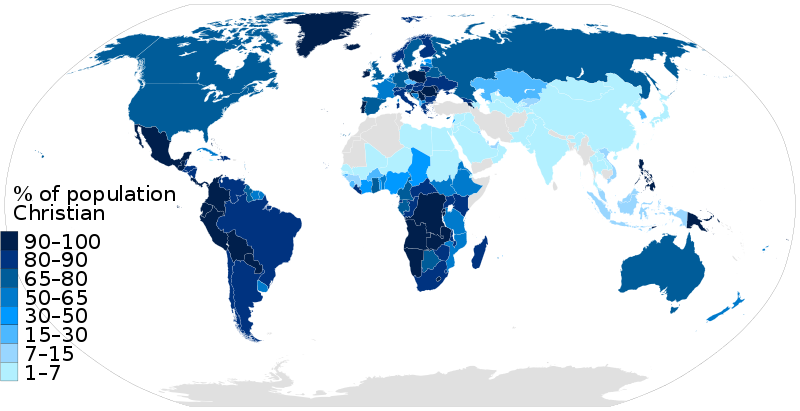
Christian populations across the world. Credit: M Tracy Hunter[/caption]

70 Christian communities analysed

A new paper delves into research from 70 Austronesian Christian societies, where political hierarchies, social inequality and population size were all analysed. Austronesian societies shared a common ancestral language and are located across Southeast Asia, East Africa and the South Pacific. Despite some similarities, they have a great variation of societal make ups; with some forming small, egalitarian, family-based communities and others following the concept of a large, politically complex society. Hawaii is an example of the latter. The communities were converted in the 18th and 19th Centuries. Some took under a year to convert; the longest took 205 years. With such a range of social structures and reactions to conversion, these Austronesian societies were ideal for exploring theories on cultural change.

Win the chief and you win the tribe

The researchers have revealed that cultures with political leadership structures already in place were usually more easily converted to Christianity. They call it a ‘top down’ process of conversion: chiefs and elite leaders were the first to be converted by missionaries. Due to their existing influence over their people, the spread of Christian doctrine followed naturally. Jesus Christ Interestingly, social inequality was not related to conversion times. This debunks the theory that Christianity spread from the bottom up, by empowering the impoverished and promising an improved experience in the afterlife. There was a distinct correlation between small populations and the fast spread of Christianity, proving the importance of population size during processes of cultural change.

“A smaller populace is more open to innovation”

Lead author Dr Joseph Watts undertook the research at the University of Auckland’s School of Psychology and the Max Planck Institute for the Science of Human History in Germany. The research team also includes doctoral candidate Oliver Sheehan, Professor Joseph Bulbulia, and Professor Russell Gray. Dr Watts says: “While people often think of big societies as sources of innovation, our findings show that bigger societies can also be slow to pick up on new ideas… In a small population, it becomes more likely that beliefs will be transmitted relatively quickly, particularly if they are being driven by leaders and other powerful figures.”

Cultural change

Looking beyond Christianity and even religion, Dr Watts says this is indicative of cultural change at large. “If you look at our contemporary world, some things spread incredibly quickly while others take a very long time so here we provide evidence of why that might be.” University of Auckland Professor Quentin Atkinson adds: “This research can help us understand how both the size and the structure of populations influence the diffusion and adoption of new institutions, ideologies or technologies.”]]>

Categories
Breaking News Editorial

Why Homo sapiens survived (and other hominins didn't)

Map of the potential distribution of archaic hominins, including H. erectus, H. floresiensis, H. neanderthalenesis, Denisovans and archaic African hominins, in the Old World at the time of the evolution and dispersal of H. sapiens between approximately 300 and 60 thousand years ago.
Credit: Roberts and Stewart. 2018. Defining the ‘generalist specialist’ niche for Pleistocene Homo sapiens. Nature Human Behaviour. [/caption]

Homo sapiens surviving extreme conditions

Archaeological and palaeoenvironmental datasets from the Middle and Late Pleistocene eras have come under critical review in the recent collaboration between the Max Planck Institute and the University of Michigan. Hominin movement and biological development within and beyond Africa proves our species’ ability to occupy diverse and ‘extreme’ settings around the world. This could well explain how Homo sapiens became the last surviving hominin on the planet. Previously, it was thought that early homo sapiens had stayed close to the coast or savannahs, not infiltrating extreme environments until around 15,000 years ago. But this new evidence has shown humans were in tougher climates far earlier, affecting the debate over what it means to be human – as a Homo sapien, at least.

What does it mean to be human?

“So much focus has gone into finding the next artwork, the next fossil, that in the search for a sort of ‘modernity’ as it is often put – other fundamental elements were neglected,” says Dr Patrick Roberts from the Max Planck Institute for the Science of Human History. Under this new theory, investigations into what separates Homo sapiens from our ancestors would shift away from attempts to uncover the earliest traces of art, language and technological complexity. They’d move, instead, towards understanding what makes our species ecologically unique.

New ideas of Neanderthal creativity

Recent research exposed the fact that our Neanderthal cousins created art before Homo sapiens, and were therefore capable of creating symbolism independently. Because of this, the lines between Homo sapiens and our ancestors are becoming increasingly blurred. You can read more about Neanderthal creativity and the recent discoveries that probe into it here. [caption id="attachment_8774" align="aligncenter" width="500"] A model an adult Neanderthal male head and shoulders on display in the Hall of Human Origins in the Smithsonian Museum of Natural History in Washington, D.C. Credit: Tim Evanson[/caption]

Ancestral ecologies

In contrast to other hominins, our species not only colonised environments as varied as deserts, tropical rainforests, high altitude settings and the palaeoarctic, but also flourished in these extreme conditions. Looking at our ancestral ecologies, we know that the genus Homo is highly diverse. Although often given the blanket name of ‘human,’ both academically and colloquially, using one term is certainly deceptive. There were a range of Homo species, all of which comfortably developed to reflect their surroundings. Homo erectus and Homo floresiensis (also known as ‘the Hobbit’) are thought to have occupied resource-scarce tropical rainforests from 1 million to 100,000 and 50,000 years ago respectively. The Neanderthals (Homo Neanderthalensis) occupied the high latitude areas of Eurasia between 250,000 and 40,000 years ago. To some extent, they backed themselves into an ecological corner, by only developing hunting skills in specialised environments.

What is the difference between ‘humans’ and Neanderthals?

While it might seem like there were gulfs between Homo sapiens and Homo Neanderthalensis, it would be remiss not to point out that the Neanderthals were our closest hominin relatives. In fact, Homo Neanderthalensis shares 99.7% of DNA with Homo sapiens. The history, appearance, intelligence and behavioural similarities and differences between the two are explored by Daryl Worthington on the New Historian – click here to read more.

Rapid Homo sapien colonisation

In contrast to the rest, Homo sapiens had spread to higher-elevation niches by around 80-50,000 years ago. By 45,000 years ago, the species was rapidly colonising both palaeoarctic and tropical rainforest conditions in Asia, Melanesia and the Americas. In order to decipher how our species demonstrated its colonising capacity elsewhere in places like northwest India and the high elevations of Tibet and the Andes, better-dated and higher resolution environmental datasets are required.

Homo sapiens: the ‘generalist specialist’

Ultimately, the new theory is that Homo sapiens were a ‘generalist specialist’. The ’generalist specialist’ is a new ecological niche: one that reflects Homo sapiens’ ability to occupy a huge diversity of environmental settings across the majority of the Earth’s continents by the Late Pleistocene. Dr Patrick Roberts has written: “A traditional ecological dichotomy exists between ‘generalists’, who can make use of a variety of different resources and inhabit a variety of environmental conditions, and ‘specialists’, who have a limited diet and narrow environmental tolerance.” He continues: “However, Homo sapiens furnish evidence for ‘specialist’ populations, such as mountain rainforest foragers or palaeoarctic mammoth hunters, existing within what is traditionally defined as a ‘generalist’ species.”

How did Homo sapiens become a ‘generalist specialist’?

Dr Brian Stewart, from the Department of Archaeology at the University of Michigan, thinks that this new niche was carved out through extensive cooperation between non-kin individuals. He writes: “Non-kin food sharing, long-distance exchange, and ritual relationships would have allowed populations to ‘reflexively’ adapt to local climatic and environmental fluctuations, and outcompete and replace other hominin species.” It comes down to empathy, as well as an ability to accumulate and pass on cultural knowledge.

How our species became the last surviving hominin on the planet

“As with other definitions of human origins, problems of preservation also make it difficult to pinpoint the origins of humans as an ecological pioneer. However, an ecological perspective on the origins and nature of our species potentially illuminates the unique path of Homo sapiens as it rapidly came to dominate the Earth’s diverse continents and environments”, says Roberts. He writes: “Understanding this ecological niche provides a framework for discussing what it means to be human and how our species became the last surviving hominin on the planet.”]]>