
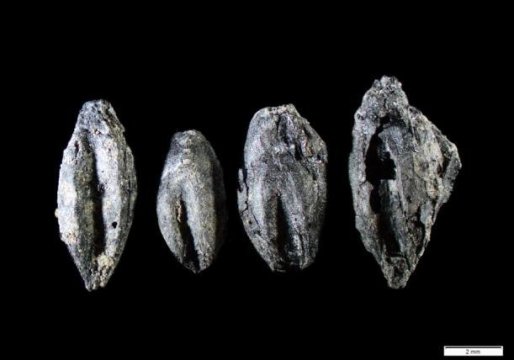
 Carbonized germinated grains found at Uppåkra, Sweden.
Credit: Mikael Larsson[/caption]
“We found carbonised malt in an area with low-temperature ovens located in a separate part of the settlement. The findings are from the 400-600s, making them one of the earliest evidence of beer brewing in Sweden,” says Mikael Larsson, a specialist in archaeobotany, the archaeology of human-plant interactions.
Beer: a hazy history
The brewing, consumption and distribution of beer was an important aspect of many ancient societies across the world. By way of example, beer was produced in Mesopotamia as far back as 4000 BCE. There have been suggestions that Mesopotamians could have been drinking beer in 10,000 BCE, but there is little evidence to back this up. We do know, though, that beer was drunk in Northern China 9,000 years ago. [caption id="attachment_8765" align="aligncenter" width="640"] Beer has played an important role in society for at least 10,000 years. Credit: Pixabay[/caption]
But for the Nordic countries, evidence of early beer consumption is scarce, as there are no written sources from before the Middle Ages in this region. Knowledge of beer production has been, so far, dependent on botanical evidence.
Existing findings are limited, though early traces of malt for beer brewing have been discovered in two other places in the Nordics. One is in Denmark from 100 CE and one is in Eketorp on Öland from around 500 CE.
“We often find cereal grains on archaeological sites, but very rarely from contexts that testify as to how they were processed. These germinated grains found around a low-temperature oven indicate that they were used to become malt for brewing beer,” says Larsson.
Beer has played an important role in society for at least 10,000 years. Credit: Pixabay[/caption]
But for the Nordic countries, evidence of early beer consumption is scarce, as there are no written sources from before the Middle Ages in this region. Knowledge of beer production has been, so far, dependent on botanical evidence.
Existing findings are limited, though early traces of malt for beer brewing have been discovered in two other places in the Nordics. One is in Denmark from 100 CE and one is in Eketorp on Öland from around 500 CE.
“We often find cereal grains on archaeological sites, but very rarely from contexts that testify as to how they were processed. These germinated grains found around a low-temperature oven indicate that they were used to become malt for brewing beer,” says Larsson.