Categories
Breaking News

Sweden has been brewing beer since the Iron Age

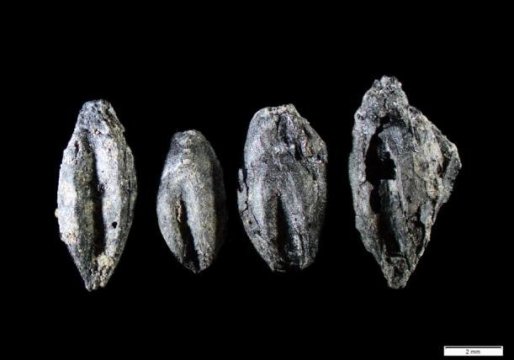
Carbonized germinated grains found at Uppåkra, Sweden.
Credit: Mikael Larsson[/caption] “We found carbonised malt in an area with low-temperature ovens located in a separate part of the settlement. The findings are from the 400-600s, making them one of the earliest evidence of beer brewing in Sweden,” says Mikael Larsson, a specialist in archaeobotany, the archaeology of human-plant interactions.

Beer: a hazy history

The brewing, consumption and distribution of beer was an important aspect of many ancient societies across the world. By way of example, beer was produced in Mesopotamia as far back as 4000 BCE. There have been suggestions that Mesopotamians could have been drinking beer in 10,000 BCE, but there is little evidence to back this up. We do know, though, that beer was drunk in Northern China 9,000 years ago. [caption id="attachment_8765" align="aligncenter" width="640"] Beer has played an important role in society for at least 10,000 years. Credit: Pixabay[/caption] But for the Nordic countries, evidence of early beer consumption is scarce, as there are no written sources from before the Middle Ages in this region. Knowledge of beer production has been, so far, dependent on botanical evidence. Existing findings are limited, though early traces of malt for beer brewing have been discovered in two other places in the Nordics. One is in Denmark from 100 CE and one is in Eketorp on Öland from around 500 CE. “We often find cereal grains on archaeological sites, but very rarely from contexts that testify as to how they were processed. These germinated grains found around a low-temperature oven indicate that they were used to become malt for brewing beer,” says Larsson.
A centre of political & religious power

Uppåkra, where the grains were discovered, is the largest known Iron Age settlement in southern Scandinavia. It served as a densely populated political and religious centre of power for more than 1000 years, from the 100s BCE to the 1 000s CE. Many imported and luxury items have been discovered at Uppåkra. Jewellery and glass bowls found on the sites indicate that the location was a rich, bustling trading centre – one that would likely play host to Scandinavia’s oldest brewery.

Scandinavia’s oldest brewery

Making beer is a two-stage process. Before the actual brewing, the malting process must be executed. Grains are soaked in water, which will allow the grain to germinate. While that’s happening, enzymatic activities convert both proteins and starches of the train into fermentable sugars. When enough sugar has been formed, the germinated grain is dried in an oven with hot air. It was this oven that was discovered and studied in Uppåkra, Sweden. Larsson explains: “Because the investigated oven and carbonised grain was situated in an area on the site with several similar ovens, but absent of remains to indicate a living quarter, it is likely that large-scale production of malt was allocated to a specific area on the settlement, intended for feasting and/or trading.”]]>

Categories
Breaking News

Spectacular Viking Age Manor Discovered in Sweden

Archäologisches Korrespondenzblatt volume 2017/1. Featured Image: Reconstruction by Jacques Vincent ]]>

Categories
Breaking News

340-Year-Old Stinky Cheese Found in Shipwreck

The Local Sweden recounts how divers undertaking excavation work on the Kronan, a royal ship that sunk in the waters of the Baltic, made the discovery in July, with the cheese housed within a black tin jar resting on the seabed off the coast of the island of Öland. According to the Kalmar County Museum’s Lars Einarsson, researchers are reasonably sure that the object contained within the sealed jar is some sort of dairy product, with it most likely being cheese of some kind. The scientist added that the substance is both thick and gooey, has a strong smell of yeast and cheese, and particularly resembles a rather granular Roquefort, a blue cheese traditionally created from sheep milk. Einarsson remarked that the smell to him was quite appetizing, thanks to his own personal tastes for exotic food. However, while it’s been reasonably well preserved by being in the frigid mud of the Baltic, the 340-year-old cheese isn’t something he’s going to be tasting any time soon; the researcher likened the seafloor to be about as far as possible from the kind of ideal preservation conditions in a location such as Tutankamun’s burial chamber. It wasn’t just exceptionally fragrant ancient cheese that the researchers found. Over the course of a two-week dive, Einarsson and his colleagues also discovered other salvage, such as a diamond ring and over a dozen golden coins. The Kronan sank on June 1st of 1676 at noon, prior to the beginning of a sea battle known as the Battle of Southern Öland, which was a clash between a Danish-Dutch allied fleet and the Swedish one. The warship turned too sharply to port, and water began to flood into the vessel through the dozens of gunports, filling the Kronan with water. Soon, the forward powder magazine of the warship ignited, resulting in a massive explosion that sealed the fate of many of the sailors. The death toll from the wreck was massive, with approximately 800 ship hands perishing in the waters off the coast of the Baltic island; only around 40 men survived the Kronan’s sinking. One of the largest warships ever built during its heyday, the Kronan was found once again in 1980. It has since been subjected to careful study over the decades. In excess of 20,000 artifacts have been recovered from the wreck of the 110-gun three-decker so far, including the cranial remains of several crew members complete with intact traces of brain tissue. The suspected cheese is to be subjected to scientific analysis to confirm its identity, and is being kept in low temperature storage until the mystery can be put to rest in a more decisive manner. Hopes are high that, if it is indeed cheese, it will help to paint a broader picture of what it might have been like aboard a seventeenth century Swedish warship. ]]>

Categories
Breaking News

Evidence Emerges of Double Meteorite Strike

Categories
Breaking News

500-Year-Old Figurehead Recovered from Baltic Shipwreck

Categories
Breaking News

1,500 Year Old Bodies of Massacred Children Found in Sweden

Image courtesy of: GeographBot]]>

Categories
Breaking News

Ancestors of Ancient Europeans Revealed in DNA Study

Categories
News

The End of the Russo-Swedish War

Categories
Breaking News

Historians Find Viking "Ring Fortress" in Denmark

Categories
Breaking News

Team to Complete Digital Reconstruction of Sunken Warship “Mars”