Categories
Breaking News

Ancient dirty dishes shed light on early climate change – and how farmers adapted

A major climate event Looking closely at the Neolithic and Chalcolithic city settlement of Çatalhöyük in southern Anatolia, Turkey, the study takes into account farming practices in the period spanning 7500 BC to 5700 BC. When the city was most intensely occupied around 8,200 years ago, there was a sudden decrease in global temperatures. It became a well-documented event in the history of climate change, and was caused by a huge amount of glacial meltwater from a massive freshwater lake in northern Canada.   [caption id="attachment_8875" align="aligncenter" width="800"] An artist’s reconstruction of the east and west mounds at Çatalhöyük. Image Credit: Çatalhöyük Research Project[/caption]

Pragmatic farming during drought

The research centres on animal bones found at the excavation site. Scientists have concluded that the herders of the city turned towards sheep and goats, as they fared better during times of drought than cattle. By looking at the cut marks on the animal bones, we can also find more information on butchery practices. They indicate desperation in the community: the high number of cut marks on the bones during the time of the temperature drop shows how the populace exploited any meat available as food would have been scarce.

Dirty dishes

Ancient cooking pots with traces of animal fats have also been analysed in the study, which makes this the first time compounds from animal fats found in pottery are shown to carry evidence for the climate event. [caption id="attachment_8874" align="aligncenter" width="500"] In situ pottery at the archaeological site of Çatalhöyük. The pottery has been at the centre of recent research shedding light on the ways ancient farming practices adapted to climate change. Image credit: Çatalhöyük Research Project.[/caption]

Inevitable impacts

The paper brings together researchers from the University of Bristol’s Organic Geochemistry Unit (School of Chemistry) and the Bristol Research Initiative for the Dynamic Global Environment (School of Geographical Sciences). Co-authors of the paper include archaeologists and archaeozoologists involved in the excavations and the study of the pottery and animal bones from the site. Dr Mélanie Roffet-Salque lead the research. She says: “Changes in precipitation patterns in the past are traditionally obtained using ocean or lake sediment cores. “This is the first time that such information is derived from cooking pots. We have used the signal carried by the hydrogen atoms from the animal fats trapped in the pottery vessels after cooking. “This opens up a completely new avenue of investigation – the reconstruction of past climate at the very location where people lived using pottery.” Co-author, Professor Richard Evershed, adds: “It is really significant that the climate models of the event are in complete agreement with the H signals we see in the animal fats preserved in the pots. “The models point to seasonal changes farmers would have had to adapt to – overall colder temperatures and drier summers – which would have had inevitable impacts on agriculture.”]]>

Categories
Editorial

How did 'dazzle painting' affect World War One military tactics?

German U-boats: A looming challenge As a Royal Navy volunteer, Norman Wilkinson was all too aware of the threat from Germany’s U-boats. The Kaiser had declared a no-holds-barred approach to submarine warfare on January 31st 1917 and, desperate to bring an end to such a costly and gruesome war, he ordered torpedoes on any ship entering the warzone. Unbridled horror ensued: on April 17th 1917, the HMHS Lanfranc, a hospital ship with wounded German soldiers, was torpedoed by Imperial U-boats. 40 died, including 18 Germans. Maritime camouflage became one of the big questions being passed around the British Royal Navy offices. On a ship’s journey, it moves through changing light and visibility. If a camouflage was to work, it would need to evolve every second. What worked on land simply wouldn’t work at sea. As imaginative ideas from artists and inventors arose, they were discussed, trialled and ultimately vetoed. Thomas Edison’s idea, to adorn a vessel with trees to make it look like an island, was actually put into practice on the S.S. Ockenfels. It made it to New York harbour before the winds got the better of the disguise.

Hidden in plain sight

Artist-turned-Royal-Navy-volunteer Wilkinson took a different approach. Rather than hide the boat, he’d distort it. Reflecting on his idea, he said: “Since it was impossible to paint a ship so that she could not be seen by a submarine, the extreme opposite was the answer – in other words, to paint her, not for low visibility, but in such a way as to break up her form and thus confuse a submarine officer as to the course on which she was heading.” A U-boat gunner would need to hit the target from between 300 and 1900 metres away. He had under 30 seconds to pick out the ship through his periscope before he would be spotted, thus revealing the submarine’s location. Terribly expensive and often slow, torpedoes were in limited supply: a typical U-boat would only carry 12. For the gunner, getting it right first time was imperative. The visibility of a British ship may have been its vulnerability; but the gunner’s weakness was his reliance on his own guesswork during that 30-second window. Spotting this, Wilkinson realised that ‘dazzling’ the gunner was the only way to compromise his estimation. In that split moment, he’d have to decide: should he risk shooting a precious torpedo when he couldn’t be certain where the ship was heading? With this theory in place, Wilkinson started to design. He used broad strokes of intense colours in geometric shapes to blur the vessel’s shape, size and direction. For example, a curve on the side of the ship could conjure up a phantom wave; making the ship seem smaller. Bold patterns on the stern or bow could create an optical illusion, turning the ship around in the eye of the gunner and his low-down viewpoint. [caption id="attachment_8786" align="aligncenter" width="500"] HMS London in May 1918. Credit: British Royal Navy[/caption] Consciously or not, Wilkinson’s newly militarised creativity reflected the overwhelming strides being made in contemporary art.

What was happening in the art world?

As an artist, Wilkinson would have been aware of the truly ground-breaking movements occurring in art during the First World War. Consumed by nihilism, many international artists had begun to express their anguish at a humanity hell-bent on tearing itself apart. In 1915, one artist, the Russian Kazimir Malevich, painted a simple black square on a canvas. Representing the end of everything, the omnipresence of death, and a bleak hopelessness, Black Square remains one of the most influential artworks of the 20th Century. Malevich’s Black Square was part of the artist’s Suprematist movement: a bold visual language of abstract geometric shapes and stark colours. The first ever Suprematist exhibition was held in 1915, showing 35 of Malevich’s seemingly random arrangements of shapes and colours. Despite the sparse conversation around the relationship between Suprematism and dazzle painting, the influence is clear. [caption id="attachment_8785" align="aligncenter" width="500"] Supremus 58 by Kazimir Malevich. Credit: Russian Museum[/caption] More frequently discussed is the impact Cubism may have had on dazzle painting. Picasso, a leading artist of the Cubist movement that first gained traction in 1907, claimed inspiration for the new military technique. Whether Cubism, Suprematism or something else, Wilkinson was functioning in an art world obsessed with randomised geometric shapes and a gripping use of colour. His subconscious would have been overflowing with an aesthetic intended to confuse.

Dazzle painting gets the royal approval

By late October, Wilkinson’s idea had come to fruition. King George V was sent to inspect the ‘Dazzle Section,’ a new division of the British merchant naval service. At first, the King was presented with a small model of a ship. Rather than the classic battleship grey, it had been painted with a joyous palette of contrasting colours. Looking through a periscope about 10 feet from the tiny model, he was asked to guess the ship’s course. As an ex-Naval officer, he knew what he was doing. “South by west,” he answered. Had he been a gunner, he’d have wasted one of 12 precious torpedoes on that guess. The dazzle-painted ship had actually been heading east by southeast. The king was first confounded, and then convinced.

Dazzle artists at work

The Royal Academy of Arts offered four unused studios as dazzle-painting headquarters. Wilkinson’s team of 19 was made up of 5 artists, 3 model makers and 11 female art students who hand-painted the technical plans. To become predictable was to become defunct; so each design was unique and tailored to individual ships. Within a year, 2,300 British ships were painted with dazzle. By the end of the war, that number would grow to 4,000. [caption id="attachment_8787" align="aligncenter" width="500"] A Dazzled Merchantman by Charles Pears. A Merchant vessel at sea during choppy weather conditions. The ship is painted in a dazzle camouflage scheme, which incoporates shades of blue, pale green, mauve and also black and white. Credit: Imperial War Museum[/caption]

Did dazzle painting work?

Whether or not dazzle painting worked is up for debate. In the first three months of 1918, 72% of dazzled British ships that were attacked were sunk or damaged. In the second quarter, though, this dropped to 60%; compared to the 68% of non-dazzled ships. Dazzled ships in America fared better: of 1,256, only 18 were sunk. The conversation continues to this day. In 2011, the University of Bristol released research concluding that dazzle painting can certainly disrupt a person’s perception of the speed of a moving target. In truth, though, it didn’t matter whether dazzle painting worked. Insurance companies thought it did, so they lowered the premiums on painted boats. Morale on dazzled ships was higher, making deployment of the strategy a no-brainer. Despite being met with general derision in the press, dazzle ended up having a distinct effect on the identity of wartime Britons. Its distinctive visuals appeared on fashion items, cars and even high street windows. People attended ‘dazzle balls,’ where they would dress up in dazzle-inspired costumes and raise money for the war effort. Its military effect may be debatable but one thing is certain: a creative injection into a flailing war can have a morale boost at sea and at home.]]>

Categories
Breaking News

Secrets of the Neanderthals: collaborative, intelligent hunters

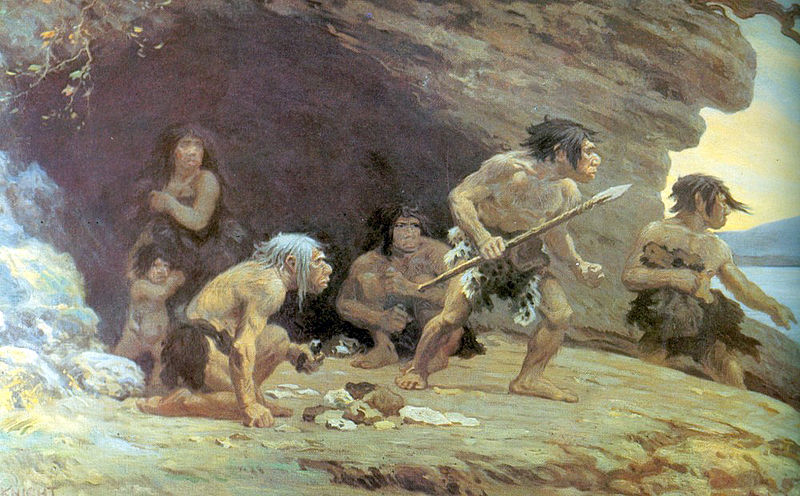
they, and not humans, created the first cave paintings. Now, with an analysis of prehistoric animal remains from Germany, we can deduce that Neanderthals were capable of sophisticated and collaborative hunting strategies. [caption id="attachment_8773" align="aligncenter" width="500"] Credit: Le Moustier Neanderthals by Charles R Knight, 1920[/caption]

120,000-year-old secrets

Cut marks on the bones of two deer from 120,000 years ago provide the earliest evidence that weapons were used to stalk and kill prey. The findings, published in Nature Ecology and Evolution, used microscopic imaging and ballistics experiments to confirm that at least one of the blows was delivered at low velocity with a wooden spear. Sabine Gaudzinski-Windheuser, a researcher at Johannes Gutenberg-University Mainz, Germany has commented: “This suggests that Neanderthals approached animals very closely and thrust, not threw, their spears at the animals, most likely from an underhand angle.” “Such a confrontational way of hunting required careful planning and concealment, and close cooperation between individual hunters,” she continues.

A brief history of the Neanderthals

Neanderthals occupied areas in Europe from around 300,000 years ago. They died out 30,000 years ago, when they were overtaken by humans. For a long time, it was considered that Neanderthals simply lacked the intelligence to compete with humans, but evidence such as this new study has turned that argument on its head. For instance, it was thought that Neanderthals lacked symbolic culture; but as we now know, they were creating cave paintings 20,000 years before humans arrived in Europe. Similarly, they buried their dead in a ritual fashion, proving a symbolic culture in itself. New Historian has previously published a study on the differences between the Neanderthals and humans, which you can read here. [caption id="attachment_8774" align="aligncenter" width="500"] A model an adult Neanderthal male head and shoulders on display in the Hall of Human Origins in the Smithsonian Museum of Natural History in Washington, D.C. Credit: Tim Evanson[/caption]

Neanderthals: cleverer than we might have thought

Hominins, which include both early human species as well as our own, are likely to have hunted with weapons more than 500,000 years ago. 300-400,000 year old wooden staves have been found in England and Germany, and are the oldest known spear-type implements that could have been used to kill prey. However, with no physical evidence that they were indeed used for hunting, scientists have speculated. This new finding removes any doubt: these were hunting tools. “As far as spear use is concerned, We now finally have the ‘crime scene’ fitting to the proverbial ‘smoking gun’,” Gaudzinski-Windheuser says. Excavations from nearby sites have provided us with tens of thousands of bones from huntable animals such as deer, horses and bovids. Thousands of stone artefacts also found nearby help to paint the picture of a flourishing Neanderthal forest lifestyle between 135,000 and 115,000 years ago. Despite having been discovered around 20 years ago, these deer bones have now been examined with new technologies. They have allowed us to tell which injuries were fatal, the kind of weapon used and what kind of distance there was between the hunter and his prey. Annemieke Milks, a researcher at the Institute of Archaeology at University College London writes in Nature Ecology and Evolution: “the ballistics work is experimental archaeology at its best”.]]>

Categories
Breaking News

Sweden has been brewing beer since the Iron Age

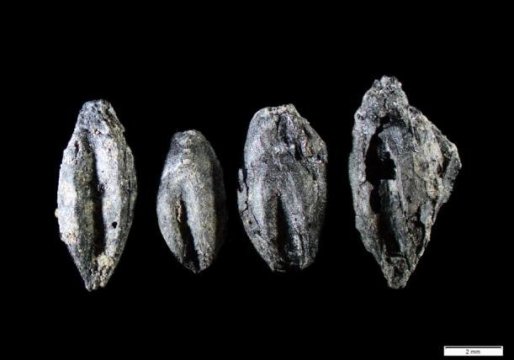
Carbonized germinated grains found at Uppåkra, Sweden.
Credit: Mikael Larsson[/caption] “We found carbonised malt in an area with low-temperature ovens located in a separate part of the settlement. The findings are from the 400-600s, making them one of the earliest evidence of beer brewing in Sweden,” says Mikael Larsson, a specialist in archaeobotany, the archaeology of human-plant interactions.

Beer: a hazy history

The brewing, consumption and distribution of beer was an important aspect of many ancient societies across the world. By way of example, beer was produced in Mesopotamia as far back as 4000 BCE. There have been suggestions that Mesopotamians could have been drinking beer in 10,000 BCE, but there is little evidence to back this up. We do know, though, that beer was drunk in Northern China 9,000 years ago. [caption id="attachment_8765" align="aligncenter" width="640"] Beer has played an important role in society for at least 10,000 years. Credit: Pixabay[/caption] But for the Nordic countries, evidence of early beer consumption is scarce, as there are no written sources from before the Middle Ages in this region. Knowledge of beer production has been, so far, dependent on botanical evidence. Existing findings are limited, though early traces of malt for beer brewing have been discovered in two other places in the Nordics. One is in Denmark from 100 CE and one is in Eketorp on Öland from around 500 CE. “We often find cereal grains on archaeological sites, but very rarely from contexts that testify as to how they were processed. These germinated grains found around a low-temperature oven indicate that they were used to become malt for brewing beer,” says Larsson.

A centre of political & religious power

Uppåkra, where the grains were discovered, is the largest known Iron Age settlement in southern Scandinavia. It served as a densely populated political and religious centre of power for more than 1000 years, from the 100s BCE to the 1 000s CE. Many imported and luxury items have been discovered at Uppåkra. Jewellery and glass bowls found on the sites indicate that the location was a rich, bustling trading centre – one that would likely play host to Scandinavia’s oldest brewery.

Scandinavia’s oldest brewery

Making beer is a two-stage process. Before the actual brewing, the malting process must be executed. Grains are soaked in water, which will allow the grain to germinate. While that’s happening, enzymatic activities convert both proteins and starches of the train into fermentable sugars. When enough sugar has been formed, the germinated grain is dried in an oven with hot air. It was this oven that was discovered and studied in Uppåkra, Sweden. Larsson explains: “Because the investigated oven and carbonised grain was situated in an area on the site with several similar ovens, but absent of remains to indicate a living quarter, it is likely that large-scale production of malt was allocated to a specific area on the settlement, intended for feasting and/or trading.”]]>

Categories
Editorial

Colour symbolism in Viking culture: what we know so far

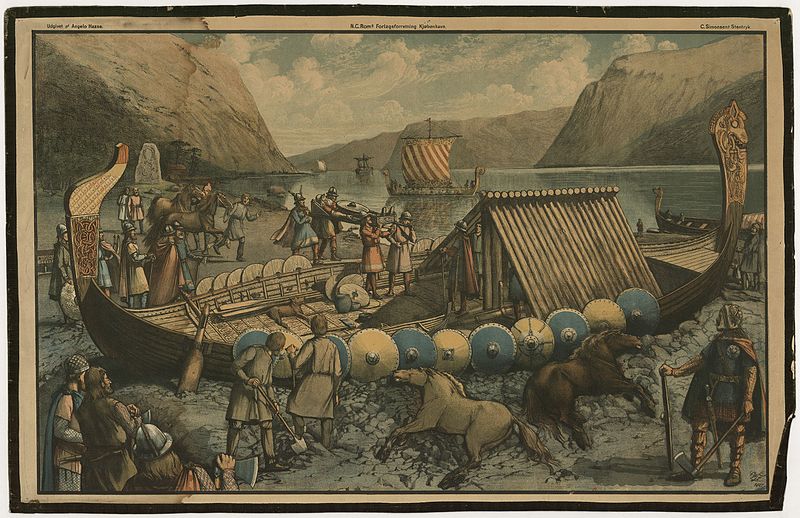
The pigments of pillage Regarding the Vikings, research has been relatively sparse. We know they used bold colours to be seen from a distance, and they would produce these colour pigments from numerous sources, including ochre and charcoal. These would have been blended together along with a binding agent (such as milk products, egg, or linseed oil), to allow the colour to adhere to the material. Now, after the publication of a new chemical analysis on Viking objects, we know more about the Viking use of colour than ever before. [caption id="attachment_8744" align="aligncenter" width="500"] En vikingehøvdings højsætning (“The burial of a Viking jarl”), Carl Schmidt, 1888. Credit: Wikimedia Commons[/caption]

No sailing under false colours

With the help of specialist teams of chemists, archaeologists have been able to study colour used in the Viking Age. Chemical analyses of pigments from objects have allowed them to stipulate what could have been the Vikings’ symbolic colour palette. Co-author of the paper and conservator from the National Museum of Denmark, Line Bregnhøi, says that the Viking Age was probably more visually vibrant that we may have first assumed. She says: “When we’ve previously excavated finds from the Viking Age among others, we weren’t so interested in colours. Partly because we didn’t have the techniques to study pigments, but also because we assumed that the colours appeared more or less as they were found.” [caption id="attachment_8743" align="aligncenter" width="440"] The study includes a selection of colours that are likely to have been used by the Vikings. Credit: National Museum of Denmark / Roberto Fortuna[/caption]

Authenticity first

However, she has now worked with colleague Lars Holten, director of the Centre for Historical and Archaeological Research and Communication, to create the colour palette used in the reconstructed version of The Royal Hall, Denmark’s largest Viking building. In the reconstruction, which sits at the Centre for Historical and Archaeological Research and Communication in Denmark, the team has worked with the same type of paint that would have been used by those in the upper echelons of Viking society. The Royal Hall has been decorated with linseed oil paint, as it would have been the most durable binding agent available to Viking painters. For authenticity’s sake, the hall has not been entirely covered in paint, as sheer expense means that this would have been unlikely.  

A study in scarlet

As has been true throughout the history of paint, some colours were rarer and thus more expensive than others. Imbued with symbolism, they indicated a separate social standing. Lars Holten comments: “We know that the symbolism of colour is enormously important in all cultures. Red, white, and black are some of the most common and have similar symbolism among numerous cultures.” Henriette Syrach Lyngstrøm, an archaeologist from the University of Copenhagen’s Saxo Institute, says: “it’s an important study because it presents the chemical analyses that form the basis for the very subjective ideas that archaeologist have on Viking Age colour.” Although not involved in the new study herself, she says it’s one of the most essential reports we have on the Viking’s use of colour. She continues: “On the rare occasion that we excavate a piece of painted wood, the colour looks nothing like the original. Here, chemists and conservators analyse the pigments and help us to further our interpretations.”]]>

Categories
Breaking News

3,000 year old funeral rituals show earliest evidence of human hair dye

Early funeral rituals: mysteries revealed A collaborative excavation from the University of Granada in Spain, the University of Tübingen in Germany and the University of Cambridge in the United Kingdom has uncovered around one hundred bodies; many of which have been affected by hitherto undiscovered funeral rituals, including hair that has been dyed red. The bodies were uncovered in a Biniadris Cave, which would have been frequented by different societies over a period of between 3,300 and 2,600 years ago.   [caption id="attachment_8737" align="aligncenter" width="500"] View of the entrance to Biniadris Cave in Menorca. Credit: University of Granada[/caption]

Hair dye and its symbolic value

Two archaeological researchers from the University of Granada, Dr. Eva Alarcón García and Dr. Auxilio Moreno Onorato, have written: “Evidently, the red tufts of hair must have had symbolic value for these social groups. They were perfectly cut and deposited in containers of varying sizes that were made of different materials (metal, leather and even wood), which were then hidden in specific parts of the cave.” [caption id="attachment_8738" align="aligncenter" width="500"] Remains discovered in Biniadris Cave, Menorca. Credit: University of Granada[/caption]

A unique combination of funeral rituals

As well as colouring the deceased’s hair red, members of this society practiced a collection of funeral rituals that reflect their local religion and its symbolism. For example, the researchers found that the bodies were usually placed in the centre of the cave, where they were surrounded by ceramic fragments. Trepanation, a symbolic act in which a hole is drilled into the skull of the deceased, was also practiced on many of the bodies. Dr. Eva Alarcón García notes: “There are no precedents for these kinds of social practices in the Iberian Peninsula and they are unique to the Balearic Islands. The buried were placed in the middle of the cave and a variety of elements were used during the rituals, such as plant materials (branches and trunks), ceramic vessels that must have played an important role given the degree of fragmentation they exhibit, iron oxide ores (‘ochre’), etc.”  

Ritualistic attire for Menorca’s deceased

The team of archaeologists also found that many of the bodies were dressed up in ritualistic attire. Needles, fabric and ancient V-perforated buttons made from bones and wild boar tusks were discovered in the cave, close to the bodies. The remains of the hairs and fabric are currently being studied through carbon-14 dating at the University of Cambridge. “Undoubtedly, the findings at the Biniadris Cave will raise many questions and pave the way for new lines of research, not only from archaeological perspectives but also from anthropological ones. For now, the main objective of the research is to solve the enigmas presented by these mysterious funeral rituals performed long ago in the Biniadris Cave,” they conclude.]]>

Categories
Breaking News

Revealed: the secrets of pre-Viking whaling

Credit: Wikimedia Commons[/caption]
Toys and games as evidence for early whaling

A visit to a typical Swedish museum will expose visitors to extensive collections of Iron Age board game pieces. Thousands of pieces have been found, helping to paint a picture of early Scandinavian culture and communication. But new studies from the University of York and Uppsala University have analysed the raw materials, showing that these toys were commonly made out of whale bone from the mid 6th Century. Suggesting an advanced method of production, they were created in large volumes and had standardised forms. As a result, researchers believe that a steady access to whale bone would have been necessary; and since it is unlikely that the carcasses of beached whales would have been in rich supply, we’re able to interpret this as evidence for early whaling. Adding to the theory, gaming pieces and toys made from whale bone appear at around the same time as larger boathouses, as well as production features for blubber, were becoming more common in Norway. It’s likely that the toys were made in this region, before being transported southwards and ultimately being used as playthings and burial gifts in Sweden.  

Whaling in folklore

Despite northern Europe’s large-scale whaling being discussed frequently, its origins have long been shrouded in mystery. Alleged sources have been controversial: 9th Century sagas about the Norwegian merchant Ohthere or Ottar, who was a guest and informant at the court of King Alfred the Great, mention his penchant for hunting large whales. Similarly, there are written sources that detect large-scale whaling during the Viking Age in Scandinavia. Neither source is unanimously regarded as true.  

Determining the species

The team was able to determine the materials for a number of game pieces using Zooarchaeology by Mass Spectrometer, or ZooMS. The method revealed that all of the analysed pieces came from the North Atlantic right whale, the Eubalaena glacialis: a huge whale that typically weighs around 50 to 80 tonnes. The animal got its name because it was the ‘right whale’ to hunt. It was known for swimming slowly and close to the shore, and it contained so much blubber that it would float after being killed. With only 300 in known existence, the North Atlantic right whale is one of the world’s most endangered large whales. By shedding a light on the history of its hunt, this research could certainly affect calculations on the development of its population. [caption id="attachment_8733" align="aligncenter" width="500"] Atlantic Northern Right Whale mother and calf. Credit: Wikimedia Commons[/caption]

Pre-urban, pre-Viking trading networks

As well as shedding light on early whaling, the archaeologists believe these findings are an important component for researching extensive early trading networks. Alongside other goods such as bear furs, birds of prey, and an increased iron and tar production, whale bone products indicate that Scandinavia had developed strong, pre-urban trading routes – 200 years before the Viking Period. To complement the research, an in-depth supplementary study will analyse human influence on the marine ecosystems in relation to the population of whales in European waters, since the story of whaling goes back much further than we previously thought.]]>

Categories
Breaking News

Elongated skulls reveal female-biased immigration to Early Medieval Germany

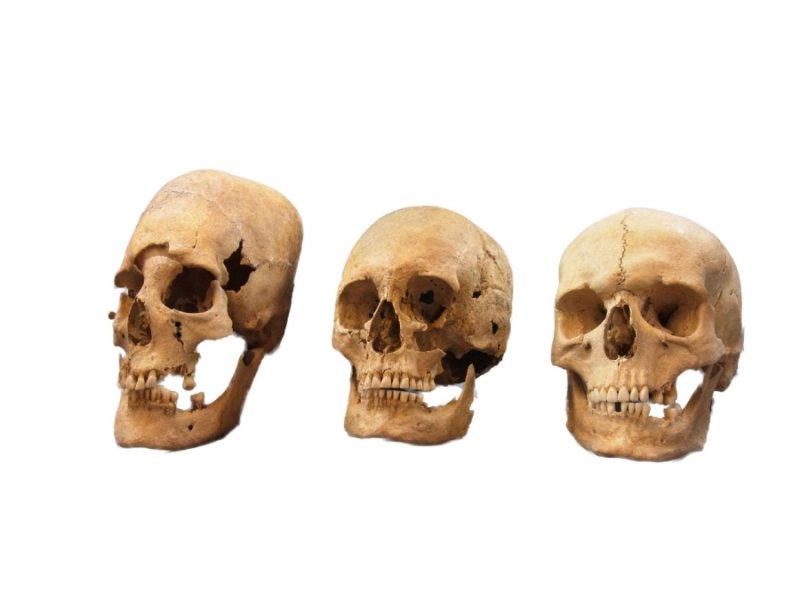
These are strong, intermediate, and non-deformed skulls (from left to right) from the Early Medieval sites Altenerding and Straubing in Bavaria, Germany.
Credit: State Collection for Anthropology and Palaeoanatomy Munich[/caption] In recent years, an international and interdisciplinary team of anthropologists and population geneticists has congregated to explore this transition. The team has now published a palaeogenomic study, which investigates early medieval migration in southern Germany and the peculiar phenomenon of artificial skull deformation. They performed the first genomic analysis of populations that occupied German Bavaria around 500 AD; shedding light on the complex population dynamics of the Völkerwanderung, or Migration Period. Dr Michaela Harbeck from the Bavarian State Collection for Anthropology and Palaeoanatomy (SAPM) teamed up with population geneticist Professor Joachim Burger of Johannes Gutenberg University Mainz (JGU). Working with them were Dr. Krishna Veeramah from US Stony Brook University and colleagues from the UK and Switzerland.  

A curious genetic profile

The study, which analysed 40 different inhabitants, revealed that most ancient Bavarians had a genetic similarity to Central and Northern Europeans. But one group had a particularly diverse genetic profile: the female skulls had been artificially deformed into a tower shape. [caption id="attachment_8728" align="aligncenter" width="500"] Credit: State Collection for Anthropology and Palaeoanatomy Munich. Artificially deformed female skull from Altenerding, an Early Medieval site in Bavaria[/caption] “Parents wrapped their children’s heads with bandages for a few months after birth in order to achieve the desired head shape,” says Dr. Michaela Harbeck. “It is difficult to answer why they carried out this elaborate process, but it was probably used to emulate a certain ideal of beauty or perhaps to indicate a group affiliation.”  

Elongated skulls: A long history

Elongated skulls are found in civilisations across history. The earliest written record refers to the Macrocephali, or Long-heads, and dates to 400 BC; though studies have determined its prevalence in cultures for many thousands of years earlier. Dr. Krishna Veeramah, first author of the study, says: “The presence of these elongated skulls in parts of eastern Europe is most commonly attributed to the nomadic Huns, led by Atilla, during their invasion of the Roman Empire from Asia, but the appearance of these skulls in western Europe is more mysterious, as this was very much the fringes of their territory.”  

Migrating from east to west

DNA analyses of these skulls revealed that the women migrated to early Bavarian settlements from areas across eastern Europe. As well as their deformed skulls, the women tended to have darker colouring in comparison to the other Bavarians they were living with, who generally had fair hair and blue eyes. “Although there is evidence that there was some genetic contribution from Central Asia, the genomic analysis points to the fact that women with deformed skulls in this region are genetically most similar to today’s south eastern Europeans, and that the Huns likely played only a minor role in directly transmitting this tradition to Bavaria,” Burger says. Those with deformed skulls were not the only women migrating to Bavaria. Two women closely resembling modern Greeks and Turks can also be identified. “Most of these foreign women are found with grave goods that look unremarkable compared to the rest of the buried population,” adds Veeramah. “These cases of female migration would have been invisible from the material culture alone.”  

Strategic alliances during political upheaval

“This is an example of long-range female mobility that bridges larger cultural spaces and may have been a way for distant groups to form new strategic alliances during this time of great political upheaval in the absence of a previous Roman hegemony,” notes Burger. “We must expect that many more unprecedented population-dynamic phenomena have contributed to the genesis of our early cities and villages.” “Interestingly, though our results are preliminary, there are no major traces of genetic ancestry in these early inhabitants of Bavaria that might have come from soldiers of the Roman army,” says Harbeck. “We need to keep investigating on an even broader basis how much Celtic and Roman ancestry is in these early Bavarians.”]]>

Categories
Editorial

Nazi Germany and its curious treatment of lesbians

Memorial “to the gay and lesbian victims of National Socialism” in Cologne: The inscription on the left side of the monument (to the viewer’s right from the angle depicted) reads “Totgeschlagen – Totgeschwiegen” (“Struck Dead – Hushed Up”). Credit: Jörg Lenk via Wikimedia Commons[/caption]

Female oppression as a cause for the tolerance of lesbians?

Some have argued that lesbians weren’t as harshly persecuted as gay men, simply because female sexuality wasn’t taken seriously. Others have said that the regime’s policy of pronatalism, which encouraged reproduction and the nuclear family, didn’t face as much of a threat from lesbians as it did gay men. Further still, the Nazis believed women were inferior to men and thus dependent on them. Under this theory, a lesbian would still rely on the men in her community, and is hardly a threat to male dominance. The Nazis also dismissed lesbianism as they believed lesbians could still occupy a German woman’s primary role: to mother as many German babies as possible. Sexuality, they believed, did not interfere with a woman serving the Nazi state as a wife and mother. There is another prominent narrative, which has gained attention over the past year. Samuel Clowes Huneke from Stanford University posits that Nazi officials didn’t see lesbians as a strong political threat, due to the fact that women were barred from politics and public life. “In light of both the fearsome persecution of homosexual men and scholarship that places it in the context of National Socialist pronatalism, the regime’s seeming lack of interest in female homosexuality is startling, for in other respects the government placed considerable burdens on women,” says Huneke.  

Four couples betrayed

Specialising in homosexuality in the Third Reich, Huneke has examined 4 cases of investigation by the Kriminalpolizei, or the German criminal police. Discovered at the Landesarchiv Berlin in 2015, the files shed light on the investigation of 8 women. They show us signed statements from witnesses and the women themselves. In all 4 of the cases, the women were accused by a person they knew and trusted: whether that was a neighbour, co-worker or even a parent. “That these eight women were denounced to the Berlin criminal police in the early 1940s is striking on its own, given the archival silence when it comes to female homosexuality,” Huneke says. Astonishingly, there is no evidence that any of the 8 women were punished as a result. All 4 cases tell us that the women could not be prosecuted for same-sex relations under the criminal code, in the way that gay men would have been. Huneke was fascinated: “To scholars accustomed to seeing in the Nazi state a jungle of overlapping jurisdictions, personal initiative and law based solely on the Führer’s wish, this is a curious portrait of the Nazi justice system, one marked by an unexpected concern for the strict interpretation of statute.” One case stands out as particularly peculiar. Margot Liu née Holzmann was a Jewish lesbian living in Berlin. In 1941, she married a male Chinese waiter and received Chinese citizenship, which protected her from being deported to a concentration camp. However, when her husband discovered she was in a lesbian relationship, he filed for divorce and reported her to the police. Curiously, the police did not intervene. Moreover, they insisted, in multiple documents, that she was protected because of her Chinese citizenship – despite being a German Jewish lesbian. At this point, it is worth noting that in all 4 of these cases, including Margot Holzmann, we are looking at the judgment of one single officer. That particular officer may have just been less inclined to pursue homophobic policy than other officers. However, the rules were very closely followed, which has led some historians to consider this to be an indication of relative tolerance for lesbians.  

“Open – but not enviable – lives”

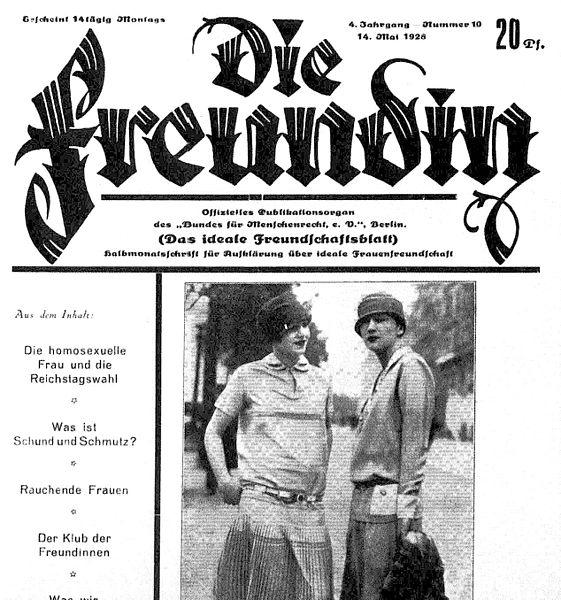
The files show that the 8 women had led relatively open – though certainly not enviable – lives as lesbians before being denounced to the authorities. Ordinary German citizens would have been aware of their female friends, co-workers and acquaintances in same-sex relationships, but were less likely to report them to the police. A patronising understanding of female sexuality comes into play: “Gender is perhaps why lesbians weren’t persecuted in the same ways… [but] these files throw into sharper relief the duplicity of tolerance that has characterised societies’ views of female sexuality for centuries,” says Huneke. By no means was life as a lesbian in Nazi Germany easy, though. In 1928, for example, the police banned popular lesbian journals such as Die Freundin (Girlfriend) based on the Protection of Youth from Obscene Publications Act.   [caption id="attachment_8709" align="aligncenter" width="561"] Credit: Bund für Menschenrecht/Wikimedia Commons[/caption] Many conservatives are documented as demanding the enactment of criminal statutes against lesbian sexual acts. Pamphlets with messages against homosexuals, feminists, Republicans and Jews were everywhere, usually bringing with them the ideas of a conspiracy from marginalised peoples to destroy Germany. These pamphlets denounced the movement for women’s rights, saying that feminism was nothing more than a seduction into lesbianism. Culturally, it seems there was a war against lesbians; and yet there appears to be at least some level of tolerance when it came to prosecution.  

Tolerance and the nature of dictatorships

The case of lesbian life in Nazi Germany is considered to demonstrate that dictatorships often rely not purely on overt oppression; but on limited tolerance of certain groups. Huneke calls it the ‘divide-and-conquer approach’. “One of the most important takeaways from this research, to my mind, is to break the popular idea that authoritarian governments maintain their power only through repression.” Moreover, Huneke says: “the experiences of lesbians in Nazi Germany can help shed light not only on how gender operates in multivalent ways, but also the complex negotiation of both repression and toleration on which authoritarian regimes depend.”]]>

Categories
Breaking News

Mummy Mystery Solved – The History News of the Week

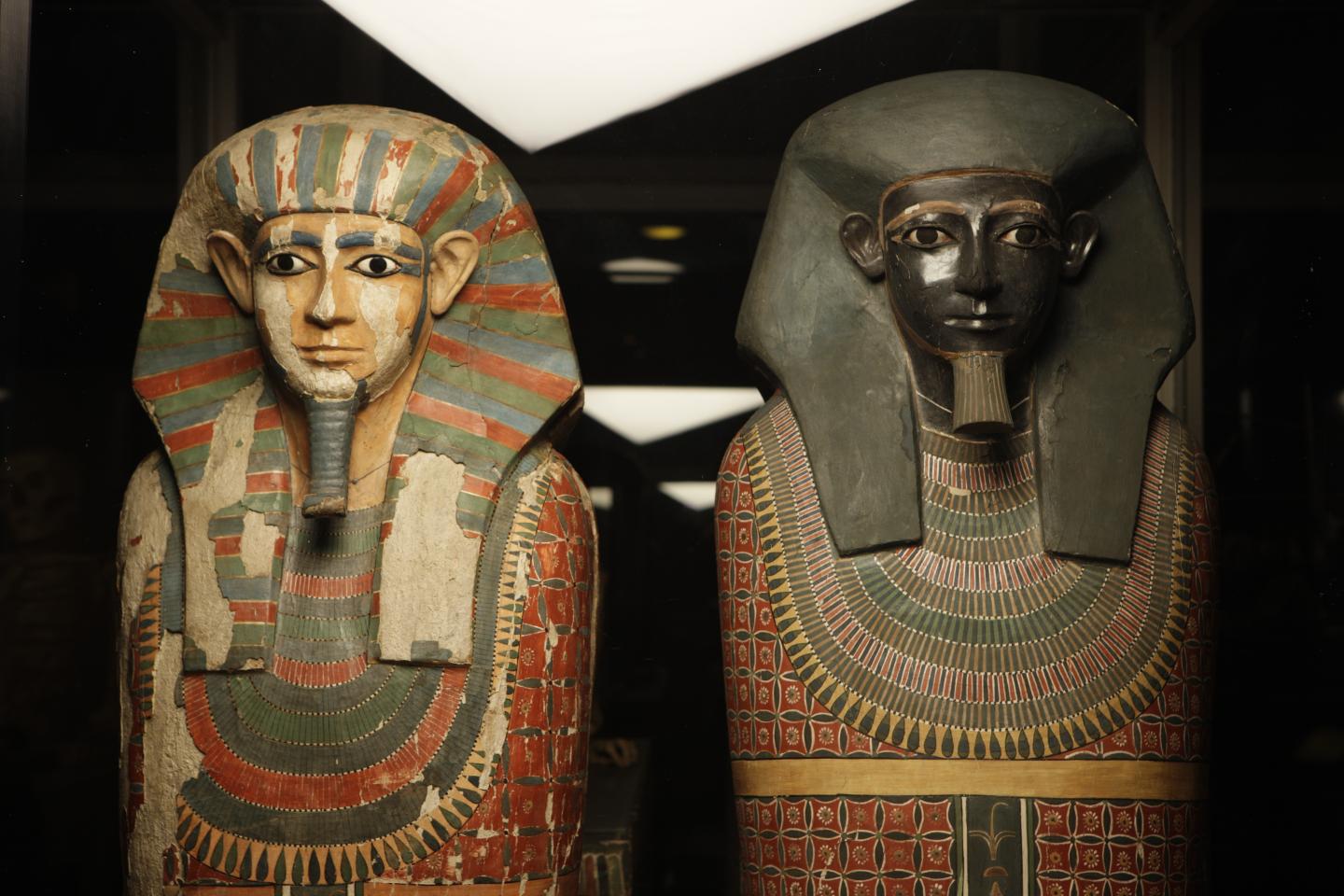
Mystery of Mummified Brothers solved Modern DNA techniques have solved a 4,000-year-old mummy mystery. For years, two mummies at the Manchester Museum were thought to be brothers, but a new study by scientists from the University of Manchester has revealed they are in fact half-brothers with a different father. The mummies are of two ancient Egyptian elites, Khnum-nakht and Nakht-ankh – dating to around 1800 BCE. Despite popularly being dubbed ‘The Two Brothers’, ever since their discovery in 1907 there has been debate over whether they were really related. Hieroglyphic inscriptions on their coffins had suggested the two men were siblings. However, when pioneering Egyptologist Dr. Margaret Murray unwrapped the two mummies in 1908, she argued that differences in skeletal morphologies suggested they weren’t actually related and one had been adopted. In 2015, DNA was extracted from the teeth and sequenced using a next generation technique to determine the relationship – if any – of the two men. The results have now been published in the Journal of Archaeological Science, revealing that they were half-brothers. Dr Konstantina Drosou, of the School of Earth and Environmental Sciences at the University of Manchester, who conducted the DNA sequencing, said: “It was a long and exhausting journey to the results but we are finally here. I am very grateful we were able to add a small but very important piece to the big history puzzle and I am sure the brothers would be very proud of us. These moments are what make us believe in ancient DNA. ” The study is the first to successfully use the typing of both mitochondrial and Y chromosomal DNA in Egyptian mummies. Forest Europe’s Forests Halved over last 6,000 years More than 50% of Europe’s forests have disappeared in the last 6,000 years, new research claims. Authors of the new study identify the need for agricultural land and wood as a source of fuel as causing the massive deforestation. The shocking findings were made through pollen analysis at over 1,000 different sites on the continent. They reveal that at one point more than two thirds of northern and central Europe were covered by trees. By contrast, now only a third of the region is covered with forest. In the UK, Ireland and other coastal areas, the amount has plummeted to less than 10%. Published in the journal Scientific Reports, the study points out that this trend of massive deforestation is now starting to reverse due to new types of fuel and building techniques, and ecological initiatives. “Most countries go through a forest transition and the UK and Ireland reached their forest minimum around 200 years ago,” said study lead author Neil Roberts, Professor of Physical Geography at the University of Plymouth. “Other countries in Europe have yet to reach that point, and some parts of Scandinavia – where there is not such a reliance on agriculture – are still predominantly forest. But generally, forest loss has been a dominant feature of Europe’s landscape ecology in the second half of the current interglacial, with consequences for carbon cycling, ecosystem functioning and biodiversity.” Along with Roberts, the study also involved scientists from Estonia, France, Germany, Sweden and Switzerland. Remarkably, in their bid to track the development of Europe’s forests over the last 11,000 years, the authors found that between 11,000 and 6,000 years ago the amount of forest coverage increased, from 60& to 80%. The introduction of ‘modern’ farming practices in the Neolithic period started the drastic decline that accelerated towards the end of the Bronze Age and has lasted until the present. Glass Was Made in Sub-Saharan Africa Centuries Before Europeans Arrived Glass was being made in Sub-Saharan Africa centuries before the arrival of Europeans, new research has discovered. Scientists from Rice University, University College London and the Field Museum say the findings represent a new chapter in the history of glass making. Abidemi Babatunde Babalola, a recent graduate of Rice with a PhD in anthropology and a visiting fellow at Harvard University, came across evidence of early glass making during archaeological excavations at Igbo Olokun, located on the northern periphery of Ile-Ife in southwestern Nigeria. He recovered more than 12,000 glass beads and several kilograms of glass-working debris. “This area has been recognised as a glass-working workshop for more than a century,” Babalola said. “The glass-encrusted containers and beads that have been uncovered there were viewed for many years as evidence that imported glass was remelted and reworked.” A decade ago, it was found that the chemical composition of the glass from Ile-Ife was different to other known glass production areas, raising the possibility the glass was actually produced in Ile-Ife. The excavations at Igbo Olokun have confirmed that possibility. The researchers analysed 52 of the glass beads discovered, revealing that none matched the chemical composition of any glass production area in the ‘Old World’. The excavations revealed that glass production at Igbo Olokun dates to the eleventh through fifteenth centuries CE, long before Europeans arrived at the west coast of Africa. The teams’ findings have been published in the Journal of Archaeological Science. Featured Image: The Two Brothers are the Museum’s oldest mummies and amongst the best-known human remains in its Egyptology collection. They are the mummies of two elite men — Khnum-nakht and Nakht-ankh — dating to around 1800 BCE. Credit: Manchester Museum, The University of Manchester]]>