Categories
Breaking News

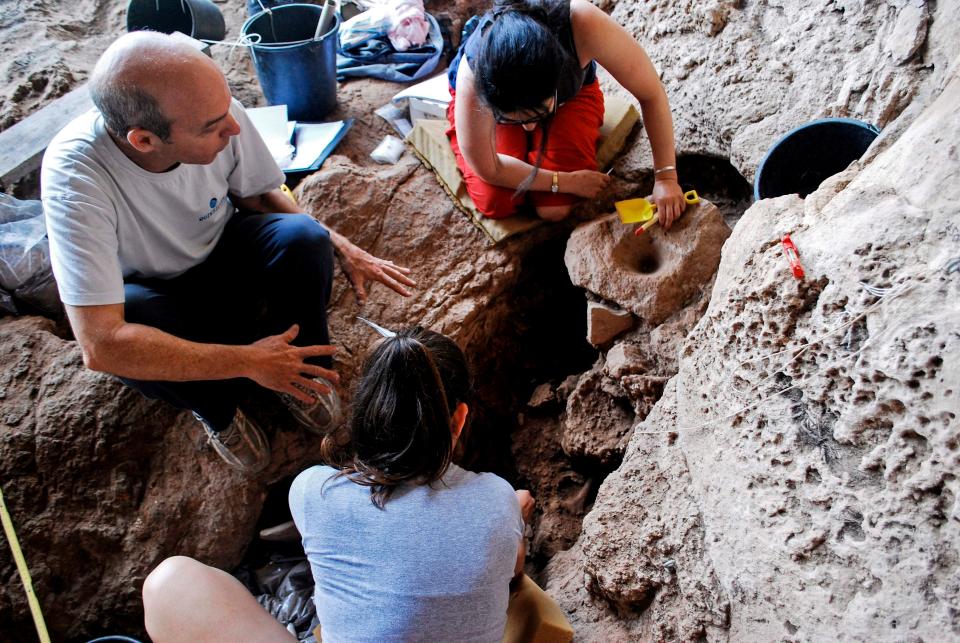
World’s oldest beer brewery discovered in Israel

Archaeologists at the beer-making site in a cave near Raqefet, Israel
Photo credit: AFP[/caption]

Who were the Natufians?

The Natufians were semi-sedentary foraging people, living in the Eastern Mediterranean between the Palaeolithic and the Neolithic periods (after the last Ice Age). As part of their rituals, they collected locally available plants, stored malted seeds and made beer.  

A vivid and colourful picture of Natufian ways

Prof. Dani Nadel, Zinman Institute of Archaeology, University of Haifa, Israel, was on the excavation team: “The Natufian remains in Raqefet Cave never stop surprising us. “We exposed a Natufian burial area with about 30 individuals; a wealth of small finds such as flint tools, animal bones and ground stone implements, and about 100 stone mortars and cup marks. “Some of the skeletons are well-preserved and provided direct dates and even human DNA, and we have evidence for flower burials and wakes by the graves. “And now, with the production of beer, the Raqefet Cave remains provide a very vivid and colourful picture of Natufian lifeways, their technological capabilities and inventions.” The results of the study indicate that the Natufians exploited over seven types of plants associated with the mortars. That includes wheat or barley, oat, legumes, and bast fibres like flax. They would then pack plant foods in fibre-made containers and store them in boulder mortars. Bedrock mortars would be used to brew wheat and barley based beer, which would then have likely been served in ritual feasts. [caption id="attachment_8893" align="aligncenter" width="500"] This is the site location and artefacts analysed. (A) The location of Raqefet Cave and three additional Natufian sites in Mt. Carmel; (B) field photos of the studied boulder mortars (BM1,2) and the location of BM3 on the cave floor (scale bar and arrow: 20 cm); (C) a functional reconstruction of the mortars: a boulder mortar used to store plants in a basket with a stone slab on top, and a bedrock mortar used for pounding and cooking plants and brewing beer. Photo credit: Dror Maayan; Graphic design credit: Anat Regev-Gisis[/caption]
Fleshing out our understanding of Natufian society

In July, experts discovered the remnants of what may have been the oldest bread ever baked in Jordan at a site occupied by the Natufian people 14,400 years ago. The fact that beer was brewed at Raqefet Cave 13,000 years ago fleshes out our understanding of Natufian social and ritual realms. It is thought that the brewing of beer inspired people to cultivate cereals in southern Levant – supporting a hypothesis proposed by archaeologists more than 60 years ago.]]>

Categories
Breaking News

Sweden has been brewing beer since the Iron Age

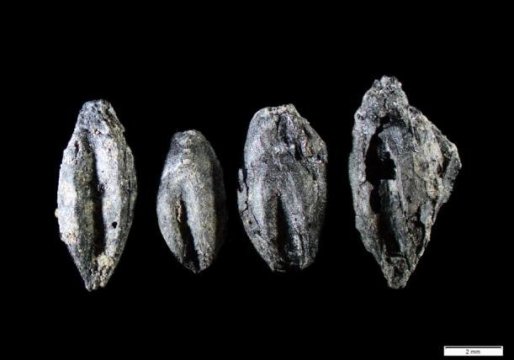
Carbonized germinated grains found at Uppåkra, Sweden.
Credit: Mikael Larsson[/caption] “We found carbonised malt in an area with low-temperature ovens located in a separate part of the settlement. The findings are from the 400-600s, making them one of the earliest evidence of beer brewing in Sweden,” says Mikael Larsson, a specialist in archaeobotany, the archaeology of human-plant interactions.

Beer: a hazy history

The brewing, consumption and distribution of beer was an important aspect of many ancient societies across the world. By way of example, beer was produced in Mesopotamia as far back as 4000 BCE. There have been suggestions that Mesopotamians could have been drinking beer in 10,000 BCE, but there is little evidence to back this up. We do know, though, that beer was drunk in Northern China 9,000 years ago. [caption id="attachment_8765" align="aligncenter" width="640"] Beer has played an important role in society for at least 10,000 years. Credit: Pixabay[/caption] But for the Nordic countries, evidence of early beer consumption is scarce, as there are no written sources from before the Middle Ages in this region. Knowledge of beer production has been, so far, dependent on botanical evidence. Existing findings are limited, though early traces of malt for beer brewing have been discovered in two other places in the Nordics. One is in Denmark from 100 CE and one is in Eketorp on Öland from around 500 CE. “We often find cereal grains on archaeological sites, but very rarely from contexts that testify as to how they were processed. These germinated grains found around a low-temperature oven indicate that they were used to become malt for brewing beer,” says Larsson.

A centre of political & religious power

Uppåkra, where the grains were discovered, is the largest known Iron Age settlement in southern Scandinavia. It served as a densely populated political and religious centre of power for more than 1000 years, from the 100s BCE to the 1 000s CE. Many imported and luxury items have been discovered at Uppåkra. Jewellery and glass bowls found on the sites indicate that the location was a rich, bustling trading centre – one that would likely play host to Scandinavia’s oldest brewery.

Scandinavia’s oldest brewery

Making beer is a two-stage process. Before the actual brewing, the malting process must be executed. Grains are soaked in water, which will allow the grain to germinate. While that’s happening, enzymatic activities convert both proteins and starches of the train into fermentable sugars. When enough sugar has been formed, the germinated grain is dried in an oven with hot air. It was this oven that was discovered and studied in Uppåkra, Sweden. Larsson explains: “Because the investigated oven and carbonised grain was situated in an area on the site with several similar ovens, but absent of remains to indicate a living quarter, it is likely that large-scale production of malt was allocated to a specific area on the settlement, intended for feasting and/or trading.”]]>

Categories
News

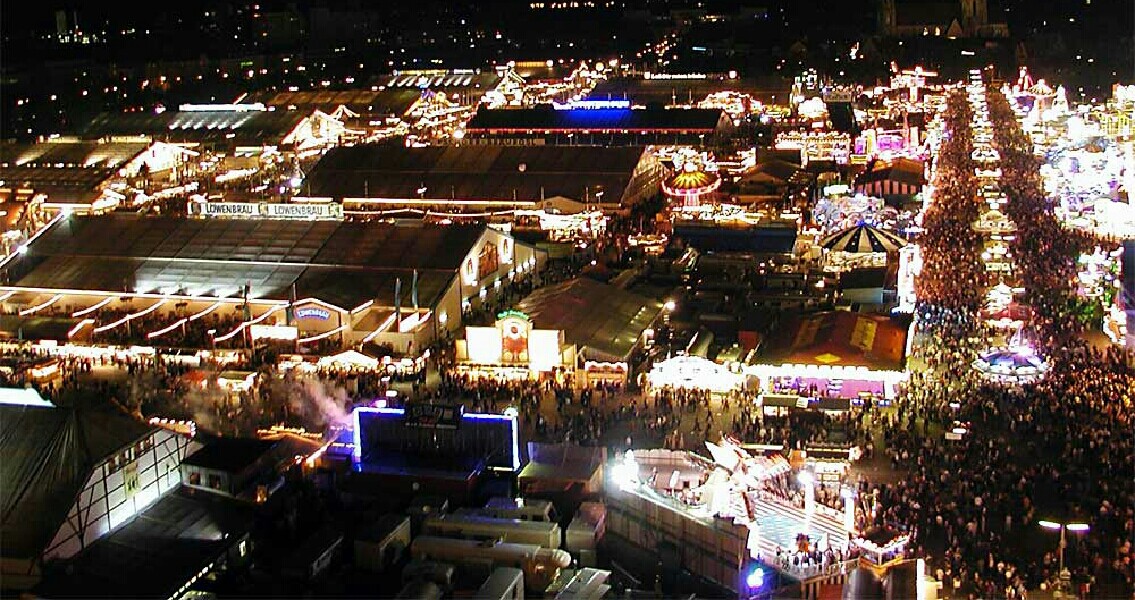
From Weddings to Beer Halls, The History of Oktoberfest

Categories
Breaking News

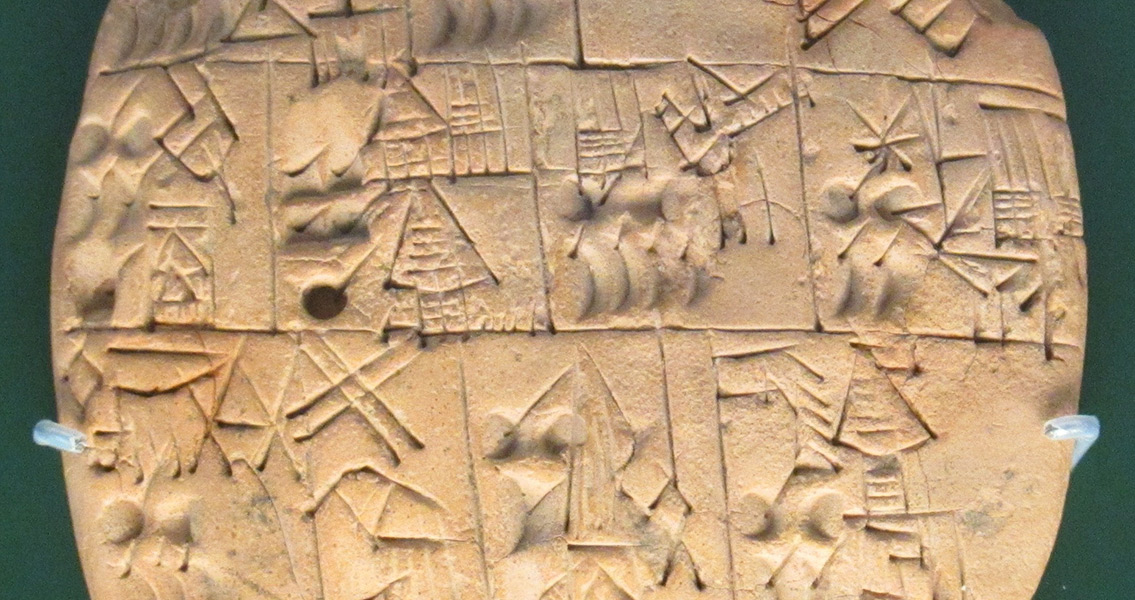
Sumerian Workers Paid in Beer, Cuneiform Tablet Reveals

New Scientist, the tablet bears specific symbols including a stylized human head eating from a bowl (which meant “ration” to the Sumerians) and a conical vessel for containing an alcoholic beverage (the cuneiform for “beer”). Around the tablet appear markings that record how much beer a specific worker was entitled to, the article explains. Mesopotamians weren’t the only ones to use alcohol as a currency. In fact, ancient Egyptians were often paid anywhere from 4 to 5 liters of beer a day for working on the pyramids. The custom persisted until much later in history, records exist from as late as the fourteenth century, such as the 252 gallons of wine a year which was part of Geoffrey Chaucer’s salary as decreed by King Richard II. This system differs from even more ancient evidence indicating that many prehistoric settlements were more egalitarian – instead of getting paid for work, everyone within the community would share the work and then reap the rewards collectively. While this has changed, and while it seems a no-brainer to award workers with alcoholic beverages to keep them in line, there’s more at play here than just keeping workers happily drunk. Ancient beer doubled as a food item, as it was loaded with starches that made it an excellent choice for nutrition. Meanwhile, popular thought from the Middle Ages included the belief that consuming wine regularly was excellent for your health. Some historians believe that wine might have been the healthier choice during times that Europe was gripped by plague, as water supplies could easily become tainted; wine sealed in casks and bottles, by comparison, would have been relatively safe to drink. The tradition isn’t without its modern adherents as well. The city of Amsterdam began a controversial new initiative in 2013, aimed at helping alcoholics and encouraging them to become functioning members of society once more, that involves reimbursing them in beer for picking up trash. Less strange is the common practice of many Silicon Valley companies providing free drinks to their staff on Friday afternoons. However, with this newly-translated pay stub, one that stretches back literally thousands of years, it’s clear that the modern practice of compensating workers with a few alcoholic beverages now and again is hardly a new or controversial idea but instead one that’s been present throughout recorded history. Image courtesy of Wikimedia Commons user: BabelStone]]>

Categories
Breaking News

5,000-Year-Old Brewery Found in Israel

Categories
Breaking News

Nineteenth-Century Beer Analysed

www.pubs.acs.org Image courtesy of Wikimedia commons user: Alfvanbeem]]>