Related Books

Les Fleurs du Mal
by Charles Baudelaire

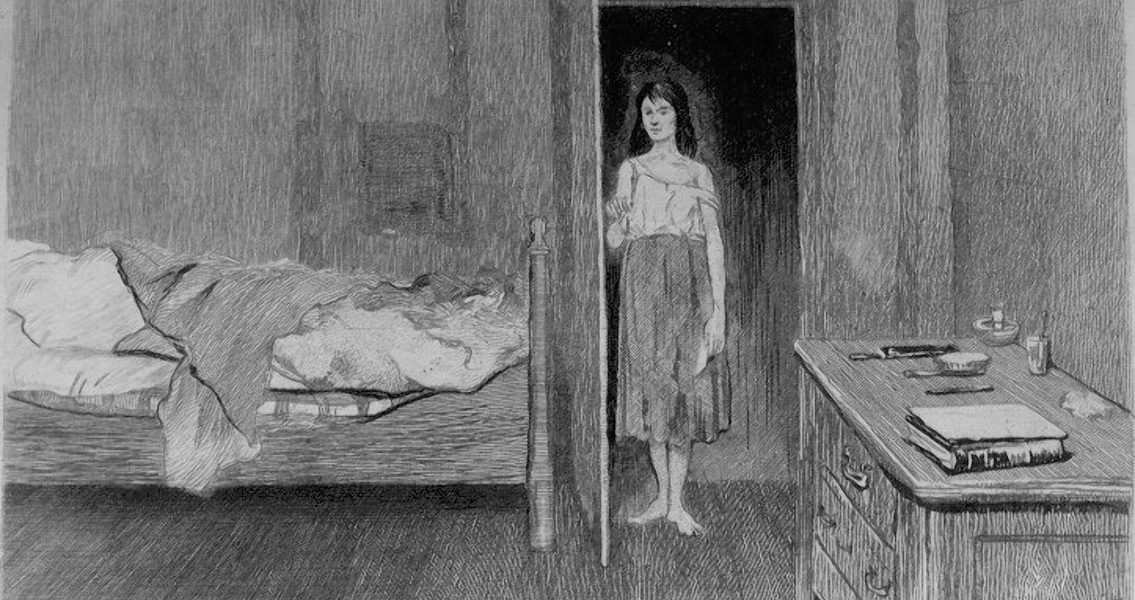
Les Miserables has evolved well beyond its nineteenth century origins into a modern cultural phenomenon. As the story has been retold and adjusted to fit new forms however, it is important to remember that the original novel was a vital piece of social commentary that strove to both reflect and affect the context in which it was created. Les Miserables is not a book about the French Revolution, its author was born over a decade after the events of 1789, and the story is set in the middle of the nineteenth century. However, its backdrop is a France still coming to terms with 1789, reflecting the experiences of an author who grew up and lived in the wake of that momentous event. As such, it captures the upheaval of nineteenth century France, a century which witnessed both the Napoleonic Wars and the Paris Commune, and conveys the sense of constant change and instability of the early nineteenth century through the troubled lives of its protagonists. Hugo was born 26th February, 1802, in Besançon, France. His father, Joseph-Léopold-Sigisbert Hugo, was a general in Napoleon’s armies. Joseph Hugo’s constant traveling for the French campaigns in Italy and Spain meant that the Napoleonic Wars had a very direct relevance to the younger Hugo’s early life. The tumultuous politics of the period became a feature of his upbringing. While his mother was a staunch royalist, Hugo’s father was loyal to each successive French government: the Convention, the Empire, the Restoration. Marital tensions meant Hugo’s childhood was spent switching from accompanying his father on his campaigns through Europe and returning home to Paris to see his mother. Although Les Miserables charts a broad chunk of French history in the aftermath of 1789, it reaches its climax in the June 1832 Rebellion in Paris, an event Hugo witnessed first hand. Already established as a writer, the events in June proved particularly inspirational. The 1830 Revolution had seen the ‘Citizen king’ Louis-Philippe take the throne. Initially popular, the widening gap between rich and poor during the first years of his reign saw resentment build among the poor in France. Amidst a major cholera epidemic, thousands of Parisians took to the streets to commemorate the death of General Jean Maximilien Lamarque, a man considered to have been a champion for the poor. The mob swelled as political agitators joined those attempting to witness the funeral procession. Some observers claim that around 100,000 protesters eventually joined and the mob eventually took over half of Paris. Barricades were erected throughout the city, as the insurgents looked for arms to defend the sections of Paris they had gained control of. Ultimately, a lack of broader support from the citizens of the city meant that the uprising was suppressed within twenty four hours of its start. In a century of revolutions throughout France and Europe, the rebellion of June 1832 had failed to achieve any lasting change, which explains why it is perhaps overlooked compared to other events in French history. As a first hand witness to the rebellion however, Hugo immortalised it in Les Miserables for what it was – an expression of the continued discontent of the poor in Parisian society. Les Miserables charts a period of constant revolution and change. It comments on the failings of successive administrations, and the effects these failings had on the French people. Its focus is the poor in society, and how time and again the French class system punished good, honest people with poverty. Each of the main characters represents a problem of their time that Hugo felt needed reform – education, women’s rights and the treatment of criminals. These personal tragedies are linked explicitly to problems with nineteenth century France as a whole, and towards the end of the book become manifested in the insurrection in Paris. Les Miserables is a fantastic story which has rightly been retold in different languages and different formats. On top of that, it is an analysis by one of France’s greatest writers about the condition of the society in which he lived. Image by Pierre Jeanniot

Les Miserables
A Novel
Vol. 1Vol. 1
by Victor Hugo
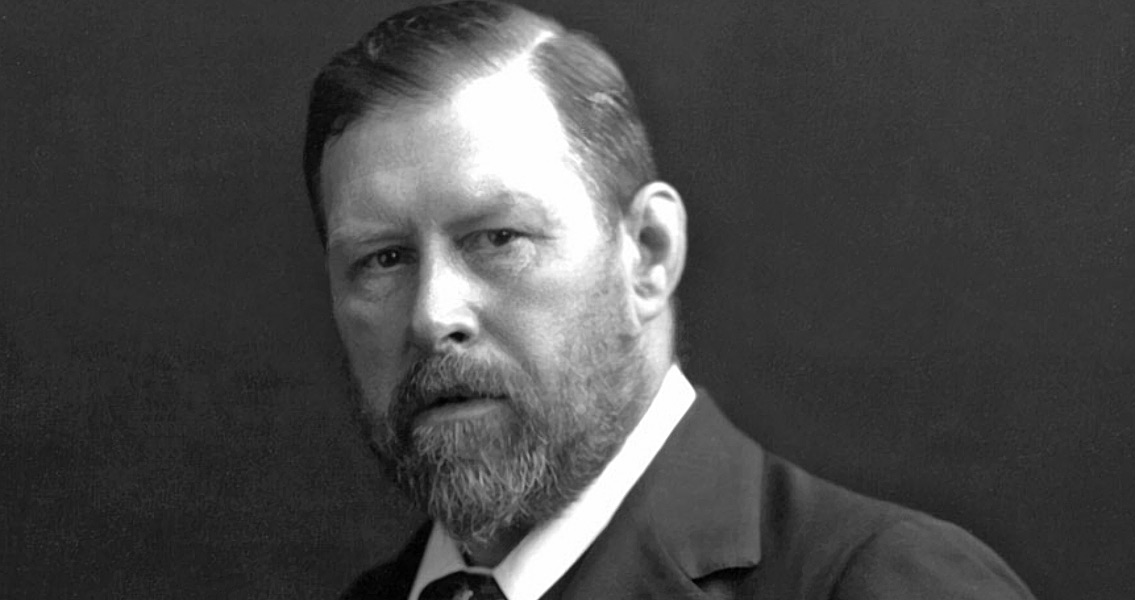
Dracula. First released in English bookshops in 1897, the book remains for many the classic vampire novel. The book’s author, Bram Stoker, was born in Dublin, Ireland, in 1847. A sickly child, Stoker was forced to spend much of his youth confined at home. His mother, a charity worker and writer, entertained him with fantastic stories. Stoker became healthier as he grew older, and went on to study Mathematics at Trinity College, graduating in 1867. Stoker worked as a civil servant in Dublin while also writing theatre reviews for the Dublin Mail newspaper. He met the famous actor Sir Henry Irving, who hired Stoker as his manager, forging a working relationship which would last for the best part of the next three decades. The new job saw Stoker move to London, where he began his writing career and started to move in the city’s literary circles alongside the likes of Oscar Wilde, Arthur Conan Doyle and Alfred Lord Tennyson. Easily Stoker’s most well known novel, Dracula is composed of a collection of diary entries, letters and telegrams between several key characters. This narrative technique was intended to give the story a more unnerving sense of reality, as though the narrators are relaying simple fact rather than consciously telling a story. It also lends the book a distinct style: lacking a fixed narrator, the story is told from several first person perspectives. A central theme in the book is the relationship between science and tradition, a key concern of the late Victorian era. Industrialisation and scientific advances had led to an increasing detachment from rural traditions, while works such as Darwin’s On the Origin of Species had called into question religious belief systems as a means to understand the universe. Count Dracula however, is something beyond science, a supernatural being whose weaknesses can only be found through traditional means. It is only Van Helsing, a doctor trained in both scientific and non-scientific knowledge, who can identify the threat Count Dracula poses and stop it. Female sexuality is another central issue in Dracula, and in many ways the depiction of women in the book is a reminder of the patriarchal society in which it was written. Many critics argue that the novel was intended to stimulate the imaginations of Victorian men, with Dracula’s female victims metaphors for lust. Many of the female characters are portrayed in a very flat, one dimensional way, often serving as mere objects in the development of the story rather than active subjects. Count Dracula’s attacks lead to his victims breaking from ideals of Victorian womanhood, as seen in his first victim Lucy, or the seductive female vampires in his castle. Throughout, women are either victims or temptresses, their characters are never developed beyond these very basic allegorical roles. It is important to remember that Dracula was not the first vampire story written. Stoker’s work in fact drew on ancient folk stories of the blood sucking undead who attacked their victims at night. Nevertheless, it is the basis for most modern vampire stories, providing an image of vampires that is influential to this day and serving as a reflection of the late Victorian world in which it was written.

Dracula
by Bram Stoker
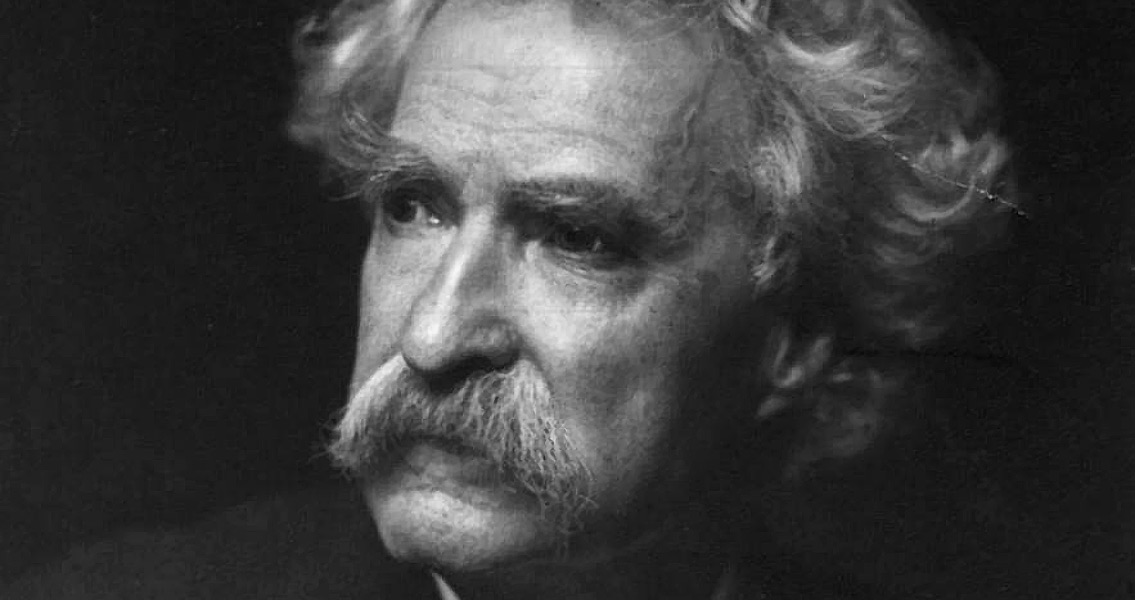
Related Books

The Adventures of Tom Sawyer and the Adventures of Huckleberry Finn
by Mark Twain

Related Books

Strange Case of Dr. Jekyll and Mr. Hyde
by Robert Louis Stevenson

Related Books

Frankenstein
Or the Modern Prometheus
by Mary Wollstonecraft Shelley
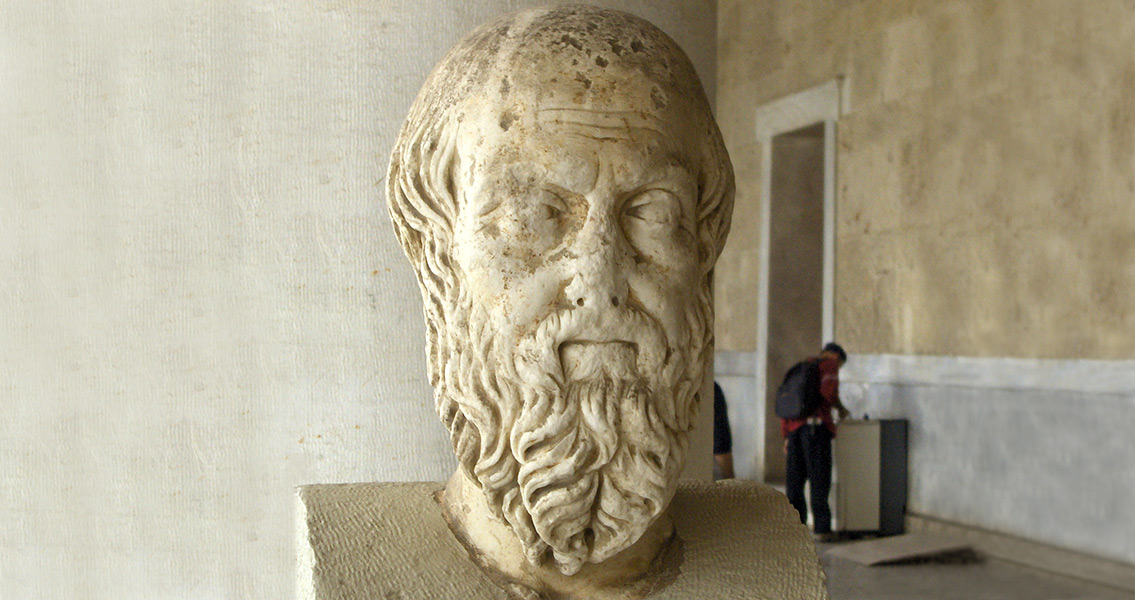
Histories of the war between Greece and Persia is regarded as the first work of narrative history ever produced. It is pioneering in its attempt to provide a broader analysis of the factors behind the conflict, as well as providing one of the few insights available on the host of cultures that had been absorbed into the Persian Empire. Exact details of Herodotus’ life are unknown, but it is clear from the scope and nature of the Histories that he travelled extensively. It is believed that he was born between 500 and 470 BCE, and died sometime after 430 BCE based on the fact that the last event recorded in his Histories took place in that year. It appears that he was born in Halicarnassus, a Greek city in Asia Minor that at the time was under Persian rule. He lived in Athens for a significant part of his life, and some historians have suggested that he was killed in the plague that decimated the city’s population between 429 and 413 BCE. The Greco-Persian Wars were a series of wars fought between the Greek City States and the Persian Empire over a period of more than forty years. A consequence of the continuing expansion of the Persian Empire, the war reached its peak with two Persian attempted invasions of the Greek mainland between 490 and 479 BCE. The wars, and their aftermath, proved crucial in Ancient Greek history. The Greeks defied the odds and successfully repelled the military might of the Persian Empire at the peak of its powers. The victory proved crucial in allowing Greek culture and civilisation to flourish over the next few hundred years, as well as allowing Athens to become more powerful and challenge the previously dominant Spartans. Herodotus’ Histories can be divided into two sections, one of which deals with the origins of the Persian Empire, while the other is a more straightforward narrative of events in the wars themselves. It seems that Herodotus was not content to simply provide a description of the conflict, and felt a need to explain just how the Persian Empire came to be so powerful. As a result, his work illuminates the contrast between the polyglot Persian forces, made up of soldiers from a host of of different regions but united under a strong, forceful leadership, and Greece, a civilisation which shared a language and culture, but was divided by the politics of the City States. In the first four books of the Histories, Herodotus provided a detailed account of the various parts of the Persian Empire, and how they came to be conquered. Influenced by his extensive travels throughout Europe, Asia and Africa, the Histories combine detailed accounts of political maneuverings and military invasions with diversions into the stories and histories of the cultures and people from Africa to Asia who made up Persia at its peak. In Herodotus’ Histories we get detailed accounts of some of the most monumental moments in the history of the Ancient World, such as The Ionian Revolt and the Battle of Marathon. It also depicts some of the period’s most colouful figures, such as the Persian Kings Xerxes and Darius. Herodotus’ storyteller style means the Histories can simultaneously come across as a fantastical tale, and a detailed socio-political examination of two different cultures and the epic battle they fought. What is perhaps most remarkable however, is the balanced approach the author takes, depicting acts of great heroism and great evil on both sides. It is this neutrality which makes Herodotus so pivotal in the development of modern approaches to history. Image courtesy of Wikimedia Commons user: Konstantinos Stampoulis

The History of Herodotus
Translated from the Greek
by Herodotus

risk assessment. The Art of War may have been written for warring states of ancient China, but Sun Tzu’s work has taken on a much broader series of applications.

Sun Tzu on the Art of War
The Oldest Military Treatise in the World; Translated from the Chinese With Introduction, and Critical Notes
by Lionel Giles

