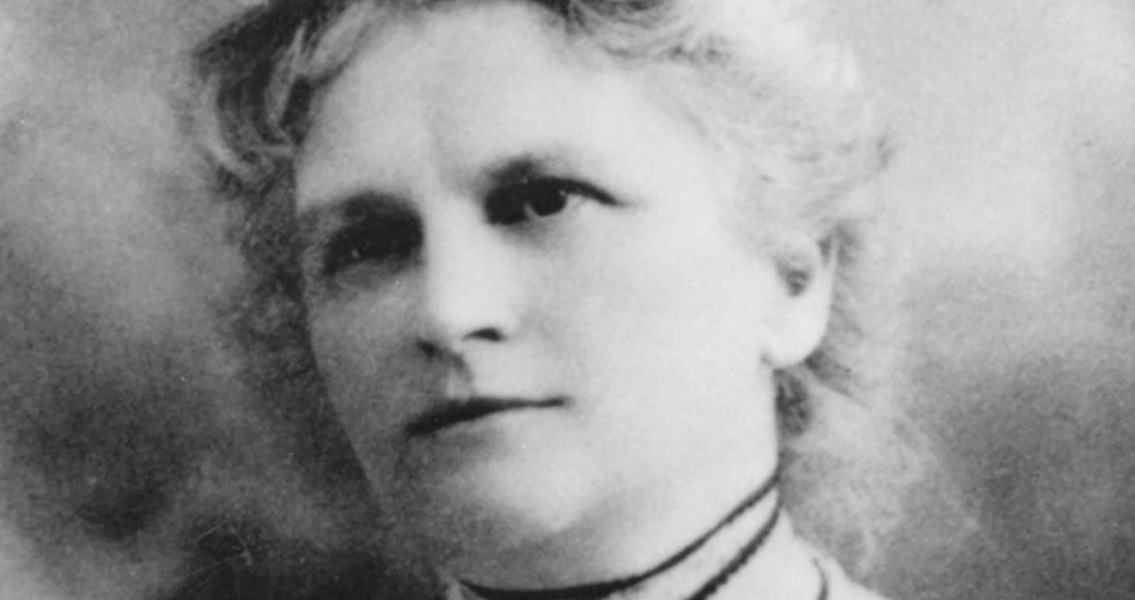
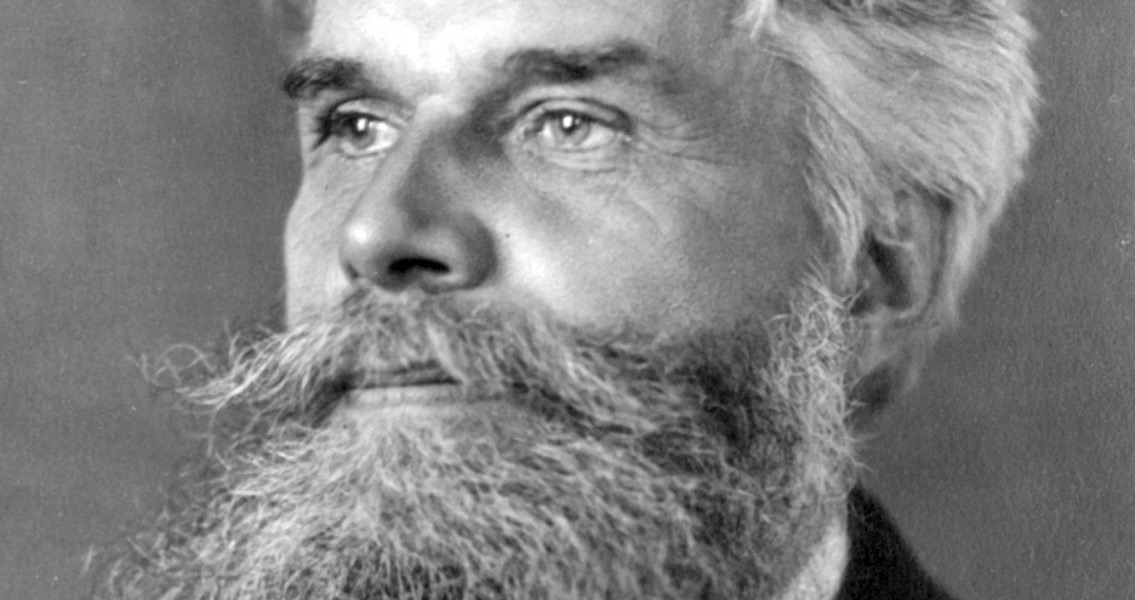
The Nationalisation of Health suggested that the state held responsibility for the health of its citizens. Coming over fifty years before the foundation of the NHS, it was a revolutionary suggestion for its time. The book describes the hospitals of the future, the role of private practitioners, and the need for a Health Minister. Two years later, Man and Woman: A Study of Human Secondary Sexual Characters was published. It was Havelock Ellis’ first study of sexology, coming as the result of over 12 years of research. Attempting to ground the study of gender in biology, the work was in some ways symptomatic of its time. The book traces the history of women’s position in society, from the prehistoric period through medieval times and into the Victorian era, and attempts to analyse the social and economic problems connected to womanhood in the still deeply patriarchal societies of the late nineteenth century. Although some of the conclusions the book reaches about the physical and mental differences between men and women may seem at best overly simplistic and at worse downright sexist now, it was groundbreaking in stressing that men and women had complementary abilities crucial to society, rather than one being more valuable than the other. “Woman is not undeveloped man, but diverse.” ‘Man and Woman’ laid the basis for what is perhaps Havelock Ellis’ best known work, and certainly the most important – ‘Studies in the Psychology of Sex’. The first of the seven volume work, ‘Sexual Inversion’, is perhaps the most significant. Published in 1897, just two years after Oscar Wilde’s conviction for sodomy, the book is the earliest serious study of homosexuality (what Havelock Ellis referred to as ‘Inversion’) and truly innovative considering its context. Highlighting that homosexuality was present in both the animal kingdom and throughout history, ‘Sexual Inversion’ argued that it was a natural occurrence rather than a symptom of social decay, mental illness, or moral degeneracy. Unsurprisingly, the book caused an uproar and was quickly banned. In 1898 George Bedborough was charged with selling copies, the prosecution claiming he “sold and uttered a certain lewd wicked bawdy scandalous and obscene libel in the form of a book entitled Studies in the Psychology of Sex: Sexual Inversion.” Authorities associated the book with anarchism, showing just how dramatically it had shocked a still incredibly reactionary society. For years, the groundbreaking work was only available to the medical profession. Subsequent volumes of ‘Studies in the Psychology of Sex’ would go on to discuss issues such as masturbation and the physiology of sexual behaviour. Throughout, the unifying theme was an attempt to dispel fear and ignorance with open discussion, portraying sexuality as a natural expression of love. In that sense, Havelock Ellis’ works were crucial in defying the rigid repression of Victorian Society.

Studies in the Psychology of Sex
The Evolution of Modesty the Phenomena of Sexual Periodicity Auto-Erotism
Vol. 1Vol. 1
by Havelock Ellis

The Works of Edgar Allan Poe, Vol. 1). “And so faintly you came tapping, tapping at my chamber door, That I scarce was sure I heard you”—here I opened wide the door;— Darkness there and nothing more.” The narrative poem, which is often paid homage to or parodied, depicts a man’s gradual slip into insanity, tortured by a raven who repeatedly answers ‘Nevermore’ to the narrator’s insistent questions. The constant rhyming of the poem and the short, sharp pace of the text adds to the unsettling feeling it conjures. Throughout, the detailed description of the setting further builds a sense of uneasy suspense. Hugely influential, in poetry for the unique form of the work, and to the horror genre in general for its minimalist version of psychological torment, The Raven has also fostered a stereotypical image of Poe’s work which perhaps obscures the diversity of his output. Along with his other horror works such as ‘The Fall of the House of Usher’ and ‘The Black Cat’, Poe wrote short mystery stories such as the ‘The Murders in the Rue Morgue’, or bizarre, fantastical tales such as ‘The Masque of the Red Death’. All of them deal with dark, but widely varied themes. ‘The Masque of the Red Death’ (available in The Works of Edgar Allan Poe, Vol. 7) highlights just how diverse and complex Poe’s works are. It tells the story of a fictional country plagued by a disease known as the Red Death. Prospero, the prince of the country, locks the walls of his palace to hold out the plague, and continues to live a normal life despite the tragedy which is killing his people. Such is his lack of concern for the country’s plight that he even organises a lavish masquerade ball inside the palace. At midnight an ominous figure, dressed like a victim of the Red Death, joins the party. Shocked by the visitor’s ghoulish attire, Prospero confronts it and is immediately killed. Others in the party attempt to confront the strange apparition, and all suffer a similar fate until the Red Death has killed everyone at the party. Although dabbling in themes of the supernatural, the short story is deeply allegorical. Prospero’s fate and the onset of the Red Death at the masquerade symbolise the inevitability of death and decay. Specifically it shows the impossibility, even for the wealthy, of evading these inevitable fates. Prospero meanwhile, represents the vulgar excesses of wealth and power. His insensitivity to his countrymen’s plight sees him build walls with his wealth rather than use it to help them. Beyond mere cowardly self preservation, his revelry at the party shows an unwillingness to compromise his own luxurious life, even if doing so could save others. Poe’s life was a tumultuous one from his youth until his death, one filled with controversy and mystery. This is reflected in the sombre tone of many of his works. His parents, two prominent actors, were both dead by the time of Poe’s third birthday. Poe was fostered by his godparents, John and Frances Allan, who raised him in Richmond, Virginia. John Allan, a wealthy tobacco merchant, afforded his foster son a good education, sending him to the finest boarding schools and eventually to the University of Virginia. That is, until a bitter dispute surrounding Allan’s refusal to pay Poe’s gambling debts ended in his foster son’s dismissal from the university. His life already showing signs of the turmoil which would come to define it, Poe joined the US army. While serving in the military he published his first two poetry collections: ‘Tamerlane and Other Poems’ in 1827, and ‘Al Aaraaf, Tamerlane, and Minor Poems’ in 1829. Both collections were released into relative critical and public obscurity. Following his military service Poe moved into the house of his aunt, Maria Clemm and her daughter, Virginia, in Baltimore, Maryland. He became the editor of Southern Literary Messenger in Richmond and embarked on one of the biggest controversies of his life when he married Virginia in 1836. She was just fourteen years old. Poe’s career as a writer gradually developed in the 1840s, and he moved to New York with his wife. Shortly after his most successful work, The Raven, had been published, Virginia died in 1847. The tragedy pushed Poe into a self destructive spiral of alcohol and drug abuse. In 1849 he got engaged once again, but died in mysterious circumstances in October of that year, just a few days before his planned wedding. The Works of Edgar Allen Poe are perhaps befitting of the author’s controversial, sometimes tragic and often unhinged life. By taking a look at his poetry and short stories, it is possible to gain an insight into the bleak universe he created. Stretching beyond mere horror however, his works explore the diverse facets of the human condition.

The Works of Edgar Allan Poe
Vol. 3 of 5Vol. 3 of 5
by Edgar Allan Poe
Related Books

The Works of Dr. Jonathan Swift
Accurately Revised in Twelve Volumes, Adorned With Copper-Plates, With Some Account of the Author’s Life, and Notes Historical and Explanatory
Vol. 10Vol. 10
by Jonathan Swift
Related Books

Confessions of an English Opium-Eater
Literary Reminiscences
by Thomas de Quincey

Related Books

The Works of Daniel Defoe
Carefully Selected from the Most Authentic Sources, With Chalmers’ Life of the Author, Annotated
by Daniel Defoe

Alice’s Adventures in Wonderland. Meeting a frosty reception on its initial release, the book has since become one of the most iconic children’s stories ever. When first published in 1865, the book received largely negative reviews. The surrealist nature of the work was interpreted as utter nonsense by most readers, who found it absurd and incoherent. Over time, and aided by the illustrations provided by John Tenniel, these accusations have evolved into an appreciation of the vividly realised world described by the author. Some of the more bizarre elements of the story – Alice consuming a mushroom which alters her physical state or a talking caterpillar smoking a hookah pipe – have since been interpreted as thinly veiled references to hallucinogenic drugs. As soon as Alice follows the white rabbit, the story becomes increasingly removed from reality. This idea that the book is loaded with thinly veiled drug references was particularly cemented in the 1960s, when bands, musicians and artists associated with the psychedelic movement frequently described imagery and text from Carroll’s books alongside allusions to narcotics. This is most explicit in Jefferson Airplane’s famous song “White Rabbit”, which is saturated with references to characters from Alice’s Adventures in Wonderland. Writing in a time when opium was legal in Britain, there is of course a chance that Carroll was influenced by drug use. However, there is a danger that the story’s adoption into psychedila in the 1960s has distorted perceptions of the original work and its author, reflecting how a more recent cultural interpretation of the book has been projected onto its creator. Lewis Carroll, born in 1832, was a lecturer in Mathematics at Christ Church College, Oxford. Several recurring ailments, including a stammer, partial deafness, and physical deformities affected Carroll’s confidence in dealing and socialising with others. Socially awkward, Carroll was immensely creative in private, not only as a writer but also a photographer. The witty, complex wordplay in his writing, far from being a sign of hallucinations, is often considered to be an example of him applying the rules of logic and mathematics he needed in his day job to manipulate language. Carroll’s inhibitions around adults completely disappeared when in the company of children. He was fascinated by the innocence of youth, and had an ability to tell imaginative, offbeat stories; his diaries are full of references to the friendships he formed with children, especially girls. One in particular, Alice Liddel, the daughter of one of Carroll’s colleagues, became the inspiration for Alice’s Adventures in Wonderland. This obsession with childhood, a desire to capture a fantastic story which could ignite the imagination of a young child, is a much more likely explanation for the fantastical elements of Alice’s Adventures in Wonderland than the author being under the influence of opium. As a BBC article published in 2012 observed, there is no evidence that Carroll himself was a recreational opium user. The book may seem completely disjointed from reality, surreal to the point of being hallucinogenic – especially when compared to other works from the era – but this is because it was aimed at a young audience, inspired by a socially awkward adult’s fascination with the innocent imagination of youth. In recent years Carroll’s relationships with the young girls who he became friends with have been called into question, perhaps fueled by modern cynicism in the wake of recent controversies related to peadophilia, but also backed up by the unearthing of several troubling photographs of nude children in Carroll’s archives. Although there is no clear evidence that Carroll engaged in any inappropriate actions (it is not clear, for instance, if Carroll was the photographer or even owner of the troubling pictures), questions over his conduct have led to further reappraisals of Alice’s Adventures in Wonderland. Alice’s Adventures in Wonderland is a fantastical piece of literature which revels in the joy of youthful innocence. Shifting interpretations of the book however, reveal that its true meanings are still far from understood.

Alice’s Adventures in Wonderland
And Through the Looking-Glass and What Alice Found There
by Lewis Carroll
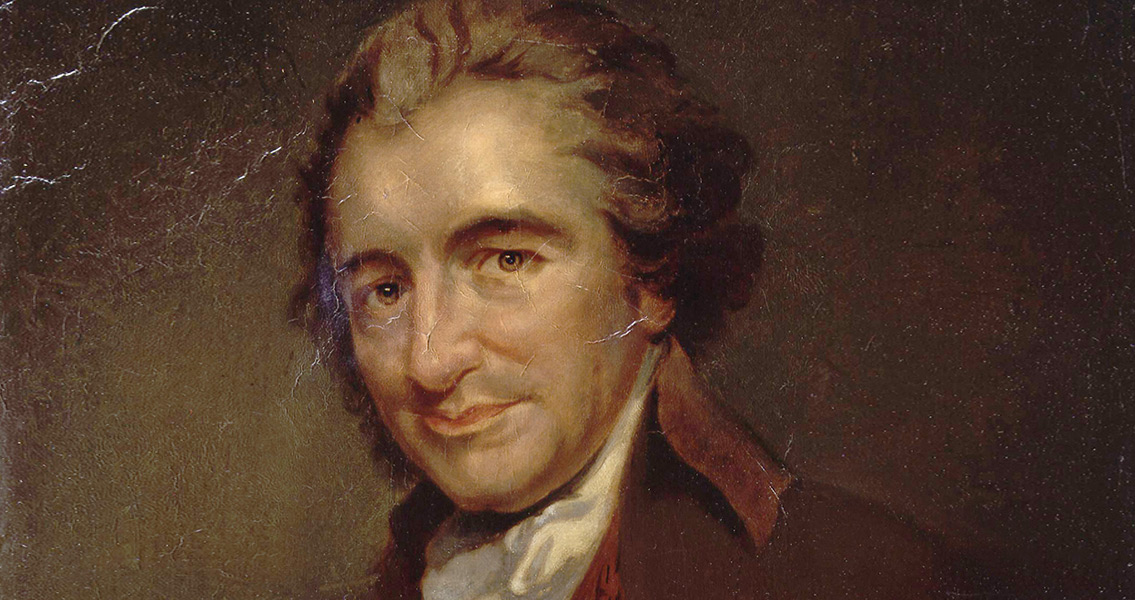
Common Sense was first published as a pamphlet in 1776. The hugely influential seventy-seven page work was one of the first to argue in clear, direct fashion that the future of the American colonies should be one independent from Great Britain. Along with general discussions on the nature of politics and society, Paine’s pamphlet also engages with what he perceived as fundamental flaws in the British political system and the defining injustice of monarchy. All of these factors are combined to form a justification for US independence. Paine was born in Thetford, England, in 1737. He finished his formal education at the age of thirteen and started to work for his father. Throughout his teens and twenties he took in a variety of jobs, ranging from corset maker to school teacher to tax collector. At the same time he used his spare time to pursue the education he hadn’t completed in his youth. He lost the tax collecting job in 1772, after he’d published an article arguing that an increase in tax collectors pay would lead to a reduction in corruption. In 1774, shortly before the American Revolution started, Paine left England for North America. He quickly became involved in American political life, editing the Pennsylvania Magazine and writing a host of articles. At this point relations between the North American colonists and the British were in a precarious state. Several protests against excessive British taxation of the colonies, most notably the Boston Tea Party of December 1773, had already taken place. As more British troops were sent to the colonies, a growing campaign formed among the colonists to break Britain’s interfering presence. Crucially, at this point most colonists viewed themselves as still holding some connection to Britain, and as such campaigned to break the aggressive British taxation rather than win complete independence. Commons Sense played a key role in changing the focus of the campaigns by making a clear argument for independence. At a time when the stirrings of the Revolutionary War had already started with a battle at Lexington and Concord in 1775, Commons Sense convinced many colonists that the only solution was to completely cut all connections to the British government. Pivotal was Paine’s highlighting of the fact that many of the colonists were not just from England, but had actually fled to North America from across Europe in search of liberty. “This new world hath been the asylum for the persecuted lovers of civil and religious liberty from every part of Europe. Hither they have fled, not from the tender embraces of the mother, but from the cruelty of the monster.” By framing the history of migration to the colonies as one from persecution to liberty, Common Sense provided a political justification to the campaign for freedom, and established a clear distinction between the colonists looking for liberty and the conservative politics of the Old World. At the same time, painting Britain as a monster ruled by a tyrannical monarchy and dominated by inequality made explicit the sense of a fundamental divide between the values of the colonists and their rulers across the Atlantic. The pamphlet also argues that when America won its freedom from Britain, its people would stop being rebels and instead become respected internationally. This in turn would allow the new country to make important alliances to further strengthen its position and gain support in its campaign for liberty and freedom. Paine’s Common Sense is a crucial work in understanding American history. Undoubtedly the movement towards the Revolutionary War was already well underway before he had even reached North America. However, the seventy-seven page pamphlet is vital for helping to develop an understanding of the ideological arguments used in the build up to the Declaration of Independence.

Common Sense
by Thomas Paine

