Categories
Editorial

The Teenage Anarchist from Scotland and the Plot to Kill Franco

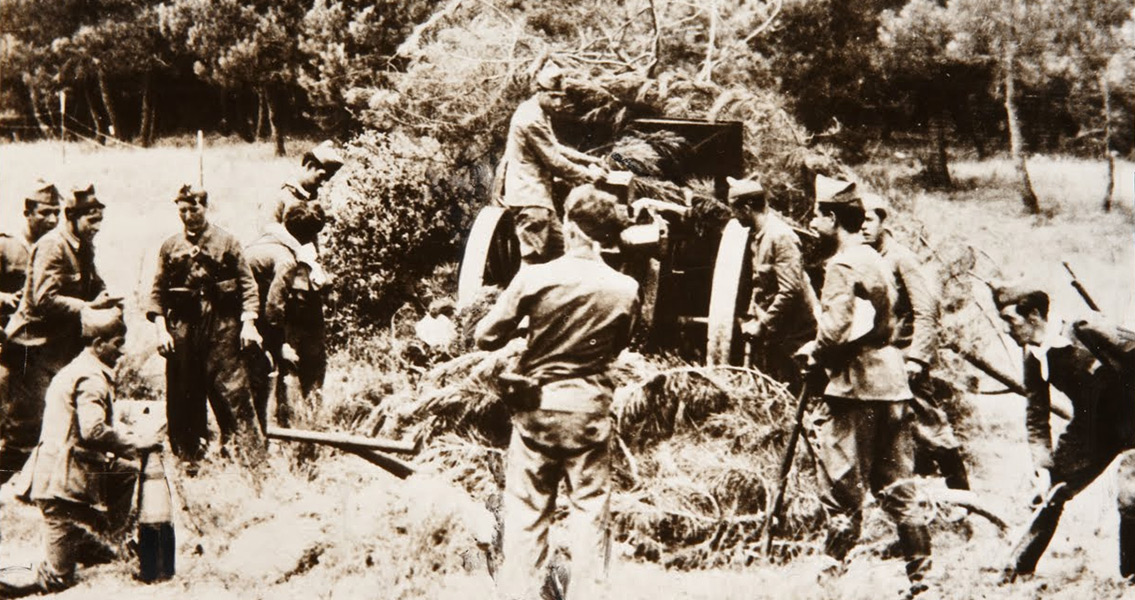
Guardian in 2004, as soon as he arrived at the office he was suspicious his cover had been blown. “It was siesta time and the streets were quiet. Turning the corner to enter the American Express office, I was immediately aware of three smartly dressed and tight-lipped men in heavy-rimmed sunglasses standing by the entrance muttering among themselves.” His fears were confirmed when the clerk went to get the letter. He noticed a pink slip had been attached to the envelope. Before the clerk could hand it over, a supervisor stopped her, telling her to hand the pink slip to two smartly dressed men sitting at an alcove in the office. Only then did the supervisor hand the letter to Christie. “What was in the letter? How much did they know? Would I be arrested there or would they wait until I had met my contact? But if they knew about the Amex pick-up, they probably knew the details of my rendezvous as well.” Christie told the Guardian. He made his way out of the American Express office, clutching the letter. “I turned to see the two men from the alcove quickly walking out. I made a mental note to shaft American Express at every conceivable opportunity, if I were ever again offered an opportunity.” On the street, the men he had earlier noticed outside also began to follow him. Before he could escape into the crowd, Christie was apprehended at gunpoint. The Spanish authorities had infiltrated Defensa Interior long before, allowing them to set the trap. Christie and his Spanish contact: Carballo Blanco, were taken into custody. The teenager was made to watch his accomplice get tortured, although avoided the same fate himself. He signed a confession after four days in detention, and was promptly jailed. Previously, those found guilty of ‘political crimes’ in Spain faced execution by garroting. Blanco and Christie both avoided this fate but were hit with jail terms: thirty years for the former and twenty for the later. Protests erupted around the world at the treatment of the two would-be assassins, providing a poignant reminder of the authoritarian nature of the Franco regime and its treatment of political prisoners. Growing international pressure meant Christie was released after three years. Blanco was not so fortunate, serving his entire sentence and becoming the last political prisoner of the Franco regime. ]]>
Categories
News

Picasso's Guernica Shown in Spain for the First Time

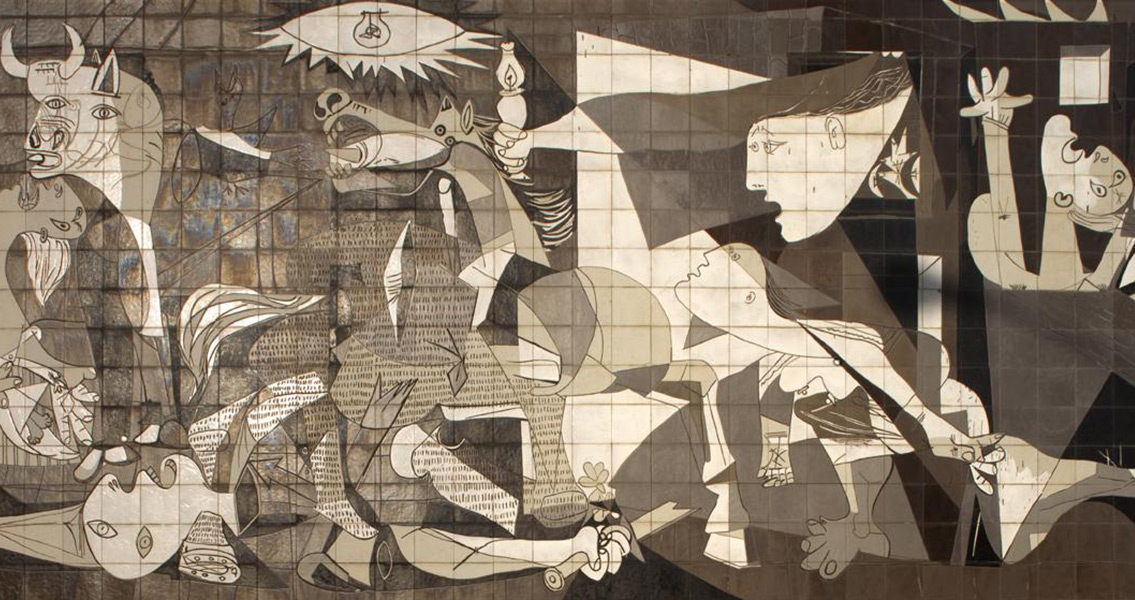
Guernica arrived in Spain for the first time on 10th September, 1981. A powerful depiction of the horror of war and the evil people could inflict on others with the aid of modern technology, Picasso had given the artwork to the New York Museum of Modern Art in 1939, following its initial exhibition in Paris. He insisted that it should not be exhibited in his native Spain, then under the control of General Francisco Franco, until democratic liberties had been restored to the country. Born in Málaga, Spain, in 1881, Pablo Picasso became one of the most influential visual artists of the twentieth century. Throughout his career considered one of the most adventurous artists of his generation, Picasso’s typically radical approach to sculpture, ceramics, painting, printing and stage design was inspired by the radical and anarchist intellectuals he met at the El Quatre Cats Cafe in Barcelona during his late teens. Picasso moved to Paris in 1904, then the centre of European art, and opened his own art studio in the city. Returning to Spain sporadically over the next decades, he set foot in the country for the final time in 1934. Guernica was commissioned as part of the 1937 Paris Exposition, whose official theme was a celebration of modern technology. Its organisers hoped that the Exposition would become a symbol of the triumph of human ingenuity in the face of the Great Depression which had devastated the 1930s. For Picasso, 1937 was a time of despair, caused by both frustrations in his personal life and shock at events in his homeland. Spain was ravaged by Civil War, as the nationalist forces of General Franco fought to overthrow the democratically elected Republican government. Initially struggling to find an idea for his mural, events of April 1937 provided a somber inspiration for Picasso, an artist who had previously avoided explicit political or social commentary. An ancient Basque town, allied with the Republican forces but situated well beyond the frontline of the fighting, Guernica was completely destroyed by an air raid on 26th April, 1937. Despite attempts by the Nationalists to blame the town’s destruction on their enemies, the destruction wrought in Guernica was clearly the work of the German and Italian airforces – allies of the Nationalists. Hours of constant bombing incinerated the town, and led to casualties of anywhere between 200 and 1000 people. Reading a description of the brutal attack, written by George Steer in the Times newspaper, Picasso headed to his studio and began preparing sketches for what would become one of his most famous works, just three weeks before it was due to be unveiled at the Spanish Pavilion. Although sticking to the surrealist style of Picasso’s work from this period, the painting used simple black and white to depict the human pain and suffering in war. Among the triumphant celebration of technology of the Paris Exposition, it proved a sobering reminder of the tragedy modernity could inflict. Picasso died in 1973, with Franco’s regime still ruling Spain. It was only in 1981, six years after Franco himself had died, that the heirs to Picasso’s estate authorised the work to be sent to Spain. Even now, it remains a source of controversy. Housed in a museum in Madrid, Basque nationalists argue that the work should be housed in the Basque region – the site of the events which inspired its creation. Image courtesy of Wikimedia Commons user: Papamanila ]]>

Categories
News

White Flag Over Madrid: Spanish Civil War Comes to An End

Homage to Catalonia. Clearly, the divisions in Spanish society were taken to symbolise something much broader, a set of competing values which many felt had an international importance. By 1939 the Republican forces were in disarray, Barcalona was captured in January and the situation had clearly become unwinnable. The Republicans attempted to sue for peace but Franco refused to negotiate. Madrid was soon surrounded and the city eventually became divided when sections of the Republican forces began fighting with each other. On 28th March, Franco’s forces marched into Madrid. It marked the end of a conflict which had seen over a million people lose their lives and whole cities leveled by the shocking power of modern military technology. The reality of the consequences were most directly felt in Spain, but in some ways people around the world had felt a connection to the Spanish Civil War. ]]>

Categories
News

Franco's Ascent to Power