Categories
Book Reviews

For Whom the Bell Tolls by Ernest Hemingway

For Whom the Bell Tolls is a book with important themes that still hold relevance today. The book is semi-biographical as Hemingway took inspiration for some of the characters and events from his own experiences in the Spanish Civil War. Brief Synopsis of the Plot The story is centered around American-born Robert Jordan, a dynamiter, who is tasked with blowing up a bridge near the Sierra de Guadarrama mountain range that is located between Segovia and Madrid. The plot is tight as the action occurs over the course of just four tense days and three sleepless nights. Wrought with the brutality of war, For Whom the Bell Tolls contains imagery and themes that reveal the even deeper meanings of an already complex and rich story: Relevant Themes in the Text Like any great work, For Whom the Bell Tolls has been analyzed by literary scholars. Most agree on central themes to the story. As a reader, you can look for each theme in your own reading of the text, seek out your own as well, and take personal lessons from the messages Hemingway intended. Camaraderie based on loyalty A key theme in the text is friendship and love or more broadly camaraderie based around shared ideals, shared loyalty to those ideals, and ultimately shared loyalty to one another due to common goals. In the brief span of the time depicted in the text, Robert Jordan experiences intense friendship with his comrades and an intense relationship with his newfound love, Maria. On the one hand, this theme can all read as romanticized. After all, it seems lovely to think of a group of people quickly banding together over a shared mission. It might be easy to scoff at the way things play out. However, research does show that when placed in life and death situations, brain chemistry does allow for these fast and furious bonds. It aids survival after all. Sacrifice for the greater good of all If a main theme of For Whom the Bell Tolls is the coming together of different peoples over a common goal to promote the survival of each, it may be surprising to learn that another theme of the text is personal sacrifice. Indeed, the characters of the book are putting themselves at risk not just for their own personal survival but to promote greater ideals and a greater good. The goal for Robert Jordan and his comrades is not just their own survival but the survival of something much greater than themselves. That is war. No person ever went to war just hoping to make it out alive. They knew they risked their life, but they did it with the hopes of making the world a better place. Hemingway illustrates this perfectly through the plot of the text. Defeat and death of one’s ideals Sadly, camaraderie and personal sacrifice do not always mean success. Throughout the text, Hemingway also weaves a theme of defeat, which is illustrated with repeated instances of hopelessness and inevitability for a less desired future. This is first illustrated when Robert Jordan visits the palm reader, whose prophecies serve to foreshadow the rest of the book. Death in a literal sense is also a key theme in the book. This is to be expected based on the title alone. Being set in a period of messy war tactics only increases the odds. The characters each know the risks they face in their situation, with death by enemy or self being the ultimate one. There is no skirting around it and Hemingway does not even try to. In fact, he highlights it. Analysis of Writing Style For Whom the Bell Tolls was lauded during its initial publishing. Today, however, there are millions of books to choose from and it might not be the first option you would turn towards. The book does contain some antiquated stylings that might make it seem less relevant and accessible to today’s reader. In writing the book, Hemingway nearly treated it as though it was a true account of the war, even “translating” the content from Spanish into English. As such, there are some phrasings that might make little sense to the common reader. Although, that can also reasonably happen with any aged book, wherein some phrases have simply been lost to changing styles that occur over time. Further, despite depicting the brutalities of war, Hemingway was simultaneously mindful of the sensibilities of the time-period he was writing in. As such, he modified “foul” language, often replacing those words with the terms “obscenity” or “unprintable.”  This makes reading the book akin to watching a show with words ‘bleeped’ out but the reader can still discern meanings from context clues. Relevant Themes for Today Despite its somewhat antiquated language and styling, For Whom the Bell Tolls still has great relevance to today. The text is considered a classic after all because the themes that Hemingway included and highlighted are ones that every generation will face in some form. Any person who has been in school, a club, a job, or some other setting will know the force that can come along with camaraderie and allegiance to others. It can make people do amazing things they could not have done on their own or engage in unspeakable acts under the guise of anonymity. When you watch the news and see that an innocent person has stepped in front of a gun to protect another innocent person, you know that personal sacrifice still abounds. Yet, when you watch the news too much, seeing death and destruction, you may also be met with the same feelings of hopelessness and inevitability about a dismal future that the characters in For Whom the Bell Tolls faced. Final Recommendations Ultimately, the question is whether you should take the time to read Hemingway’s classic novel For Whom the Bell Tolls. The answer is yes, you absolutely should. This book is a classic for a reason. It contains a piece of history not often depicted in books and movies. It also contains timeless themes. At the least you will be a more learned person for adding this classic to the bookshelf of your mind. You may also learn some valuable lessons about the human spirit. You may even learn more about what people (including yourself) are willing to do to protect the people they love and their shared ideals.

 ]]>


Categories
Breaking News

History News of the Week – USS Indianapolis Discovered

USS Indianapolis Shipwreck Discovered 72 years after its sinking, the wreckage of the USS Indianapolis has been discovered 18,000 feet beneath the surface of the Philippine Sea, according to the New York Times. In July 1945, in the final months of the Second World War, the USS Indianapolis was sunk by a Japanese torpedo, as it returned from a secret mission to deliver parts that were used in the atomic bomb dropped on Hiroshima. The ship’s sinking was the worst loss of life in the history of the US Navy. Of the 1,196 crew on board, just 316 were rescued. Although somewhere between 800 and 900 people escaped the sinking ship, no distress signal was sent. When the survivors were found by chance four days later in shark infested waters, just a fraction were left alive. On Saturday 19th September, a civilian team led by Paul G. Allen, the co-founder of Microsoft, announced that it had found unmistakable wreckage of the Indianapolis. They had been directed to the site by new research from a naval historian which determined a specific region of the ocean where the ship had been sited the night before its destruction. “To be able to honour the brave men of the USS Indianapolis and their families through the discovery of a ship that played such a significant role during World War Two is truly humbling,” Allen told the BBC. Ancient Pompeii’s Water Supply was Poisonous New research claims that the water transported through the pipelines of the ancient Roman city of Pompeii was probably poisonous on a scale that would have likely led to diarrhea, vomiting and liver and kidney damage for anyone who drank it. Kaare Lund, a chemist from the Southern University of Denmark (SDU), analysed water pipes from Pompeii and found high levels of the toxic element antimony, which he believes may have poisoned the drinking water. Antimony is acutely toxic, meaning it causes a quick reaction in anyone who consumes it. According to a statement from SDU, the element is particularly irritating to the bowels, and the reactions are excessive vomiting and diarrhea that can lead to dehydration. In severe cases it can also affect the liver and kidneys and, in the worst-case scenario, can cause cardiac arrest. Pompeii’s location, close to Mount Vesuvius, likely meant the concentration of antimony was higher there than elsewhere in the Roman Empire, as the toxic chemical element naturally occurs in groundwater close to volcanoes. Lund and colleagues’ findings have been published in the journal Toxicology Letters. Hannibal’s defeat and the rise of Rome written in coins Chemical analysis of Roman coins has found that the defeat of Hannibal led to a flood of wealth through the Empire from the silver mines of Spain. According to scientists, the discovery tracks Rome’s transition from regional power to empire. Regarded as a key event in European history, the Second Punic War saw Hannibal lead his formidable Carthaginian army across the Alps in 218 BCE in a failed assault on Rome. Hannibal’s defeat saw the Romans conquer the Iberian Peninsula, with the Romans slowly gaining control over the region’s lucrative silver mines circa 211 BCE. War reparations from Carthage combined with the revenue taken from the Spanish mines ultimately funded Rome’s rapid territorial expansion. The new geochemical analysis has now provided clear proof of the importance of the Spanish silver in funding Roman conquest. A group of scientists based in Germany and Denmark and led by Prof Fleur Kemmers and Dr Katrin Westner (Institute for Archaeological Sciences, Goethe University, Frankfurt) analysed 70 Roman coins dating from 310-300 BCE to 101 BCE, the period surrounding the Second Punic War. Using Mass Spectrometry, the team determined that the lead in the coins from after 209 BCE had distinctive isotope signatures which identified them as presumably originating from Spain. “Before the war we find that the Roman coins are made of silver from the same sources as the coinage issued by Greek cities in Italy and Sicily2. In other words the lead isotope signatures of the coins correspond to those of silver ores and metallurgical products from the Aegean region”, said Katrin Westner. “But the defeat of Carthage led to huge reparation payments to Rome, as well as Rome gaining high amounts of booty and ownership of the rich Spanish silver mines. From 209 B.C. we see that the majority of Roman coins show geochemical signatures typical for Iberian silver”. “This massive influx of Iberian silver significantly changed Rome’s economy, allowing it to become the superpower of its day. We know this from the histories of Livy and Polybius and others, but our work gives contemporary scientific proof of the rise of Rome. What our work shows is that the defeat of Hannibal and the rise of Rome is written in the coins of the Roman Empire.” ]]>

Categories
Breaking News

10,000-Year-Old Case of Cannibalism Discovered in Spanish Cave

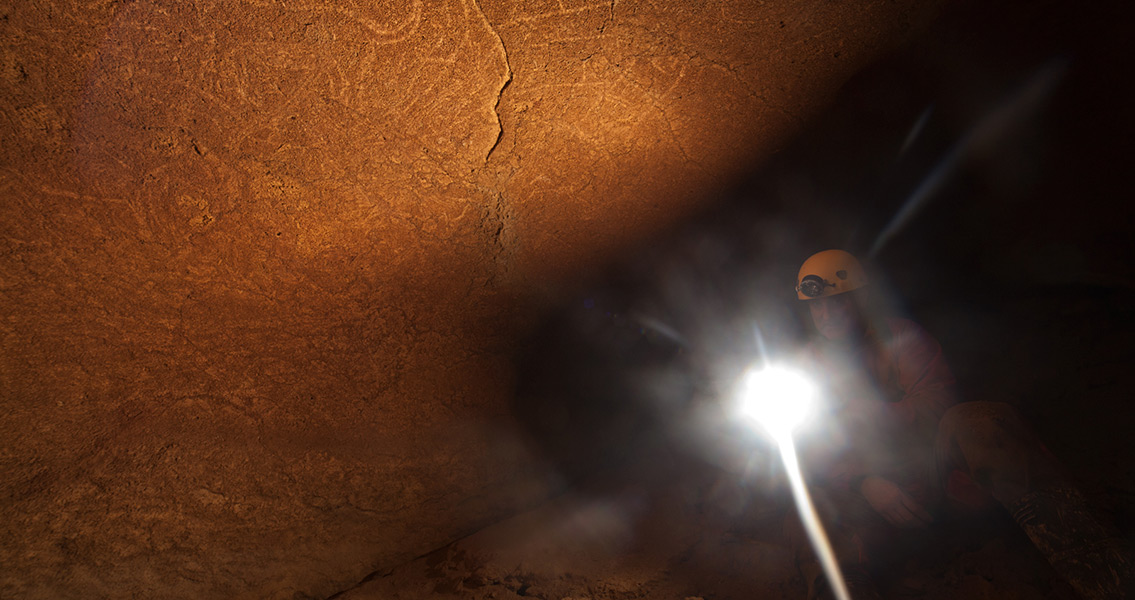
Ars Technica, the remains in question show no signs of violence, indicating that the bodies were likely consumed after death. Identifying cannibalism can be a tricky business, but Morales-Pérez and his team say the evidence was clear. The bones themselves were discovered buried alongside the remains of other, non-human animals; bore signs of being burned and butchered, and evidence of being bitten and scraped. Radiocarbon dating has set the age of the bones to between 9,000 and 10,000 years old. Finding evidence of the practice of cannibalism during this time period is not unheard of, though this is the first time that cannibalism has reared its ugly head in Spain during the Mesolithic. Other archaeological finds throughout Europe and the Levant dating to this time period have yielded evidence of humans eating their own. Additional questions have arisen after discovering the cannibalism. One such question – one that may not ever be able to be answered – is why the humans inhabiting this cave in Spain decided to turn to the practice in the first place. Necessity due to starvation is always one reason for cannibalism, but the multitude of animal remains found in the cave indicates that the food sources for the humans living there were varied and apparently abundant. Occasional periods of privation do occur of course, and the evidence of cannibalism could represent a desperate time in the lives of the people who lived there when food sources were scarce. However, the possibility that the cannibalism might have been ritual in nature cannot be discounted – there’s precedent of complex rituals for eating the flesh of the deceased, often important members of the community, dating back thousands of years. The beginning of the Mesolithic also represented a time period when humans were beginning to transition from their hunter-gatherer existence of the earlier Paleolithic, and taking up the trappings of a more sedentary, agrarian lifestyle. The conflict between these two ways of life could have precipitated some funerary practices that would seem gruesome and barbaric to our own modern sensibilities, researchers say. The state of the remains seems to contradict the idea that they were consumed as part of a ritual. Seemingly dumped unceremoniously in a midden heap at the rear of the cave, these butchered, fire-processed and chewed human bones don’t seem to have been treated with much care. However, with literally ten thousand years having passed between the event and the discovery of the evidence of that event, there’s no way of knowing if the remains had at one time been buried with reverence and then ended up in a new location due to rain runoff and soil erosion. The new research study, published in the Journal of Anthropological Archaeology, can be found online here Image courtesy of Journal of Anthropological Archaeology]]>

Categories
Breaking News

Copper Mine Seized and Expanded by the Romans found in Spain

Categories
Breaking News

Census Document Details the Aztec Land Conquered by Cortés

Categories
Breaking News

The Relationship Between Early Man and Eurasian Cave Lion Studied

Panthera spelaea, the Eurasian cave lion, a species that was larger than an African lion without the mane, became extinct approximately 14,000 years ago, but the reasons behind its disappearance have never been completely understood. Archeological findings show that between 50,000 and 10,000 years ago, Upper Paleolithic humans did in fact hunt animals both large and small, however, evidence of lion hunting is rare. In an attempt to determine if early humans hunted the cave lion, thereby contributing to its extinction, Marián Cueto, with the Universidad de Cantabria, Spain, and her colleagues examined nine fossilized toe bones from the claw of a cave lion, looking for evidence the cats were exploited by humans. The feline bones were unearthed at La Garma, the Upper Paleolithic cave site located in northern Spain. What researchers found was that a majority of the bones did in fact show signs of having been modified by stone tools used by humans, along with signs of a specific technique, similar to the one used by modern hunters to keep the claws attached to the fore while skinning it. The research suggests that the toe bones may have been part of a single lion pelt, possibly covering the floor of the occupied cave. The La Garma site is known to have been associated with human rituals, and it’s possible the Eurasian cave lions had some symbolic meaning for Upper Paleolithic humans. While the analysis doesn’t offer definitive findings which would conclude the Upper Paleolithic humans hunted cave lions for their pelts, it also doesn’t offer any findings to the contrary, and other evidence has been found showing that cave lions and early humans did interact in some capacity. The cave, situated on La Gama Mountain, is divided into different levels. In the upper section there are human burial sites, the intermediate level holds a large number of palaeontological remains, primarily bones. The most important remains, however, are found on the lower level where there are three intact spaces with numerous examples of painted art, including an amazingly realistic black horse, and a number of symbols painted red. Also found are representations of goats and bison and still more panels are covered with hand prints. The drawings date to between 28,000 and 13,000 years ago. Prehistoric humans ventured into the La Garma cave to perform sacred rituals. They navigated hundreds of yards through the dark, until they reached one of the circular stone huts (each with a horse skull in the center) where their religious ceremonies took place. Untouched for thousands of years, La Garma acts as a time capsule, with everything remaining exactly as it was during the Upper Paleolithic era. The nature of the ceremonies is unknown, however, the discovery of just foot bones indicates that aside from the pelts, the claws of the lion were also brought into the cave. The research has been published journal in the online journal PLOS ONE. Image courtesy of Wikimedia Commons user: Pit1233 ]]>

Categories
Breaking News

Spectacular New Cave Art a Treasure of Humanity

Categories
News

Campaign To Tear Down Statue of Christopher Columbus

set sail from Spain in August 1492, embarking on a journey that would change the world forever. The mysterious explorer – little is known about his life prior to the expedition with some even questioning whether he was truly a Genoan as official accounts claim – set out hoping to find a new passage to the Far East. He ended up becoming the first European to set foot in the Americas since the Age of the Vikings. Following his discovery of the Bahamas, Columbus continued his explorations with subsequent voyages, opening up much of the Caribbean, South America and eventually North America to European exploitation. The consequences for the indigenous populations proved devastating. European colonialism was catastrophic for the original inhabitants of the Americas, entire groups and tribes wiped out either by European aggression or the spread of new diseases to the continent. Columbus signaled the start of the Age of Exploration; opening up two new continents to Europeans his discovery was pivotal to shaping the world we live in today. At the same time, he also cleared the path for the devastating consequences of imperialism. Columbus himself oversaw the enslavement of the indigenous population of Hispaniola (the island that is now the Dominican Republic and Haiti), in response to an attack on the European settlers there. The indigenous tribes were forced to search for gold and help build a colony for the European settlers, despite Queen Isabella herself being against slavery. It’s a fact that shows beyond merely opening the way to the Americas for others to exploit, Columbus was actually at the forefront of the evils of European imperialism. It is this questionable legacy that has led to CUP Capgirem’s call for the statue’s destruction. But their mission doesn’t stop there. 12th October is a national holiday in Spain, celebrating the anniversary of Columbus making landfall in the Americas, but they think it should just be a normal working day. According to a CUP Capgirem press release, the 12th October marks: “the genocide of the indigenous American population by colonist-conquistadors, and an act of aggressive Spanish nationalism against all the peoples that it oppresses and has oppressed.” CUP Capgirem’s campaign marks a growing sentiment, particularly among the Spanish left, to challenge the monuments to Spain’s imperial past. Just last year, Barcelona’s mayor, Ada Colau, said the country should not be marking a “genocide” (12th October) with a military parade. This aggressive confrontation of Europe’s imperial past is not limited to Spain. Earlier this year, a protest movement began in Oxford, UK, calling for the destruction of a statue of Cecil Rhodes at Oxford University’s Oriel college. Rhodes, a businessman and politician at the heart of the annexation of huge swathes of land in South Africa in the late nineteenth century, was called “the Hitler of South Africa” by a protester earlier this year. ]]>

Categories
Breaking News

Flint Tools in Spain May be One Million Years Old

Categories
Breaking News

Earliest Evidence of European Fire Building Found in Spain

Homo heidelbergensis, a direct ancestor of Neanderthal Man, Homo neanderthalensis. Like other sites that show signs of early fire building, hominids at Black Cave left behind a variety of stone tools, indicating they possessed the technical skills needed for selecting the right material for striking sparks. Paleontologist Michael Walker with the University of Murcia explained in Science News that it’s unlikely a brush fire near the cave’s entrance could have sent sparks inside to ignite fires that were found between five and seven meters in, adding that dry brush wasn’t likely to be near the cave to begin with, given that 800,000 years ago the area bordered a swamp and a river. Other researchers told Science News they suspect the Cueva Negra’s artifacts are actually not as old as the report indicates, because it’s difficult to say where the artifacts originally were in relation to several different reversals of the planets magnetic field which are preserved in the sediment layers found in the cave. A 2011 study, published in the Journal of Archaeological Science, set an age limit for the tools made by the Homo species in Europe at no more than 600,000 years ago. Even at 600,000 years old though, the findings at the cave would still be the earliest evidence of fire making in Europe. The systematic excavation of the cave was started in 1990 and until 2004 researchers considered the site to be from the late Pleistocene era, however, rodent fossils were discovered from a species that became extinct 500,000 years ago. Other animal fossils include megaceroides (giant deer), wild boar, bison, hyena, turtles and rabbits, in addition to 60 different species of birds. ]]>