Categories
Breaking News

Did Acceptance of Autism Fuel Evolutionary Success?

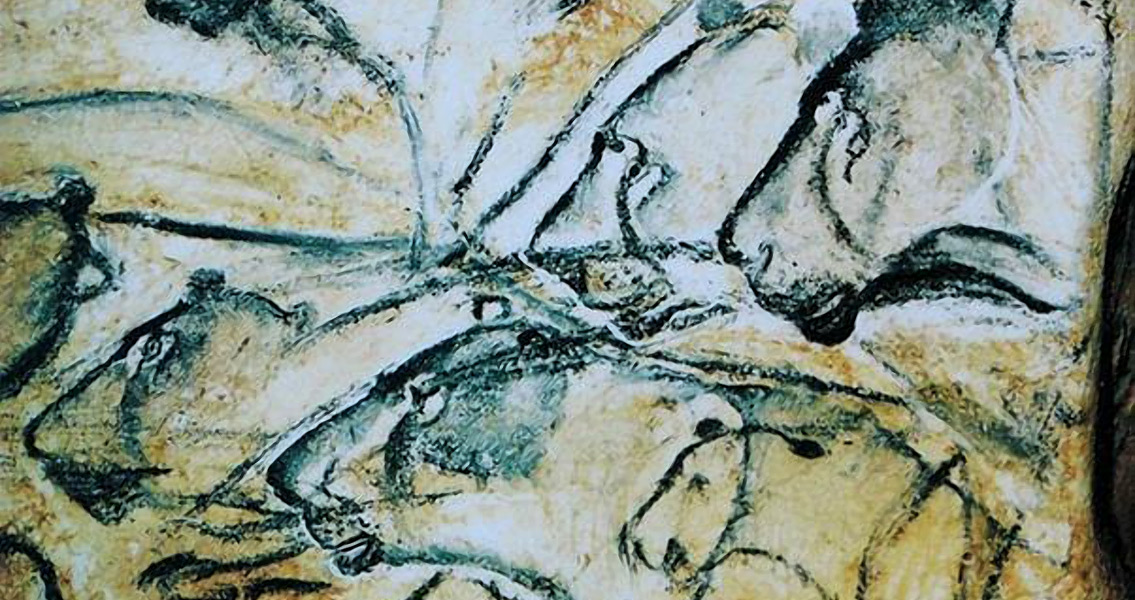
Time and Mind argue that integration of people with such skills into a community would have played a vital role in the development of specialists. A compelling example comes from a 2005 ethnographic study of a reindeer herder from Siberia. The man held a remarkably detailed memory of the parentage, character and medical history of each of the 2,600 reindeer under his care. The grandfather, who was a respected member of his community with a wife, son and grandchildren despite being uncomfortable in the company of other humans, made a vital contribution to the management and survival of his reindeer herd, and the community as a whole. Of course, evidence of ancient autism is hard to detect. “The archaeological record doesn’t give us a skeletal record for autism, but what it does do is give us a record for other people who have various differences and how they have been integrated.” Dr. Spikins said. Clues concerning autism’s long history can be found in cave art and other artefacts, however. “There has been a long-standing debate about identifying traits of autism in Upper Paleolithic cave art.” “We can’t say some of it was drawn by someone with autism, but there are traits that are identifiable to someone who has autism. It was also roughly at that time that we see collaborative morality emerging.” Dr Spikins explained. The study can be found here Image courtesy of University of York ]]>

Categories
News

Science Bolsters Moral Sensitivity

research that shows the relationship between religion, science and morality is in fact much more complicated than traditionally thought. The earlier study found that priming either religious or science related words in test subjects led to them demonstrating increased prosocial behaviour. As such, the results suggested that, “at least in modern societies, secular institutions have overtaken religious institutions in their capacity to promote prosociality and living harmoniously as a moral society.” Yilmaz and Bahçekapili aimed to test the causes of this connection between scientific reasoning and morality. Three different tests were carried out on Turkish University students, which involved priming scientific, religious or ‘neutral’ words through language games before having the test subjects respond to a moral scenario. The results of the first test showed that the priming had no effect on the response to the crime described, although the psychologists suggest that this may be because the scenario was so extreme (a date rape case) that it created a ‘ceiling effect’. The next test followed the same process, but for less extreme, more morally ambiguous scenarios -one involving two people late to a meeting who accidentally run over a cat and choose not to stay and help it, and another involving a person who finds a friend’s winning lottery ticket and collects the winnings for himself (the friend is unaware the ticket is a winning ticket). The results showed that in the first scenario, both science priming and religious priming affected the moral sensitivity of the participants. The suggestion being that thinking about scientific themes can be just as influential on our morality as thinking about religious ones. Finally, Yilmaz and Bahçekapil sought to determine “whether science exerts its moral sensitivity boosting effect by activating analytic thinking or the idea of secular authority.” For this test, the preliminary section was designed to prime words in the test subjects associated with either secular authority (e.g. court, police) or analytical thinking ( e.g. logic, reason). The results provided a clear pattern, with the subjects in the secular authority group demonstrating the greatest moral sensitivity. “These results suggest that science priming exerts its boosting effect on moral sensitivity not by activating analytic thinking but by activating the idea of secular authority.” The study’s results are of great interest to the study of history, anthropology and psychology, showing that secular authority is now capable of bolstering moral sensitivity as much as religion. One of the key transitions of the modern era, particularly in the West, has been the decline of religiosity, in both political institutions and individuals. Yilmaz and Bahçekapil’s study provides a framework to explain how the rise of science and the decline of religion did not coincide with a dramatic decrease in morality. For more information: www.journals.plos.org Image courtesy of Wikimedia Commons user: kenhodge13 ]]>

Categories
Breaking News

Economic Development Led to Major World Religions

Current Biology, has posited that the development of major world religions in the so-called “Axial Age” of 500-350 BCE cannot be traced to the rise of complex political institutions or to growth in population. Instead, the rise of religions such as Judaism (and its eventual offshoots of Christianity and Islam), Buddhism, Daoism, Brahmanism, and Jainism resulted from increases in economic development and better standards of living, according to the authors of the study. A research team from the École Normale Supérieure, led by research scientist Nicolas Baumard, delved into the study of the formation of world religions during the Axial Age in order to make a determination as to what led to the proliferation of such religions concurrently yet in such disparate geographical locations around the globe. The Axial Age was characterized by new beliefs supplanting the older ones commonly held by hunter-gatherer societies. Nomadic cultures from before the advent of agricultural pursuits tended to have spiritual beliefs that focused more along tribal lines and were primarily concerned with warding off misfortune, enforcing taboos, and ritual offerings and sacrifices. In comparison, the researchers point out that once the economic status of civilizations improved – partly thanks to adopting agriculture and focusing less on itinerant lifestyles – abundance for these civilizations increased, leading individuals to begin to have the ability to focus on things besides subsistence. The rapid advancement in living standards which occurred in the Axial Age could have been the catalyst for spiritual development that delved beyond the nomadic campfire ring, the research suggests, although the most rapid and dramatic advances in living conditions were likely reserved for the richer and more powerful members of these societies. According to Baumard and his colleagues, it was at this point that these new religions began to develop and focus more on “personal transcendence” instead of taking ritualized steps to ensure the survival of the group. The study points out that these later religions focused on the “purpose” of human existence independent of survival, “a moral existence and the control of one’s own material desires, through moderation (in food, sex, ambition, etc.), asceticism (fasting, abstinence, detachment), and compassion (helping, suffering with others).” However, Baumard and his team remain unconvinced that morality alone is responsible for successful civilizations. In an interview with Scientific American, the researcher remarked that “some of the most successful ancient empires all had strikingly non-moral high gods. Think of Egypt, the Roman Empire, the Aztecs, the Incas, and the Mayans.” More likely is the idea that morality exists independently from religion or spirituality, and it was only the increased economic security and affluence of these Axial Age civilizations that gave enough breathing room for morality to exist without having to be subsumed by the vicissitudes of tribal survival, a sentiment echoed by other researchers not associated with the new study. For more information: www.cell.com Image courtesy of Wikimedia Commons user: Gunnar Bach Pedersen]]>