Categories
Breaking News Editorial

How did Christianity spread?

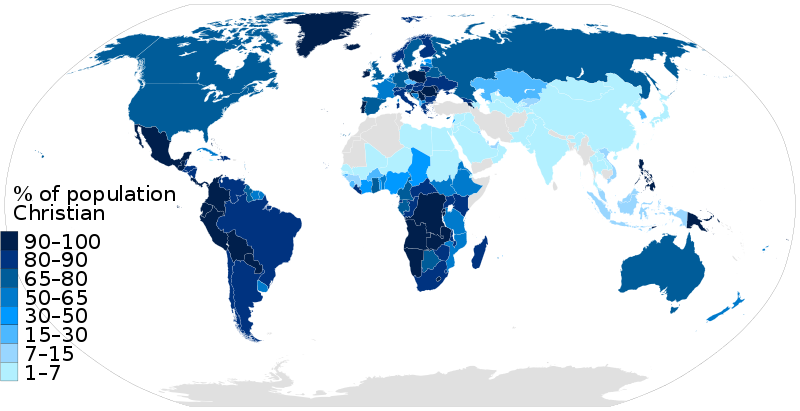
Christian populations across the world. Credit: M Tracy Hunter[/caption]

70 Christian communities analysed

A new paper delves into research from 70 Austronesian Christian societies, where political hierarchies, social inequality and population size were all analysed. Austronesian societies shared a common ancestral language and are located across Southeast Asia, East Africa and the South Pacific. Despite some similarities, they have a great variation of societal make ups; with some forming small, egalitarian, family-based communities and others following the concept of a large, politically complex society. Hawaii is an example of the latter. The communities were converted in the 18th and 19th Centuries. Some took under a year to convert; the longest took 205 years. With such a range of social structures and reactions to conversion, these Austronesian societies were ideal for exploring theories on cultural change.

Win the chief and you win the tribe

The researchers have revealed that cultures with political leadership structures already in place were usually more easily converted to Christianity. They call it a ‘top down’ process of conversion: chiefs and elite leaders were the first to be converted by missionaries. Due to their existing influence over their people, the spread of Christian doctrine followed naturally. Jesus Christ Interestingly, social inequality was not related to conversion times. This debunks the theory that Christianity spread from the bottom up, by empowering the impoverished and promising an improved experience in the afterlife. There was a distinct correlation between small populations and the fast spread of Christianity, proving the importance of population size during processes of cultural change.

“A smaller populace is more open to innovation”

Lead author Dr Joseph Watts undertook the research at the University of Auckland’s School of Psychology and the Max Planck Institute for the Science of Human History in Germany. The research team also includes doctoral candidate Oliver Sheehan, Professor Joseph Bulbulia, and Professor Russell Gray. Dr Watts says: “While people often think of big societies as sources of innovation, our findings show that bigger societies can also be slow to pick up on new ideas… In a small population, it becomes more likely that beliefs will be transmitted relatively quickly, particularly if they are being driven by leaders and other powerful figures.”

Cultural change

Looking beyond Christianity and even religion, Dr Watts says this is indicative of cultural change at large. “If you look at our contemporary world, some things spread incredibly quickly while others take a very long time so here we provide evidence of why that might be.” University of Auckland Professor Quentin Atkinson adds: “This research can help us understand how both the size and the structure of populations influence the diffusion and adoption of new institutions, ideologies or technologies.”]]>

Categories
Breaking News

Ancient Statue of Pre-Christian Deity Found on Corsica

International Business Times, local road work had been planned for nearby the ancient ruins, which prompted local authorities to contact the French National Institute for Preventative Archaeological Research (INRAP) to clear the construction. INRAP conducted excavations to ensure the new road wouldn’t inadvertently demolish any significant archaeological remains, only to discover the statue during their investigations. Led by archaeologist Philippe Chapon, the INRAP team began work in Mariana in November of 2016. The small Roman town, thought to have reached its primacy in the third and fourth centuries CE, would have been most well-known for its moderately successful commercial harbor thanks to its location next to the Mediterranean. After several months of work on site, the INRAP team has revealed that they have excavated the remains of a religious sanctuary dedicated to Mithra. The entire find consists of a worship room and an antechamber devoted to the Indo-Iranian deity. Chapon characterized the find as “very rare and exciting”, adding that it’s the first time evidence of worshiping Mithra has been found on Corsica. Throughout the rest of France, there are only around a dozen similar sites, the archaeologist said, with the most recent one being found in 2010 near the city of Angers. Several relics were found in the ruined sanctuary, including a trio of oil lamps and a fragmented marble structure that would have depicted Mithra. Pieced back together, the marble depicts Mithra sacrificing a bull, a scene from the pre-Christian god’s mythology. One of the pieces showcases the spilled blood of the bull as both a snake and a dog lap at it. The same fragment adds insult to injury to the bull, as a scorpion is depicted pinching its testes as well. Other finds, such as pottery, bronze bells and a partial marble statue depicting a female head, were also found. While Mithra is likely to have pre-dated Christianity in its place of origin, when worship of the deity spread west it probably found itself battling for followers. There are indications that Roman soldiers and merchants returning to Rome from the east brought the religion with them, and that there was a fierce competition for new followers between Mithraism and Christianity. There’s no written record of the religion, but archaeologists have pieced together information from finding and analyzing things worshipers left behind. This includes relics and ritual representations depicted on walls of sanctuaries. The resultant knowledge paints a picture of a primitive monotheistic religion likely open exclusively to men, one that spread through the elite echelons of society before expanding outward and downward. Mithras worshipers came under fire directly in 392 CE as emperor Theodosius I forbade the religion, instead proclaiming Christianity the Empire’s official religion. This may be the source of some of the damage the artifacts at the Corsican site sustained, with the altar being broken sometime in the past. A large Christian structure being built in Mariana at around 400 CE, one of the earliest occurrences of Christianity on the island, may have been built in the wake of Mithra’s expulsion. ]]>

Categories
Breaking News

Spiritual Cave Inscriptions Show New World Meeting the Old

Antiquity, has offered a personalised insight into the intercultural and spiritual dynamics at play as European and indigenous Caribbean cultures clashed for the first time, showing the tone and attitudes of some of the earliest interactions. “This research reveals a new perspective on the personal encounter between indigenous populations and the first generations of Europeans in the Americas.” said Dr. Jago Cooper from the British Museum. “This is a unique site that helps us to understand the origins of cultural identity in the Americas, the start of a process that continues right up to the modern day.” Image courtesy of University Leicester]]>

Categories
Breaking News

Spanish Colonial Churches Influenced By Maya Designs

here Image courtesy of Wikimedia Commons user Alex]]>

Categories
Breaking News

Religion Undermined Early Societies, Says New Study

Current Anthropology, claims that rather than binding early state societies, religion often had the opposite effect. It’s a conclusion which runs against commonly held beliefs that religion was the glue used to hold early societies together. University of Colorado anthropology Professor Arthur A. Joyce and University of Central Florida Associate Professor Sarah Barber’s controversial conclusion is based on evidence they unearthed at several key Mesoamerican archaeological sites. Although governments are increasingly secularised nowadays, religion remains a powerful political force throughout the world, dividing societies. The study, titled “Ensoulment, Entrapment, and Political Centralization: A Comparative Study of Religion and Politics in Later Formative Oaxaca,” argues that this is far from a recent trend. Prof. Joyce and Prof. Barber spent several years conducting field research in the lower Rio Verde Valley in Mexico’s Pacific lowlands. The data they compiled has now been compared with similar data from the highland Valley of Oaxaca. “Archaeological evidence shows that these regions had dramatically different later Formative histories.” they write in their study. Focusing on the period between 700 BCE and 250 CE, a time generally considered to have coincided with the emergence of the earliest states in Mesoamerica, the authors noticed dramatic differences in the development of the two societies they focused on. In the lower Verde, the creation of state institutions was hindered by religious rituals based on offerings and the burial of the dead at small, local cemeteries. The nature of the rituals and traditions meant people’s lives were focused around small, localised communities – religious ties which primitive, centralised state institutions couldn’t overcome. “In the lower Verde, we find that religion constrained changes that could have stabilized political centralization. A crucial aspect limiting the creation of multicommunity authority and identities was the physical entrapment of the bones of ancestors, offerings, and divine beings within public buildings in local communities.” Joyce and Barber explain in the study’s abstract. A rapid rise and then collapse in state institutions in the lower Verde is the evidence the authors use for their explanation. At Rio Viejo, a once major city in the region, impressive temples and other buildings were built in the years leading up to 100 CE before being abandoned within a century. Things were different in the highland Valley of Oaxaca, with religion having a significantly different impact on the formation of the state institutions there. “In contrast, in the Valley of Oaxaca, we find that religion fostered developments that would eventually give rise to a politically centralized polity, with its seat of government at the hilltop city of Monte Albán.” Here, political elites became the mediators between the people and their gods, supplanting the power held by traditional community leaders. Religion was used as a means to create a centralised political system. The study highlights just how pivotal religion could be in the formation of early states, both as a means of achieving cohesion, but also at times as a force acting against the foundation of state institutions. It is of course well established that Christianity evolved into being a powerful political force throughout Europe for centuries. Similarly, many governments today are still heavily influenced by various religious considerations. Barber and Joyce’s study shows that this complex relationship between religion and politics could in fact be crucial to understanding the earliest societies, as well as our own. “It doesn’t matter if we today don’t share particular religious beliefs, but when people in the past acted on their beliefs, those actions could have real, material consequences,” Barber said about the team’s findings, in a press release from the University of Central Florida. “It really behooves us to acknowledge religion when considering political processes.” For more information: www.jstor.org Image courtesy of Wikimedia Commons user: Ern]]>

Categories
Breaking News

Mystery of the Phaistos Disk Reportedly Solved

Categories
News

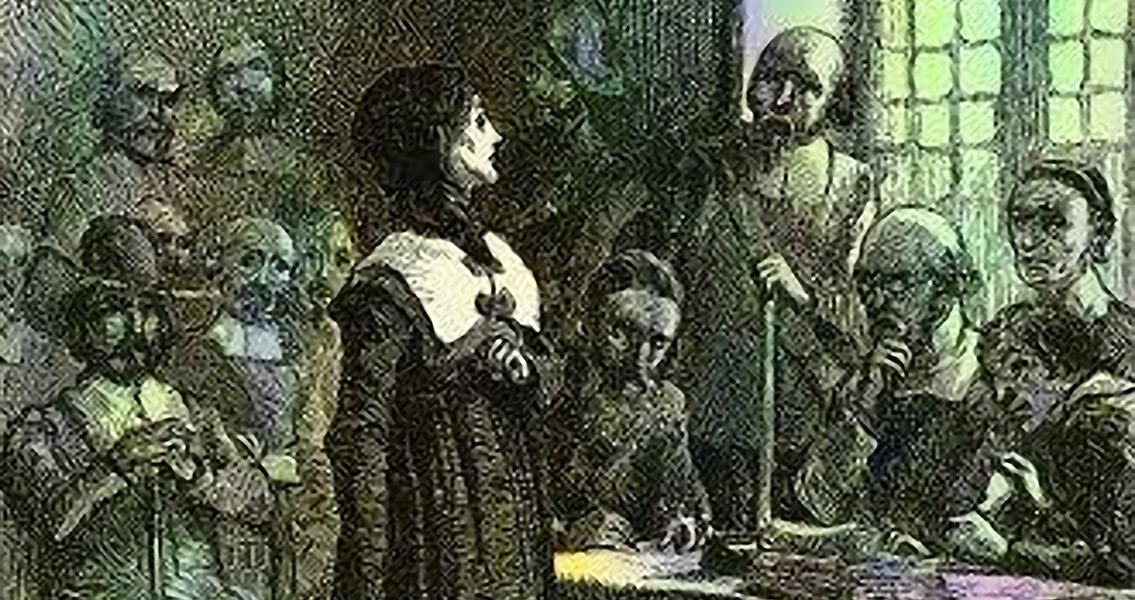
Famed Heretic Reaches the New World

Categories
News

Science Bolsters Moral Sensitivity

research that shows the relationship between religion, science and morality is in fact much more complicated than traditionally thought. The earlier study found that priming either religious or science related words in test subjects led to them demonstrating increased prosocial behaviour. As such, the results suggested that, “at least in modern societies, secular institutions have overtaken religious institutions in their capacity to promote prosociality and living harmoniously as a moral society.” Yilmaz and Bahçekapili aimed to test the causes of this connection between scientific reasoning and morality. Three different tests were carried out on Turkish University students, which involved priming scientific, religious or ‘neutral’ words through language games before having the test subjects respond to a moral scenario. The results of the first test showed that the priming had no effect on the response to the crime described, although the psychologists suggest that this may be because the scenario was so extreme (a date rape case) that it created a ‘ceiling effect’. The next test followed the same process, but for less extreme, more morally ambiguous scenarios -one involving two people late to a meeting who accidentally run over a cat and choose not to stay and help it, and another involving a person who finds a friend’s winning lottery ticket and collects the winnings for himself (the friend is unaware the ticket is a winning ticket). The results showed that in the first scenario, both science priming and religious priming affected the moral sensitivity of the participants. The suggestion being that thinking about scientific themes can be just as influential on our morality as thinking about religious ones. Finally, Yilmaz and Bahçekapil sought to determine “whether science exerts its moral sensitivity boosting effect by activating analytic thinking or the idea of secular authority.” For this test, the preliminary section was designed to prime words in the test subjects associated with either secular authority (e.g. court, police) or analytical thinking ( e.g. logic, reason). The results provided a clear pattern, with the subjects in the secular authority group demonstrating the greatest moral sensitivity. “These results suggest that science priming exerts its boosting effect on moral sensitivity not by activating analytic thinking but by activating the idea of secular authority.” The study’s results are of great interest to the study of history, anthropology and psychology, showing that secular authority is now capable of bolstering moral sensitivity as much as religion. One of the key transitions of the modern era, particularly in the West, has been the decline of religiosity, in both political institutions and individuals. Yilmaz and Bahçekapil’s study provides a framework to explain how the rise of science and the decline of religion did not coincide with a dramatic decrease in morality. For more information: www.journals.plos.org Image courtesy of Wikimedia Commons user: kenhodge13 ]]>

Categories
Breaking News

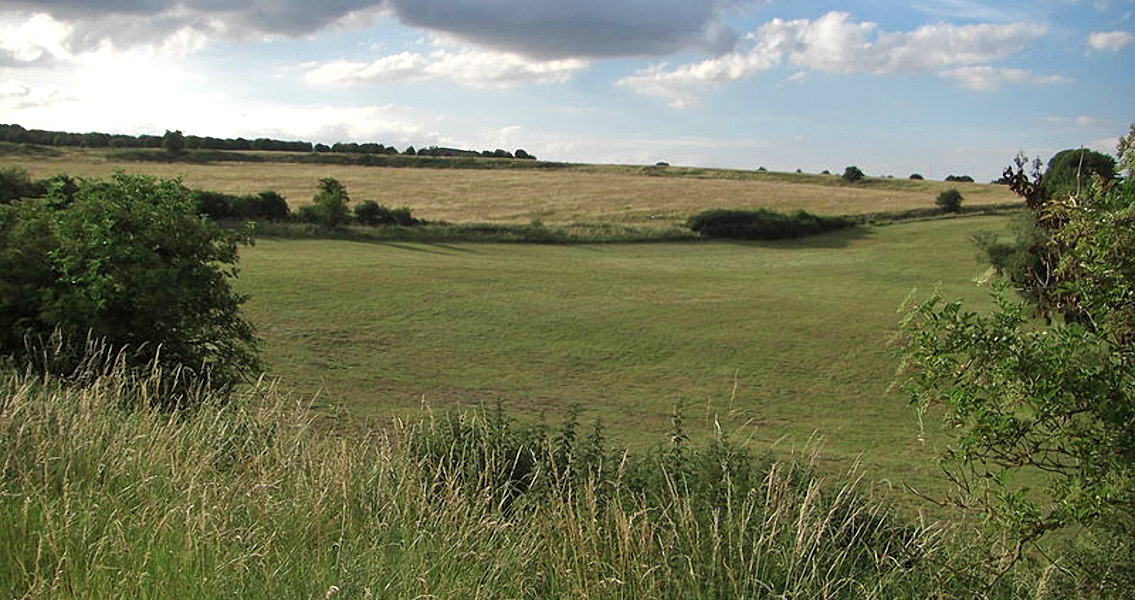
Enormous Pre-Stonehenge Monument Found in Salisbury

Categories
Breaking News

Economic Development Led to Major World Religions

Current Biology, has posited that the development of major world religions in the so-called “Axial Age” of 500-350 BCE cannot be traced to the rise of complex political institutions or to growth in population. Instead, the rise of religions such as Judaism (and its eventual offshoots of Christianity and Islam), Buddhism, Daoism, Brahmanism, and Jainism resulted from increases in economic development and better standards of living, according to the authors of the study. A research team from the École Normale Supérieure, led by research scientist Nicolas Baumard, delved into the study of the formation of world religions during the Axial Age in order to make a determination as to what led to the proliferation of such religions concurrently yet in such disparate geographical locations around the globe. The Axial Age was characterized by new beliefs supplanting the older ones commonly held by hunter-gatherer societies. Nomadic cultures from before the advent of agricultural pursuits tended to have spiritual beliefs that focused more along tribal lines and were primarily concerned with warding off misfortune, enforcing taboos, and ritual offerings and sacrifices. In comparison, the researchers point out that once the economic status of civilizations improved – partly thanks to adopting agriculture and focusing less on itinerant lifestyles – abundance for these civilizations increased, leading individuals to begin to have the ability to focus on things besides subsistence. The rapid advancement in living standards which occurred in the Axial Age could have been the catalyst for spiritual development that delved beyond the nomadic campfire ring, the research suggests, although the most rapid and dramatic advances in living conditions were likely reserved for the richer and more powerful members of these societies. According to Baumard and his colleagues, it was at this point that these new religions began to develop and focus more on “personal transcendence” instead of taking ritualized steps to ensure the survival of the group. The study points out that these later religions focused on the “purpose” of human existence independent of survival, “a moral existence and the control of one’s own material desires, through moderation (in food, sex, ambition, etc.), asceticism (fasting, abstinence, detachment), and compassion (helping, suffering with others).” However, Baumard and his team remain unconvinced that morality alone is responsible for successful civilizations. In an interview with Scientific American, the researcher remarked that “some of the most successful ancient empires all had strikingly non-moral high gods. Think of Egypt, the Roman Empire, the Aztecs, the Incas, and the Mayans.” More likely is the idea that morality exists independently from religion or spirituality, and it was only the increased economic security and affluence of these Axial Age civilizations that gave enough breathing room for morality to exist without having to be subsumed by the vicissitudes of tribal survival, a sentiment echoed by other researchers not associated with the new study. For more information: www.cell.com Image courtesy of Wikimedia Commons user: Gunnar Bach Pedersen]]>