Categories
Breaking News

Archaeologists Discover Further Details of London’s Curtain Theater

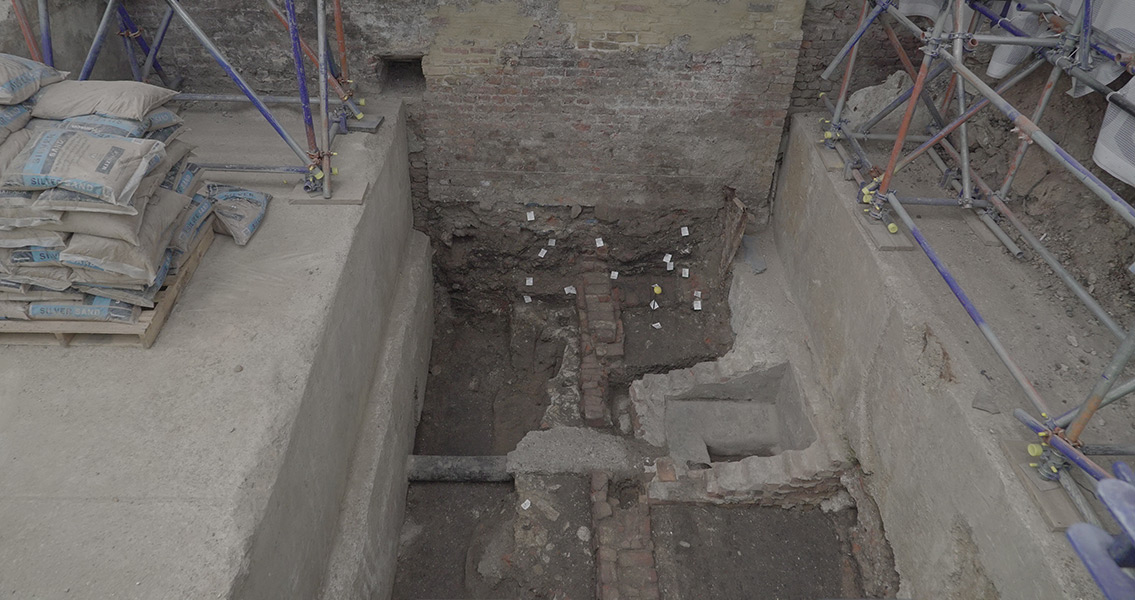
The Guardian, researchers found additional unique features of the Curtain’s stage, including what could have been a tunnel that ran beneath it to allow actors to pass from one side to the other undetected. The innovation could have led to Shakespeare – and other playwrights of his day – writing plays with the capabilities of the Curtain in mind, according to Museum of London Archaeology senior archaeologist Heather Knight. Knight remarked that with the Curtain stage so different from a typical thrust stage, which has places for the audience to stand on three of its four sides, the Shoreditch theater might have led to the development of new and interesting types of theatrical experiences. One of Shakespeare’s most beloved history plays, Henry V, is thought to have been first performed at the Curtain, though historical record is spotty. The famous line from the play’s prologue, where the Chorus describes the story as being portrayed in “this wooden O”, seems to contradict the idea that the Curtain was the first place Henry V was performed. However, historians have pointed out that the descriptive line simply may have been added to performances set in more traditional venues, and these versions of the play are the ones that have survived to this day. The excavation efforts are the first step in a massive development being undertaken in Shoreditch, including the construction of a mixed-use complex of apartments, offices, and retail space dubbed “The Stage” on the site of the Curtain. Detailed plans for the construction have been altered after the discovery of the Curtain’s foundations buried under a layer of gravel and rubble from a former Medieval monastery that had existed on Curtain Road at one time. It is common to find the ruins of many monasteries throughout England, especially from the period after King Henry VIII orchestrated England’s split from the Roman Catholic Church. In addition to the revelations of the size and dimensions of the theater, other artifacts have been discovered as well. Pieces of green-glazed ceramics, typically used as money-boxes for collecting entry fees from paying customers, have been found on the site; the possible remnants of costumes in the form of an assortment of pins and glass beads were also recovered. The new mixed-use office complex will incorporate a visitor center where archaeological finds from the Curtain will be on display. The center is slated for a 2019 opening date. ]]>
Categories
Breaking News

Foundations of Shakespeare’s Curtain Theatre Found in Shoreditch

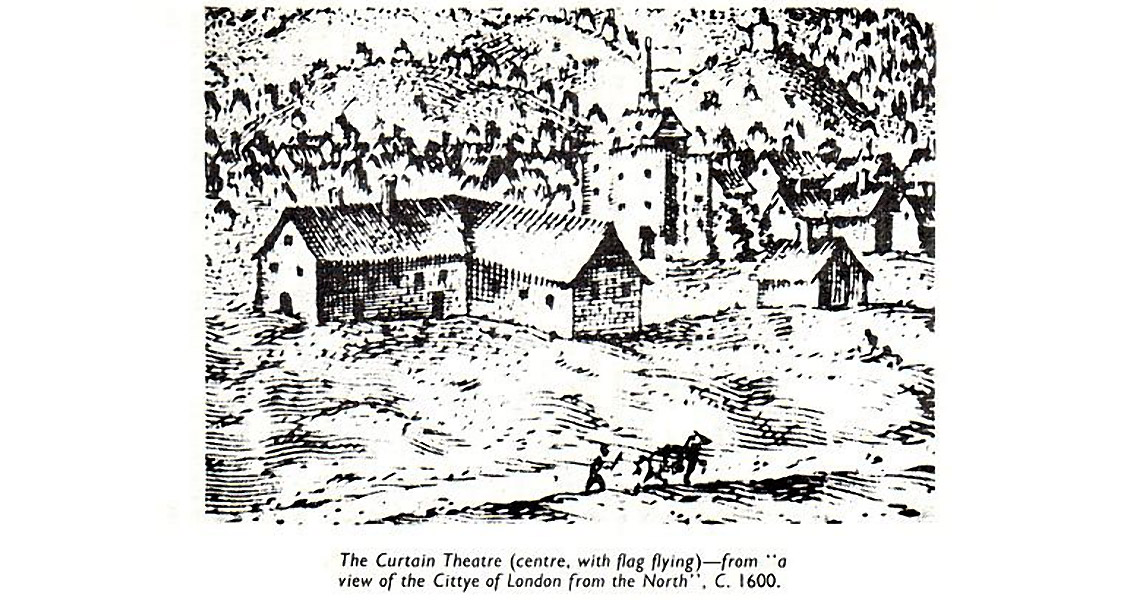
Guardian, renowned Shakespeare archaeologist Julian Bowsher, who specializes in the locations of the sites the Bard performed at as an actor and the locations where his plays themselves were performed; indicated that the Curtain’s rectangular design was a bit of a shock. As the site where the very first performances of such plays as Henry V and Romeo and Juliet might have taken place, the Curtain’s squared-off shape clashes with Henry V’s famous prologue, where the stage was referred to in shape as a “wooden O”. Bowsher said that he’ll have to revise his previous scholarship on The Curtain, as the evidence seems clear that before it was a playhouse, it had likely been an Elizabethan-era tenement. All indications point to the theater being converted once more into a block of flats after The Curtain was no longer in use as a playhouse, the archaeologist added. According to Heather Knight, the excavation’s senior archaeologist, the theater’s remains are some of the best preserved of all of the Tudor-era playhouses excavated to this day. The key to the preservation is actually due to its status as a conversion, the theater being reused as a tenement house led to far more of the structure surviving to the modern era, much more than the South Bank theaters known to have been some of Shakespeare’s most famous haunts, the Rose and the Globe. The current Globe is of course a reconstruction, while the original structures are nothing more than barely visible traces of foundation. The curtain’s architectural remains include a collection of brick walls, some as tall as 1.5 meters. Additionally, the area within the stage where the groundlings would have stood, a sloping surface covered in gravel, has also survived partially. Also surviving are some limited documentation from the era that tell us that the Curtain was set just 100 meters from another playhouse on the outskirts of the city of London, and stood in a fair meadow. The name of the playhouse itself comes from Curtain Road, a medieval pathway that ran parallel to a priory’s old curtain wall. Additionally, the theater was the site of one of Shakespeare’s performances as an actor in 1598, when he appeared in ‘Every Man In His Humour’, by Ben Jonson. Apparently the neighborhood the Curtain was situated in was less than idyllic. Theater manager Richard Burbage, a close friend of Shakespeare, had been fined regularly for running an unlicensed tavern, or “tippling house,” in close proximity to the playhouse, according to surviving records. Fights seemed to have been common, such as an incident where a Thames ferryman assailed two actors for not paying their fares. The backstage area of The Curtain is still being excavated. Tours of the site are available every Friday from now until June 24th. ]]>