Categories
Breaking News

Archaeologists Discover Further Details of London’s Curtain Theater

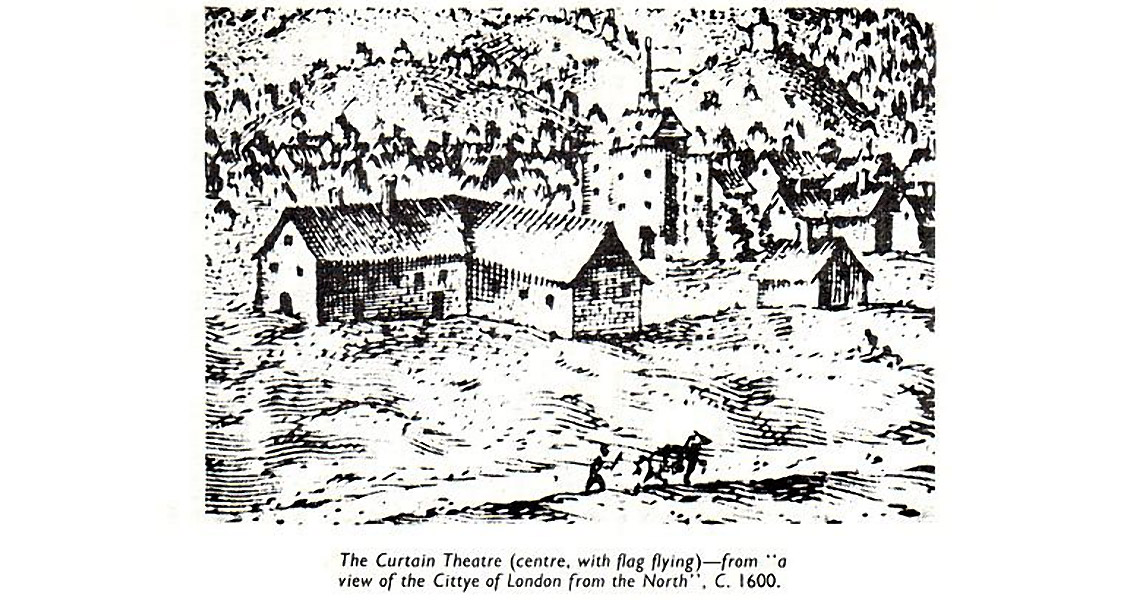
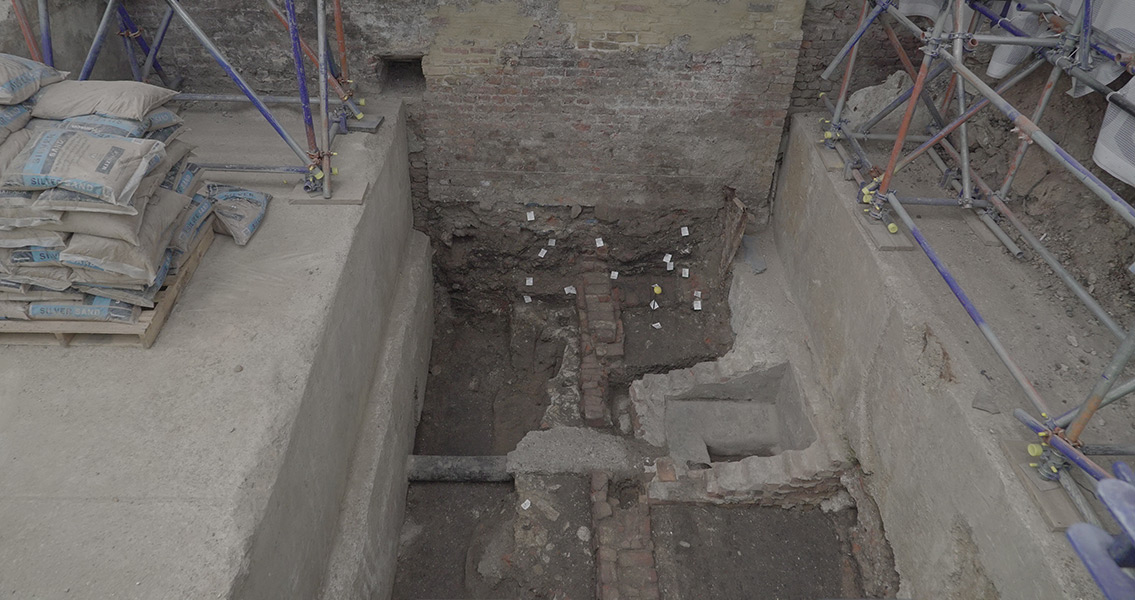
The Guardian, researchers found additional unique features of the Curtain’s stage, including what could have been a tunnel that ran beneath it to allow actors to pass from one side to the other undetected. The innovation could have led to Shakespeare – and other playwrights of his day – writing plays with the capabilities of the Curtain in mind, according to Museum of London Archaeology senior archaeologist Heather Knight. Knight remarked that with the Curtain stage so different from a typical thrust stage, which has places for the audience to stand on three of its four sides, the Shoreditch theater might have led to the development of new and interesting types of theatrical experiences. One of Shakespeare’s most beloved history plays, Henry V, is thought to have been first performed at the Curtain, though historical record is spotty. The famous line from the play’s prologue, where the Chorus describes the story as being portrayed in “this wooden O”, seems to contradict the idea that the Curtain was the first place Henry V was performed. However, historians have pointed out that the descriptive line simply may have been added to performances set in more traditional venues, and these versions of the play are the ones that have survived to this day. The excavation efforts are the first step in a massive development being undertaken in Shoreditch, including the construction of a mixed-use complex of apartments, offices, and retail space dubbed “The Stage” on the site of the Curtain. Detailed plans for the construction have been altered after the discovery of the Curtain’s foundations buried under a layer of gravel and rubble from a former Medieval monastery that had existed on Curtain Road at one time. It is common to find the ruins of many monasteries throughout England, especially from the period after King Henry VIII orchestrated England’s split from the Roman Catholic Church. In addition to the revelations of the size and dimensions of the theater, other artifacts have been discovered as well. Pieces of green-glazed ceramics, typically used as money-boxes for collecting entry fees from paying customers, have been found on the site; the possible remnants of costumes in the form of an assortment of pins and glass beads were also recovered. The new mixed-use office complex will incorporate a visitor center where archaeological finds from the Curtain will be on display. The center is slated for a 2019 opening date. ]]>
Categories
Breaking News

New Project Will Determine If a Rose By Any Name Was Still a Rose

Heritage Daily. “Supported by hundreds of years of scholarly enterprise, Shakespeare is now a global phenomenon. One of the areas we know very little about is what the Elizabethans themselves would have made of Shakespeare’s language. When they heard a word in one of Shakespeare’s plays, what did it mean to them?” As the project moves forward, researchers also hope to learn what made Shakespeare’s writing unique by comparing the language he used to the language used by his contemporaries. An earlier pilot study has provided some hints, as Culpeper explained to Heritage Daily. “Shakespeare seems to love the word ‘I’ as in the pronoun referring to one’s self. It is a little word but an important one. Modern drama is similar to an over-heard conversation – we listen to characters asking questions like ‘What do you think about X?’ and we learn about characters from their answers. But Shakespeare is much more geared to the direct presentation of the self through the word ‘I’”. The project is being funded by the British Arts & Humanities Research Council, and published in two separate volumes. All of the resources used in its creation will be made available to students and scholars. ]]>

Categories
Breaking News

New Records Show Shakespeare Established His Own Brand

Categories
Breaking News

Foundations of Shakespeare’s Curtain Theatre Found in Shoreditch

Guardian, renowned Shakespeare archaeologist Julian Bowsher, who specializes in the locations of the sites the Bard performed at as an actor and the locations where his plays themselves were performed; indicated that the Curtain’s rectangular design was a bit of a shock. As the site where the very first performances of such plays as Henry V and Romeo and Juliet might have taken place, the Curtain’s squared-off shape clashes with Henry V’s famous prologue, where the stage was referred to in shape as a “wooden O”. Bowsher said that he’ll have to revise his previous scholarship on The Curtain, as the evidence seems clear that before it was a playhouse, it had likely been an Elizabethan-era tenement. All indications point to the theater being converted once more into a block of flats after The Curtain was no longer in use as a playhouse, the archaeologist added. According to Heather Knight, the excavation’s senior archaeologist, the theater’s remains are some of the best preserved of all of the Tudor-era playhouses excavated to this day. The key to the preservation is actually due to its status as a conversion, the theater being reused as a tenement house led to far more of the structure surviving to the modern era, much more than the South Bank theaters known to have been some of Shakespeare’s most famous haunts, the Rose and the Globe. The current Globe is of course a reconstruction, while the original structures are nothing more than barely visible traces of foundation. The curtain’s architectural remains include a collection of brick walls, some as tall as 1.5 meters. Additionally, the area within the stage where the groundlings would have stood, a sloping surface covered in gravel, has also survived partially. Also surviving are some limited documentation from the era that tell us that the Curtain was set just 100 meters from another playhouse on the outskirts of the city of London, and stood in a fair meadow. The name of the playhouse itself comes from Curtain Road, a medieval pathway that ran parallel to a priory’s old curtain wall. Additionally, the theater was the site of one of Shakespeare’s performances as an actor in 1598, when he appeared in ‘Every Man In His Humour’, by Ben Jonson. Apparently the neighborhood the Curtain was situated in was less than idyllic. Theater manager Richard Burbage, a close friend of Shakespeare, had been fined regularly for running an unlicensed tavern, or “tippling house,” in close proximity to the playhouse, according to surviving records. Fights seemed to have been common, such as an incident where a Thames ferryman assailed two actors for not paying their fares. The backstage area of The Curtain is still being excavated. Tours of the site are available every Friday from now until June 24th. ]]>

Categories
Breaking News

The Kitchen Was the Heart of Shakespeare’s Home

Categories
Breaking News

Rare Shakespeare First Folio Found in French Library

Categories
Breaking News

Chemical Analysis Tells Story of Richard III

Categories
Editorial

Richard The Third

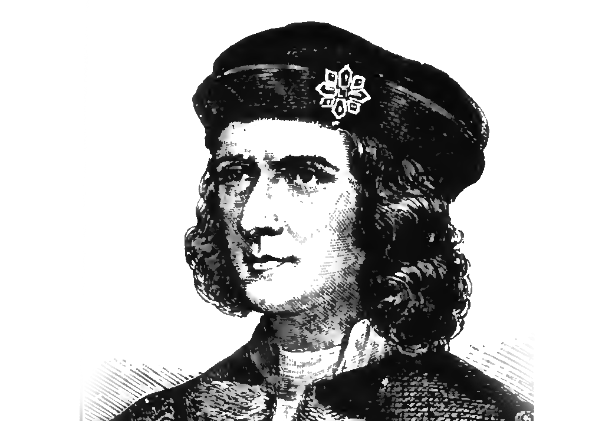
Richard the Third is believed to be one of Shakespeare’s earliest plays. It is also the second longest in the collection, with only Hamlet being longer. It is so long, in fact, that its full text is rarely played out. With five acts, each comprised of at least four scenes, it is a monumental accomplishment, even for the most prolific writer in the English language. It is crowded by a litany of characters, with most being from royal families, but including clergy, elected officials, and a handful of ghosts for good measure. Perhaps its best known phrase is the beginning of a speech given by Richard the Third at the start of the second scene. The oft-quoted line, “Now is the winter of our discontent”, has been referenced in popular culture, including the movie “Being John Malkovich”, and even used as the title of a novel by Steinbeck. The plot is complex and demands rigourous attention to the characters and the storyline. It twists and turns through elaborate schemes with different members of different royal families manipulating one another in a fierce battle for power. With his plot to gain the throne having succeeded, Richard goes on to rule for only two years, during which members of rival families make efforts to have him removed. In the finale, his wicked ways return to haunt him on the fields of the Battle of Bosworth where his followers abandon him and the ghosts of his victims admonish him to “despair and die”. His imminent death occurs at the hands of the Earl of Richmond who subsequently assumes the throne. As with all of Shakespeare’s creations, the play contains elements contrary to the principal themes. Some of the despised king’s speeches draw sympathy from the audience and, despite it being classified as a tragedy, it is infused with comedic elements. To be sure, though, it is a dry and ironic humour. And, for all the murderous acts alluded to in the story, acts of physical violence are notably omitted. Richard the Third is available, in unabridged form, from forgottenbooks.org. It is faithfully reproduced from a stage adaptation that was originally published in 1822. As such, it contains details about costumes and notes about how it was to be played. Specifically, there is a diagram of the arrangement of characters at the closing of the final scene. The text has a classic, yet spartan, appearance that lends an ominous atmosphere to the script. It also contains a list of the actors and their corresponding roles as played at two different theatres as well as a list of other publications in the same collection. There is renewed interest in the historical figure of Richard the Third thanks to a bizarre post-mortem on a skeleton found beneath a church in 2012. DNA studies confirmed its identity and anatomic analysis showed evidence of the deformed figure depicted by Shakespeare. It also identified multiple crushing and penetrating wounds to the skull, corresponding to the violent end to a tyrannous reign. Finally, just two weeks ago, the identification of parasitic eggs at the site of the inauspicious burial added yet further to the stranger-than-fiction legacy. For some weary followers, it may be an epilogue, drawing the story of Richard the Third to a close and leaving Shakespeare’s play to tell the tragic tale of England’s most infamous king.]]>