Categories
News

Lines In The Sand, part 1: The Texas Revolution

Today the US government is shut down due to debates over building a wall on the border between Mexico and the US.  This isn’t the first fierce political controversy over the border.  Two hundred years ago all the territory where the wall might be built clearly belonged to Mexico.  How did that change? The answer involves questions of sovereignty, slavery, illegal immigration, and accusations of ‘fake news.’ Today’s post describes the first part of that process.

Questions of Freedom

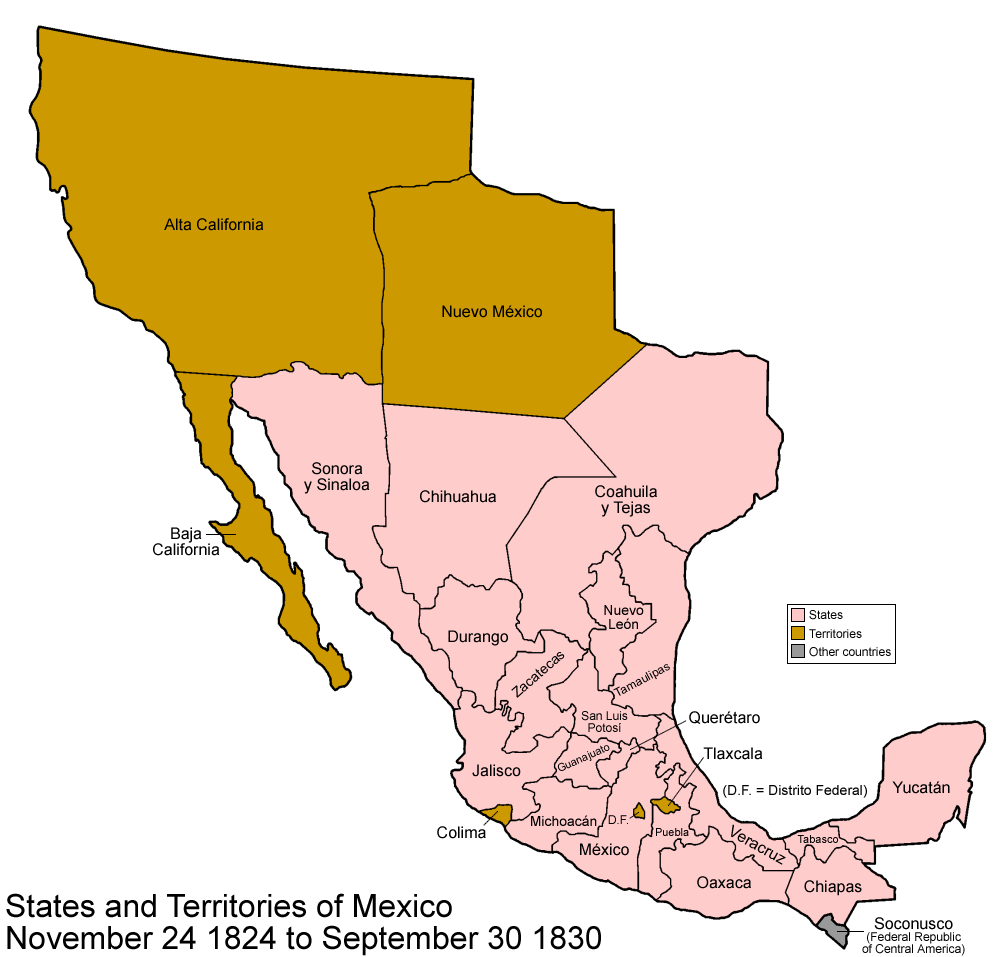
In 1820 New Spain opened some northern territories to Anglo-American settlers. Those territories, which jointly comprise today’s states of Texas, California, New Mexico, Arizona, Utah, and parts of Colorado, Oklahoma, Kansas and Wyoming, were mainly inhabited by First Nations people; Spain wanted to ‘civilize’ the land and remove or forcefully assimilate its original inhabitants.  When New Spain won independence in 1821 and became Mexico, it encouraged immigrants and allowed empresarios to claim large tracts of land in exchange for bringing in large numbers of colonists “of good character” to settle on them. 

One Anglo-American empresario was Stephen Austin, for whom the capital of the US state of Texas was later named.  Austin was a skilled political operator who talked the new Mexican government into continuing the grant New Spain had given his family, together with tax and tariff privileges designed to encourage settlers. He preserved those privileges through the resignation of the Mexican Emperor and the subsequent political upheaval in 1823.  He was far less diplomatic in his approach to the Karankawa tribe who inhabited parts of the land that had been designated as his; in 1825 he ordered Karankawas to be pursued and killed on sight.  By that time 300 formerly American families had settled on the land he controlled in the combined territory of Texas/Coahuila, and had begun growing sugarcane and cotton with slave labor. 

In 1829 Mexico outlawed slavery in all its territories.  Austin had sometimes declared that he disapproved of slavery (in large part because he feared that slave rebellions could endanger white people), but he also knew that the economy of his colony ran on slave labor, and he wasn’t willing to lose that revenue. He lobbied successfully to get Texas exempted from the anti-slavery laws.  But the Mexican government was beginning to be concerned about the influx of Protestant Anglo slaveholding immigrants who didn’t seem particularly interested in assimilating into their new country. In 1830 it banned further immigration from the US and imposed taxes and tariffs.  A small group of Mexican soldiers were dispatched to prevent smuggling and illegal immigration.  The American Texans, armed and irritable, didn’t take this well; at the end of the skirmishes of the 1832 Anahuac Disturbance, the Mexican army withdrew from most of its Texan garrisons, and immigrants continued to enter in large numbers. Texans began to demand separation from Coahuila and greater autonomy.

“With His Rifle, With Passports Or No Passports”

The Mexican government had more to worry about than Texas. General Santa Anna was actively rebelling against Mexico’s President.  In 1833 Santa Anna took power. That same year the Texans held a Constitutional Convention, chaired by Sam Houston, a protégé of expansionist American president Andrew Jackson.  That convention called for Texan separation from the territory of Coahuila, freedom from tariffs, and a repeal of the American immigration ban. Austin took the convention’s demands to Santa Anna, who repealed the immigration ban but refused the other requests. His agents intercepted Austin’s letter telling the Texans to disregard the Mexican government’s rulings, and Austin was imprisoned for eighteen months. Sam Houston left Texas and traveled through the US; some historians report that he encouraged militant immigrants to go to Texas with the view of preparing to help separate Texas from Mexico by force.

When Austin was released from prison on 1835 he wrote a letter calling for Anglo-Americans to immigrate to Texas en masse, “each man with his rifle, with passports or no passports,” and proclaimed that war was inevitable. Some historians see this as a reluctant acceptance of facts; others say he was spoiling for a fight.

At the same time, Santa Anna was moving to consolidate his power, rewrite the Mexican constitution and assert federal control over the territories.  In 1835 he violently put down an insurrection in Zacatecas and prepared to assert his control in Texas. He sent 500 soldiers to Gonzalez, TX to repossess a cannon which had earlier been given to the Texans to help in their campaign against indigenous peoples. The Texans gathered in arms and refused to turn the cannon over. On October 2 they attacked the soldiers, drove them back to San Antonio and besieged them there; late in December the soldiers surrendered and were allowed to leave.

Remember the Alamo!

Santa Anna mounted a counterattack in early 1836, bringing about seven thousand troops to quell what he saw as a criminal insurrection.  The Texans fortified the Alamo mission and sent out urgent appeals for other Anglos to join them. Very few came, and those who did were killed by the federal troops.  Militarily, the Alamo was an unqualified defeat; but the dramatic story of the deaths of its defenders became a rallying cry for Texans.  The same could be said of the capture of Texan commander James Fannin’s retreating forces and the later execution of four hundred prisoners.  To these stories was added an appeal to race prejudices: Austin wrote that the inevitable conflict between a “mongrel Spanish-Indian and negro race” and “civilization and the Anglo-American race” could have only one outcome.

In March 1836 Texans formally declared their independence, and Sam Houston was put in charge of the Texan army. On April 21 his troops caught Mexican forces under Santa Anna’s command unawares, resting on the road between forts, and killed six hundred men—many of whom, according to contemporary reports, were trying to surrender. Some prisoners were taken, including Santa Anna, who signed a treaty from prison in which re recognized Texas and called off the war.  The Mexican government deposed him in his absence and refused to recognize his treaty, but Texas declared victory.

Where, exactly, were the new boundaries of the Republic of Texas, and what should its relationship to the United States be? Those questions, and the lingering tensions between the Mexican government and the Texan republic, would be settled in another ten years, with complex repercussions for both the countries Texas bordered.  That story will be told in next week’s column on the Mexican-American War.

]]>
Categories
Breaking News

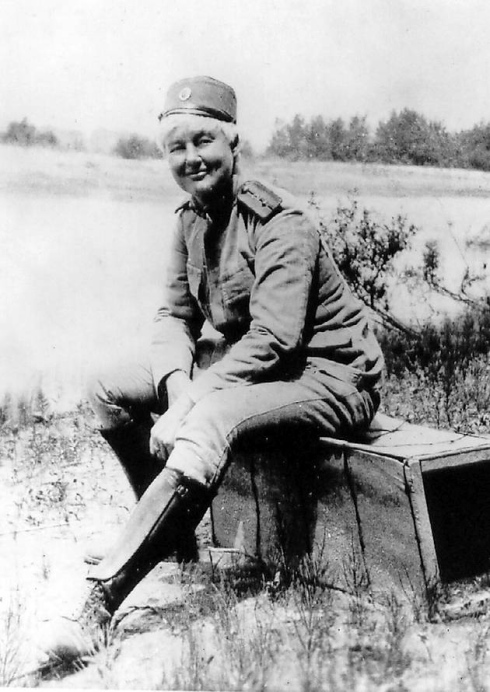
Who was Flora Sandes?

What do most little girls dream of becoming when they grow up? A princess, a housewife, a teacher perhaps? None of these options tempted a young girl born in North Yorkshire in 1876. Her dream was to become a soldier and when the First World War escalated, she became the only female fighter to be on the frontlines. 

Even in her early years, she didn’t let social stereotypes stop her from pursuing her hobbies. According to her autobiography, she enjoyed fencing and shooting and once cars were invented, she bought an old French racecar and drove it around her neighborhood. 

When the First World War broke out in 1914, she volunteered to become a nurse, however, she was rejected due to a lack of experience. This, obviously, did not stop her and she joined the red cross. In August 1914 she left England for the Serbian battlefield together with 36 other women. 

Their job was to aid in the humanitarian crises, but a year into her nursing job, Flora left her post and joined the soldiers on the frontlines. Being the only woman shooting at Austro-Hungarian soldiers and throwing hand grenades into enemy territory, she soon made a name for herself among the Serbian armed forces.

She moved up in ranks rapidly. From being a private at first, she was promoted to corporal and then to sergeant-major. It wasn’t just fighting in which she proved herself as an equal to her male counterparts. Anecdotes recount how she gave her male comrades a fair game in pursuits such as car racing, smoking, drinking, and shooting. 

One year after she joined the battle, she was severely wounded by a grenade in hand to hand combat. She was saved by a lieutenant in her company, who saved her by risking his own life. 

She was given the highest decoration of the Serbian Military, the Order of the Karadorde’s Star. In the same year, she published her autobiography, An English Woman-Sergeant in the Serbian Army. 

Due to the severe injury she suffered from the grenade attack, she spent the remainder of the war running a hospital. She demobilized in 1922 as the first female and first foreign officer of the Serbian army.

At age 51 she married Yuri Yudenitch, an ex-pat Russian general. They lived in France for a while, but as Flora missed Serbia too much, the two of them eventually settled in Belgrade. 

They were both recalled to military service when the Nazis launched an attack on Yugoslavia in 1941, but the invasion was over before they were given the time to take military action.

She was incarcerated by the German’s political police, the Gestapo. They questioned her for seven days before finally releasing her, but she was still ordered to report to the Gestapo once every week. 

After the death of her husband in 1941, due to heart failure, she moved back to England. She spent her final years touring across England, telling her story of how she became the first female Sergeant-major. She died on November 24, 1956 and was cremated in Ipswich. 

Flora Sandes was doubtlessly a remarkable person and her story was and remains an inspiration for women everywhere.  

]]>
Categories
News

Planting Seeds of Hope: Wangari Maathai, part 2

Last week’s article described the education and formative years of biologist, activist, planter and educator Wangari Maathai and her founding of the Green Belt movement for ecological and cultural restoration. This article describes a few of the struggles and triumphs that grew out of that movement.

Trials

By the late 1970s the Green Belt initiative was growing rapidly, as women in small rural communities across Kenya organized to start tree nurseries and reforest barren lands. Wangari Mathai was coordinating this effort while also working as a senior lecturer in veterinary medicine and raising their three children. The work was satisfying, but it came at a great personal cost. Part of that cost was simple exhaustion. The other part was more complicated. In 1977 her Parliamentarian husband Mwangi Mathai left her and her children; in 1979 he filed for divorce. No-fault divorce was not an option. Mwangi Mathai accused his wife of adultery, cruelty, and raising his blood pressure. She pled innocent. The 3-week trial that followed was widely publicized. Press reports said Mwangi Mathai was divorcing his wife for being “too educated, too strong, too successful, too stubborn, and too hard to control.” Some people saw those as admirable qualities. The judge did not; he found in Mwangi Mathai’s favor, and agreed with him that she needed to stop using his surname. Since she was becoming well known by then, she made the smallest change possible, becoming Wangari Maathai instead of Wangari Mathai. Maathai also told the press that the judge was either incompetent or corrupt. For this she was convicted of contempt of court and sentenced to six weeks in prison, but the public outcry was so great that she was released after only three days. The divorce was a harrowing ordeal for Maathai, and later on her political enemies used it against her. But it also taught Maathai something about the power of public opinion against unjust laws. In later years she used that lesson and that power to great effect. Maathai’s public life became more difficult under Kenya’s new president, Daniel arap Moi, who disapproved of Maathai as an uppity woman (and perhaps also as a Kikuyu; politics were taking on a distinctly tribal edge) and tried to force her out of her leadership position on the National Council of Women in Kenya. When the majority of women sided with Maathai, Moi persuaded some influential members of the Council to withdraw their participation and their backing. Maathai served as chair of the council for the next seven years. In 1982 Maathai decided to run for Parliament and was disqualified on a very dubious technicality. When she tried to resume her university job (which she had resigned, as required by law, to declare her candidacy) the university refused to rehire her. Other employers were reluctant to hire a woman who had clearly made enemies in high places. President Moi was then consolidating his power; he officially declared Kenya a one-party state, and his critics tended to disappear.

Green Belt Growing

Maathai put all her time and energy into the Green Belt. Timely financial assistance from the Norwegian Forest Service and the UN allowed her to hire ‘monitors’ to visit remote sites, support women in the field and learn more about what they needed. Maathai and the monitors wanted to understand the root causes of the poverty and pollution that the Green Belt movement was designed to cure. When they asked local people about the roots of the problem they heard a consistent answer: It’s the government. They’re corrupt. They don’t care. We have no chance. Maathai knew that the government had exploited public natural resources for private gain, but she encouraged people to look at the ways in which their own lives contributed to the problem—or the solution. They couldn’t control government policy, but they could grow their own food instead of relying on cash crops and purchased foods, and they could plant trees. Green Belt meetings were always held in local languages. This helped to break down barriers between poorer people and people who had been able to afford British schooling. It also affirmed the dignity and wisdom of local traditions. In the late 1980s and early 1990s the Green Belt began offering civic and environmental seminars which reminded people of the value of local traditions that had protected ecosystems and communities. Maathai wrote in her article The Cracked Mirror about how British missionaries had dismissed local traditions about the sacredness of Mount Kenya, asserting instead that God was in heaven. Many Kenyans had willingly turned their backs on their own sacred traditions. But Maathai countered, “Heaven is not above us: it is right here, right now…If believing that God is on Mount Kenya is what helps people conserve their mountain, I say that’s okay. If people still believed this, they would not have allowed illegal logging or clear-cutting of the forests…. Communities without their own culture, who are already disinherited, cannot protect their environment from immediate destruction or preserve it for future generations. Since they are disinherited, they have nothing to pass on.” The Green Belt meetings helped people to remember the value of their culture and their land. The message spread quickly. By the mid-1980s there were nearly two thousand Green Belt women’s groups in Kenya, and more than one thousand green belts being tended by schoolchildren. People from nearby countries were visiting to learn how to reforest their own land. The view from the grassroots was encouraging. But the economic and political structures were still stacked against preservation.

Protests and Prison

In 1989 an informant told the Green Belt that President Moi’s government planned to develop a substantial part of Nairobi’s largest public green space, Uhuru Park, into a sixty-story complex housing ruling party offices and high-end businesses. Maathai wrote letters to newspapers and government officials protesting that the city needed a natural space open to all more than it needed extra luxury properties for the wealthy. Getting no response, she wrote to foreign project investors to ask them to withdraw. Some Members of Parliament denounced Maathai for appealing to colonial powers and undermining Kenyan independence, but the denunciation only raised more publicity about the park. Many Kenyans wrote to the newspapers denouncing the planned tower. The Green Belt was evicted from its headquarters and forced to move into Maathai’s house, but investors backed out and the planned tower was canceled. The Green Belt had won the battle, but the war was just beginning. In 1991 Maathai joined the Forum for the Restoration of Democracy (FORD) in peaceful protests calling for open elections and a free press. In 1992 multi-party elections were promised, but in January of that year, as more of Moi’s opponents were found dead in mysterious circumstances, FORD heard rumors that Moi’s government planned to have the army seize control, cancel the elections, and assassinate Maathai and other opposition figures. Ten FORD members held a press conference warning about this possibility. After the conference broke up, most speakers were arrested. Maathai barricaded herself inside her home for three days (though she attempted to lower tensions by making tea for the policemen on cold nights and handing it out a window). On the third day she was arrested and charged with treason, a capital offence. She spent that night in a cold wet cell; her arthritis flared up, and she had to be carried into court the next morning as protestors in the streets shouted, “What have you done to her?” Public opinion was strongly on Maathai’s side; she was released to the hospital on bail, and in time the charges were dropped. Mothers of other political prisoners began reaching out to Maathai, telling her that they feared for their sons who had been detained for supporting opposition parties. There were very ugly rumors about prison conditions—and anyhow, since opposition parties were no longer outlawed, why shouldn’t their former supporters be freed? Maathai agreed to accompany five mothers to the attorney general as a translator and advocate, on one condition. She didn’t expect the attorney general to listen to them, but if public opinion could be mobilized she hoped something might change. The women agreed to fast and demonstrate in Uhuru Park for three days if their sons weren’t released in that time. The AG was noncommittal, and the women went to the park with signs explaining what they were doing. Fifty more mothers joined them that day. On the following day ex-prisoners joined the group and began to speak about the torture and abuse they had suffered in prison. Journalists spread their stories. On the third day the police attacked the camp, beating anyone who didn’t leave immediately. Maathai was knocked unconscious and taken back to the hospital. When she had recovered she went back to the vigil, which had moved into an Anglican church across the street where the police were not willing to break in. That vigil continued for a year; at the end of that time, the prisoners were released.

Seeds of Peace

By then the elections had been held, and Moi and his party had triumphed over a fragmented (and sometimes intimidated) opposition. The prisoners came out into an angry and polarized society. Intertribal violence—fueled, Maathai believed, by a government that preferred to keep people divided—spread rapidly in early 1993. Maathai toured the Rift Valley, where some of the worst fighting had taken place. She listened to grieving survivors and held seminars urging people to rebuild and reconcile rather than retaliating. She suggested making this concrete by starting tree nurseries and giving trees to people from apparently hostile tribal groups. Sometimes Maathai planted trees alongside multi-ethnic delegations from war-torn communities. When the government forbade her to enter conflict zones Maathai traveled incognito for a time. As the year wore on the fighting slackened, and Maathai noted that women from warring groups did actually accept trees from one another. In 1997 Maathai ran for Parliament and lost. In 1998 she became a co-chair of the Jubilee Africa campaign, appealing for the forgiveness of loans that crippled African economies. Often those loans had been made to dictators, but their cost fell most heavily on people who had no choice in the incurring of the debt. And mounting inflation made the debts seem hopeless. Maathai noted, “Between 1970 and 2002, African countries obtained about $540 billion (US) in loans and paid back $550 billion. However, because of interest on that debt, by the end of 2002 the debtor countries still owed the lending agencies nearly $300 billion.” Then another struggle over land use called her attention back to matters close at hand. The government was privatizing and developing a large part of the 2500-acre Karura forest preserve. The Karura, located near Nairobi, served as ‘lungs’ and a windbreak for the city, and also as home to rare species including mihugu trees, Sykes monkeys, bush pigs, and hundreds of varieties of birds. Maathai wrote to officials and newspapers to protest. She also led delegations into the forest to plant trees on land that had been cleared, and appealed directly to construction workers to stop destroying the forest. After one of these speeches workers set fire to the construction equipment and then fled. The police began blocking her from entering the park. Once when the gates were barred by armed guards, Maathai snuck in through the marshes to tend her seedlings. On another occasion she went openly to the gate and planted a tree outside it, accompanied by reporters and members of Parliament. She and her group were attacked and beaten by a group of un-uniformed men. One early-bird reporter had taken photos of uniformed police talking to the assailants, and there was plenty of footage of Maathai and other protestors who’d been beaten bloody. Students from the University of Nairobi took up the cause, ramming the gate and then fleeing into a UN compound where they were pursued and beaten by police. The UN and international dignitaries began to lodge protests and complaints, and riots broke out across Nairobi. Once again the development project was quietly dropped, although some illegal logging continued until the 2002 elections swept a newly unified opposition into power. Maathai was part of that new government, a Member of Parliament and assistant in the Ministry of Environmental Resources. Two years later, in 2004, she received the Nobel Peace Prize and spoke to an international audience about the necessary connection between democracy/human rights, sustainable and equitable development, and a culture of peace. In 2007 she lost her parliamentary seat, but her national and international advocacy continued until her death from cancer in 2011. And the Green Belt movement she founded is still planting trees and working for the causes she championed. To learn more about Wangari Maathai’s life, work and legacy, read her memoir “Unbowed,” or read her biography and selected works at http://www.greenbeltmovement.org/wangari-maathai  ]]>
Categories
News

How did Siam (Thailand) avoid European colonization?

In the mid-19thcentury, Siam had a unique and well-established political system called the “Mandala” system. The underlying philosophy of this system was very different from the European notion of nation-states. Instead, the “Mandala” system focused on spheres of influence in which weaker rulers had to pay tributes to the more powerful rulers. At the top of the pyramid was the Siamese King.   Siam was able to avoid colonization by European powers due to a combination of factors. Firstly, Siam was geographically located to function as an ideal buffer zone between the British colonies of the Malay peninsula and the French colony of Indochina.   Secondly, the Siamese kings, especially Chulalongkorn, realized that in order to avoid colonization, they had to transform their political system into a more Europeanized version. This became a massive nation-building project that led to the modernization of today’s Thailand.   An important aspect of this project was map-making. The Siamese realized that the Europeans put a lot of emphasis on knowledge, especially topographical knowledge. The Brits and the French used maps to define the territory that they ruled and when borders were ill-defined, they used this as an opportunity to claim the land.   Another point of interest was the concentration of power. In the previous Mandala system, power was very diffused. Local rulers exerted their influence as much as they could, but large areas still remained outside the reach of any particular ruler. De facto, the king was in charge of the whole land, but de jure, many areas remained in a political limbo.   Chulalongkorn recognized this problem and introduced a standing professional army for the first time in Siamese history. While they would have never been able to stand up against any European military, it gave the king more power to control the local rulers and unsupervised regions.   Eventually, all local rulers were deposed and stripped of their powers, which was transferred and centralized in Bangkok. This concentration of power became a beneficial advantage in the fight against western colonization.   Additionally, programs to foster nationalism were established. Historiography was used to create the sense of an eternal Thai nation and the Thai language was introduced as the only official language of the nation.   These carefully calculated maneuvers turned Siam into a legitimate state in the eyes of its European competitors. Subsequently, this gave the Siamese kings much more power than they otherwise would have had.   All in all, these factors were not a waterproof plan to avoid colonization and one could say that Siam was simply “lucky” to have circumvented colonial rule. Either way, Siam managed to remain sovereign for long enough to survive the period of European colonization.]]>

Categories
News

Planting Seeds of Hope: Wangari Maathai, part 1

A Changing Culture Miriam Wangari, later Wangari Maathai, was born on April 1940 into a country undergoing deep cultural change. When the colonial powers divided up their spheres of influence in 1885, the newly designated country of Kenya, which incorporated parts of the ancestral lands of many different ethnic groups, was assigned to Britain. The British established station posts there, initially promising some tribal groups that their lands and possessions would not be taken over. Those promises weren’t kept. Some groups cooperated with the British; others resisted and were violently put down. Britain sent missionaries who taught literacy to those who converted to Christianity (in the Kikuyu language converts were called “athomi,” literally “people who read.”) It also sent colonists who took possession of much of the best agricultural land, while black Kenyans were moved onto “native reserves.” When the colonial government introduced taxes that had to be paid in British currency, men from the native reserves had to leave their families for months at a time and work for white families in order to obtain money. Wangari was born to a Christian family of the Kikuyu tribe on the native reserve of Ihithe. The land there was fertile and well forested, and rain, food and firewood were abundant. Wangari helped with farming and food and wood gathering from a very early age; she was told that fig trees must never be cut for firewood or otherwise disturbed, because those were the trees of God. (This was a traditional Kenyan teaching, not one brought by the missionaries.)

Education and Independence

Wangari’s oldest brother urged her parents to send her to the British Presbyterian school when she was eight, and they agreed. She excelled there, and at age eleven she went on to a Catholic boarding school. Later on Wangari praised the education she received and the dedication of the nuns, commented matter-of-factly on the weevil-infested food and the constant work and schoolwork which allowed very little free time, and lamented the fact that children were punished for speaking in their native languages rather than English of Kiswahili. But at the time it seems she was uncritically grateful. She converted to Catholicism, changed her name to Mary Josephine Wangari, and joined a Catholic volunteer organization. Wangari was still in school when the Mau Mau uprising erupted in the early 1950s. As an adult Wangari described the uprising as the result of ongoing theft of land from black Kenyans; as a teenager she believed the nuns who told her that the Mau Mau were terrorists and urged her to pray for their defeat. Her father also took the British side, and her brothers were conscripted into the Home Guard. Despite this, Wangari was arrested by the British as she traveled to visit family friends on a school holiday. She spent two days in a crowded, dirty prison camp on very scanty rations; then she was identified as her father’s daughter and released. It was her first, but not her last, experience of imprisonment. Many thousands of black Kenyans died in prison camps during that war. The British prevailed militarily but realized that their occupation was growing unsustainable. In 1957 black Kenyans were given the right to vote; in 1959, when Wangari was nineteen, negotiations for Kenyan independence began. Both sides saw a need for more Kenyans to complete higher education so they could take over posts vacated by the British. Wangari, who had just graduated at the top of her class, was one of six hundred Kenyans awarded airfare and scholarships to attend universities in the United States.

Travels and Questions

Wangari attended a Catholic college in Kentucky, where she majored in biology and minored in chemistry and German. She was startled to find that the US, the reputed “land of the free,” still enforced racial segregation, and she watched the struggle for civil rights with fascination, seeing parallels to her own country. During the summer she assisted a black technician at a hospital, and he urged her to attend a meeting of the Nation of Islam. Wangari was shocked by their assertion that Jesus was black, argued with them, and indignantly confronted the technician afterward. He asked her, “Why do you think everything you’ve been taught is true?” The question took root in her mind. Around this time she changed her name from Mary Jo Wangari—her English baptismal name and African given name—to Wangari Muta, reclaiming her father’s last name as her own. Wangari completed her master’s degree in 1966, three years after Kenya gained independence. She accepted a job as a research assistant at the University of Nairobi and flew home, eager to help shape her country’s free future. Riding home from the airport, she listened to President Kenyatta urging Kenyans to reclaim their land and their future and thought of words she’d heard in the US from Martin Luther King: “Free at last!” But it wasn’t quite that simple. Upon arrival, she learned that the job promised to her had been given to somebody else, a man of the same ethnic group as the professor she had expected to assist. Instead she found work in the university’s school of veterinary medicine. After a year she traveled to Germany to get her doctorate. Returning home in 1969, she married Mwangi Mathai, helped him run for Parliament (he lost), and kept up her doctoral studies. In 1971 she became the first woman in East Africa to receive a doctorate. The university promoted her to senior lecturer but still denied her pension benefits and a housing allowance because she was a married woman. Wangari protested and filed a court case. Since the university’s chancellor was none other than President Kenyatta, the case was promptly dismissed, but Wangari’s persistence finally got the university to declare her an honorary male professor with full benefits.

The Root of the Problem

In the early 1970s Kenya was East Africa’s largest livestock producer, but there were concerns about poor herd health. Wangari set out to study a tick-borne disease. As she collected samples she noticed thin cattle, poor pastures, and shallow, silty rivers. She decided that the main problem for cattle was not parasitism but environmental degradation. Wangari went back to Ihithe, which she remembered as a clean and fertile place. The fig trees were no longer regarded as ‘trees of God’—that was seen as backward thinking—and many had been felled. Wangari knew that the fig trees’ deep root systems had held soil together and split rock so that streams could rise. In the absence of the trees, the streams were shallower and dirtier, the hillsides more eroded,and the soil poorer. Other native trees had been cut en masse and replaced by faster-growing imported timber trees or tea and coffee plantations. Returning to Nairobi, and to meetings of the National Council of Women of Kenya, Wangari heard of other changes for the worse. Cash-crop plantings had replaced subsistence farms in many places, and there more children suffered from sicknesses related to malnutrition as families relied on purchased refined foods that lacked necessary vitamins and proteins.

Planting Seeds

Wangari decided that tree planting would solve several problems at one. The root systems would hold soil, reduce erosion and protect waterways; the trees could also clean waterways as well as providing shade for cattle, fruit for human consumption, firewood and fence posts. First she started a small business hiring low-income women to do tree-based landscaping for richer people and also to start tree nurseries. She wasn’t able to make the business pay, but other NGO members agreed with the need for tree planting. In 1977 Wangari and other women from the Council celebrated World Environment Day with public tree plantings. Soon afterward they were invited to do a large-scale tree planting on a farm owned by a women’s collective. As those stories were publicized, women from other parts of the country reached out to Wangari to ask about starting their own planting projects. First she thought that foresters in their areas could help them, but many foresters refused, saying that forestry should be left to professionals. Wangari disagreed. “You don’t need a diploma to plant trees,” she said. She reminded the women that most of them were used to farming, and they could learn tree-growing too. She provided tree seedlings, until her supply was soon exhausted. The government forest service offered to supply seedlings and then backed out as requests poured in. Wangari urged women to collect their own seed from local native trees, paid them for every seedling they raised and successfully transplanted, and encouraged successful tree-growers to tell women in nearby villages about their successes and failures. Soon tree nurseries and ‘green belts’ of trees planted by local women were spreading throughout Kenya, offering the ecological benefits Wangari had hoped for, offering empowerment for women and poor people… and also leading to challenges Wangari had not foreseen. We’ll look at those challenges in part 2.]]>

Categories
News

Why did Russia sell Alaska to the United States of America?

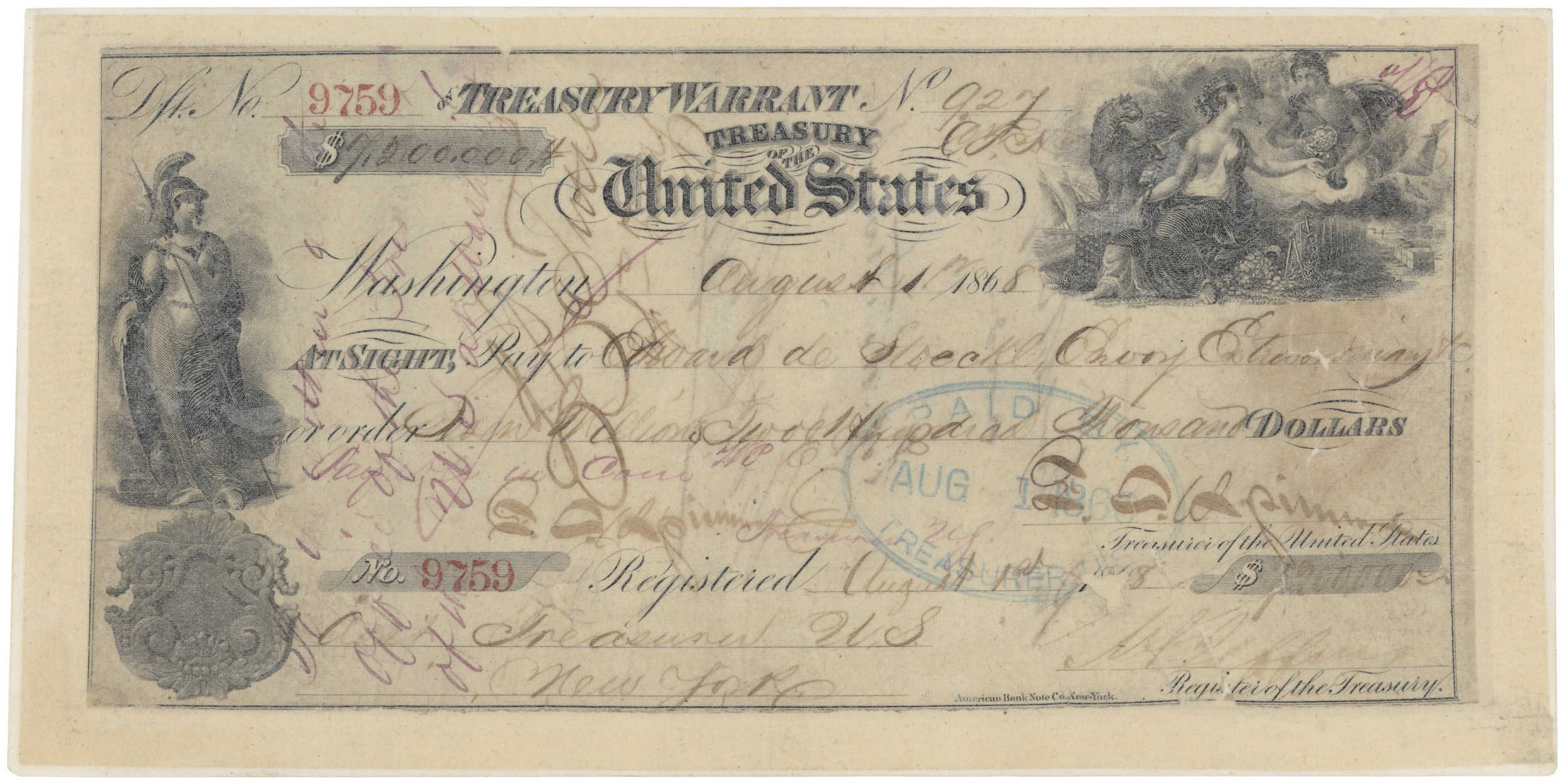
thstate and the largest of the 50 United States of America. 50 years after the sale, the Americans had already earned the initial price back 100 times over. So, why would Russia agree to such a, seemingly, unfair treaty?   In 2014, the White House’s website gathered more than 35.000 signatures on a petition calling for the return of Alaska to Russia. The petition was eventually cancelled, as it didn’t receive the 100.000 votes necessary to draw a response from the Obama administration.   However, the 35.000 signatures show that there is still a widespread belief that Alaska was annexed unfairly or even illegally, but that is merely a myth. Contrarily to popular opinion the deal was an honest one and both sides had rational reasons to sign it.   As early as the 18thcentury, adventurous Russian travelers, businessmen, and entrepreneurs set up trading agreements with Indigenous People in the region. The Russian-American Company (RAC) traded in various commodities, such as walrus ivory and sea otter fur.   As the company expanded, so did its power. By the 19thcentury, Russian Alaska became a center of international trade. Merchants traded Chinese fabrics, tea, and even ice. Various ship factories were built, and coal and mineral mines were established.   The imperial government itself supported the company, as the tsars and their family members were among RAC’s shareholders. Even at the time, the numerous gold deposits in the territory were already known and exploited.   So why did Russia decide to sell this profitable land? It all started when the RAC brought in new employees and shareholders from military circles, whose unrealistic economic expectations led to the fall of the RAC.     This resulted in excessive hunting and fishing in the area which deprived Alaska of its most profitable resources. Subsequently, the officers began to look for revenue in other places, but even this could not save the company. Eventually, the RAC was transferred to state subsidies.   Around this time, the Crimean War broke out, with Russia facing Britain, France, and Turkey. With all these on their plate, the Russians simply could not supply or defend Alaska.   As tensions between Moscow and London grew, Russia’s relationship with the United States became closer and negotiations over the sale of Alaska to the USA were brought to the table. Yet, citizens of either country were less enthusiastic about the deal. Russians claimed that they couldn’t give away land that they had put so much time and effort into developing, while Americans asserted that they didn’t need an “ice box and 50,000 wild Eskimos who drank fish oil for breakfast”.   Congress also disapproved of the purchase, but the White House did not. On March 30, 1867, President Andrew Johnson signed the Treaty with Russia. The capital, Novoarkhangelsk was renamed Sitka, which shortly after the sale became a hub for goldmining.   With the Klondike gold rush boom, Alaska brought the US hundreds of millions of dollars. In hindsight, this trade was probably not the most lucrative deal for Russia, but desperate times call for desperate measures.]]>

Categories
News

From Time to Time: a short history of calendars

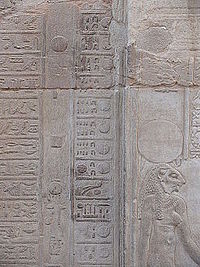
Egypt Around 4000 BC the Egyptians transitioned from a straight lunar calendar to a sun- and star-based calendar. Their New Year happened in high summer (in July by the current Gregorian calendar) on the day when Sirius rose above the eastern horizon again after staying below the horizon for seventy days. This was significant for religious reasons; Sirius was associated with the earth-goddess Isis, and was also said to be the source of spiritual energy, as the sun was of physical energy. That date was also important for agricultural reasons: on or shortly after Sirius’ reappearance the Nile began to flood. The Egyptian calendar year was divided into three four-month-long seasons: flood season, emergence season, and low water. Each month was divided into three ten-day ‘decans’, and the last two days of each decan were kept as holidays. Each year also contained 5 days that were not assigned to any month; on those days the birthdays of gods were celebrated.

Sumer

The ancient Sumerians also began with a strictly lunar calendar. A new month began whenever a new crescent moon rose. By 2400 BC the Sumerians began experimenting with a lunisolar calendar. This calendar had alternating 29-day and 30-day months, so that each day of the month remained correlated to a given moon phase. There were twelve lunar months in a year. Whenever the lunar year got too far out of sync with the solar year, an additional month was added to the year’s end. Initially each city decided independently when or whether to add new months. Around 380 BC the Persians, who were then ruling the Sumerian empire, worked out a standardized cycle for every city to use: a 19-year cycle where the 3rd, 6th, 8th, 11th, 14th, 17th and 19th years had thirteen months while the rest had twelve. This kept the lunar and solar years more or less in harmony.

China

Between 2000 and 1000 BC the Chinese developed a detailed solar calendar. The solstices and equinoxes were given fixed dates, and seasons were held to begin halfway between them (summer, for instance, began halfway between the vernal equinox and the summer solstice.) A total of twenty-four ‘node days’ evenly divided the year. The Chinese also observed alternating 29-day and 30-day lunar months, and used the same cycle as the Sumerians for adding extra months to years so that the lunar and solar years mostly kept pace with each other. The date of the New Year was changed for political reasons by successive dynasties until it was finally settled as the second (or sometimes, in a thirteen-month year, the third) new moon after the winter solstice.

South America

The Mayans and some other pre-Columbian peoples used two distinct calendars. The Haab, the basis for the agricultural year, was a solar calendar with eighteen twenty-day months and one five-day month. In some cultures the five-day month was a sacred time. Others kept festivals on other dates set by the Haab calendar. There was another calendar, the Tzolk’in, which seems to have been mostly used to set ceremonial dates. The Tzolk’in is divided into twenty periods of thirteen days. New Year’s Day was celebrated at the beginning of each Tzolk’in cycle. The two calendars were combined to produce the Calendar Round, which gave dates according to their Haab and Tzolk’in reckoning. A given Haab and Tzolk’in combination would recur every 52 years. Some Mayans believed that a person attained the wisdom of an elder after living through one full Calendar Round cycle. Finally, there was the “Long Count’ calendar which measured each day’s position relative to what was believed to be the 7,885 years which spanned from the beginning of the world to its destruction and rebirth. European guesses about the origin point of the Long Count calendar led to the popular rumors that the world would end in 2012.

Islamic Calendar

The Islamic calendar, like the Tzolk’in, is not tied to the solar year. It is strictly measured in lunar months based, not on a count of days, but on the actual observation of the new crescent moon. It begins from the date of the Hegira, the prophet Mohammed’s journey from Mecca to Medina (July 15, 622 by the Gregorian calendar.) Each year is made up of twelve lunar months. Saudi Arabia and some other Middle Eastern countries use the Islamic calendar for their official calendar.

Roman, Julian, and Gregorian Calendars

The Roman Republic in the 500s BC used a solar calendar with four 31-day months, seven 29-day months, and one 28-day month. This totaled 355 days; a leap month was added every 2 or 3 years to keep the calendar year in sync with the seasons. The Pontifex Maximus, or high priest, was responsible for declaring leap months. But since the priest’s term of authority was tied to the calendar year, there was some concern about priests adding unnecessary leap months in order to extend their terms. Under Julius Caesar the leap month was eliminated, regular months were lengthened, and a leap day was added to February once every four years. This nearly approximated the actual solar year, but the leap years occurred a little too often, leaving a calendar 4-year period a little longer than a solar 4-year period. In 1582 AD Pope Gregory announced a new calendar formulation with slightly less frequent leap years, and also ordered an abrupt change in date to bring the dates back in line with the seasons. Those countries which adopted the change immediately dropped 10 days. But the adoption of the calendar was slow in some parts of the world. The United Kingdom and its colonies changed over in 1752, dropping 11 days; Turkey changed over in 1926, dropping 13 days. Read more about early calendars at the links below: Ancient lunar calendars: https://sservi.nasa.gov/articles/oldest-lunar-calendars/ Egyptian and Sumerian calendars: http://www.webexhibits.org/calendars/calendar-ancient.html#anchor-babylonian Chinese calendar: http://www.math.nus.edu.sg/aslaksen/gem-projects/hm/Chinese_Calendar.pdf Mayan calendar: https://maya.nmai.si.edu/calendar/calendar-system Roman calendar: https://www.timeanddate.com/calendar/roman-calendar.html Julian/Gregorian: https://www.timeanddate.com/calendar/julian-gregorian-switch.html      ]]>

Categories
News

The Real Christmas Wars

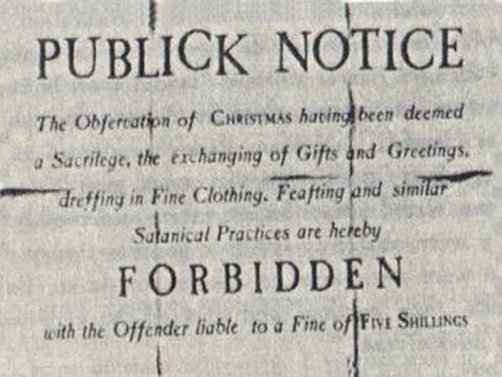
“told them that if they made it mater of conscience, he would spare them till they were better informed. … [Later] he found them in the street at play, openly; some pitching the barr and some at stoole-ball, and such like sports. So he went to them, and took away their implements, and told them that was against his conscience, that they should play and others work. If they made the keeping of it mater of devotion, let them keep their houses, but there should be no gaming or revelling in the streets. Since which time nothing hath been attempted that way, at least openly.” Apparently open attempts resumed soon thereafter; in 1659, the Massachusetts Bay Colony passed a law strictly forbidding Christmas observance, saying the law was necessary “for preventing disorders” associated with “such festivals as were superstitiously kept in other countries.” The Puritan Mayor of Canterbury attempted to enforce a similar ban in 1647 when the Puritan Parliament was governing England, ordering shopkeepers to open for business as usual on Christmas Day. When many shopkeepers disobeyed, the Mayor set out to rebuke them, flanked by soldiers. He got as far as threatening one defiant shopkeeper with the stocks before an angry crowd knocked him down, vandalized the shops which had opened, and began a very rough game of football up and down the streets. Officials and Puritan preachers who tried to stop them were pelted with anything that came to hand; most wisely retreated indoors. Attempts to legally punish the leaders of the so-called “Plum Pudding Riots” were met with furious demonstrations in favor of Anglicanism and the King. Why did some Christians object so fervently to Christmas? As with most questions of history and religion, the answers are complicated.

“Mad Mirth”

The Puritans objected to the way in which people observed Christmas. Some (like Governor Bradford) saw it as an excuse for idleness. Others were concerned about just how that idleness was used. New England Puritan minister Increase Mather lamented that people who celebrated Christmas were “consumed in… revellings,in excess of wine, in mad mirth.” Christmas celebrations often featured heavy drinking and gambling, which the Puritans understandably saw as unwholesome. There was also controversy over the tradition of wassailing, in which poorer people banded together and went to the homes of the rich, where they sang or put on pantomimes and expected to be given food and drink. Sometimes this seems to have been a pleasant and friendly interchange all round; but fights sometimes developed when the rich folk were unwilling to play host. Puritans were also unhappy with mummers who tramped the streets and visited houses in elaborate costumes, often cross-dressing and sometimes engaging in highly bawdy antics.

Paganism and Power

There was also some actual religious controversy around the holiday itself. Some reform-minded Christians pointed out that the Bible said nothing about Christ’s birth date. They saw Christmas as a thinly disguised pagan revel, given that it fell at the same time as the earlier Roman Saturnalia, which also featured costumes, feasting, bawdy revelry and gift-giving, as well as incorporating other Pagan traditions such as the burning of the Yule log, the setting up of Christmas trees and the hanging of mistletoe. But their objection may have been to certain Christian groups as much as to Pagans.   The battle for Christmas arose in the context of English civil wars with a heavy religious component. England had broken with Catholicism and established the Anglican Church in 1533 under King Henry VIII. Depending on which historians you believe, this was a cynical move prompted entirely by Henry’s wish to divorce wives as often as he liked until he got get one who’d bear him a son, this was a principled protest against the Catholic Church’s own cynical political moves and repression of freethinkers, or this was some combination of the two. After Henry’s death his Catholic daughter Mary took the throne and attempted to forcibly reimpose Catholicism; after Mary’s death her Anglican sister Elizabeth attempted to forcibly quash Catholicism, which she saw as linked to rebellion; religion and politics were entangled in a way that did no good to either. Under Queen Elizabeth I people began to speak derisively of “Puritans,” hard-line Protestant reformers who wanted to move the Anglican Church further from Catholicism. Many of the Puritans were “middling sort of people,” yeomen and artisans from the cities eager for a less hierarchical version of politics and religion; some were people of high position, and many found their way into the English Parliament. King Charles I and the Parliament clashed bitterly over issues of religion, economics and politics, and another bloody civil war followed. As in any civil war, all the cultural differences between groups became occasions for violent animosity. This was the backdrop of the Canterbury Christmas Riot, which took place while Parliament was ruling and the King out of power; it was also the backdrop for the emigration of many Puritans to America after the monarchy and the rule of the Anglican Church were restored.

Peace On Earth?

The battles over Christmas didn’t end in one deliberate truce; they seem to have fizzled out over time as the larger wars which had spawned them faded into the past. Nineteenth-century Books like Dickens’ “A Christmas Carol”and (in the US) Washington Irving’s “The Sketchbook of Geoffrey Crayon” are widely credited with giving Christmas a newer, tamer image as a pleasant domestic holiday and an occasion for charity. For a vivid account of the Canterbury Christmas riot, see http://www.vaguelyinteresting.co.uk/canterburys-cancelled-christmas-and-the-plum-pudding-riots/ For a closer look at the pagan roots of some Christmas traditions, see https://www.thoughtco.com/history-of-yule-2562997 For a glimpse of the history of Christmas controversy in the early US, see http://www.newenglandhistoricalsociety.com/wont-go-get-new-england-colonial-christmas-traditions/ For a brief look at the history of the Puritans, see http://bcw-project.org/church-and-state/sects-and-factions/puritans]]>

Categories
News

What was the Berlin Conference?

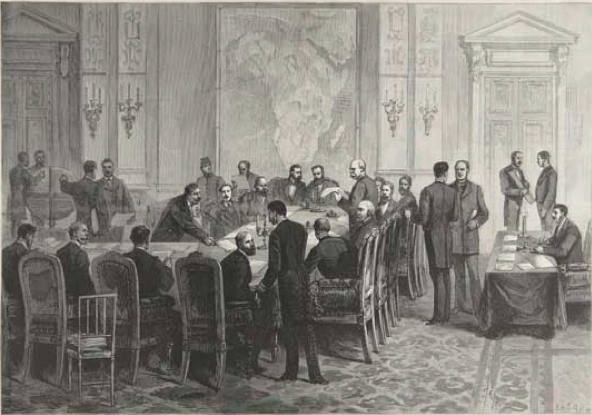
thcentury. At the end of the 18thcentury, European explorers started mapping out the interior of Africa and by 1850, most of the African continent had been discovered by European explorations.   This newly discovered land, however, led to increased tensions between European states that were already competing for colonial dominance. In 1884, at the request of Portugal, Germany’s first chancellor Otto von Bismarck organized a conference for all the major western powers to negotiate the issue of control over Africa.   This event became known as the Berlin Conference of 1884-1885 (aka the Congo Conference or the West Africa Conference). Not only was this a turning point in the history of Africa, it was also the establishment of Germany as a colonial power.   At the time, 80% of the African continent remained independent and indigenous people were treated as trading partners. But over time, due to various factors, such as diplomatic maneuvers, colonial explorations, and the discovery of numerous valuable resources (i.e. gold, timber, rubber, etc.), interest in the continent increased dramatically.   The Berlin Conference aimed to end the competition between European powers during the “Scramble for Africa”. The following fourteen countries were represented at the Conference: Austria-Hungary, Belgium, Denmark, France, Germany, Great Britain, Italy, the Netherlands, Portugal, Russia, Spain, Sweden-Norway (who were unified in 1814-1905), Turkey, and the USA.   The General Act covered several key points. For one, the Conference “resolved” the issue of slavery, as it contained a clause prohibiting the transatlantic slave trade. Furthermore, the Free State of Congo was established, which was one of the initial and key causes of the conflict. The 14 signatories were allowed to trade freely throughout the Congo Basin, and the Niger and Congo rivers were made free for ship traffic.   The Principle of Effectivity was established, which meant that European powers were not allowed to set up colonies in name only. Moreover, the act established regional boundaries for each colonial power, giving them an exclusive right to “pursue” the legal ownership of land in the eyes of the other European powers.   The conference sped up the process of colonization, and by 1914, the African continent was fully divided into fifty countries. Britain was the biggest “winner”, gaining control over Egypt, Sudan, Uganda, Kenya, South Africa, Zambia, Zimbabwe, and Botswana. Furthermore, they also controlled the Gold Coast with Nigeria and Ghana.   France came in second with control over most of western Africa, including the Ivory Coast, Benin, Mali, French Guinea, Mauritania, Niger, and Senegal. Other notable colonial powers were Belgium, that controlled the Democratic Republic of Congo, Portugal, Italy, Germany, and Spain.   The outcome was an ill-defined, rigid grid of borders that divided the continent into irregular territories. The new boundaries were superimposed over the existing borders, completely disregarding the pre-existing division of indigenous cultures. The consequences are still evident today, as it merged together disparate groups who were historically enemies, leading to numerous conflicts on the African continent.]]>

Categories
News

The Immigrant Invasion That Wasn’t

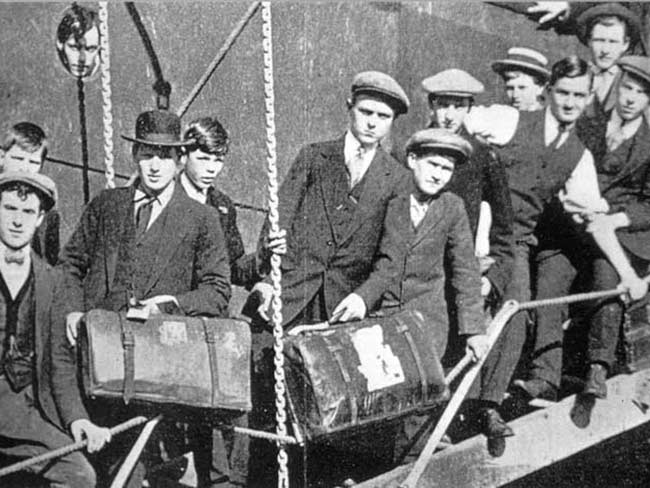
Reasons for Leaving Many of the Irish immigrants in the 1800s were no more eager to leave their land for the US than Coxe and his ilk were to receive them. But living conditions in Ireland had become untenable. This was the result of a process that started long before the infamous potato famine. In the late 1100s Norman-English soldiers arrived in Ireland to help one side in a civil war and stayed on uninvited. Soon after, England’s King Henry II sent further troops and laid claim to Ireland. Over the centuries that followed, Irish laws were changed and Irish lands confiscated. By the 1700s, only 14% of Irish land was owned by Irish people. A considerably larger portion was worked by Irish farm laborers who grew food for export, sometimes going hungry themselves. In the early 1800s, Anglo-Irish landlords found it more profitable to raise livestock than crops for export. Tenant farmers were evicted in order to make room for larger pastures. Some of the evictees found day labor at other jobs. Some managed to get small plots of land and grow enough potatoes to keep themselves alive. Others, unable to make a living in their native land, emigrated to America. In the mid-1840s the fungal disease called late blight swept the country, rotting the potato crop in the field. In 1845 forty per cent of the crop was lost. Families who had been barely getting by began to starve. By 1855 one million people had died of hunger and disease (as food continued to be exported from Ireland to England). Many more emigrated to the United States. As smallholders fled, their land was bought up and enclosed for pastureland; even after the blight subsided in the 1850s, the problem of dispossession remained.

In the New World

The immigrants found work in the New World—often difficult work that offered little pay and less respect. Most of the women, who made up more than half of the exodus, became domestic servants or factory workers; most of the men found work building roads, railroads and canals or mining. Some US employers spoke quite frankly of hiring Irish laborers for jobs so dangerous that native-born workers wouldn’t take them. Some native-born workers complained that the Irish were impoverishing them by competing for jobs, driving down wages and taking charity. Certainly the landscape was changing fast. In the mid-1850s the majority of New York’s residents were immigrants, and the majority of recorded charity recipients were Irish. Some writers and speakers explained that this showed that the “Hibernian race” was naturally inferior to the Anglo-Saxon—conveniently overlooking the role played by Anglo-Saxons in displacing and impoverishing Irish emigrants. Irish immigrants were also the subject of wild conspiracy theories, often focused on their religion. Many writers alleged that the Catholics owed their true loyalty to the Pope rather than to any democratic government, and once sufficient numbers had arrived they would rise up violently, overthrow the Constitution, and subject Americans to a new Inquisition. Some went so far as to claim that a new Vatican would be founded in Ohio. In 1836 Maria Monk wrote what claimed to be a memoir about her life as a nun, in which priests were accused of lurid sexual misbehavior and routine child-murder; it was pointed out that she had actually never been a nun and the ‘memoir’ was actually a novel, but that didn’t hinder book sales. Sometimes anti-Catholic hostility led to apparently spontaneous rioting and violence, as in Philadelphia’s 1844 “Bible Riot,” over whether Catholic children should be allowed Catholic Bibles in school, left twenty people dead and three Catholic churches burned. In the 1850s anti-Catholicism found organized political expression in what was formally known as “The American Party.” The American Party appealed to “native Americans”—by which it meant US-born whites, not American Indians—to pledge “eternal hostility to foreign and Roman Catholic influence.” It sought to deport “foreign beggars and criminals,” bar Catholics from public office, and make immigrants wait 21 years for naturalization. This party successfully elected more than one hundred US Congressmen as well as gaining control of several state legislatures. The party began as a secret society whose members were instructed to answer any questions about outsiders with “I know nothing,” and the American Party was also known as the Know Nothing Party, the name by which they are mostly remembered today.

Race Questions

The American Party’s rise to power was checked, not by a sudden outbreak of sanity and ethnic solidarity, but by the rise of an even more explosive conflict: the Civil War. While the Know Nothings agreed on suspecting immigrants, they didn’t agree on the question of slavery, and those questions tore the party apart. Many Irish-Americans also had ambivalent attitudes about slavery, liberty and black Americans. 19th-century Irish immigrants were stigmatized not only for their religion but also for their ethnicity; some writers lumped them in with black Americans as members of irresponsible and inferior races, and some cartoonists portrayed both Irish and black Americans as simian. This led some Irish-Americans to speak against race prejudice, others to differentiate themselves from black Americans by emphasizing their own whiteness. Irish and black Americans sometimes competed for jobs that native-born whites wouldn’t do. During the war one Irish paper in Massachusetts warned its readers, “The North is becoming black with refugee Negroes from the South. These wretches crowd our cities and, by overstocking the market of labor, do incalculable injury to white hands…” And in 1863, when a law was passed saying that rich people could escape the military draft by paying the government $300 to hire a substitute, Irish-led protests in New York City against this unequal treatment of rich and poor devolved into violent attacks against black Americans, whom rioters blamed for the war.

Rising Acceptance

After the war ended Irish-American immigrants still faced prejudice—witness Coxe’s jeremiad and the ferocious cartoons of Thomas Nast and others—but they had also established a foothold in their new land, and their children were advancing quickly. Many first-generation immigrants had had little chance for education, but they saw to it that their children attended schools. By the turn of the century a higher proportion of Irish Catholics than of Protestants attended college. Some Anglo-Saxon Protestant Harvard students were skeptical of their new schoolmates, but Harvard’s President, Abbott Lawrence Lowell, stressed that education would help to assimilate the Irish and teach them to share “our prosperity and our sentiments,” since they—unlike non-white people and Jews—were clearly assimilable and worthy of “universal political equality.” By 1910 20% of Northern schoolteachers—and 33% of Chicago schoolteachers—were Irish women, while Irish men composed 30% of municipal workers in New York City, Boston, Chicago, and San Francisco. Irish-Americans formed a powerful voting bloc, and they also took leadership in trade unions. While some unions were strongly nativist, some prominent Irish-American labor leaders, including Terence Vincent Powderly of the Knights of Labor and Mike Boyle of the International Brotherhood of Electric Workers, recruited black workers as well as Europeans of different ethnicities. Perhaps they remembered their own family stories of struggling against discrimination. By 1960, while vestiges of anti-Irish prejudice remains, Americans elected an Irish Catholic President. Many of today’s Supreme Court Justices are also Catholics who have spent their professional lives interpreting and defending the Constitution which Coxe thought their people could not value. Coxe’s essay can be read here: https://books.google.com/books?id=LchZAAAAYAAJ&pg=PA597&lpg=PA597&dq=a+cleveland+coxe+government+by+aliens&source=bl&ots=whGjicbA5B&sig=qp05rZGrmUZOLz2_PU3FtTPfqNM&hl=en&sa=X&ved=2ahUKEwiT487Uu5DfAhVo7oMKHZ4BDYQQ6AEwA3oECAYQAQ#v=onepage&q=a%20cleveland%20coxe%20government%20by%20aliens&f=false   A thoughtful discussion of the causes of Irish emigration, the process of Irish-American assimilation and the complex relationship between Irish Americans and Black Americans in the 1800s can be found in chapter 7 of Ronald Takaki’s book “A Different Mirror: A Multicultural History of America.”   More information on the Know Nothings can be found at https://www.smithsonianmag.com/history/immigrants-conspiracies-and-secret-society-launched-american-nativism-180961915/]]>