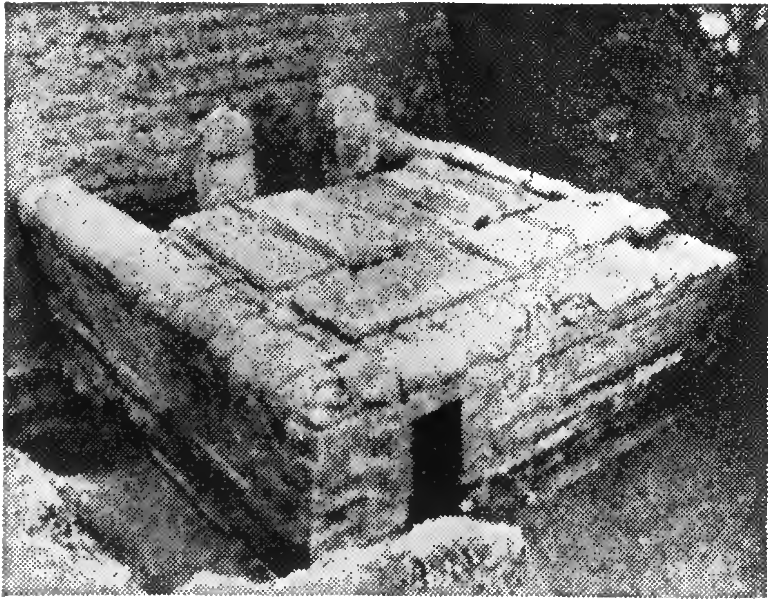
Recent findings uncovered new evidence for prehistoric Scotland. Recently, an unlikely turn of event has lead to a discovery of an ancient Scottish settlement believed to be an Iron Age village. Along with it, a host of ancient artefacts including tools and jewellery were also found. The unexpected discovery was excavated at the construction site of the £17 million A75 Dunragit bypass in Wigtownshire, in south-west Scotland. It has been reported that the discoveries include a rare and complete 130-piece jet bead necklace dating about 2000BC, the first of its kind ever discovered in south-west Scotland. Two of the jet beads necklaces found are considered to be the rarest of the discoveries, according to Dr Alison Sheridan of National Museums Scotland. She was also reported to have said that the necklaces were made in about 2000BC, between the Neolithic period and the Bronze Age, in Whitby, Yorkshire, located about 160 miles from where they were found. A Romano-British brooch, a Bronze Age cemetery complex, cremation urns and pottery fragments were among the other finds. Other than that, some flint tools, including a flint arrowhead from the early Neolithic period and more than 13,500 Mesolithic flints were also found. Flint is a hard, tough chemical or biochemical sedimentary rock that breaks with a conchoidal fracture. It is a form of microcrystalline quartz that is typically called “chert” by geologists. It is a preferred material for making tools and it has been used extensively by human to make stone tools during the prehistoric era. Prehistoric period is divided into three-age system, namely the Stone Age, Bronze Age and the Iron Age. Stone Age then further divided into three periods which are the Paleolithic, Mesolithic and Neolithic. Paleolithic means “Old Stone Age”, and this period begins when human were starting to use stone tools. Meanwhile, Mesolithic means “Middle Stone Age”, and this period dates from the end of the last Ice Age. It is in this period that agriculture was introduced. The Neolithic or the “New Stone Age” period in Scotland spanned approximately 4500BC to 2000BC and is the period in which settled farming became common. The Bronze Age dates from about 2500BC when metal-using and a “package” of other Continental novelties appeared in Scotland – and elsewhere in Britain – to around the 800BC, when iron objects and iron-using probably appeared. The Iron Age then lasted to about 500 AD. Rod McCullagh, an archaeologist of Historic Scotland said, “An unforeseen wealth of archaeological information has been recovered. The team of archaeologists from Amey and Guard Archaeology Ltd have uncovered the remains of dwellings and burials spanning over 7,000 years of prehistory,” He added, “In addition, numerous smaller sites have been discovered which seem to relate to the use and exploitation of the land both through hunting and farming. These are exciting discoveries which offer a much richer understanding of the settlement of south-west Scotland over the past 9,000 years.” Transport Minister of Scotland, Keith Brown have the following to say regarding the findings, “With the A75 Dunragit bypass already improving journey times and providing opportunities for business, leisure and tourism industries on this crucial route between Scotland, the rest of the UK and Europe – it is also helping shine a light on Scotland’s ancient past. “The finds at Dunragit, which would have remained uncovered had the new bypass not been built, are truly stunning, and underline the importance of the value we place on meeting our environmental obligations as we plan and construct essential new infrastructure,” he added. In the meantime the findings are being conserved for further analysis. Research is still ongoing and report by Historic Scotland will be produced to describe and explain what has been discovered along the road. Based on the report, a decision will be made on where the various collections will be stored or put on display. Whatever the result of the findings may yield to us, it would surely becomes another piece of evidence that would serves as an eye opener and might even unravel a new perspective in our knowledge and understanding of the prehistoric age. ]]>
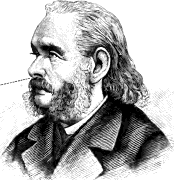
Samuel Smiles “Self-Help with Illustrations of Conduct and Perseverance” – A Victorian ethical work
While Samuel Smiles cannot be considered amongst the most famous of Victorian writers, he certainly was one of the most influential. His ideas both reflected and shaped the era in which he lived. By the time of his death at the start of the twentieth century his classic work “Self-Help with Illustrations of Conduct and Perseverance” had sold over a quarter of a million copies. Even in distant Japan the translated version had become very popular.
While the works of Dickens, Thackeray, Conan Doyle and other great literary figures of this period are still read today for pleasure, Smiles has the distinction that his writings continue to provide a doctrine of life that still manages to inspire. In the 1980’s Smiles Self help philosophy combined with economic ideas of Milton Freedman to shape the social policies of Britain’s ruling Conservative party. It is very significant that a 1986 reprint of Self Help carried an introduction written by Education Secretary Keith Joseph.
Yet for all the appeal the modern reader finds in his ideas, they are without doubt solidly rooted in the world of 150 years ago, and in the background and upbringing of the author. To understand Self Help and its impact it is essential to appreciate popular attitudes around the time this book was first published, and how Samuel Smiles both reflected and articulated the ideas of his time.
The Deserving Poor
The introduction and expansion of government welfare programmes in the twentieth century has encouraged people to consider that the state has obligations to provide its citizens with a certain standard of living, health care, education and other benefits. This attitude is a radical departure from how our ancestors viewed the role of the state. The Victorian era was characterised by a belief that the less the state intervened in the lives of ordinary people the better it would be for everyone. Economists argued that free trade was the best economic policy to follow, and industrialists and farmers needed to have the freedom to set prices and hire labour according to supply and demand. Political thinkers and philosophers such as John Stuart Mills argued for minimum government intervention and regulation of the lives of ordinary people.
Social policy was strongly influenced by opinions that everyone should be encouraged to stand on their own two feet. While these attitudes had their roots in the Protestant “Work Ethic” they were also in accord with the opinion of Jeremy Bentham and other popular opinion-formers of this time. A classic example of this attitude was the Poor Law legislation introduced in the UK in 1834. This law gave legislative expression to the idea that people turn to the state for assistance because it is more comfortable for them to receive funds in this manner than to go out to work. The authors of this law believed that by offering the poor assistance only in a workhouse environment (most famously portrayed by Charles Dickens in “Oliver Twist”) only the really needy would seek help. All the able-bodied poor would be deterred by the harsh workhouse conditions and go and find work. Poverty was ascribed to reckless spending, alcoholism and other human failings, consequently it was considered eminently reasonable to argue that the state should not have to pay the bill for a person’s irresponsibility. Only the deserving poor – those who poverty could not be ascribed to a corrupt lifestyle – should be assisted.
The Man behind the Book
Samuel Smiles was born in Haddington, Scotland in 1812. His family belonged to a particularly strict Protestant sect called the Cameronians. From an early age he was brought up to believe in concepts of sin and virtue, rewards and punishment and of course the famous Protestant Work ethic. These childhood influences certainly shaped his manner of thinking and contributed to the quasi-religious tone of his writings.
After training as a doctor, Smiles turned his hand to journalism. In the 1840s he edited a northern English newspaper, the Leeds Times. Moved by the injustices he saw generated by England’s rapid industrialisation and urbanisation Smiles turned to radical politics. He supported a political movement known as Chartism. They advocated political reform including one man one vote (Smiles personally also supported female suffrage) and annual elections as the best way of improving the lot of the average Englishman. When more militant figures took control of the Chartist movement, Smiles withdrew his support. In the 1850s he began to seriously explore other paths to improve life for the ordinary person and so he began to develop his philosophy of Self-Help.
One of the pivotal moments in Smile’s life was his meeting with the famous railway engineer George Stephenson in the mid-1840s. Smiles drew inspiration from the humble beginnings of Stephenson and other inventors, engineers and entrepreneurs who were spearheading Britain’s Industrial Revolution. In earlier years aristocratic families had been in the forefront of the country’s economic development. In the late eighteenth and early nineteenth ordinary people seemingly suddenly became empowered to become astoundingly successful businessmen on the basis of their hard work and determination. Smiles saw Stephenson, Wedgwood and other key figures of Britain’s economic takeoff as valuable sources of inspiration, especially for young people. The examples they provided showed how you did not need to be born with the proverbial silver spoon in the mouth to achieve. The study of the lives of the engineers found expression in the approach to life advocated in Self-Help, and also in a number of biographies. A few years before Self Help appeared Smiles published a biography of George Stephenson. In 1861 he authored another very successful book of biographies of famous engineers. Although the historical accuracy of all the information he presented might have been questioned by later historians, the book admirably served is purpose of inspiring a generation of Victorian schoolboys to take an interest in technical professions.
Smile’s Self Help Formula
The origins of Self Help can be traced to an 1845 lecture delivered to a March 1845 speech that Smiles was asked to deliver to a self-improvement society. These organisations were formed to assist ordinary working people to advance their education and better the quality of their lives. In the opening pages of Self Help Samuel Smiles sets the tone of his outlook on life, and it is certainly attuned with the philosophy that prompted the establishment of self-improvement societies, and mechanics institutes across Great Britain.
On the book’s first page he quotes the popular saying that “Heaven Helps Those who Help Themselves.” He clearly sets out the key role of self-help in promoting the welfare of the society and he gives us a clear idea of the theme around which he builds his work. To quote Mr. Smiles, “The spirit of self-help is the root of all genuine growth in the individual; and, exhibited in the lives of many, it constitutes the true source of national vigour and strength. Help from without is often enfeebling in its effects, but help from within invariably invigorates.”
Yet if this introduction leads the reader to anticipate they a long and boring sermon lies ahead they are invariably presently surprised. This is no philosophical treatise aimed at Ivory Tower academics but an exercise in encouraging the ordinary person to get ahead in life drawing upon their own resources. The writing is simple and makes plenty of use of examples of people who helped themselves to achieve success in various fields. In a sense the approach adopted might even be classed as anti-intellectual. Thus in the first chapter Smiles compares unfavourably formal college education to the practical education a man can gain from the honest pursuit of a trade or profession. Smiles writes, “Far more influential is the life-education daily given in our homes, in the streets, behind counters, in workshops, at the loom and the plough, in counting-houses and manufactories, and in the busy haunts of men…..—all that tends to discipline a man truly, and fit him for the proper performance of the duties and business of life,—a kind of education not to be learnt from books, or acquired by any amount of mere literary training.”
Part of the enduring appeal of Self Help is the simple English and the abundance of anecdotes and biographical snippets of people whose success in life held lessons of value for his reasons. Although many of the individuals mentioned are now forgotten, there are many others that are instantly familiar to the modern reader. For example, Smiles brings William Shakespeare the playwright and Livingstone the explorer as typical examples of people from poor backgrounds who overcome many challenges to achieve great personal success.
While these inspiring stories occupy a significant portion of the book there are interwoven with sound practical advice on how the reader can achieve in their own right. Discipline and training are praised as traits that allow even those of mediocre talents to become top achievers.
Hard work is another quality that Smiles sees as essential for personal progress, as he comments in regard to artistic success, “Excellence in art, as in everything else, can only be achieved by dint of painstaking labour.”
Another area where Smiles chooses to focus is prudence in handling monitory affairs. He remarks “How a man uses money—makes it, saves it, and spends it—is perhaps one of the best tests of practical wisdom.” He then proceeds through quotations and examples to illustrate all that is to be gained by avoiding spendthrift habits and practicing the virtues of self-denial.
In his final chapter he attempts to define the English gentleman and provide his readers with guides how they refine their character through the practice of honest and other virtues and so win this coveted title. He comments on the worthlessness of intellect without character as follows: “That character is power, is true in a much higher sense than that knowledge is power. Mind without heart, intelligence without conduct, cleverness without goodness, are powers in their way, but they may be powers only for mischief. We may be instructed or amused by them; but it is sometimes as difficult to admire them as it would be to admire the dexterity of a pickpocket or the horsemanship of a highwayman.”
Maybe some modern readers might find the author’s tone in places too sermonic, but the values he was seeking to promote are still as worth attaining now as they were one hundred years ago. The number of recent editions attests to this work’s continued appeal. Although the language sounds a little antiquated and the style dated, the sincerity with which he delivers his message continues to shine through.
 Source
Self-Help with Illustrations of Conduct and Perseverance
PIBN: 1000149101
Stevenson biog: 1000632707
Lives of engineers: 1000137590
Other sources
http://en.wikipedia.org/wiki/Samuel_Smiles
http://www.economist.com/node/2610260
http://infed.org/mobi/samuel-smiles-and-self-help/e]]>
A Family of Clowns As the family name suggests, the Grimaldi family came from Italy. They had been living in England for half a century when Joseph was born. They made their living from comic performances and acting in the London theatres. Joseph’s father, Joseph Giuseppe Grimaldi, was an accomplished entertainer but a harsh parent who regularly beat his children. Joseph’s mother was a 14 year old dancer taken into his father’s apprenticeship. His father was 60 years old at the time of his birth. Joseph’s mother was not the only woman in his father’s life. He had a few mistresses. Born into such a family it was not surprise that Joseph Grimaldi began his stage career at an early age. He was only a toddler when his father took him on stage with him to take a bow on the stage of the famous Drury Lane Theatre in 1780. With no compulsory education law in those years the young boy only received the most rudimentary education. He was raised a child actor to appear in support of his father. Sometimes he had to play the role of animals. It is recorded that once his father brought him on the stage in the guise of a pet monkey with a chain around his neck. His father swung him round so fast by the chain that he was thrown off the stage into the orchestra pit. He survived this fall and many cuts and bruises. This turned out to be a good preparation for the athletic clowning style that brought him later fame. Joseph Grimaldi’s father died when he was just 10 years old. He had developed a paranoid fear of death, and especially being buried alive. In the 1700s the poor state of medicine made this a real concern, but nevertheless Grimaldi Senior went a little too far in his fears. He asked his daughter to cut off his head after his death just to make sure that he would not be buried alive. He offered her the princely sum of five pounds for performing this grisly duty. Joey the Clown The young Joseph Grimaldi was forced to become the main supporter of his family at such a young age. The famous theatre manager Richard Sheridan gave him employment at the Drury Lane Theatre for a pound per week. His mother was also employed as a dancer. Over the next few years he continued to play a series of child, animal and dwarf roles on the London stage. In 1794 he had his first major breakthrough in the Thomas John Dibdin pantomime “The Talisman; or, Harlequin Made Happy” During this era productions build around the comic characters of Harlequin and Clown were the mainstays of comic theatre. Into this particular milieu, Grimaldi found that his comic acting skills fitted very well. He developed his unique clown identify with the painted face. He also entertained the audience with acrobatics and sword play. Not infrequently he caused himself injury through his energetic performance. Another popular element in his performance was the way he used satire to poke fun at characters or stereotypes that his audience easily recognised amongst their own family or acquaintances. He also courted audience participation. In a tactic that is followed by pantomime performers today he asked the audience if he should do a certain move or trick. Invariably his audience shouted yes and egged him on. He also coined the “here we come” catchphrase which successive generations of clowns have borrowed. Some of his comic songs have also stood the test of time and you might hear them sung today where clowns perform. In the first decade of the nineteenth century Joseph Grimaldi rose to the position of the leading comic performer of Regency England. His performance as clown in the Mother Goose pantomime in 1806 brought the theatre an amazing 20,000 pounds in takings. In 1815 along with his fellow clown Jack Bologna, he earned 1,743 pounds in the course of just 56 performances. Theatrical Family Life In 1799 Joseph Grimaldi married Maria Hughes, daughter of Sadler’s Wells Theatre manager Richard Hughes. His wife died in childbirth in 1801. Joseph was devastated by his wife’s death. To take his mind off his grief he added to his performing schedule by performing at both Drury Lane and Sadler’s Wells theatres each night. During one of his routines he accidentally shot himself in his foot. His mother arranged for a dancer called Mary Bristow to attend to him in his sickness. A relationship developed and in the end of 1801 they married. By Mary Bristow he had his only child, Joseph Samuel. With his career at its peak they could afford to take a country cottage at Finchley, which was in those days a country village outside London. Just as Joseph had been introduced to the stage at an early age by his father, he decided to do the same with his own son. Joseph Samuel also developed into an accomplished pantomime performer but he remained in the shadow of his famous father and came to resent it. The Unhappy Clown It is a well-known phenomenon that comic entertainers are often struggling to cope with depression. A story is told that Joseph Grimaldi once went to a leading doctor for treatment for his depressed condition. The doctor was not aware of his patient’s identity. He recommended that the man go to see a performance of Joseph Grimaldi the clown to cheer him up. The patient looked the doctor straight in his face and said to him, “I am Joseph Grimaldi.’ Another time he is recorded as saying that while he makes other people laugh he remains “grim all day” (a clever play on his name). Grimaldi’s acrobatic stunts and numerous injuries in the course of his performances took their toll on his health. In 1821 he collapsed after a performance and from this point on his health went continually downhill. He gave a farewell performance at Drury Lane Theatre in 1827. His wife’s spendthrift habits and people taking advantage of his own lack of skills in money management led to the Grimaldi family’s fall into poverty. His own son became an alcoholic. The drunken friends and ladies of the street he brought home aggravated his parents suffering. Joseph Samuel Grimaldi died age 30. His parents made a suicide pact but their attempt to take poison was botched. Mary Grimaldi died in 1834. Joseph continuing living on his own in abject poverty relieved by visits to the tavern to drink and talk about better times. He died on 1st June 1837, probably from alcoholism. Charles Dickens edited Grimaldi’s memoirs. He had a strong admiration for the clown whom he saw while a young child in 1812. The book was a great success and still makes an entertaining read. ]]>

Scientists have longed believe that the Hadean period, because of the earth’s newly formed conditions along with volcanic activities, was a hellish place where life could not have existed. The discovery of the Zircon however suggest that the earth might have been able to sustain life longer than it was previously thought, which is some 4.3 billion years ago. The zircon was extracted in 2001 from a rock outcrop in Australia in the Jack Hills region. The Jack Hills is home to the oldest zircons on the planet. The Zircon, now dubbed the Jack Hills Zircon, takes scientists out of the limbo they were in regarding whether or not life existed on the planet during this time; on one hand they previously had no evidence that life existed during the Hadean age but on the other hand, there was no evidence that life didn’t exist. The zircon crystal pushes them significantly towards one angle. While they are pondering over this new found information, they are still not clear about exactly when earth began to cool off and eventually become conducive to life forms. A Zircon crystal by nature is a mineral used sometimes as a replacement for diamonds i.e. in the case of the transparent crystals. They are usually large and come in a variety of colors, oftentimes beautiful to look at. This particular crystal, as Professor John Valley of the University of Wisconsin remarked, is only attractive to a geologist. Valley, who led the research, is a geosciences professor and explained the size of the Zircon. The crystal found in Australia is about twice the width of the human hair and can barely be seen with the naked eye. The crystal is indeed a rare gem not because of what it might be worth but rather because it is almost as old as the earth itself. ]]>

th century, Nathaniel Hawthorne presents the society as strict with Christian-like rules and principles to abide by. This was a close representation of the actual society.
The town of New England consisted mostly of migrants who came into the US from England. Their numbers were so large they ended up forming what is known today as the Massachusetts Bay Colony.
The puritans had varying degrees of beliefs where society, religion and the family structure is concerned. They believed men were head of the household and made all important decisions, while women were just there to take care of housework. This great family structure kept everyone in line with God, and adultery or any kind of sexual sin was shunned severely.
There are many reasons why Hawthorne’s novel can be seen as criticism of puritan beliefs. Maybe he believed that women contributed more to society than their role as good housewives and child bearers, or maybe he was trying to point out the injustice of punishing women who commit adultery. Hawthorne uses the symbol of the scarlet letter in his three main characters to criticize the puritan world and to question whether their beliefs and punishments are justified.
 The novel begins with Esther emerging from prison holding Pearl, her illegitimate baby whom she had borne out of an act of adultery. She had a smile on her face and the Letter “A” was delicately embroidered on her bosom. She had embroidered it beautifully and had made it into a “gorgeous luxuriance of fancy that it had all the effect of a last and fitting decoration”. What should be a symbol of shame for her is portrayed as a symbol of resilience.
Esther does not hold her head in shame or seem remorseful, leading many of her critics to believe that she did not see the need to be sorry for her actions. She turns a potentially degrading symbol into something that helps her to earn her keep even during a time when women had little or no power and were seen as the inferior sex.
In the 17th century some women who were found guilty of this kind of crime were punished by flogging, and in extreme cases were put to death. Men on the other hand were normally handed down a less severe punishment, as the blame was given only to women. Had Reverend Dimmesdale been revealed as Pearl’s father, his level of punishment might have been lesser than Esther’s. In fact, Dimmesdale being exposed as Pearl’s father might not have made a difference in his own life at all.
Dimmesdale hides behind his deeds and suffers in silence. He turns out to be the opposite of what puritan men should be like; headstrong. Puritans believed that men should lead yet Hawthorne had Esther leading Dimmesdale by providing a shoulder for him and by having her formulating all their plans.
The author uses the reverend to represent a flaw within Puritan authority figure. He submits to sins with Esther when he should be helping her stay on the right path. Many believe Hawthorne mocks the church by presenting the male religious figure, as weak and desolate.
That Dimmesdale’s and Esther’s daughter Pearl is the manifestation of the actual act of adultery was also seen as an important contribution to The Scarlet Letter’s representation. For puritans, children were born into the sins of their parents and Pearl, born out of an act of sin was the perfect example.
Women were educated from very young and prepared to take over the domestic duties. They were expected to be, like their mothers, good wives and mothers and to uphold the puritan belief systems. Esther however, did not instill these rules into Pearl.
The church believes that it is their duty to interfere and does, only to no avail; Esther has no intention of allowing the church to take her child away. This again demonstrates the authority that Hawthorne gives to Esther.
The fact that Hawthorne made Esther into a heroine gives the impression that he wanted to point out that females can be authority figures and that some of rules the puritans meted out were as harsh as they were silly. No amount of punishment, ridicule and disgrace could make Esther crumble under the watchful eyes of the Puritans making Esther one of the most popular heroines of classic literature.
[caption id="attachment_8458" align="alignleft" width="307"]
 The Scarlet Letter by Nathaniel Hawthorne[/caption]
Source
The Scarlet Letter
Nathaniel Hawthorne
ISBN 978-1-330-32145-4
[gap]
]]>